 Precision Milling Cutters,Cutting Tools for CNC Machining Every Material

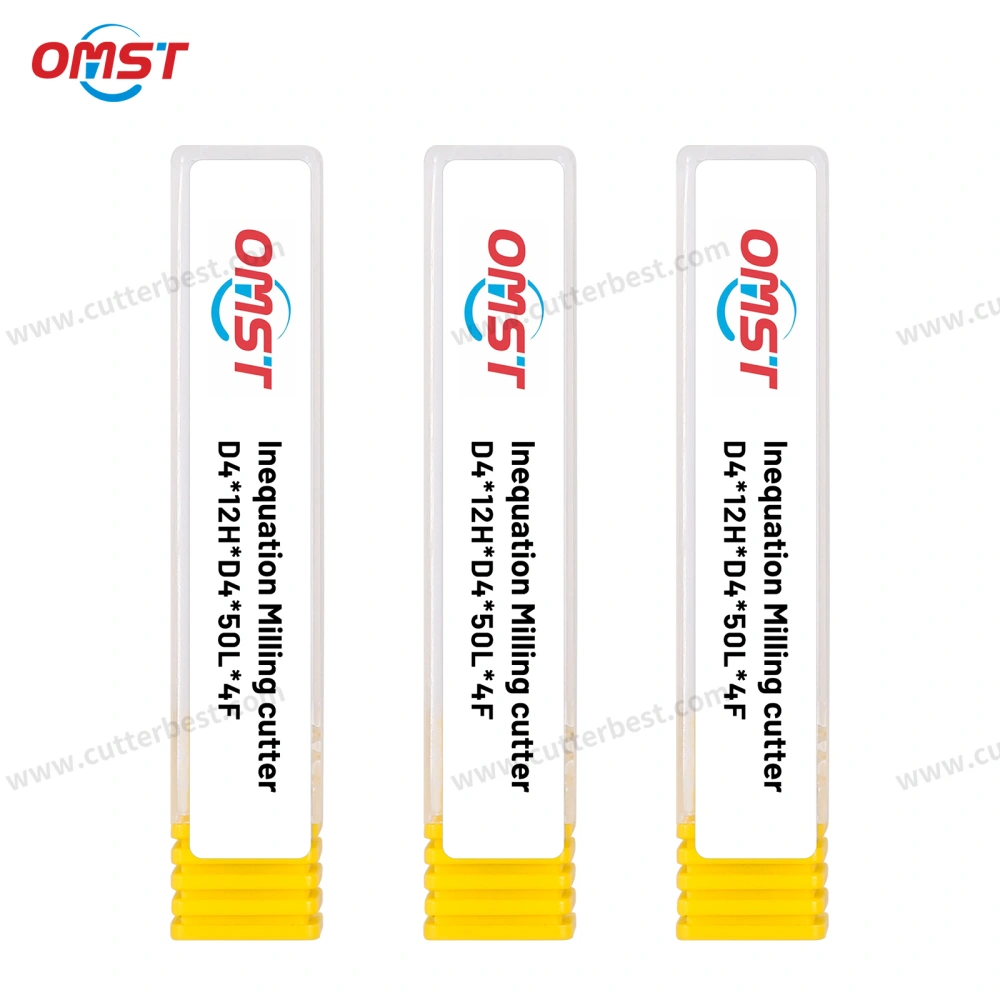
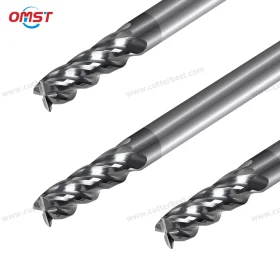
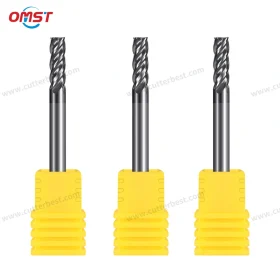
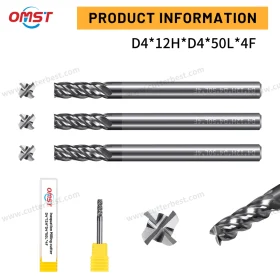
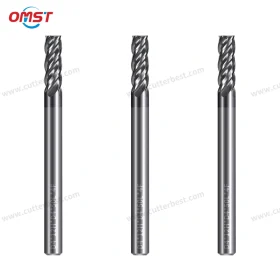
An end mill cutter removes material with cutting edges on its end face and along its flutes. Therefore, it can perform several CNC milling operations, including slotting, pocketing, side milling, profiling, contouring, and finishing.
OMIST supplies standard and custom end mill cutting tools for machine shops, distributors, tool brands, and industrial buyers. We manufacture tools in solid carbide, HSS, and other materials according to the workpiece, machine condition, cutting operation, and required tool life.
As an end mill cutter manufacturer, we supply both standard production tools and drawing-based special cutters.
For a basic explanation of the tool structure and its main functions, read basic CNC milling tool guide.
Key Features
Stable Cutting Performance
Suitable flute geometry and cutting-edge preparation help improve cutting stability. As a result, the tool can reduce vibration and support more consistent machining under suitable operating conditions.
Tool overhang, holder rigidity, machine condition, and cutting parameters also affect performance. Therefore, the cutter design should match the actual CNC setup.
Efficient Chip Evacuation
Flute count and flute space directly affect chip removal. Fewer flutes provide more chip space, while more flutes generally improve rigidity and provide more cutting edges.
For example, two-flute and three-flute designs often suit aluminum and other materials that produce larger chips. Four-flute or higher-flute-count tools may suit steel machining, finishing, and applications that require greater rigidity.
Multiple Tool Materials
Solid carbide provides high rigidity, wear resistance, and dimensional stability. Therefore, it is widely used for CNC milling at medium and high cutting speeds.
HSS provides greater toughness and may suit some general machining, low-speed cutting, large-diameter tools, or special applications. OMIST can evaluate the appropriate material according to the cutter size and machining conditions.
For dedicated solid carbide options, visit our explore our solid carbide milling tools.
Coating Options
A suitable coating can improve wear resistance, heat resistance, and tool life. Available options include AlTiN, TiAlN, TiSiN, TiN, DLC, Nano Blue, and other coatings after technical evaluation.
However, one coating does not suit every material. For this reason, OMIST selects the coating according to the workpiece material, cutting temperature, coolant method, and application.
Standard and Custom Supply
We supply standard cutters for common CNC milling operations. Meanwhile, we also manufacture non-standard tools according to drawings, samples, size lists, and application requirements.
Custom production may include special diameters, long flute lengths, extended overall lengths, non-standard shanks, special profiles, and application-specific cutting geometry.
End Mill Cutter Types and Geometry Options
Different milling operations require different end profiles and flute designs. Common options include:
- Flat or square end cutters
- Ball nose end mills
- Bull nose or corner radius end mills
- Roughing end mills
- Finishing end mills
- Long-reach end mills
- Tapered end mills
- Special-profile cutters
- Drawing-based custom tools
A flat end profile suits slots, pockets, steps, and square shoulders. In contrast, a ball nose design suits curved surfaces, molds, dies, and three-dimensional contouring. A corner radius design adds strength to the cutting corner and may improve tool life in suitable applications.
Flute count, helix angle, core diameter, edge preparation, and chip space also influence cutting performance. Therefore, the final geometry should match both the machining operation and the workpiece material.
For a broader comparison, read our guide to end mill cutter types and uses.
End Mill Cutters for Different Workpiece Materials
Aluminum and Non-Ferrous Materials
Aluminum machining requires efficient chip evacuation and reduced chip adhesion. Therefore, two-flute and three-flute tools with larger flute spaces often provide good chip removal.
A polished flute or suitable low-friction coating may also reduce built-up edge. However, the exact design depends on the aluminum grade, cutting depth, coolant method, and required surface finish.
Carbon Steel and Alloy Steel
Steel machining requires a balance of rigidity, edge strength, and wear resistance. Four-flute or higher-flute-count carbide tools often suit general milling and finishing operations.
In addition, a suitable coating can improve heat resistance and reduce cutting-edge wear. The correct choice depends on the steel grade, hardness, cutting speed, and engagement.
Stainless Steel
Stainless steel can generate heat and work harden during machining. Therefore, the cutter needs stable geometry, suitable edge strength, and controlled chip evacuation.
A coated carbide tool may help reduce wear and maintain cutting performance. However, excessive rubbing or unsuitable parameters can shorten tool life, so stable feed and machine rigidity remain important.
Cast Iron
Cast iron often requires wear-resistant carbide and suitable edge preparation. Depending on the cast iron grade, the tool may use a strong cutting edge and a coating selected for abrasive machining conditions.
Copper, Plastics, and Other Materials
Copper, engineering plastics, graphite, and composite materials require different geometries and coatings. Therefore, customers should provide the exact material grade and machining purpose before tool selection.
Typical CNC Milling Applications
OMIST end mill cutters support a wide range of machining operations, including:
- Slot milling
- Pocket milling
- Side milling
- Shoulder milling
- Profiling
- Contouring
- Rough machining
- Finish machining
- Mold and die machining
- Precision component production
Typical users include mold manufacturers, automotive suppliers, aerospace component producers, equipment manufacturers, general machine shops, and precision component manufacturers.
For diagrams explaining end cutting, side cutting, chip formation, and the CNC milling process, read how an end mill cutter works.
Specification Options
Available Materials: Solid Carbide or HSS; Selected According to the Application
Cutter Diameter: Standard Metric or Inch Sizes; Custom Diameters Available
Flute Configuration: 2, 3, 4, 5, or 6 Flutes; Special Geometry Available
Flute Length: Standard, Long, or Custom Flute Length
Overall Length: Standard or Custom Overall Length
Shank Diameter: Standard, Reduced, Reinforced, or Custom Shank
Helix Angle: Standard or Application-Specific Helix Angle
End Profile: Flat, Ball Nose, Corner Radius, Roughing, Tapered, or Custom Profile
Application Grade: HRC45, HRC55, HRC60, and HRC65 Series
Coating Options: AlTiN, TiAlN, TiSiN, TiN, DLC, Nano Blue, or Application-Specific Coating
Supported Materials: Aluminum, Carbon Steel, Alloy Steel, Stainless Steel, Cast Iron, Copper, Plastics, and Other Materials
Machining Operation: Slotting, Pocketing, Profiling, Side Milling, Contouring, Roughing, and Finishing
Tolerance: Standard Production Tolerance or Drawing-Specified Tolerance After Technical Review
Marking: Standard Marking, Customer Logo, Model Number, or Private Label
Packaging: Individual Protective Packaging, Export Carton, or Custom Private-Label Packaging
Actual manufacturing capability depends on the tool material, diameter, length, geometry, tolerance, and requested quantity. Therefore, OMIST will review special specifications before confirming the quotation.
Custom End Mill Cutter Service
OMIST provides custom end mill cutter manufacturing for non-standard machining requirements. Customers may send a drawing, sample, size list, reference model, or application description for evaluation.
Custom options include:
- Non-standard cutting diameter
- Special flute length
- Extended overall length
- Custom shank diameter
- Special flute count
- Custom helix angle
- Special end profile
- Application-specific edge geometry
- Coating selection
- Laser marking
- Customer model numbers
- Private-label packaging
We support distributors, cutting tool brands, machine shops, and industrial manufacturers that require repeat production. Before manufacturing, our team confirms the main dimensions, material, coating, quantity, and application requirements.
How to Select the Right End Mill Cutter
The correct tool depends on the workpiece material, machining operation, cutting depth, machine rigidity, holder condition, tool overhang, coolant method, and required surface finish.
In general:
- Choose fewer flutes when chip evacuation is the main concern.
- Choose more flutes when rigidity and finishing performance are more important.
- Match the end profile to the slot, pocket, surface, shoulder, or contour.
- Select the coating according to the workpiece and cutting temperature.
- Reduce unnecessary tool overhang to improve rigidity.
- Use a custom cutter when standard dimensions or profiles cannot complete the operation efficiently.
For a quotation, send the information you already have. This may include the cutter diameter, flute count, flute length, overall length, shank diameter, workpiece material, application, coating, and quantity. We will confirm any missing information with you.
How to Select the Right End Mill Cutter
The correct tool depends on the workpiece material, machining operation, cutting depth, machine rigidity, holder condition, tool overhang, coolant method, and required surface finish.
In general:
- Choose fewer flutes when chip evacuation is the main concern.
- Choose more flutes when rigidity and finishing performance are more important.
- Match the end profile to the slot, pocket, surface, shoulder, or contour.
- Select the coating according to the workpiece and cutting temperature.
- Reduce unnecessary tool overhang to improve rigidity.
- Use a custom cutter when standard dimensions or profiles cannot complete the operation efficiently.
For a quotation, send the information you already have. This may include the cutter diameter, flute count, flute length, overall length, shank diameter, workpiece material, application, coating, and quantity. We will confirm any missing information with you.
Frequently Asked Questions
What materials are available for end mill cutters?
We supply solid carbide and HSS end mill cutters. The appropriate tool material depends on the cutter size, workpiece material, cutting speed, machine condition, and machining application.
Can you manufacture custom end mill cutter sizes?
Yes. OMIST can manufacture custom cutting diameters, flute lengths, overall lengths, shank diameters, flute counts, helix angles, end profiles, and tolerances according to drawings or specification lists.
How do I choose the correct flute count?
Two-flute and three-flute cutters provide more chip space and often suit aluminum or applications that require efficient chip evacuation. Four-flute and higher-flute-count tools generally provide greater rigidity and may suit steel machining and finishing.
Which coating should I choose?
The coating depends on the workpiece material, cutting temperature, coolant method, and machining conditions. Available options include AlTiN, TiAlN, TiSiN, TiN, DLC, Nano Blue, and other coatings after technical evaluation.
What information is required for a quotation?
Please provide the cutter diameter, flute count, flute length, overall length, shank diameter, workpiece material, machining application, coating requirement, and quantity when available. A drawing, sample, or reference model is also helpful for custom tools.
Do you provide OEM and private-label services?
Yes. We support OEM production, laser marking, customer model numbers, neutral packaging, and private-label packaging for distributors, cutting tool brands, and industrial buyers.
Why Choose US
Cutting Tool Manufacturing Experience
OMIST has 16 years of experience in cutting tool manufacturing. We provide CNC milling tools for standard machining and custom industrial applications.
Standard and Custom Options
Customers can source both regular end mill cutters and non-standard tools from one supplier. Therefore, distributors and industrial buyers can simplify purchasing across different projects.
OEM and Private-Label Support
We support customer model numbers, laser marking, logo marking, neutral packaging, and private-label packaging. These services suit distributors, brands, and repeat buyers.
Application-Based Tool Selection
Our team reviews the material, machining method, dimensions, and cutting conditions before recommending a tool. This helps reduce specification errors and improves communication before production.
Support for Repeat Orders
We record confirmed specifications for repeat manufacturing. As a result, customers can reorder the same model more efficiently after approving the initial batch.
Send Your End Mill Cutter Requirement
Looking for a reliable end mill cutter manufacturer for CNC milling?
Send us your drawing, size list, reference model, or machining application by email at sales@cutterbest.com. OMIST will review the known information, confirm any missing specifications, and provide a quotation for standard or custom carbide and HSS cutting tools.