 Cortadores de fresagem de precisão,Ferramentas de corte para usinagem CNC de todos os materiais

Introdução
A carbide end mill cutter is one of the most widely used tools in modern CNC machining. É valorizado por sua rigidez, resistência ao desgaste, and stable cutting performance in demanding applications.
Compared with many general-purpose cutting tools, carbide end mills are often selected when higher cutting efficiency, better dimensional accuracy, and more consistent tool life are required. Como resultado, they are widely used in aluminum machining, usinagem de aço, usinagem de aço inoxidável, fabricação de moldes, and many other precision manufacturing applications.
Neste guia, we explain what carbide end mills are used for, which materials they can machine, how they compare with HSS tools, and how to choose the right cutter for different CNC milling applications.
Se você é novo nesta ferramenta, you can first read o que é uma fresa de topo.
What Is a Carbide End Mill Cutter?
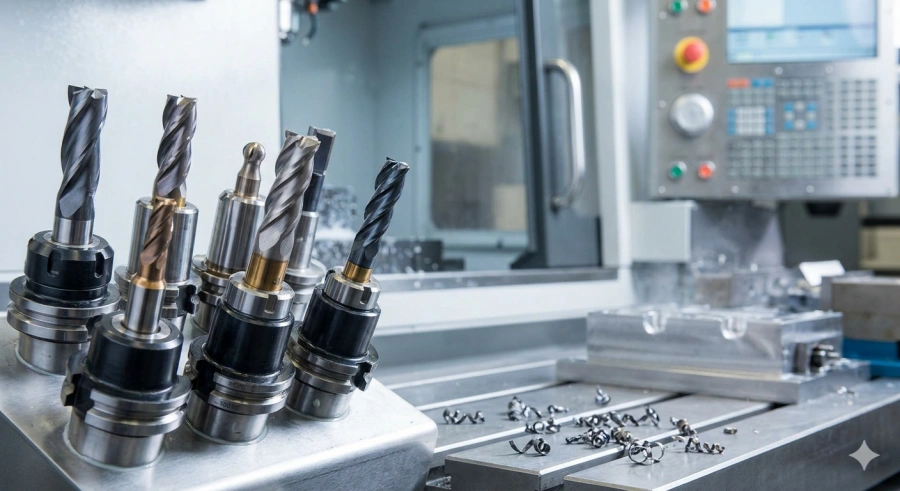
A carbide end mill cutter is a rotary cutting tool made mainly from carbide material, usually tungsten carbide. It is designed for CNC milling operations such as slotting, fresagem lateral, fresagem de bolso, contorno, e acabamento superficial.
Unlike simpler cutting tools, a carbide end mill cutter usually has cutting edges on the tip and along the sides. This allows it to remove material in different directions and handle a wide range of machining tasks.
Because carbide offers higher rigidity and better wear resistance than many traditional tool materials, carbide end mills are often preferred for higher-speed machining and more demanding cutting conditions.
For more practical applications, você também pode ler what is an end mill cutter used for.
Why Choose a Carbide End Mill Cutter?
Better Rigidity
Carbide tools are generally more rigid than HSS tools. Isso ajuda a melhorar a estabilidade do corte, especially in applications that require accuracy and repeatability.
Melhor resistência ao desgaste
Carbide end mills usually offer better wear resistance in demanding cutting conditions. Portanto, they are often selected for longer production runs and harder materials.
Higher Cutting Efficiency
Em muitas aplicações, carbide tools support higher cutting speeds and more stable machining performance, which can improve production efficiency.
Better Performance on Harder Materials
Carbide end mills are commonly used for steel, aço inoxidável, ferro fundido, and other materials that place higher demands on the tool.
More Stable Surface Quality
Because of their rigidity and cutting consistency, carbide tools are often better suited for applications where dimensional accuracy and surface finish are important.
Carbide End Mill vs HSS End Mill
| Recurso | Fresa de topo de metal duro | HSS End Mill |
|---|---|---|
| Rigidez | Mais alto | Mais baixo |
| Resistência ao desgaste | Melhorar | Mais limitado |
| Velocidade de corte | Usually higher | Usually lower |
| Heat Resistance | Better in demanding conditions | Mais limitado |
| Uso típico | CNC machining, aço, aço inoxidável, higher-speed work | General-purpose and lighter-duty machining |
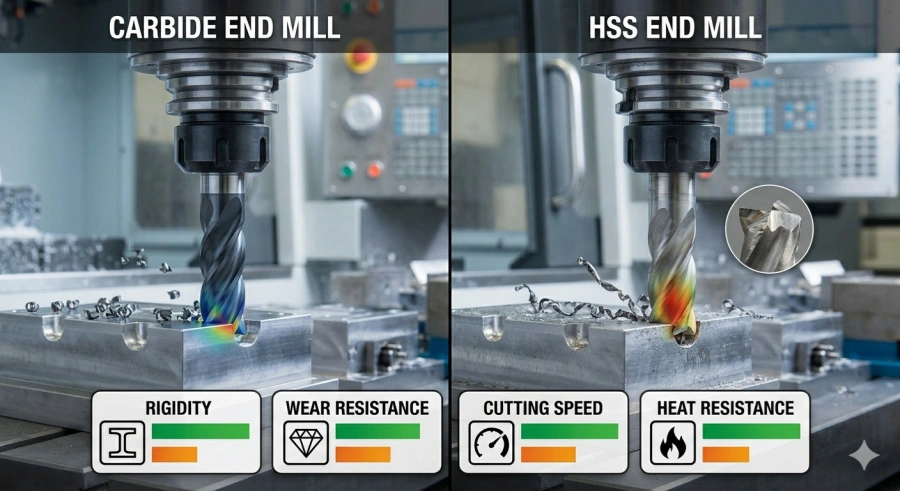
This comparison does not mean carbide is always the only option. No entanto, in many CNC machining applications, carbide is preferred when users need higher performance and more stable cutting results.
Common Applications of Carbide End Mill Cutters
Usinagem de alumínio
Carbide end mill cutters are widely used in aluminum machining because they can provide efficient cutting and clean chip evacuation when the correct geometry is selected.
Usinagem de Aço
Para aço carbono e aço liga, carbide end mills are often preferred because they offer better rigidity and wear resistance under stable cutting conditions.
Stainless Steel Machining
Stainless steel is more demanding because of heat generation and work hardening. Portanto, carbide tools are often selected for more stable and reliable cutting performance.
Mold and Die Work
Carbide end mills are commonly used in mold making and die production for contouring, usinagem de cavidade, e operações de acabamento.
Precision CNC Parts
They are also used in automotive components, peças aeroespaciais, electronics housings, and other precision machining applications where accuracy is important.
Se você quiser entender como o corte realmente acontece durante a usinagem, você também pode ler como funciona uma fresa de topo.
Which Materials Can Carbide End Mill Cutters Machine?
| Material da peça | Why Carbide Is Commonly Used |
|---|---|
| Alumínio | Good cutting efficiency and clean chip evacuation with the right geometry |
| Aço carbono | Melhor rigidez e resistência ao desgaste |
| Aço inoxidável | More stable cutting performance and better heat resistance |
| Ferro fundido | Good wear resistance in abrasive cutting conditions |
| Alloy Materials | Suitable for demanding machining tasks with the correct geometry and coating |
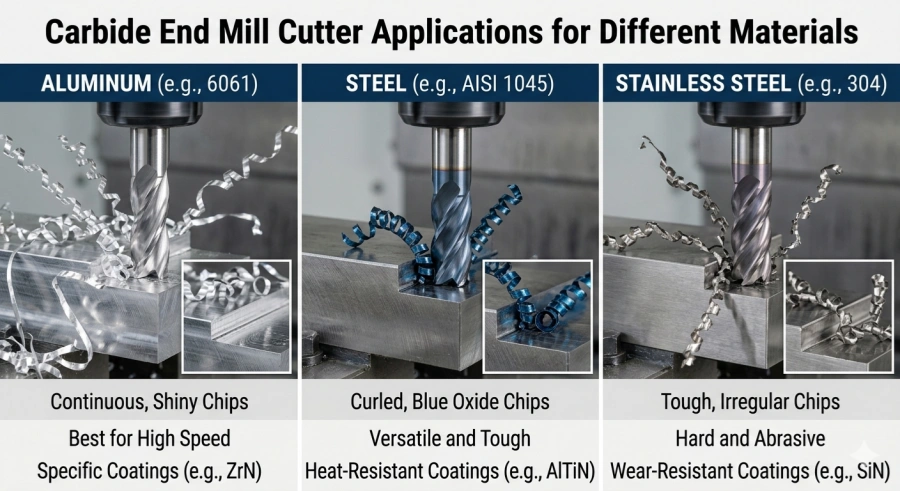
Although carbide tools are highly versatile, the best results still depend on matching flute count, geometria, revestimento, and cutting parameters to the actual material.
How to Choose the Right Carbide End Mill Cutter
1. Verifique o material da peça de trabalho
The first step is to confirm whether you are machining aluminum, aço, aço inoxidável, ferro fundido, or another material. Different materials require different cutter geometries and coatings.
2. Verifique a operação de usinagem
Entalhamento, fresagem lateral, fresagem de bolso, contorno, desbaste, and finishing often require different tool designs.
3. Check Flute Count
Flute count affects chip evacuation and rigidity. Em muitos casos, fewer flutes are preferred for aluminum, while more flutes are often used for steel and harder materials.
If you want a deeper comparison, ler 2 flauta vs. 4 moinho de extremidade de flauta.
4. Check Coating and Geometry
The right coating and tip geometry can improve wear resistance, controle de calor, and machining quality.
5. Verifique os requisitos padrão ou personalizados
Some projects can use standard carbide end mills, while others require custom diameter, comprimento da flauta, comprimento total, revestimento, or special geometry.
If you want to compare different geometries, você também pode ler types of end mill cutters.
For a detailed material-based selection guide, leia nosso how to choose a carbide end mill cutter guide.
Practical Buying Considerations for Carbide End Mill Cutters
Before placing an order, it is helpful to confirm these points:
- material da peça
- diâmetro do cortador
- contagem de flauta
- comprimento da flauta
- comprimento total
- coating type
- tolerance requirement
- roughing or finishing purpose
- OEM or custom tooling requirement
These details help ensure the selected carbide end mill cutter is suitable for the actual machining task.
If you need standard or OEM carbide tooling solutions, você também pode visitar nosso custom carbide end mill cutter product page.
Common Mistakes When Choosing a Carbide End Mill Cutter
Choosing by Material Name Only
Some buyers only check whether the tool is “carbide,” but ignore flute count, geometria, revestimento, and actual application.
Using One Tool for Every Material
A carbide end mill suitable for aluminum may not be the best option for stainless steel or harder materials.
Ignoring Cutting Parameters
Even a high-quality carbide tool may not perform well if speed, alimentar, and cutting depth are not matched correctly.
Focusing Only on Tool Life
Tool life is important, but machining quality, estabilidade, and application fit are equally important.
Overlooking Custom Requirements
In some machining projects, a standard tool is enough. Em outros, custom tooling is the better choice.
Perguntas frequentes
What is a carbide end mill cutter?
A carbide end mill cutter is a rotary cutting tool made mainly from carbide material. It is used for CNC milling operations such as slotting, fresagem lateral, contorno, fresagem de bolso, e acabamento superficial.
Para que são usadas as fresas de topo de metal duro?
Carbide end mills are used for machining aluminum, aço, aço inoxidável, ferro fundido, and other materials in CNC milling applications that require stability, precisão, and wear resistance.
What is the difference between carbide and HSS end mills?
Em geral, carbide end mills offer higher rigidity, melhor resistência ao desgaste, and higher cutting speed potential, while HSS tools are more commonly used for lighter-duty or general-purpose work.
Which materials can carbide end mill cutters machine?
They are commonly used for aluminum, aço carbono, liga de aço, aço inoxidável, ferro fundido, and other demanding machining materials.
How do I choose the right carbide end mill cutter?
You should consider the workpiece material, operação de usinagem, contagem de flauta, revestimento, geometria do cortador, e se são necessárias ferramentas padrão ou personalizadas.
Conclusão
A carbide end mill cutter is one of the most important tools in modern CNC machining because it combines rigidity, resistência ao desgaste, e desempenho de corte estável. It is widely used in aluminum machining, usinagem de aço, usinagem de aço inoxidável, fabricação de moldes, and many other precision applications.
To choose the right carbide end mill cutter, buyers should look beyond the material name alone. Geometria do cortador, contagem de flauta, revestimento, operação de usinagem, and actual workpiece material all need to be considered together.
When the right tool is selected for the right application, carbide end mills can help improve machining stability, qualidade da superfície, and overall production efficiency.
CTA
Looking for a reliable Cortador de moinho de fim de metal duro manufacturer for aluminum, aço, ou usinagem de aço inoxidável? Explore our carbide end mill cutter product page for standard sizes, custom drawings, OEM tooling support, and bulk production.