 Cortadores de fresagem de precisão,Ferramentas de corte para usinagem CNC de todos os materiais

Introdução
An end mill cutter is one of the most widely used cutting tools in CNC machining. It is designed for milling operations such as slotting, perfil, contorno, fresagem lateral, and finishing on different materials. Ao contrário de uma broca padrão, an end mill cutter can cut in multiple directions, which makes it more versatile for complex machining tasks.
Então, what is an end mill cutter used for exactly? Em termos simples, it is used to remove material accurately and efficiently when machining aluminum, aço, aço inoxidável, ferro fundido, plásticos, and other workpiece materials. The right tool geometry, contagem de flauta, and coating can make a big difference in machining performance and tool life.
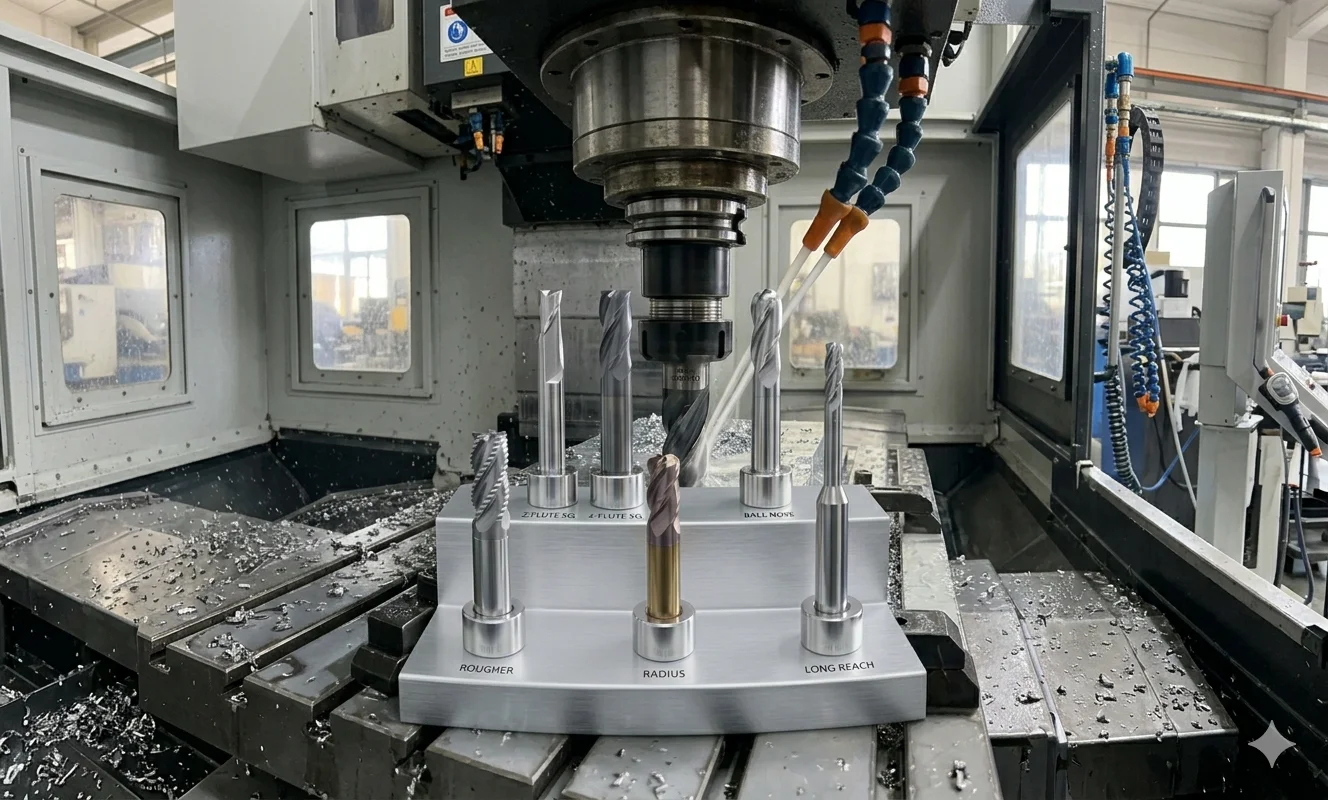
O que é uma fresa de topo?
Uma fresa de topo é uma ferramenta de corte rotativa usada em máquinas CNC e fresadoras. It has cutting edges on the end and along the sides, allowing it to cut both vertically and laterally. Por causa deste desenho, it can perform a wide range of milling tasks that require precision, flexibility, and repeatable accuracy.
End mill cutters are commonly made from high-speed steel or solid carbide, with carbide end mill cutters being the preferred choice for higher cutting speeds, melhor resistência ao desgaste, and longer service life in metalworking applications.
Se você é novo nesta ferramenta,you can also read our guide on o que é uma fresa de topo.
Main Uses of an End Mill Cutter
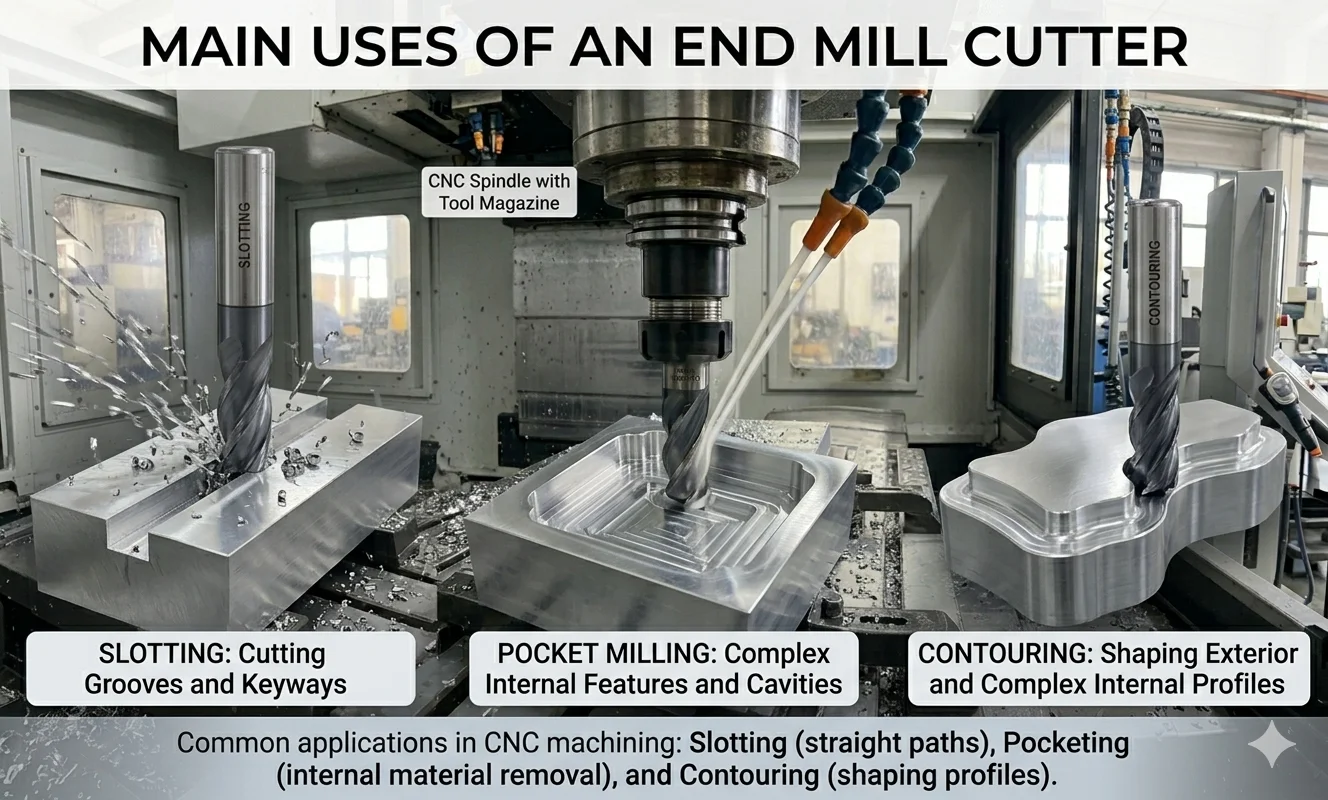
End mill cutters are used in many CNC machining operations. Below are the most common applications.
1. Fresamento de canais
One of the most common uses of an end mill cutter is slot milling. It is used to cut straight or curved slots into a workpiece with high accuracy. These slots may be used for keyways, ranhuras, trilhas guia, or assembly features in mechanical components.
For this type of operation, flute count and chip evacuation are especially important. Em muitos casos, 2 flute end mills are preferred for softer materials because they remove chips more easily.
2. Fresamento lateral
An end mill cutter is also widely used for side milling. In this process, the side cutting edges remove material from the vertical surface of a workpiece. This is useful when machining shoulders, passos, and side walls that require clean, accurate finishes.
Side milling is common in precision metal parts, moldes, tooling components, and general CNC production work.
3. Contouring and Profiling
For complex shapes and curved surfaces, end mill cutters are often used for contouring and profiling. These operations are important in mold making, die production, peças aeroespaciais, and custom-machined components.
Ball nose end mills and corner radius end mills are often selected for this kind of work because they can produce smoother transitions and better surface finishes on curved shapes.
For more geometry options, you can also read our guide on types of end mill cutters.
4. Fresamento de Bolso
End mill cutters are often used to machine pockets or recessed areas inside a workpiece. Pocket milling is common in components that need weight reduction, internal cavities, ou remoção precisa de material dentro de uma área limitada.
This operation requires stable cutting performance, good chip control, and the right tool path to maintain accuracy and surface quality.
5. Acabamento de Superfície
Another important use of an end mill cutter is finishing. Após a usinagem de desbaste remove a maior parte do material, a suitable end mill can be used to improve dimensional accuracy and surface smoothness.
Finishing tools are selected based on the required tolerance, material da peça, e qualidade final da superfície. Em muitos casos, coated carbide end mill cutters provide more stable finishing performance.
6. Fresamento escalonado e usinagem de cantos a 90 graus
End mill cutters are also used to machine stepped surfaces, ombros, e recursos de vários níveis. These operations are common in structural parts, jogos, componentes da máquina, and precision assemblies.
Because these features often require sharp transitions and dimensional accuracy, tool rigidity and geometry play an important role.
End Mill Cutter Uses for Different Materials
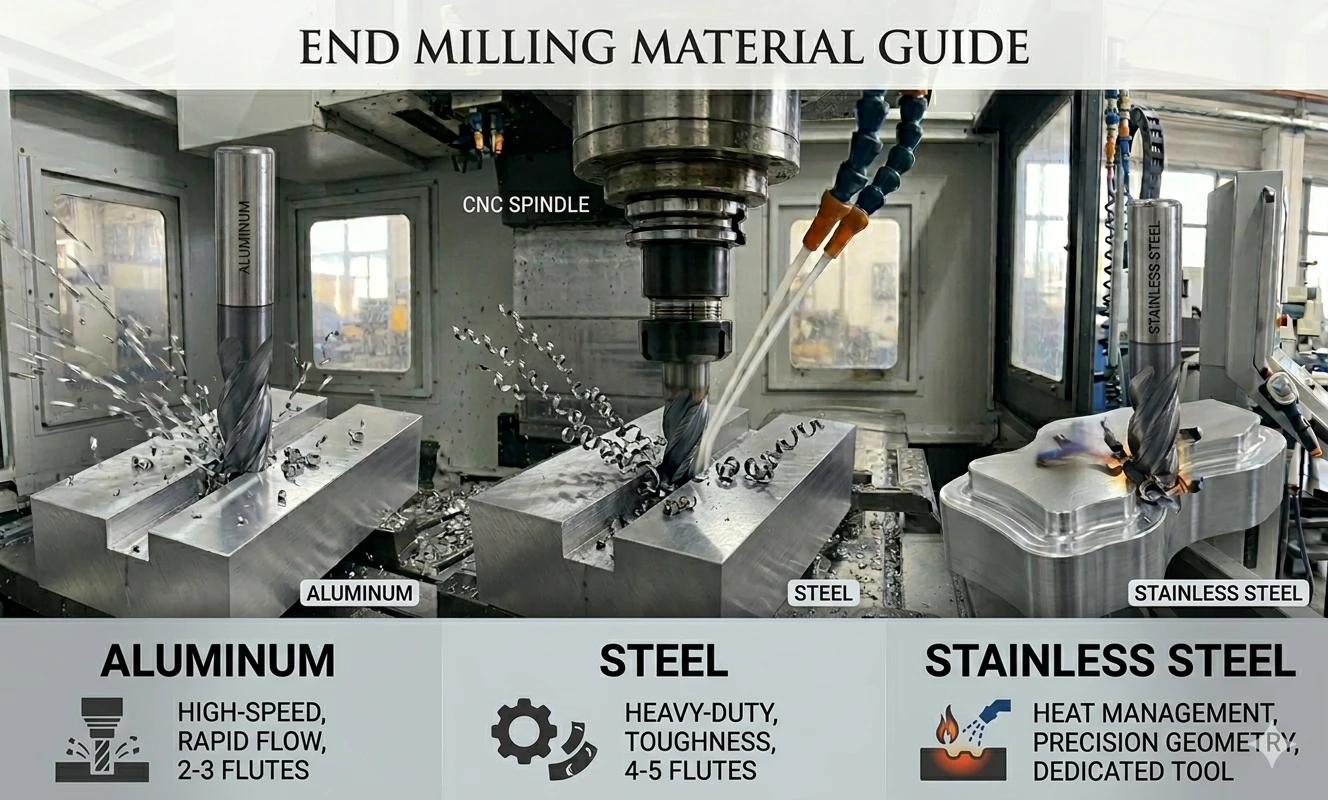
Different materials require different end mill cutter designs. Choosing the right cutter for the workpiece material helps improve cutting efficiency, reduzir o desgaste, and achieve better results.
Fresa de topo para alumínio
Ao usinar alumínio, end mill cutters are mainly used for slotting, fresagem de bolso, fresagem lateral, e acabamento. O alumínio produz cavacos maiores, portanto, ferramentas com menos canais e bom escoamento de cavacos são frequentemente preferidas.
High-helix carbide end mills are commonly used for aluminum because they help improve cutting smoothness and reduce chip buildup.
Fresa de topo para aço
Para aço carbono e aço liga, fresas de topo são frequentemente usadas para fresamento lateral, contorno, usinagem de ombro, e semi-acabamento. O aço geralmente requer melhor rigidez e maior resistência ao desgaste, so 4 flute carbide end mills are a common choice.
Coatings such as TiAlN or AlTiN are often used to improve performance and extend tool life in steel machining.
Fresa de topo para aço inoxidável
O aço inoxidável é mais difícil de usinar porque gera calor e tende a causar desgaste da ferramenta. Em aplicações de aço inoxidável, fresas de topo são comumente usadas para perfilar, acabamento, e fresamento lateral controlado.
O revestimento certo, geometria da flauta, and cutting parameters are important for maintaining cutting stability and reducing edge wear.
Why End Mill Cutters Are So Widely Used
End mill cutters are popular because they combine precision, flexibility, and efficiency in one tool category. They can perform different operations with high repeatability, which makes them suitable for both simple and complex machining tasks.
Compared with more limited cutting tools, end mill cutters allow manufacturers to machine slots, cáries, contornos, paredes laterais, and finished surfaces with fewer tool changes. Como resultado, they help improve productivity and machining consistency.
How to Choose the Right End Mill Cutter for the Job
The right end mill cutter depends on the application, material, e acabamento necessário. Em geral, os compradores devem considerar:
- Material da peça
- Contagem de flauta
- Diâmetro da ferramenta
- Tipo de revestimento
- Geometria da ferramenta
- Cutting depth and machining method
Por exemplo, 2 flute cutters are often used for aluminum, enquanto 4 flute cutters are more common for steel and general-purpose metal machining. Ball nose tools are suitable for curved surfaces, while flat end mills are better for slots and shoulders.
Instead of trying to use one cutter for every task, it is better to match the cutter design to the machining goal.
For a more detailed flute comparison, veja nosso guia em 2 flauta vs. 4 moinho de extremidade de flauta.
Why Carbide End Mill Cutters Are Often Preferred
Carbide end mill cutters are widely preferred in modern CNC machining because they offer higher hardness, melhor resistência ao desgaste, and more stable cutting performance than many standard tool materials.
For industrial buyers, carbide tools are especially attractive when machining steel, aço inoxidável, e outros materiais exigentes. They can support higher cutting speeds and provide longer tool life when the geometry and coating are selected correctly.
Por esta razão, many manufacturers, distribuidores, and machine shops choose carbide end mill cutters for production efficiency and consistent results.
Conclusão
Então, what is an end mill cutter used for? It is mainly used for CNC milling operations such as slotting, fresagem lateral, contorno, perfil, fresagem de bolso, and finishing across a wide range of materials. Its versatility makes it one of the most important cutting tools in precision machining.
No entanto, the best performance depends on selecting the right flute count, geometria, revestimento, and material for the job. Whether you are machining aluminum, aço, or stainless steel, choosing the correct end mill cutter can improve both machining efficiency and final part quality.
Looking for a carbide end mill cutter for steel, alumínio, or stainless steel?
Visite nosso Cortador de moinho de fim de metal duro página do produto or contact us for OEM and custom tooling solutions.