 Freze de precizie,Scule de tăiere pentru prelucrarea CNC a fiecărui material

Alegerea frezei corecte acoperite cu diamant este importantă atunci când prelucrați grafit, CFRP, GFRP, aluminiu cu conținut ridicat de siliciu, and other abrasive non-ferrous materials. These materials can wear cutting tools quickly. Prin urmare, coating quality, design flaut, edge strength, and cutting geometry all affect machining quality.
For buyers, engineers, and distributors, the goal is not only to find a tool with diamond coating. The real goal is to choose a cutter that matches the workpiece material, machining method, required surface finish, and production quantity.
If you need standard or custom tools for graphite and CFRP machining, you can check our freze de capăt acoperite cu diamant.
This guide explains how to choose a suitable tool for graphite electrodes, graphite molds, CFRP trimming, GFRP milling, and custom machining projects.
Why Tool Selection Matters for Abrasive Materials
Graphite and composite materials create different cutting problems from steel or stainless steel. Graphite is abrasive and dusty, so it can wear the cutting edge quickly. CFRP and GFRP contain fibers and resin, so they need clean cutting to reduce delamination, fuzzing, and edge damage.
For this reason, a general-purpose carbide end mill may not perform well in these applications. A diamond coated carbide end mill can improve wear resistance and maintain more stable cutting performance.
Cu toate acestea, not every diamond coated tool works the same way. The best choice depends on the workpiece, operation type, tool size, and cutting conditions.
Pas 1: Confirm the Workpiece Material
Before choosing a tool, first confirm the material you need to machine. Different materials need different tool features.
Graphite
Graphite machining needs strong wear resistance and stable tool diameter. This is especially important for graphite electrodes, fine details, sharp corners, and long cutting cycles.
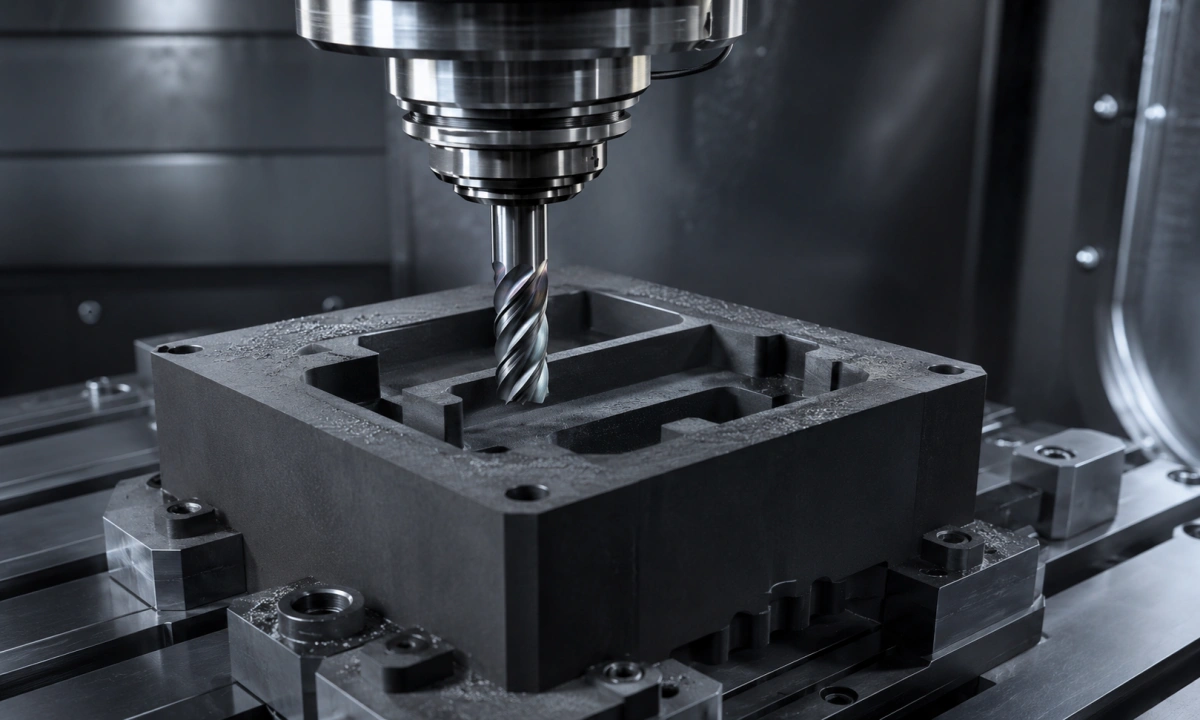
For graphite roughing, chip evacuation and tool strength matter more. For graphite finishing, edge sharpness, finisarea suprafeței, and dimensional stability become more important.
CFRP and GFRP
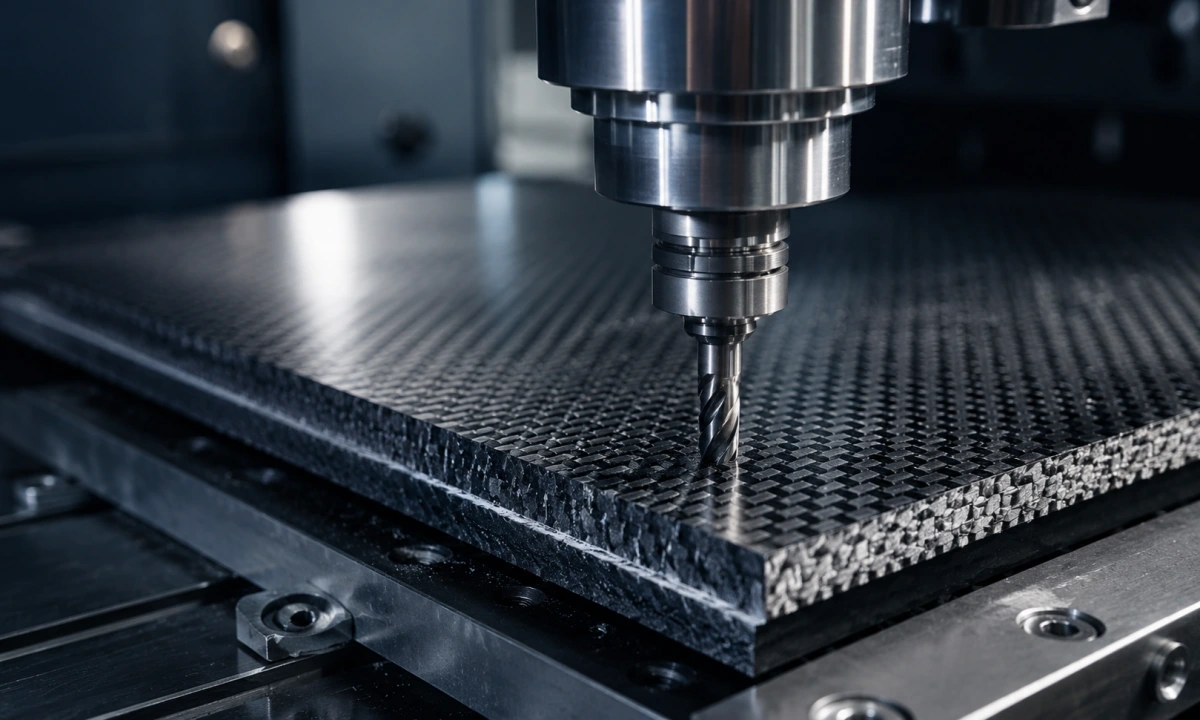
CFRP and GFRP need clean cutting performance. If the cutting edge becomes dull, the tool may pull fibers instead of cutting them. Ca urmare, the workpiece may show fuzzing, delamination, or rough edges.
For composite machining, flute design and cutting edge quality should match the cutting method.
High-Silicon Aluminum
High-silicon aluminum is more abrasive than common aluminum. Prin urmare, diamond coated tools may help improve tool life in this type of non-ferrous machining.
Pas 2: Match the Tool to the Machining Operation
The same cutter may not work equally well for roughing, finisare, trimming, sloting, and contour milling. You should choose the tool based on the actual operation.
| Machining Operation | Recommended Tool Focus | Why It Matters |
| Graphite roughing | Tool strength and chip space | Helps remove material more efficiently |
| Graphite finishing | Sharp edge and stable diameter | Supports surface quality and accuracy |
| Frezarea electrozilor de grafit | Wear resistance and repeatability | Helps maintain details during long machining cycles |
| CFRP trimming | Clean cutting edge | Helps reduce fiber pull-out and fuzzing |
| GFRP milling | Strong coating and stable geometry | Helps control wear in abrasive composites |
| High-silicon aluminum milling | Diamond coating and suitable flute design | Helps extend tool life in non-ferrous machining |
| Custom parts | Custom diameter, flute length, and end type | Matches drawings or special production needs |
Pas 3: Choose the Right Flute Design
Flute design affects chip evacuation, stabilitate de tăiere, and surface finish. Prin urmare, it is one of the most important factors in tool selection.
Lower Flute Counts
Lower flute counts usually provide more chip space. They may work better for roughing or applications where chip evacuation is important.
Higher Flute Counts
Higher flute counts may support smoother finishing in some applications. Cu toate acestea, the material, spindle speed, feed rate, and tool diameter should all match the flute design.
Custom Flute Geometry
For non-standard graphite parts or composite components, custom flute geometry may provide better results than standard tools. If you need non-standard diameters, flute lengths, or special geometry, you can review our custom end mills.
Pas 4: Select the End Type
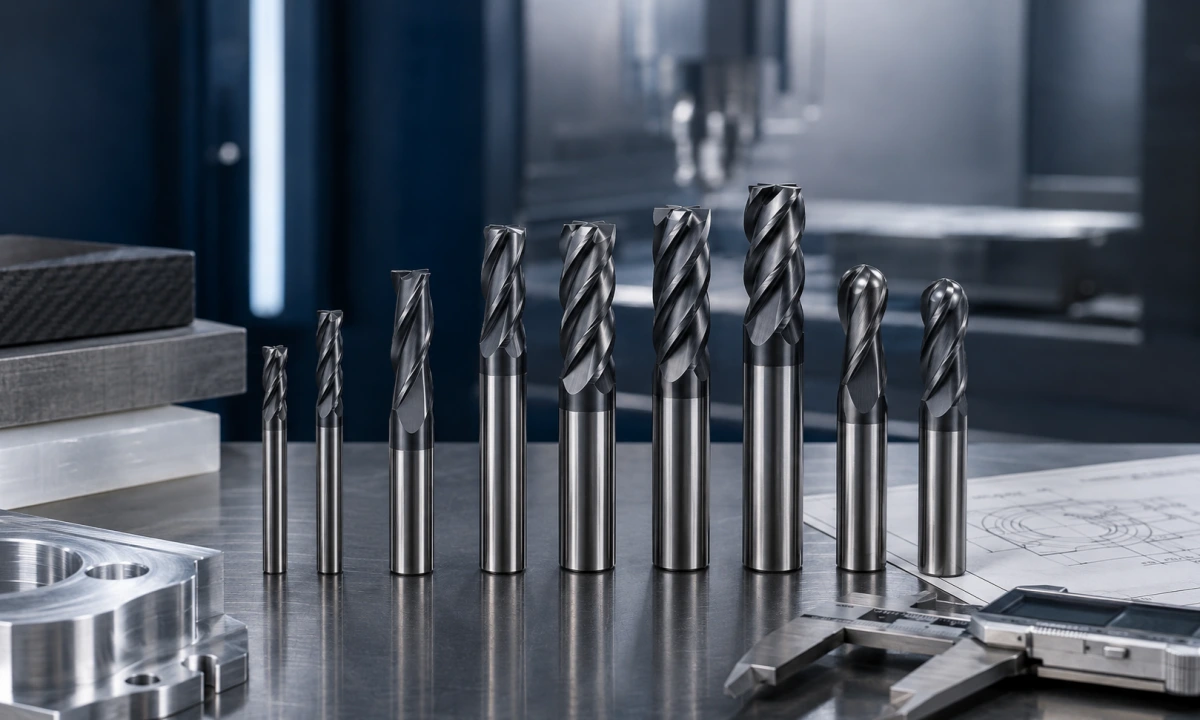
The end type should match the shape of the part and the machining purpose.
Square End
Square end tools work well for slots, flat surfaces, frezare laterală, and general graphite or composite machining.
Ball Nose
Ball nose tools are suitable for 3D contouring, suprafete curbate, and mold-related machining. They can help create smoother tool paths on complex shapes.
Corner Radius
Corner radius tools offer better edge strength than sharp square end tools. They may be useful when the application needs both tool strength and better surface quality.
Pas 5: Check Cutting Diameter and Tool Length
Tool size affects machining stability. A very long tool may vibrate more easily, while a very short tool may not reach the required cutting area.
When choosing the cutting diameter and length, consider these details:
| Tool Detail | What to Confirm |
| Cutting diameter | Match the slot, contour, or feature size |
| Flute length | Match the cutting depth |
| Lungime totală | Match the machine setup and workpiece height |
| Neck length | Support deep cavities or complex parts |
| Shank diameter | Match the tool holder and machine requirement |
If you are not sure which size to choose, send your drawing, sample photo, or machining details. A clear specification helps the supplier recommend a more suitable tool.
Pas 6: Understand the Role of Diamond Coating
Diamond coating helps improve wear resistance when machining abrasive materials. This is why many manufacturers choose diamond coated tools for graphite electrodes, CFRP trimming, GFRP milling, and high-wear non-ferrous applications.
Cu toate acestea, coating alone is not enough. The substrate, edge preparation, tool geometry, and coating quality should work together. A good tool should balance wear resistance, stabilitate de tăiere, and edge quality.
For a basic explanation of applications, you can also read our guide on what diamond coated end mills are used for.
Pas 7: Avoid Using the Wrong Tool for the Material
Diamond coated end mills mainly support graphite, CFRP, GFRP, aluminiu cu conținut ridicat de siliciu, and abrasive non-ferrous materials. They are usually not the best choice for steel or stainless steel.
For steel, oțel inoxidabil, and other ferrous materials, coated carbide end mills usually work better. You can compare our Freză din carbură options here:
This distinction is important because using the wrong tool can shorten tool life and reduce machining performance.
Pas 8: Decide Whether You Need Standard or Custom Tools
Standard tools can work for many common machining jobs. Cu toate acestea, custom tools may fit deep cavities, fine details, special edge requirements, or non-standard dimensions better.
You may need custom tools if your project requires:
- Special cutting diameter
- Longer flute length
- Longer overall length
- Special neck design
- Square end, nas de minge, or corner radius design
- Drawing-based tool production
- OEM or ODM requirements
For broader graphite milling applications, you can also review our diamond milling cutter for graphite machining.
What Information Should You Send for a Quotation?
To get an accurate quotation, send complete tool and machining information. This helps reduce misunderstandings and makes the recommendation more practical.
| Information Needed | Example |
| Workpiece material | Graphite, CFRP, GFRP, aluminiu cu conținut ridicat de siliciu |
| Machining operation | Aspre, finisare, trimming, sloting |
| Cutting diameter | Standard or custom size |
| Flute length | According to cutting depth |
| Lungime totală | According to machine setup |
| End type | Square end, nas de minge, raza colțului |
| Quantity | Trial order or batch order |
| Drawing or sample | Recommended for custom tools |
The more details you provide, the easier it is to select the right tool.
Common Mistakes When Choosing Diamond Coated End Mills
Choosing Only by Diameter
Diameter is important, but it is not enough. Flute design, cutting length, acoperire, end type, and machining method also affect performance.
Using the Same Tool for Roughing and Finishing
Roughing and finishing often need different tool designs. A roughing tool should focus on strength and material removal, while a finishing tool should focus on surface quality and accuracy.
Ignoring Workpiece Material
Graphite, CFRP, GFRP, and high-silicon aluminum do not behave the same way. Prin urmare, the tool should match the material instead of using one cutter for all applications.
Not Sending Drawings for Custom Tools
For custom tools, drawings or sample photos help confirm the correct geometry. Without these details, the quotation may not be accurate.
FAQ
How do I choose diamond coated end mills for graphite?
Start with the machining operation, cutting diameter, flute length, end type, and required surface finish. For graphite electrodes and molds, wear resistance and dimensional stability are especially important.
Are diamond coated end mills good for CFRP?
Da. They can support CFRP trimming and milling because the coating helps improve wear resistance. A suitable edge design can also help reduce fuzzing and delamination.
Can I use diamond coated end mills for steel?
We do not recommend them for steel or stainless steel. For ferrous materials, carbide end mills with suitable coatings usually work better.
Should I choose square end, nas de minge, or corner radius?
Choose square end for slots and flat surfaces, ball nose for 3D contouring, and corner radius for better edge strength. The best option depends on the part shape and machining method.
Can OMIST make custom diamond coated end mills?
Da. OMIST supports standard and custom tools according to drawings, samples, or detailed requirements. Custom diameter, flute length, overall length, numărul flautului, and end type can be discussed.
Concluzie
Choosing diamond coated end mills requires more than selecting a diameter from a catalog. You need to consider the workpiece material, machining operation, acoperire, design flaut, end type, and tool length.
For graphite electrodes, graphite molds, CFRP trimming, GFRP milling, and high-silicon aluminum machining, the right tool can help improve wear resistance, stabilitate de tăiere, and machining consistency.
With 16 years of cutting tool manufacturing experience, OMIST can help customers review material, tool size, and machining requirements before production.
Get Support for Diamond Coated End Mills
If you need reliable freze de capăt acoperite cu diamant for graphite, CFRP, GFRP, or high-silicon aluminum machining, please send us your tool size, drawing, material, and quantity.
We can help you confirm whether a standard tool or a custom tool is more suitable for your project.