 Прецизионные фрезы,Режущие инструменты для обработки любого материала с ЧПУ

Конические концевые фрезы — это фрезерные инструменты с ЧПУ, используемые для обработки углов уклона., конические боковины, полости плесени, глубокие профили, узкие канавки, и детализированные механические характеристики. В отличие от стандартной фрезы с прямым концом, диаметр резания постепенно увеличивается от кончика к хвостовику.
Как результат, инструмент может следовать по наклонным поверхностям, обеспечивая при этом большую поддержку небольшого режущего кончика. Однако, выбор правильной фрезы по-прежнему зависит от угла конуса, диаметр наконечника, конечная геометрия, материал заготовки, глубина резания, и состояние машины.
В этом руководстве объясняется, для чего используются конические концевые фрезы., как работают разные типы, и как выбрать подходящий инструмент для изготовления форм, гравировка, профильное фрезерование, и другие приложения ЧПУ.
Что такое коническая концевая фреза?
Коническая концевая фреза — это фреза с режущей частью, которая постепенно увеличивается от кончика к хвостовику.. Инструмент может иметь плоский конец, сферический нос, угловой радиус, или индивидуальный профиль резки.
Производители часто используют эти инструменты, когда деталь имеет наклонные стенки., углы уклона, конические канавки, глубокие полости, или мелкие детали, которые невозможно эффективно обработать прямой фрезой..
К основным размерам обычно относятся:
| Функция инструмента | Описание |
| Угол конуса | Угол, образованный конической режущей частью |
| Диаметр наконечника | Наименьший диаметр резания вблизи кончика инструмента |
| Максимальный диаметр фрезы | Наибольший диаметр режущей части |
| Длина канавки | Длина режущих кромок |
| Габаритная длина | Полная длина инструмента от кончика до конца хвостовика |
| Диаметр хвостовика | Диаметр, удерживаемый держателем инструмента |
| Конечная геометрия | Плоский конец, сферический нос, конец радиуса, или индивидуальная форма |
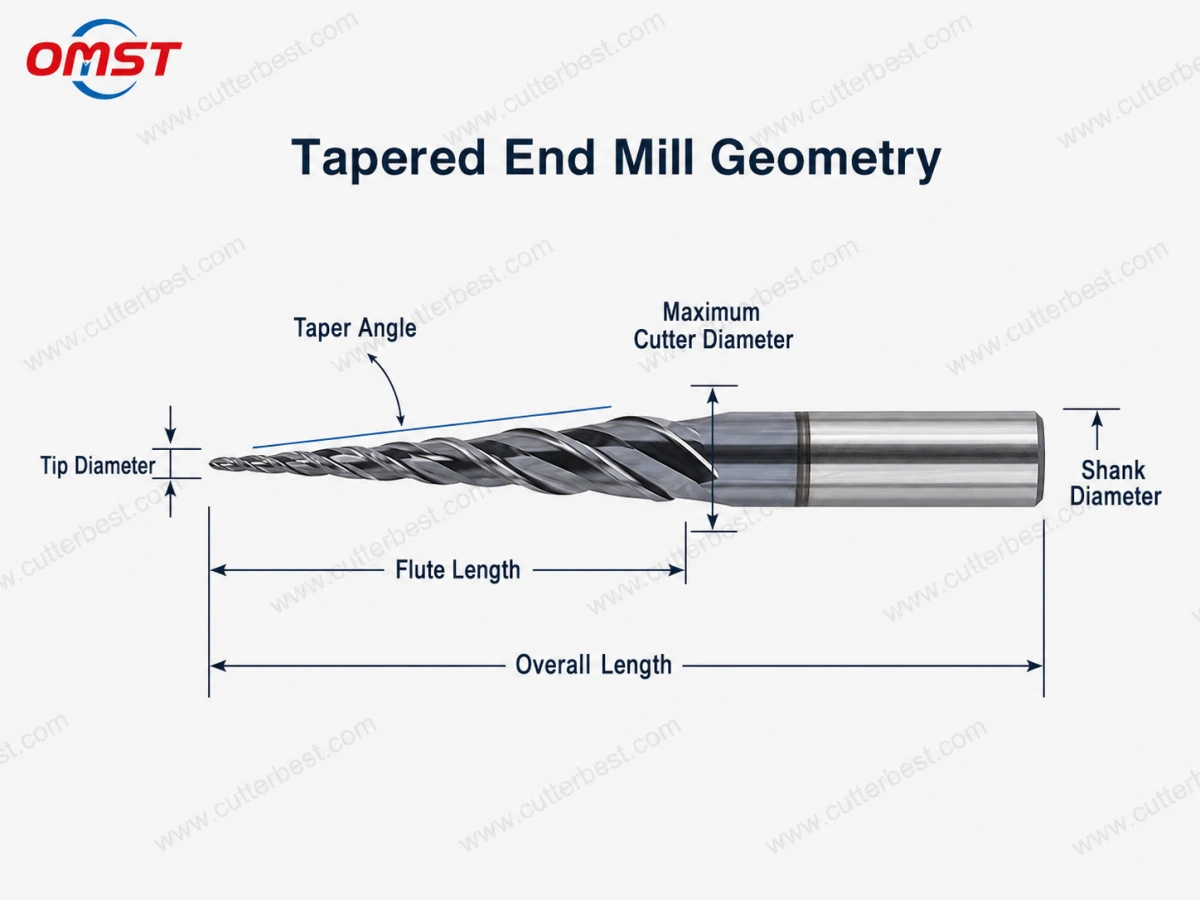
Прежде чем заказать резак, убедитесь, что на чертеже показан односторонний угол конуса или общий угол. В противном случае, готовый профиль может не соответствовать дизайну детали.
Для чего используются конические концевые фрезы?
Конические концевые фрезы используются для операций с ЧПУ, требующих наклонных поверхностей., постепенное изменение профилей стен, небольшие советы по обрезке, или улучшенная поддержка при обработке с большим вылетом.
Их наиболее распространенное применение включает изготовление пресс-форм., угловое фрезерование, резка конических канавок, глубокая обработка полостей, 3D контуринг, гравировка, и изготовление профилей по индивидуальному заказу.
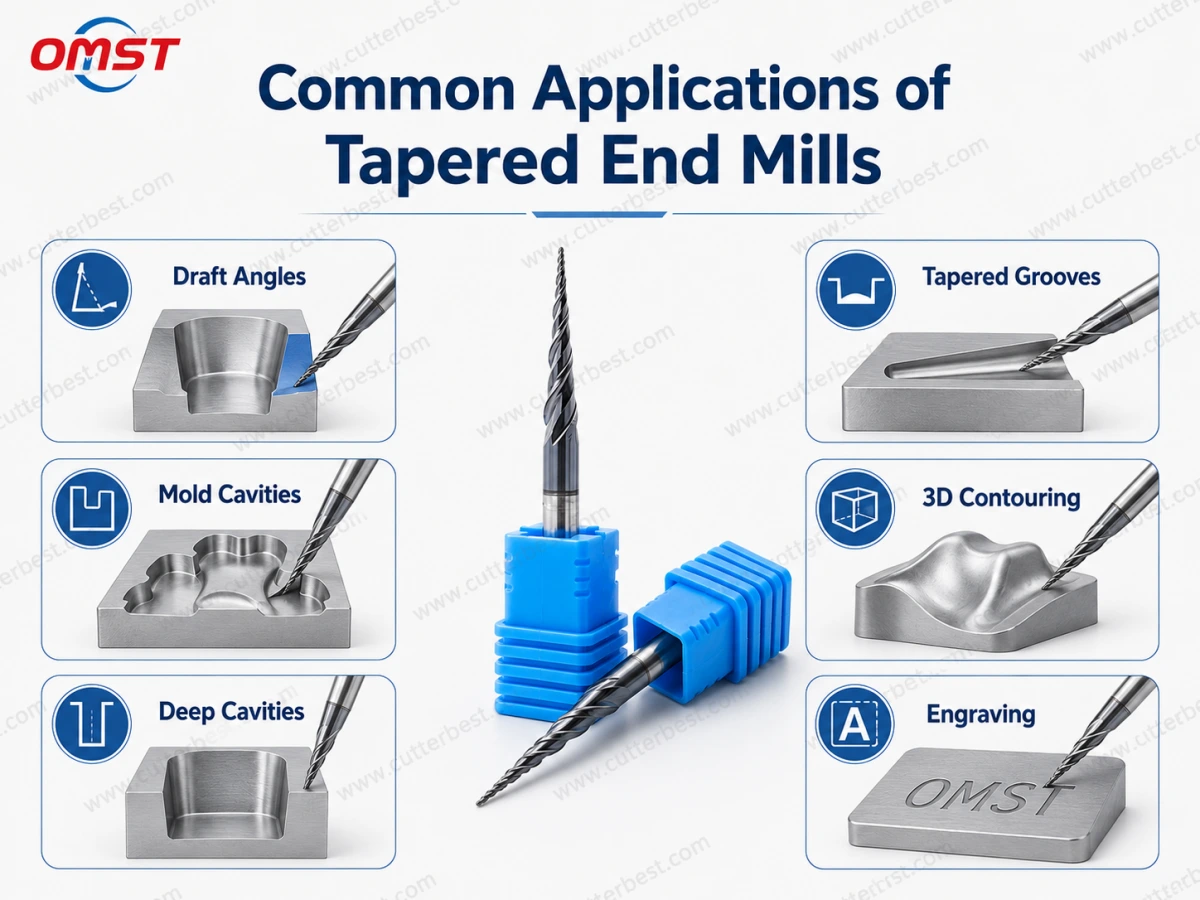
Обработка углов уклона и конических боковых стенок
Много форм, умирает, и обработанные детали включают углы уклона. Эти углы помогают легче отделять формованные детали и позволяют дизайнерам создавать невертикальные стены..
Коническая концевая фреза может обрабатывать необходимый угол непосредственно, когда геометрия фрезы соответствует чертежу.. Поэтому, инструмент часто используется для:
- Черновые стены из плесени
- Конические карманы
- Угловые боковины
- Наклонные профили
- Непараллельные поверхности
Однако, угол резца должен быть тщательно подтвержден. Даже небольшая разница между углом инструмента и чертежом может повлиять на окончательную геометрию стены..
Обработка полостей пресс-форм и штампов
Полости пресс-формы часто содержат глубокие участки., угловые стены, изогнутые поверхности, и подробные переходы. Стандартная концевая фреза может не обеспечить эффективное выполнение этих функций., особенно когда полость становится узкой у дна.
Коническая фреза может иметь небольшой режущий кончик, сохраняя при этом большее поперечное сечение ближе к хвостовику.. Следовательно, он может обеспечить лучшую жесткость, чем прямой инструмент с таким же диаметром наконечника и вылетом.
Общие применения пресс-форм и штампов включают в себя:
- Полости пресс-форм для литья под давлением
- Формы для литья под давлением
- Формовочные штампы
- Электродная обработка
- Черновая отделка стен
- Подробные профили полости
Для изогнутых полостей и 3D-поверхностей, часто выбирается коническая конструкция со сферическим носом.
Обработка глубоких полостей и больших вылетов
Глубокие полости требуют дополнительного доступа инструмента.. Тем не менее, Увеличение длины инструмента также может увеличить вибрацию и отклонение..
Потому что конический инструмент становится толще по направлению к хвостовику., он может обеспечить большую поддержку за зоной резки. Такая геометрия может улучшить стабильность во время легких операций профилирования и чистовой обработки..
Фактическая производительность по-прежнему зависит от:
- Диаметр наконечника
- Угол конуса
- Длина канавки
- Вылет инструмента
- Биение держателя инструмента
- Жесткость машины
- Материал заготовки
- Параметры резки
Коническая конструкция не заменяет правильную настройку обработки.. Поэтому, по возможности используйте инструмент минимальной практической длины.
Конические канавки и специальные профили
Конические канавки имеют непараллельные стенки., поэтому их не всегда можно изготовить с помощью стандартной прямой концевой фрезы за одну операцию..
Коническую фрезу можно использовать для:
- Конические пазы
- Угловые канавки
- V-образные профили
- Специальные возможности формы
- Пользовательские компоненты ЧПУ
- Нестандартные детали машины
Когда канавка имеет особый угол или профиль, специальный инструмент может уменьшить количество этапов обработки.
3D Контурные и изогнутые поверхности
Коническая концевая фреза со сферическим концом сочетает в себе коническую режущую часть с закругленным кончиком.. Этот инструмент подходит для изогнутых поверхностей., 3D-контуры, и отделка пресс-формы.
Типичные области применения включают в себя:
- Отделка полости формы
- Изогнутые поверхности компонентов
- 3Фрезерование профиля D
- Сложные формы штампов
- Переходные поверхности
- Скульптурные детали
Радиус шара, угол конусности, и траектория инструмента должны работать вместе. Кроме того, небольшой шаг обычно требуется, когда требуется более качественная обработка поверхности.
Для изогнутых поверхностей и 3D-профилей, требующих конической геометрии., см. наш коническая концевая фреза со сферическим концом.
Гравировка и обработка мелких деталей
Концевые фрезы с микроконусом часто используются для обработки мелких деталей., узкие черты, тонкая гравировка, и миниатюрные компоненты пресс-форм.
Маленький наконечник может попасть в труднодоступные места.. Тем временем, конический корпус поддерживает инструмент за режущей кромкой.
Эти инструменты могут быть использованы для:
- Тонкие надписи
- Мелкие детали формы
- Узкие каналы
- Декоративные профили
- Точная гравировка
- Миниатюрные компоненты
Однако, микрофрезы чувствительны к биению и чрезмерной нагрузке при резании. Поэтому, инструмент холдинг, состояние шпинделя, и параметры резки должны быть тщательно проверены.
Распространенные области применения конических концевых фрез
В следующей таблице приведены некоторые распространенные варианты использования.:
| Приложение | Подходящий тип фрезы | Основная точка выбора |
| Обработка под углом уклона | Коническая плоская концевая фреза | Сопоставьте угол конуса с чертежом. |
| Отделка полости формы | Коническая сферическая концевая фреза | Подтвердить радиус, достигать, и требования к поверхности |
| Фрезерование конических канавок | Плоский или нестандартный конический нож | Проверьте ширину паза и угол стенки. |
| Профилирование глубоких полостей | Жесткая твердосплавная коническая концевая фреза | Минимизируйте вылет и контролируйте нагрузку при резке. |
| Тонкая гравировка | Микроконическая концевая фреза | Контролируйте биение и диаметр наконечника |
| Изогнутые 3D поверхности | Коническая сферическая фреза | Выберите подходящий радиус и перешагните |
| Пользовательские профили | Конический резак индивидуальной формы | Предоставьте полный чертеж и информацию о материале. |
Зачем использовать коническую концевую фрезу?
Коническая концевая фреза не требуется для каждой операции фрезерования.. Однако, он дает несколько практических преимуществ, когда заготовка содержит наклонные или труднодоступные элементы.
Повышенная жесткость при работе на больших расстояниях
Небольшая фреза с прямым концом и большой длиной резания может прогибаться под давлением резания.. Для сравнения, у конического инструмента за маленьким кончиком больше материала.
Как результат, увеличение поперечного сечения может помочь улучшить жесткость во время соответствующих операций чистовой обработки и профильного фрезерования..
Все еще, жесткость зависит от комплектации. Диаметр инструмента, марка твердого сплава, состояние держателя, глубина резания, и устойчивость машины также необходимо учитывать.
Улучшенный доступ к угловым и узким местам
Маленький наконечник может проникать в узкие места., в то время как конические режущие кромки следуют за наклонной стенкой. Поэтому, одна фреза может достигать элементов, которые в противном случае потребовали бы нескольких операций или специальных траекторий инструмента..
Это особенно полезно в полостях плесени., подробные детали, и конические канавки.
Прямая обработка необходимого угла стенки
Когда угол резца соответствует конструкции детали, коническая режущая кромка позволяет напрямую обрабатывать весь угол стенки.
Это может упростить траекторию инструмента и улучшить согласованность профиля.. Однако, угол необходимо проверить перед производством, поскольку в чертежах могут использоваться разные определения угла..
Стабильная обработка конических профилей
Подходящий конический инструмент может обеспечить стабильный контакт по наклонному профилю.. Кроме того, Правильная конструкция и покрытие канавок могут улучшить эвакуацию стружки и повысить износостойкость..
Для лучшего результата, параметры резки должны быть подтверждены посредством контролируемого тестового разреза перед началом серийного производства..
Распространенные типы конических концевых фрез
Для разных характеристик заготовки выбираются разные геометрии концов..
Конические фрезы с плоским концом
Коническая плоская концевая фреза имеет плоскую режущую кромку.. Он обычно используется для:
- Конические канавки с плоским дном
- Угловые боковины
- Черновые профили
- Особенности пресс-формы
- Конические пазы
Эта конструкция подходит, когда нижняя поверхность должна оставаться относительно ровной..
Для этой конической геометрии с плоским концом, см. наш коническая квадратная концевая фреза.
Конические сферические концевые фрезы
Коническая концевая фреза со сферическим концом имеет закругленную режущую кромку.. В основном он используется для:
- Изогнутые поверхности
- 3D-контуры
- Полости пресс-форм
- Сложные профили
- Отделка поверхности
Потому что кончик закруглен, инструмент может двигаться по изогнутым траекториям более плавно, чем фреза с плоским концом.
Концевые фрезы с коническим радиусом
Концевая фреза с коническим радиусом включает угловой радиус между нижней частью инструмента и боковыми режущими кромками..
Радиус может усилить режущий угол и обеспечить плавный переход между нижней частью и боковой стенкой.. Поэтому, этот тип можно использовать для получистовой обработки, профили пресс-форм, и скругленные элементы.
Для конической режущей геометрии с плоским концом и переходом R., см. наш концевая фреза с коническим угловым радиусом.
Микроконические концевые фрезы
Микроконические фрезы имеют очень маленький диаметр кончика.. Они используются для детальных профилей., узкие черты, гравировка, и миниатюрные полости.
Так как наконечник маленький, контроль биения имеет решающее значение. Даже ограниченное биение может увеличить неравномерность режущих нагрузок и сократить срок службы инструмента..
Конические фрезы индивидуальной формы
Для некоторых компонентов требуется нестандартный угол конуса., диаметр наконечника, длина канавки, или профиль резки. В этих случаях, производитель может изготовить нестандартную фрезу по чертежу.
Cutterbest может рассмотреть стандартные и нестандартные требования к коническим фрезам.. Посмотреть наши изготовленный на заказ конический резак страница продукта с доступной геометрией, покрытие, и варианты OEM.
Коническая концевая фреза против прямой концевой фрезы
Конические и прямые концевые фрезы используются для различных требований обработки.. Фреза с прямым концом поддерживает постоянный диаметр резания., в то время как коническая фреза постепенно увеличивается в диаметре по направлению к хвостовику.
| Точка выбора | Коническая концевая фреза | Прямая концевая фреза |
| Геометрия резки | Коническая режущая часть | Постоянный диаметр резания |
| Основное приложение | Углы уклона, конические стены, и специальные профили | Прямые стены, карманы, и слоты |
| Глубокий охват | Увеличение сечения может улучшить жесткость. | Жесткость сильно зависит от диаметра и вылета. |
| Обработка пресс-форм | Подходит для черновых стен и специальных полостей. | Подходит для обычных карманов и вертикальных стен. |
| Конечные варианты | Плоский конец, сферический нос, радиус, или на заказ | Плоский конец, сферический нос, радиус, и другие стандартные типы |
| Основные размеры | Угол конуса, диаметр наконечника, и достичь | Диаметр фрезы и длина резания |
| Настройка | Часто настраиваются под угол и профиль. | Часто выбираются из стандартных диаметров и длин. |
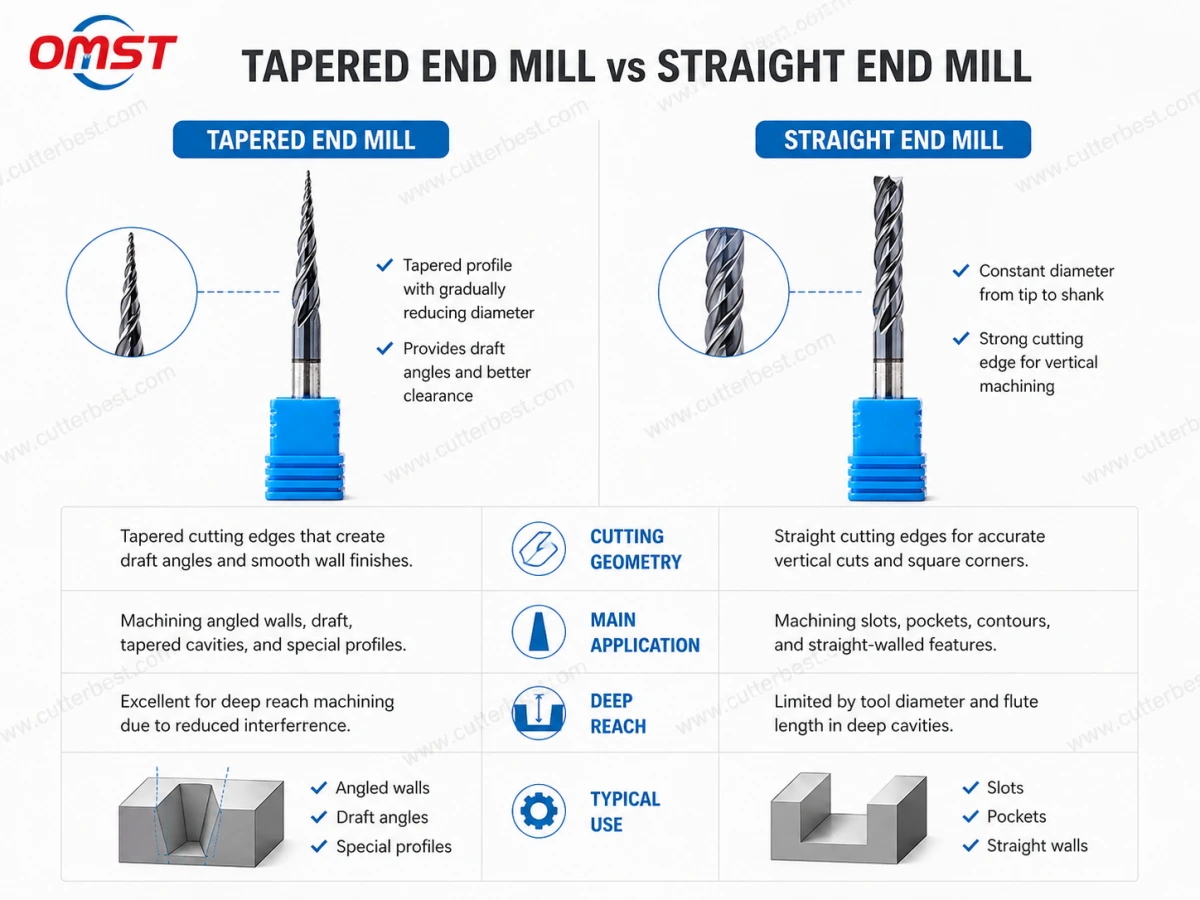
Конический инструмент обычно предпочтительнее, когда угол стенки является частью конструкции компонента.. В отличие, для обычных пазов обычно выбирается прямая концевая фреза, карманы, вертикальные боковины, и стандартное профильное фрезерование.
Как выбрать коническую концевую фрезу
Выбрать фрезу только по диаметру вершины недостаточно.. Полная геометрия и условия обработки должны быть проверены..
Подтвердите необходимый угол конуса
Первый, проверьте чертеж и подтвердите, как указан угол.
На некоторых рисунках показан угол на одной стороне инструмента.. Другие показывают полный включенный угол.. Поэтому, эта деталь должна быть подтверждена перед производством.
Также проверьте, требует ли последняя стена:
- Постоянное сужение
- Угол уклона
- Изогнутый переход
- Специальный профиль
- Допуск на угол стены
Выберите наконечник и максимальный диаметр фрезы
Диаметр вершины влияет на наименьшую деталь, которую может обработать инструмент..
Меньший наконечник может внести мелкие детали. Однако, он также более чувствителен к вибрации, закончиться, и чрезмерная режущая нагрузка.
Максимальный диаметр фрезы также должен соответствовать отверстию полости и геометрии детали..
Выберите правильную конечную геометрию
Форма заготовки определяет, будет ли плоский конец, сферический нос, конец радиуса, или требуется специальный профиль.
| Особенность заготовки | Рекомендуемая конечная геометрия |
| Конический слот с плоским дном | Конический плоский конец |
| Изогнутая полость формы | Конический сферический носик |
| Скругленный переход | Конический радиусный конец |
| Тонкая гравировка | Микроконический резак |
| Нестандартная форма | Резак по индивидуальному заказу |
Проверьте длину канавки и досягаемость инструмента.
Используйте самую короткую длину канавки и общую длину, при которой можно безопасно достичь зоны обработки..
Более длинный инструмент увеличивает доступ. Однако, это также может увеличить вибрацию и отклонение. Поэтому, следует избегать ненужного расширения инструмента.
Державка также должна захватывать как можно большую часть хвостовика, не касаясь заготовки..
Сопоставьте дизайн канавки с материалом заготовки
Разные материалы требуют разной конструкции режущей кромки и канавок..
Например, алюминий обычно требует острых кромок и достаточного пространства для стружки. Напротив, обработка стали часто требует более прочных режущих кромок и соответствующей износостойкости..
| Материал заготовки | Общие соображения при выборе |
| Алюминий и цветные металлы | Острые края, полированные флейты, и хорошая эвакуация стружки |
| Углеродистая сталь | Подходящая марка твердого сплава и износостойкое покрытие. |
| Нержавеющая сталь | Четкая геометрия, стабильный холдинг, и термостойкое покрытие |
| Пресс-форма стальная | Хорошая жесткость, контролируемый охват, и подходящее покрытие |
| Чугун | Износостойкая геометрия и стабильные условия резания |
| Закаленная сталь | Установка высокой жесткости, подходящая марка твердого сплава, и контролируемые параметры |
Эти рекомендации являются общими. Точный инструмент следует выбирать в зависимости от твердости материала., состояние машины, охлаждающая жидкость, и операция резки.
Выберите марку твердого сплава и покрытие
Покрытие должно соответствовать заготовке и условиям резания..
Общие варианты включают в себя:
- Твердый сплав без покрытия для острой резки и обработки некоторых цветных металлов.
- TiAlN или AlTiN для подходящей стали и высокотемпературных операций.
- TiSiN для избранных применений твердых материалов
- DLC для алюминия и других цветных металлов
- Полированные канавки для улучшения отвода стружки
Однако, ни одно покрытие не идеально подходит для каждой работы. Прежде чем выбрать один, учитывайте скорость резки, охлаждающая жидкость, твердость заготовки, диаметр инструмента, и время обработки.
Проверьте жесткость станка и крепление инструмента
Даже правильный резак может работать плохо, если станок или держатель неустойчивы..
Проверять:
- Состояние шпинделя
- Биение держателя инструмента
- Расширение инструмента
- Зажим заготовки
- Подача охлаждающей жидкости или воздуха
- Скорость подачи
- Скорость шпинделя
- Осевая и радиальная глубина резания
Для микроинструментов, Биение должно контролироваться настолько тщательно, насколько это позволяет оборудование..
Как более эффективно использовать конические концевые фрезы
Правильная работа особенно важна, когда фреза имеет небольшой кончик или увеличенный радиус действия..
Минимизация биения инструмента
Из-за биения одна режущая кромка снимает больше материала, чем другие.. Следовательно, нагрузка становится неравномерной, а маленький наконечник может рано изнашиваться или ломаться.
Используйте чистую, точный держатель и регулярно проверяйте шпиндель и цангу.
Используйте самое короткое практическое расширение инструмента
Чрезмерный вылет снижает жесткость. Поэтому, монтируйте инструмент с самым коротким удлинителем, обеспечивающим безопасный доступ к заготовке.
Однако, убедитесь, что держатель не касается детали или приспособления.
Избегайте чрезмерных режущих нагрузок
Не применяйте параметры резания, основанные только на диаметре хвостовика.. Также необходимо учитывать небольшой кончик и местный диаметр резания..
При обработке нового материала или профиля начните с консервативных параметров.. Затем, отрегулируйте процесс после проверки звука резки, образование стружки, износ инструмента, и качество поверхности.
Поддерживайте эффективную эвакуацию стружки
Стружка может собираться в глубоких полостях.. Если их перерезать, качество поверхности может ухудшиться, а нагрев при резке может увеличиться.
Воздух, охлаждающая жидкость, или другой подходящий метод удаления стружки, если это практически возможно, должен быть направлен в сторону зоны резания..
Осмотрите инструмент и готовую поверхность.
Регулярный осмотр позволяет выявить проблемы до того, как произойдет поломка инструмента..
Искать:
- Износ кромок
- Чипирование
- Наращиваемый материал
- Неравномерный износ флейты
- Следы вибрации
- Плохое качество поверхности
- Изменения профиля или размеров
Если эти признаки появляются, просмотреть биение, расширение инструмента, режущая нагрузка, покрытие, и эвакуация стружки.
Какая информация необходима для индивидуальной конической концевой фрезы?
Прежде чем заказывать специальный инструмент, предоставьте основные сведения об обработке.:
- Материал заготовки и твердость
- Угол конусности и определение угла
- Диаметр наконечника и максимальный диаметр фрезы
- Длина канавки, общая длина, и диаметр хвостовика
- Требование к торцевой геометрии и покрытию
- Рисование, количество, и применение механической обработки
Для нестандартной геометрии фрезы, просмотреть наш изготовленный на заказ конический резак страница продукта:
Для других нестандартных режущих инструментов, просмотреть наш пользовательские концевые фрезы.
Часто задаваемые вопросы
Для чего используется коническая концевая фреза?
Коническая концевая фреза используется для обработки углов уклона., конические стены, глубокие полости формы, узкие канавки, 3D-контуры, детали гравировки, и нестандартные профили.
Точное применение зависит от угла конуса., диаметр наконечника, конечная геометрия, длина резки, и материал заготовки.
Конические концевые фрезы прочнее, чем прямые концевые фрезы?
Коническая режущая часть содержит больше материала за маленьким кончиком.. Поэтому, он может обеспечить лучшую жесткость, чем прямой инструмент с таким же диаметром наконечника и вылетом.
Однако, фактическая прочность по-прежнему зависит от марки твердого сплава, длина инструмента, размер наконечника, биение держателя, параметры резки, и материал заготовки.
В чем разница между конической плоской концевой фрезой и конической сферической концевой фрезой?
Машинисты используют коническую плоскую концевую фрезу для обработки деталей с плоским дном., конические канавки, и скошенные боковины.
Коническая сферическая концевая фреза имеет закругленный кончик и больше подходит для изогнутых поверхностей., полости плесени, 3D-контуры, и отделочные операции.
Конические концевые фрезы из закаленной стали?
Конические концевые фрезы могут обрабатывать закаленную сталь, когда марка твердого сплава, покрытие, геометрия инструмента, жесткость машины, и параметры резки подходят.
До производства, подтвердить твердость материала и выполнить контролируемый пробный рез.
Как указывается угол конуса?
На чертеже конус может быть указан либо как односторонний угол, либо как общий прилежащий угол.. Поскольку стандарты чертежей и описания клиентов могут отличаться, подтвердите определение угла перед изготовлением инструмента.
Можете ли вы настроить конические концевые фрезы??
Да. Мы можем настроить угол конуса, диаметр наконечника, максимальный диаметр резания, конечная геометрия, длина канавки, общая длина, диаметр хвостовика, марка твердого сплава, покрытие, лазерная маркировка, и упаковка согласно заявке.
Можете ли вы заказать образец перед производством??
Обычно мы можем оценить заказ образца на основе геометрии фрезы., материал заготовки, покрытие, сложность изготовления, и необходимое количество.
Пожалуйста, предоставьте полный чертеж, прежде чем мы подтвердим конструкцию инструмента и предложение..
Заключение
Конические концевые фрезы используются для углов уклона., конические боковины, полости плесени, глубокие профили, конические канавки, 3D-контуры, гравировка, и другие подробные приложения с ЧПУ.
Инструменты с плоским концом подходят для работ с плоским дном и наклонными стенками.. Конструкции со сферическим носом лучше подходят для изогнутых поверхностей и отделки пресс-форм.. Тем временем, микроконические фрезы полезны для узких участков и мелких деталей..
Чтобы выбрать правильный инструмент, подтвердить угол конуса, диаметр наконечника, максимальный диаметр фрезы, конечная геометрия, длина резки, материал заготовки, состояние машины, и требуемая обработка поверхности.
Для изготовленный на заказ конический резак Требования, Вы можете отправить рисунок, материал заготовки, необходимые размеры, применение механической обработки, и закажите количество в Cutterbest для проверки. Мы можем порекомендовать или изготовить подходящую твердосплавную коническую фрезу для испытаний образцов или производственной обработки..