 Прецизионные фрезы,Режущие инструменты для обработки любого материала с ЧПУ

Знакомство
Как работает концевая фреза при фрезеровании с ЧПУ? Он удаляет материал с помощью вращающихся режущих кромок, в то время как движение подачи перемещает инструмент через заготовку.. Канавки отводят стружку от зоны резания, так что снижается стабильность, обработка поверхности, и стойкость инструмента зависят от скорости вращения, Норма подачи, геометрия фрезы, и эвакуация стружки.
В этом руководстве объясняется, как работает процесс концевого фрезерования., как фреза удаляет материал, как стружка покидает зону резания, и что влияет на стабильность резания, обработка поверхности, и срок службы инструмента.
Если вы новичок в этом инструменте, вы можете сначала прочитать наш базовое руководство по фрезерному инструменту.
Что такое концевая фреза при фрезеровании с ЧПУ?
Концевая фреза — это вращающийся режущий инструмент, используемый на станках с ЧПУ и фрезерных станках.. В отличие от стандартного сверла, он может резать вертикально и латерально. Поэтому, он может создавать слоты, карманы, Контуры, боковые стенки, и готовые поверхности.
Большинство инструментов имеют режущие кромки на конце и по бокам.. Как результат, они могут удалять материал в разных направлениях в зависимости от траектории инструмента и операции обработки..
Схема фрезы концевой фрезы и основные детали
| Часть | Функция | Почему это важно |
| Голень | Удерживает фрезу в шпинделе или держателе инструмента. | Влияет на стабильность зажима и контроль биения. |
| Флейты | Отводить стружку от зоны резания | Влияет на эвакуацию стружки, контроль тепла, и стабильность резки |
| Режущие кромки | Срез материала с заготовки | Влияние на эффективность резки, обработка поверхности, и срок службы инструмента |
| Конечная режущая кромка | Порезы от кончика инструмента | Помогает с прорезями, карманный вход, и нижняя обрезка |
| Боковая режущая кромка | Режет вдоль боковой части инструмента. | Помогает с профилированием, боковое фрезерование, и обработка плеч |
| Угол спирали | Контролирует угол спирали флейты | Влияет на отвод стружки, гладкость резки, и вибрация |
| Покрытие | Защищает режущую кромку | Улучшает износостойкость и термостойкость. |
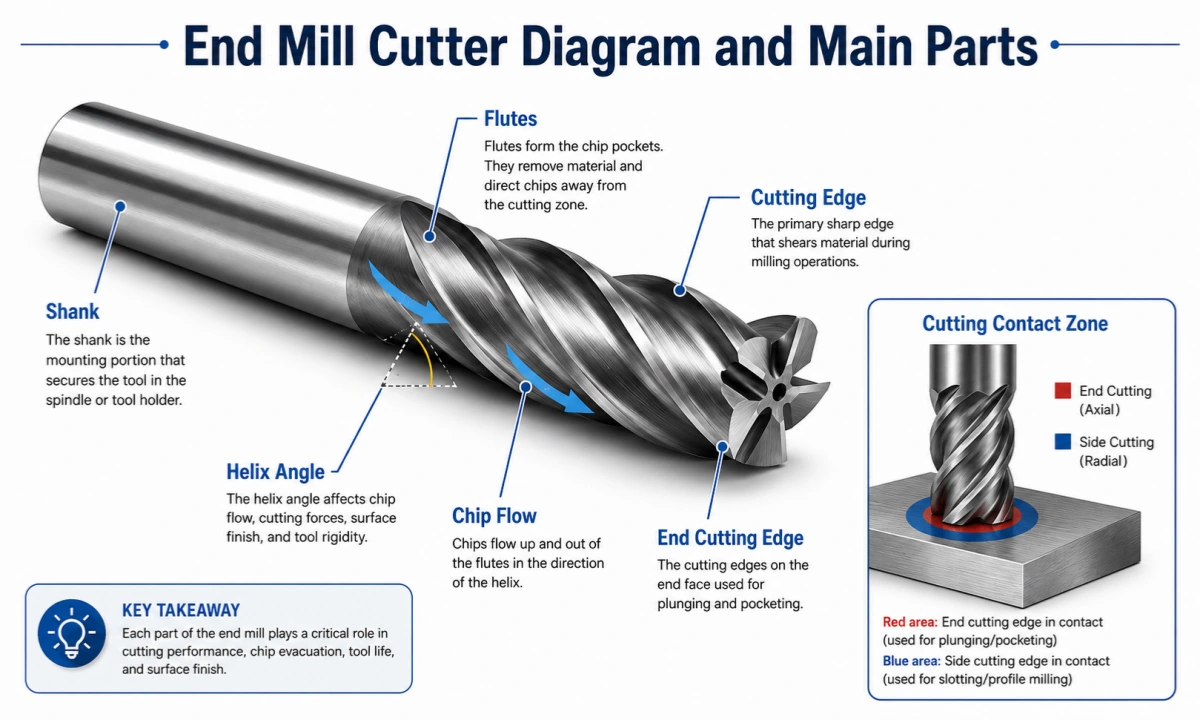
Флейты
Канавки — это канавки вдоль корпуса фрезы.. Они помогают удалять стружку во время резки и напрямую влияют на эвакуацию стружки., жесткость, и снижение производительности.
Режущие кромки
Режущие кромки срезают материал с заготовки.. Их острота и геометрия влияют на эффективность резки., обработка поверхности, и срок службы инструмента.
Голень
Хвостовик — это деталь, зажатая в шпинделе или держателе.. Стабильная установка хвостовика важна для точности обработки и контроля вибрации..
Угол спирали
Угол спирали влияет на сход стружки и гладкость резания.. Во многих случаях, это также влияет на контроль нагрева и стабильность обработки..
Геометрия подсказки инструмента
Различные формы наконечников подходят для различных задач обработки.. Фрезы с плоским концом хорошо подходят для обработки пазов и бокового фрезерования., в то время как инструменты со сферической головкой подходят для контурной обработки и 3D-поверхностей..
Если вы хотите сравнить различные формы инструментов, прочитайте наш руководство по сравнению типов инструментов.
Как работает концевая фреза при фрезеровании с ЧПУ?
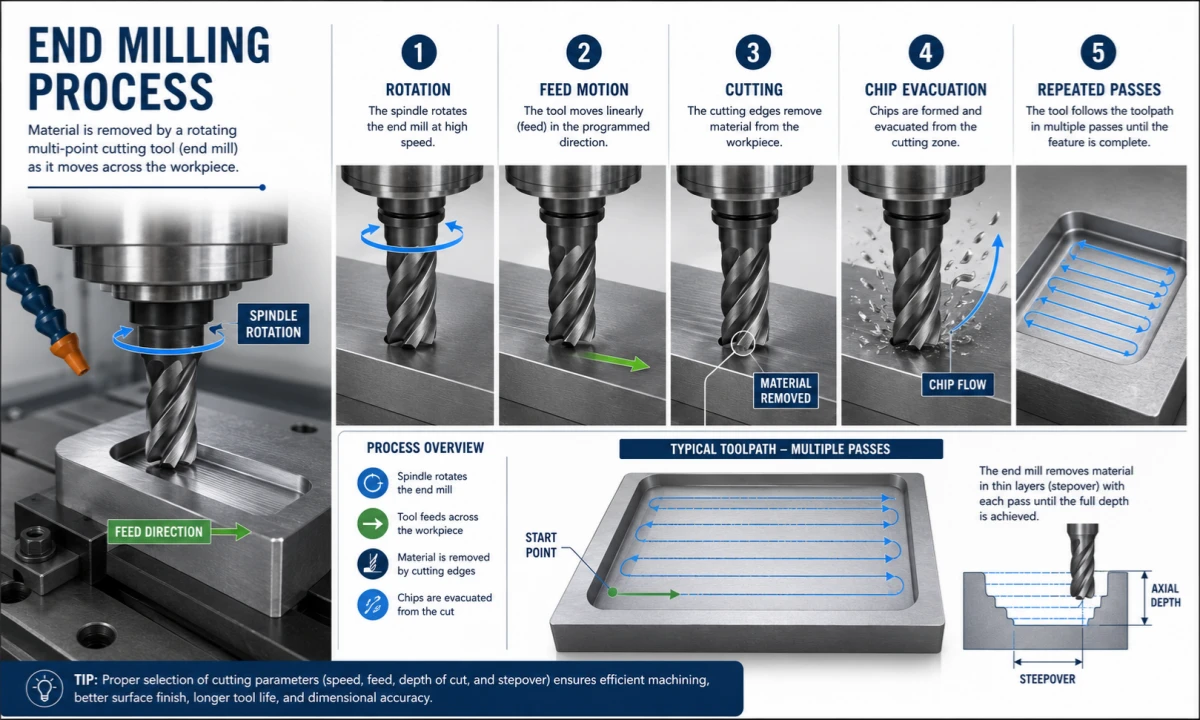
1. Вращение создает режущее действие
Первый, фреза вращается на высокой скорости в шпинделе. Это вращение приводит режущие кромки в контакт с заготовкой и создает режущее действие..
2. Движение подачи перемещает инструмент через материал.
В то же время, инструмент или заготовка движется в контролируемом направлении. Это движение называется движением подачи.. Он определяет, как фреза проходит сквозь материал и сколько материала удаляется за каждый проход..
3. Режущие кромки срезают материал
Когда вращающийся резец входит в материал, режущие кромки срезают небольшие участки заготовки. Эти удаленные разделы становятся фишками..
4. Флейты уносят фишки
Следующий, канавки помогают отводить стружку от зоны резания. Хорошая эвакуация стружки важна, поскольку застрявшая стружка может увеличить нагрев., повредить резак, и снизить качество поверхности.
5. Повторные проходы создают окончательную форму
Окончательно, станок с ЧПУ создает окончательную форму, контролируя траекторию инструмента, глубина резания, Норма подачи, и скорость шпинделя. С повторными проходами, резак может производить пазы, карманы, Контуры, боковые стенки, и готовые поверхности.
Для читателей, спрашивающих: «Как работает концевая фреза,В таблице ниже поясняются основные этапы резки в простой операции фрезерования с ЧПУ..
Таблица процессов концевого фрезерования
| Этап процесса | Что происходит | Почему это важно |
|---|---|---|
| Вращение | Резак вращается на высокой скорости | Создает режущее действие |
| Движение подачи | Инструмент или заготовка движется по контролируемой траектории. | Определяет удаление материала |
| Резка | Края разрезают материал на щепки | Формирует обработанную деталь |
| Эвакуация стружки | Канавки отводят стружку | Снижает нагрев и повышает стабильность |
| Повторные проходы | Станок следует запрограммированным траекториям | Создает окончательную форму |
В этой таблице в простой форме объясняется основная логика процесса концевого фрезерования..
Концевая резка против боковой резки
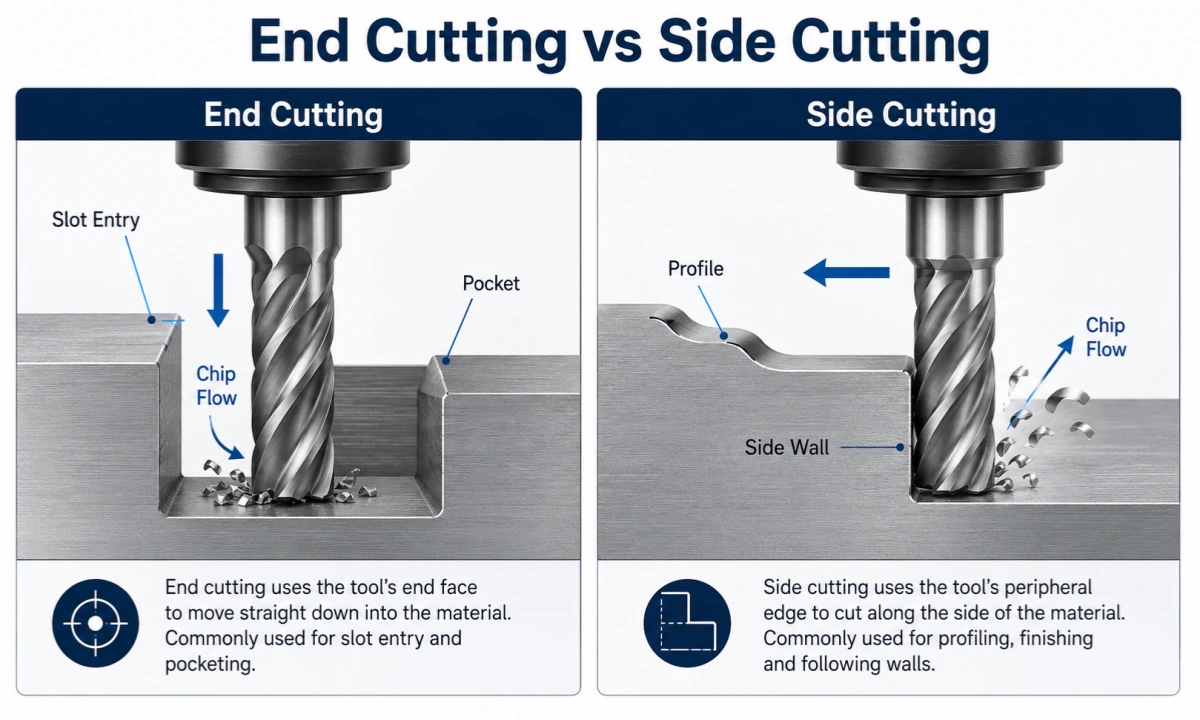
Концевая фреза может удалять материал с конца и боковой части инструмента.. Это одна из причин, по которой оно более гибкое, чем стандартное сверло..
Концевая резка
Концевая резка происходит, когда кончик инструмента удаляет материал со дна паза., карман, или неглубокая зона входа. Концевые фрезы с центральным сечением могут выполнять некоторые операции врезания или ввода в карман., но они все же отличаются от сверл.
Боковая резка
Боковая резка происходит, когда боковые режущие кромки удаляют материал со стены или профиля заготовки.. Это режущее действие часто встречается при боковом фрезеровании., фрезерование уступов, профилирование, и контурное фрезерование.
По этой причине, геометрия инструмента, счет флейты, Норма подачи, и стабильность зажима влияют на то, насколько хорошо фреза работает при различных операциях..
Общие операции концевого фрезерования
Долбление
Фреза удаляет материал по прямой траектории, создавая канавки или узкие прорези..
Боковое фрезерование
Боковые режущие кромки обрабатывают вертикальные стены или боковые поверхности..
Карманное фрезерование
Фреза удаляет материал из закрытой внутренней области внутри заготовки..
Оконтуривание
Инструмент следует по изогнутым или фигурным траекториям для создания профилей и сложных поверхностей..
Отделка поверхности
Чистовой проход улучшает качество поверхности и точность размеров..
Эти операции объясняют, почему механические мастерские используют эти инструменты при изготовлении форм., части машины, автомобильные компоненты, аэрокосмические части, и общая металлообработка.
Что влияет на качество работы концевой фрезы?
Материал инструмента
Твердосплавные инструменты обычно обеспечивают лучшую жесткость., износостойкость, и более стабильная производительность резки при обработке на станках с ЧПУ..
Для специализированных твердосплавных инструментов, вы также можете посетить наш твердосплавные фрезерные инструменты страница.
Количество флейт
Количество канавок влияет на эвакуацию стружки и жесткость.. Во многих случаях, станочники выбирают меньше канавок для алюминия и больше канавок для стали или более твердых материалов..
Для более глубокого сравнения, прочитайте наш Руководство по сравнению количества флейт.
Покрытие
Правильное покрытие может улучшить износостойкость., термостойкость, и срок службы инструмента, особенно в сложных условиях резания.
Скорость подачи и скорость
Скорость подачи и скорость шпинделя должны соответствовать материалу заготовки и конструкции инструмента.. В противном случае, резак может перегреться, носить слишком быстро, или оставить плохую поверхность.
Материал заготовки
Алюминий, сталь, и нержавеющая сталь ведут себя по-разному во время обработки.. Поэтому, станочникам следует отрегулировать геометрию фрезы, покрытие, Норма подачи, и скорость шпинделя в зависимости от материала.
Как более эффективно использовать концевую фрезу
Сопоставьте инструмент с материалом
Выберите геометрию инструмента, счет флейты, и покрытие в зависимости от материала заготовки.
Используйте стабильный зажим
Устойчивый держатель и правильная установка помогают снизить вибрацию и повысить точность резки..
Обеспечьте свободную эвакуацию стружки
Хорошая эвакуация стружки помогает предотвратить перегрев и нестабильную резку..
Используйте подходящие параметры резки
Скорость, кормить, осевая глубина, и радиальное зацепление должно соответствовать фрезе и задаче обработки..
Мониторинг износа инструмента
Изношенная фреза может снизить точность., качество поверхности, и эффективность обработки. Поэтому, важен регулярный осмотр инструмента.
Если вам нужны стандартные или OEM-решения в области инструментов, вы также можете посетить наш Страница продукта для фрезерных инструментов с ЧПУ.
Схема операции концевого фрезерования и поток стружки
На понятной схеме торцевого фрезерования должно быть показано вращение шпинделя., направление подачи, режущие кромки, поток стружки, и площадь контакта заготовки. Эти моменты помогают читателям понять, как фреза удаляет материал и почему стабильность резания зависит как от движения инструмента, так и от эвакуации стружки..
В типичной операции, шпиндель вращает инструмент, движение подачи перемещает фрезу сквозь материал, а канавки уносят стружку из зоны резания. Если стружка остается возле режущей кромки, нагрев и вибрация могут увеличиться, что может снизить качество поверхности и срок службы инструмента.
Это визуальное объяснение полезно для читателей, которые ищут схемы концевых фрез., схемы работы концевого фрезерования, или примеры процессов концевого фрезерования.
Распространенные ошибки при использовании концевой фрезы
Использование неправильного счета флейты
Неправильный выбор канавки может снизить эвакуацию стружки или стабильность резания..
Игнорирование настроек подачи и скорости
Неправильные параметры резки могут привести к перегреву., повреждение края, и короткий срок службы инструмента.
Выбор неправильного типа инструмента
Плоская концевая фреза, концевая фреза со сферическим концом, и черновая обработка концевыми фрезами для различных операций, поэтому один инструмент не должен заменять все типы фрез.
Плохая эвакуация стружки
Когда стружка остается в зоне резания, качество поверхности и срок службы инструмента могут пострадать.
Использование одной настройки для каждого материала
Одни и те же условия резки не одинаково хорошо подходят для алюминия., сталь, и нержавеющая сталь.
Вопросы и ответы
Как работает концевая фреза?
Концевая фреза работает, сочетая вращение шпинделя и движение подачи.. Режущие кромки срезают материал с заготовки., а канавки удаляют стружку из зоны резания.
Что такое концевое фрезерование?
Концевое фрезерование — это процесс обработки, при котором вращающаяся концевая фреза удаляет материал для создания пазов., карманы, боковые стенки, Контуры, и готовые поверхности.
Чем отличается концевая фреза от сверла?
Сверло в основном делает отверстия, в то время как концевая фреза может выполнять вертикальную и боковую резку для более широкого диапазона фрезерных операций..
Для чего используются концевые фрезы?
Концевые фрезы используются для прорезания пазов., боковое фрезерование, профилирование, карманное фрезерование, оконтуривание, и отделка поверхности.
Можно ли использовать одну концевую фрезу как для алюминия, так и для стали??
Не всегда. Геометрия инструмента, счет флейты, покрытие, и параметры резки часто необходимо менять в зависимости от материала.
Почему эвакуация стружки важна при концевом фрезеровании?
Эвакуация стружки помогает контролировать нагрев, уменьшить повреждение инструмента, и улучшить стабильность резки и качество поверхности.
Заключение
Понимание того, как работает концевая фреза, помогает повысить эффективность обработки и производительность инструмента.. Процесс концевого фрезерования зависит от вращения шпинделя., Движение подачи, режущая геометрия, и эвакуация стружки.
Когда машинисты подбирают тип фрезы, счет флейты, покрытие, и правильные параметры резки, концевое фрезерование позволяет производить точные детали, лучшее качество поверхности, и более стабильные результаты обработки. Вот почему правильный выбор инструмента и настройка обработки имеют важное значение..
призыв к действию
Ищем стандартные или нестандартные инструменты для алюминия., сталь, или обработка нержавеющей стали?
Посетите наш Страница продукта для фрезерных инструментов с ЧПУ или пришлите нам свой рисунок, список размеров, материал, и требования к покрытию. OMIST может порекомендовать подходящие инструменты для фрезерования с ЧПУ..