 Прецизионные фрезы,Режущие инструменты для обработки любого материала с ЧПУ

Концевая фреза — это вращающийся режущий инструмент, используемый при фрезеровании с ЧПУ для удаления материала с торца и боковой поверхности заготовки.. Он может обрабатывать слоты, карманы, профили, боковые стенки, изогнутые поверхности, и особенности отделки таких материалов, как алюминий, сталь, нержавеющая сталь, медь, и пластик.
В этом руководстве, вы узнаете, что такое концевая фреза, чем оно отличается от сверла, что он делает при фрезеровании с ЧПУ, распространенные типы фрез, основные характеристики, и как выбрать правильный инструмент для различных применений обработки.
Что такое концевая фреза?
Концевая фреза — это вращающийся режущий инструмент, используемый на станках с ЧПУ и фрезерных станках.. Он вращается с высокой скоростью, в то время как инструмент или заготовка перемещаются по контролируемой траектории для удаления материала..
Основное отличие концевой фрезы от многих других инструментов заключается в ее режущей геометрии.. Большинство концевых фрез имеют режущие кромки на конце и по бокам.. Поэтому, они могут резать вертикально и латерально. Это делает их пригодными для прорези, боковое фрезерование, профилирование, карманное фрезерование, оконтуривание, и отделка.
Производители обычно изготавливают концевые фрезы из быстрорежущей стали или цельного твердого сплава.. Однако, многие станки с ЧПУ выбирают цельнотвердосплавные инструменты, поскольку они обеспечивают более высокую жесткость, более высокая износостойкость, и более стабильная производительность резки.
Если вам нужны стандартные или специальные инструменты для производственной обработки, вы также можете посетить наш Страница продукта для концевой фрезы.
Основные части концевой фрезы
Хотя концевые фрезы бывают разных форм и конструкций., большинство инструментов включают в себя несколько основных частей. Понимание этих деталей помогает покупателям правильно выбрать фрезу для своего материала., машина, и цель обработки.
| Часть | Функция | Почему это важно |
| Режущие кромки | Удаление материала с заготовки | Влияет на эффективность резки и качество поверхности. |
| Флейты | Помощь в удалении стружки во время обработки. | Удаление чипа влияния, жесткость, и стабильность резки |
| Подсказка инструмента | Определяет конечную геометрию фрезы. | Влияет на слотирование, оконтуривание, отделка, и угловая прочность |
| Голень | Удерживается держателем инструмента или шпинделем | Должен соответствовать держателю для стабильного зажима. |
| Покрытие | Защищает режущую кромку во время обработки. | Улучшает износостойкость, термостойкость, и срок службы инструмента |
Режущие кромки
Режущие кромки являются рабочей частью инструмента.. Они удаляют материал во время фрезерования и напрямую влияют на производительность резания., точность, и качество поверхности.
Флейты
Канавки — это канавки вдоль тела фрезы.. Они помогают удалить стружку из зоны резки.. Кроме того, конструкция канавок влияет на жесткость, контроль тепла, и стабильность резки.
Подсказка по инструменту
Конструкция наконечника инструмента зависит от типа фрезы.. Некоторые концевые фрезы имеют плоские концы., в то время как у других шаровидный нос, угловой радиус, или коническая геометрия. Как результат, для разных задач обработки используются разные конструкции наконечников.
Голень
Хвостовик — это часть, удерживаемая держателем инструмента или шпинделем.. Его диаметр должен правильно соответствовать держателю.. В противном случае, вибрация, низкая точность, или может произойти биение инструмента.
Покрытие
Многие фрезы концевых фрез используют такие покрытия, как TiAlN., Алтын, TiSiN, Олово, DLC, или нано-синее покрытие. Правильное покрытие может улучшить термостойкость., уменьшить износ, и продлить срок службы инструмента.
Концевая фреза против сверла
Многие новички путают концевую фрезу со сверлом.. Однако, они предназначены для различных целей обработки.
Сверло в основном режет в осевом направлении для создания круглых отверстий.. Напротив, Концевая фреза может резать как в осевом, так и в поперечном направлении.. Поэтому, он может обрабатывать слоты, карманы, Контуры, профили, боковые стенки, и готовые поверхности.
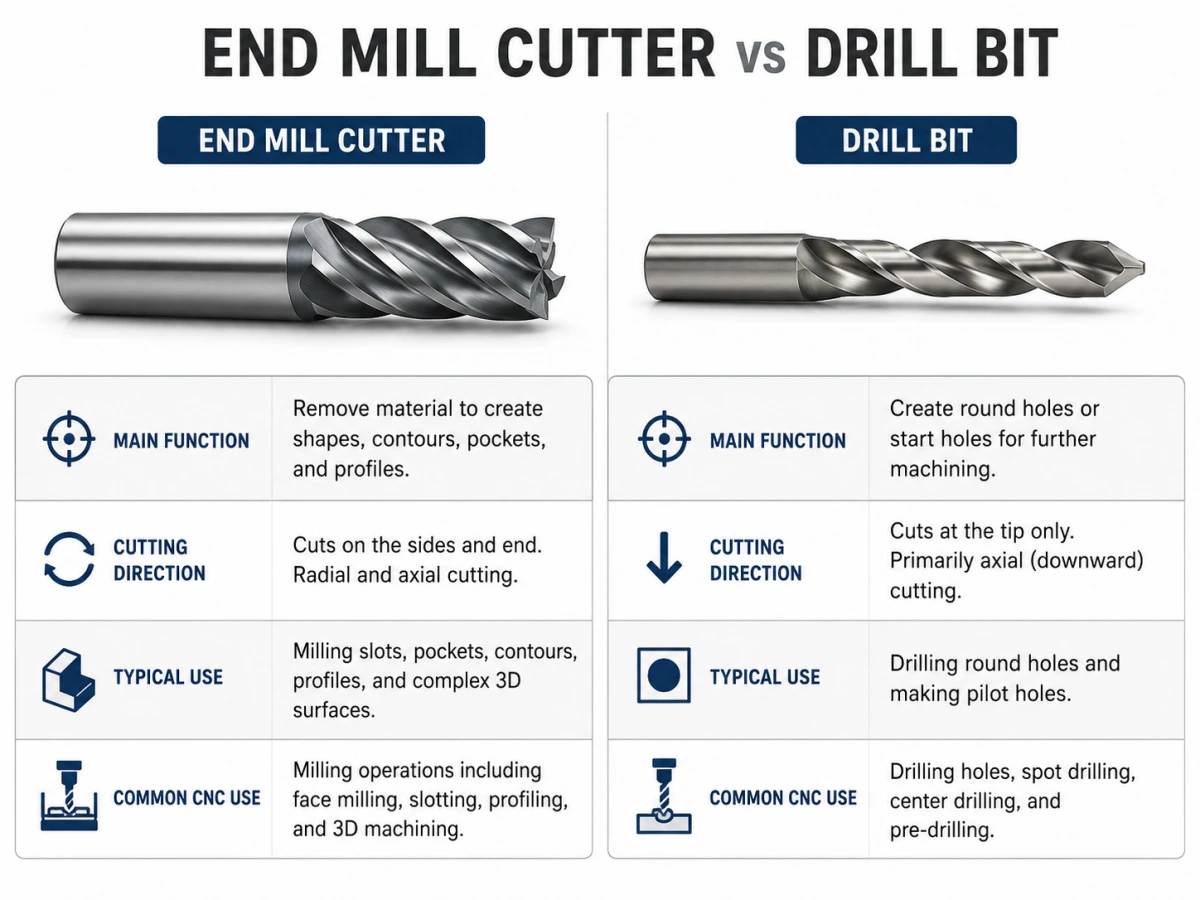
| Особенность | Концевая фреза | Сверло |
| Основная функция | Фрезерование, долбление, профилирование, боковая резка | Сверление отверстий |
| Направление резки | Осевое и боковое | Преимущественно осевой |
| Типичное использование | Слоты, карманы, Контуры, боковые стенки | Круглые отверстия |
| Гибкость инструмента | Выше | Ниже |
| Обычное использование ЧПУ | Общие фрезерные операции | Операции по изготовлению отверстий |
Суммируя, оба инструмента удаляют материал, но они не взаимозаменяемы в большинстве ситуаций обработки.. В некоторых случаях концевая фреза с центральным режущим элементом может погружаться., но это все равно не то же самое, что стандартное сверло.
Распространенные типы концевых фрез
Существует много типов концевых фрез., и каждая конструкция имеет определенную цель. Выбор правильного типа помогает повысить эффективность резки., качество поверхности, и срок службы инструмента.
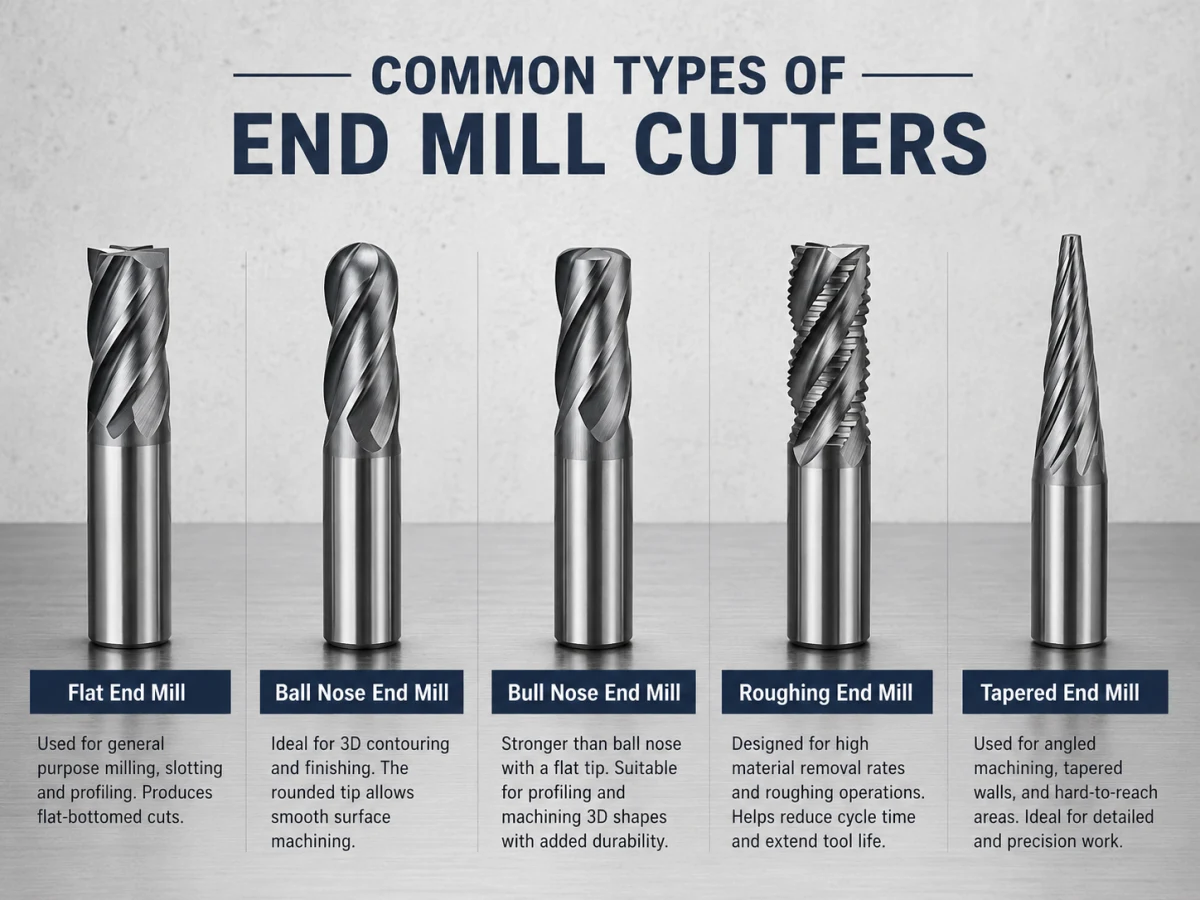
Плоская концевая фреза
Плоская концевая фреза имеет плоский режущий конец.. Он широко используется для прорези, боковое фрезерование, фрезерование уступов, и механическая обработка общего назначения.
Шариковая концевая фреза
Концевая фреза со сферическим концом имеет закругленный режущий конец.. Обычно используется для 3D-контуринга., обработка пресс-форм, изогнутые поверхности, и отделочные операции.
Для обработки криволинейных поверхностей и формования., вы также можете просмотреть наши концевые фрезы со сферическим концом.
Концевая фреза с бычьим носом
Концевая фреза с бычьей головкой, также называется концевой фрезой с угловым радиусом, сочетает в себе плоское дно с закругленными углами. Улучшает прочность кромок и помогает создавать более плавные переходы..
Для более прочной угловой геометрии, см. наш Концевая фреза с бычьим носом.
Черновая концевая фреза
Концевая фреза для черновой обработки предназначена для агрессивного снятия материала.. Его часто используют перед отделкой, чтобы быстро удалить большое количество материала..
Для удаления тяжелых материалов, вы можете проверить наш черновые концевые фрезы.
Коническая концевая фреза
Коническая концевая фреза имеет постепенно меняющийся диаметр.. Используется для угловых стен., глубокие полости, обработка пресс-форм, и специальные профили.
Для полостей пресс-форм и угловой обработки., посетите наш конический резак.
Для более детального сравнения геометрий инструментов, прочитайте наш Руководство по типам фрез концевых фрез.
Для чего используется концевая фреза?
Концевые фрезы используются во многих фрезерных операциях с ЧПУ.. Потому что они могут резать с конца и сбоку, они подходят как для простых, так и для сложных задач обработки..
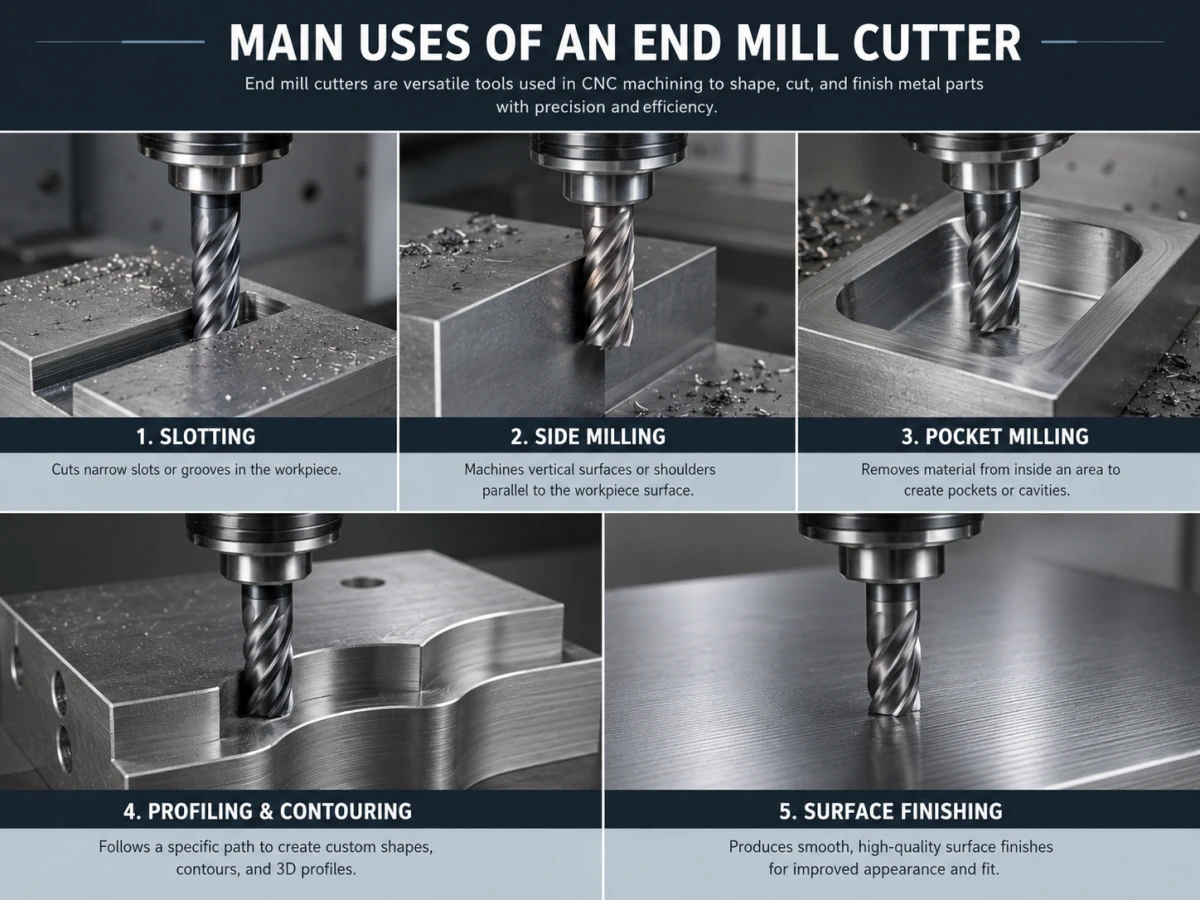
Долбление
Прорезывание является одним из наиболее распространенных применений.. Концевая фреза может с хорошей точностью вырезать в заготовке прямые или изогнутые пазы.. Эти пазы могут создавать шпоночные пазы, канавки, направляющие пути, и особенности сборки.
Для более мягких материалов, таких как алюминий., эвакуация стружки важна. Поэтому, машинисты часто выбирают 2 канавочные инструменты, когда заготовка требует лучшего удаления стружки.
Боковое фрезерование
Боковое фрезерование использует боковые режущие кромки инструмента для удаления материала с вертикальной поверхности заготовки.. Эта операция полезна для обработки плеч., шаги, и боковые стенки.
Механические цеха обычно используют боковое фрезерование для прецизионных деталей., компоненты пресс-формы, детали оснастки, и общее производство с ЧПУ.
Профилирование и контуринг
Машинисты также используют концевые фрезы для профилирования и контурной обработки.. Эти операции создают сложные формы., изогнутые пути, и внешние или внутренние профили.
Для такого рода работ машинисты часто выбирают инструменты со сферической головкой и угловым радиусом, поскольку эти инструменты могут улучшить переходы между поверхностями и качество отделки..
Карманное фрезерование
Фрезерование карманов удаляет материал из закрытой или углубленной области внутри заготовки.. Эта операция распространена в деталях, требующих внутренних полостей., снижение веса, или точное удаление материала на ограниченной площади.
Хороший контроль стружки, стабильные траектории инструмента, и правильная геометрия фрезы важны для этого процесса..
Отделка поверхности
После черновой обработки, для чистовой обработки также можно использовать концевую фрезу. Целью является повышение точности размеров и гладкости поверхности..
Инструменты для отделки подбираются по допускам., материал заготовки, устойчивость машины, и требуемое качество поверхности.
Пошаговое фрезерование и обработка уступов
Концевые фрезы могут обрабатывать ступенчатые поверхности., плечи, и многоуровневые функции. Эти функции часто требуют резких переходов., стабильная резка, и точные размеры.
Как результат, жесткость инструмента, дизайн флейты, и выбор покрытия важны.
Использование концевой фрезы для алюминия, Сталь, и нержавеющая сталь
Различные материалы заготовок требуют разных конструкций фрез.. Поэтому, покупатели должны подобрать фрезу концевой фрезы в соответствии с материалом и условиями обработки..
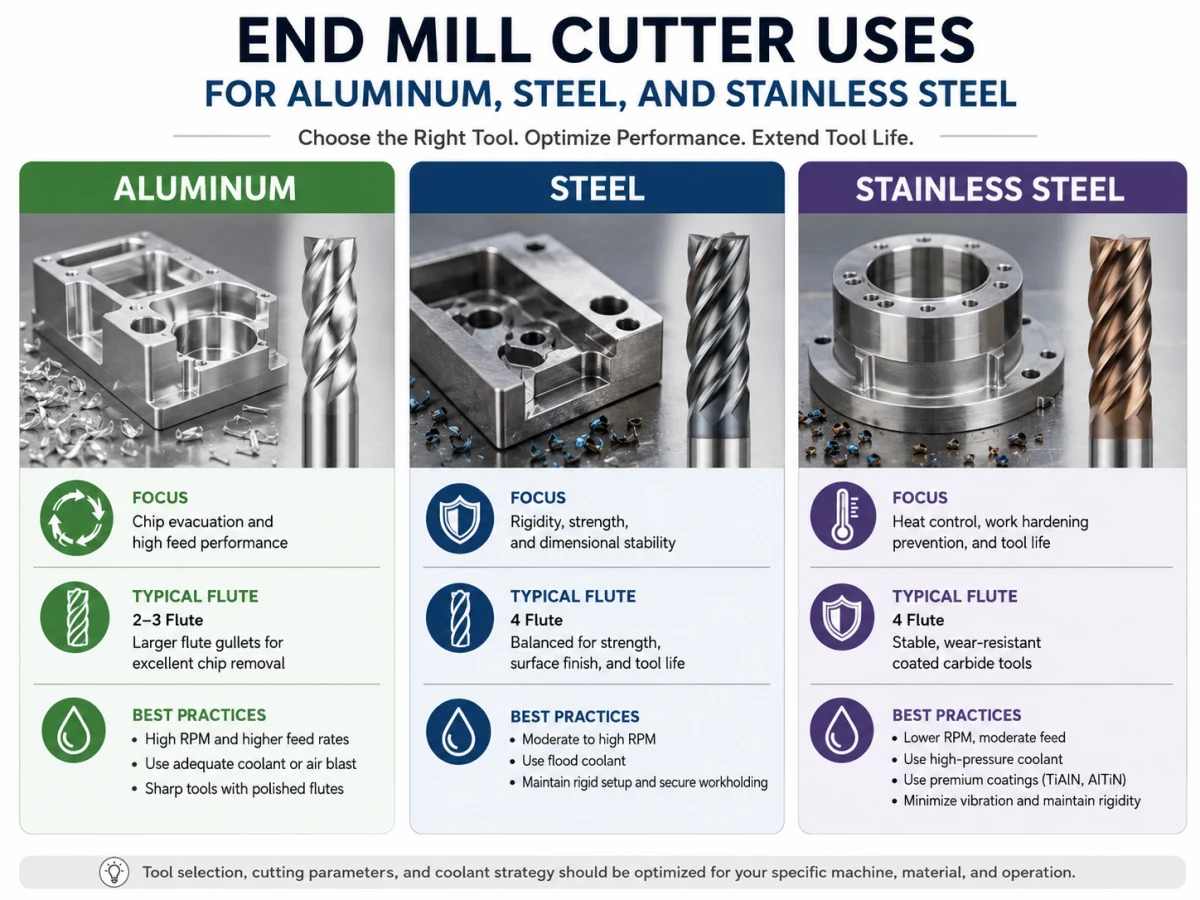
| Материал заготовки | Распространенный выбор фрезы | Основная причина |
| Алюминий | 2 флейта или 3 Концевая фреза из твердого сплава канавок | Улучшенный отвод стружки и плавная резка |
| Сталь | 4 концевая фреза из твердого сплава с подходящим покрытием | Повышенная жесткость и износостойкость |
| Нержавеющая сталь | Концевая фреза из твердого сплава с покрытием и стабильной геометрией | Лучший контроль тепла и защита кромок |
| Медь и латунь | Твердосплавная концевая фреза с острой кромкой | Чистая резка и уменьшение заусенцев. |
| Пластмассы | Острый, полированный флейтовый резак | Плавное удаление стружки и снижение риска плавления |
Концевая фреза для алюминия
При обработке алюминия, концевые фрезы используются для прорезания пазов, карманное фрезерование, боковое фрезерование, и отделка. Алюминий производит более крупную стружку, поэтому часто предпочтительнее инструменты с меньшим количеством канавок и хорошей эвакуацией стружки..
Твердосплавные концевые фрезы с высокой спиралью также распространены при обработке алюминия, поскольку они помогают улучшить плавность резания и уменьшить скопление стружки..
Для алюминия и цветных металлов, Вы можете сравнить варианты флейт на нашем сайте 2 концевая фреза с канавками и 3 концевая фреза с канавками страницы.
Концевая фреза для стали
Для углеродистой и легированной стали, концевые фрезы часто используются для бокового фрезерования., оконтуривание, обработка плеч, и получистовая обработка. Сталь обычно требует большей жесткости и большей износостойкости..
Во многих случаях, 4 концевые фрезы из твердого сплава с канавками выбираются для обработки стали и металлов общего назначения..
Для обработки стали, вы можете просмотреть наш 4 концевая фреза с канавками.
Концевая фреза для нержавеющей стали
Нержавеющую сталь труднее обрабатывать, поскольку она выделяет тепло и имеет тенденцию вызывать износ инструмента.. В применениях из нержавеющей стали, концевые фрезы обычно используются для профилирования, отделка, и контролируемое боковое фрезерование.
Правильное покрытие, геометрия флейты, и параметры резки помогают поддерживать стабильность резки и снижают износ кромки..
Как выбрать базовую концевую фрезу
Выбор концевой фрезы не должен быть сложным.. Однако, покупатели должны проверить несколько факторов перед заказом.
Материал заготовки
Материал заготовки – один из важнейших факторов.. Алюминий, сталь, нержавеющая сталь, медь, латунь, Пластмасс, и чугуна могут потребоваться разные конструкции канавок., покрытия, и стратегии резки.
Количество флейт
Количество канавок влияет на эвакуацию стружки, жесткость, и эффективность резки. Например, машинисты часто используют 2 флейты для алюминия, хотя они обычно выбирают 4 рифленые инструменты для обработки стали и общей обработки.
Для более глубокого сравнения, прочитайте наш 2 флейта против 4 направляющая концевой фрезы.
Материал инструмента
Многие станки с ЧПУ выбирают цельные твердосплавные концевые фрезы, поскольку они обеспечивают более высокую жесткость., лучшая износостойкость, и стабильная производительность. Некоторые мастерские до сих пор используют инструменты из быстрорежущей стали для низкоскоростной или общей обработки..
Покрытие
Покрытие должно соответствовать материалу и условиям обработки.. Например, станочники часто выбирают покрытия TiAlN и AlTiN для стали, в то время как покрытие DLC может подходить для алюминия и цветных металлов..
Требуемая отделка
Для черновых операций, основная цель – более высокий съем материала. Однако, для завершения работ, качество поверхности и точность размеров становятся более важными.
Основные характеристики, которые следует проверить перед покупкой
Прежде чем разместить заказ, покупатели должны подтвердить несколько ключевых спецификаций. Это помогает избежать несоответствия инструмента и повышает стабильность обработки..
Диаметр фрезы
Диаметр фрезы влияет на ширину резания, жесткость, и размер обрабатываемого элемента.
Длина канавки
Длина канавки определяет, насколько глубоко фреза может обрабатывать. Однако, более длинная канавка может снизить жесткость, поэтому оно должно соответствовать фактической глубине резания.
Общая длина
Общая длина влияет на вылет инструмента и контроль вибрации.. Для глубоких полостей может потребоваться более длинный инструмент., но его следует использовать осторожно, чтобы уменьшить болтовню.
Диаметр хвостовика
Диаметр хвостовика должен правильно соответствовать держателю.. Стабильный зажим помогает повысить точность и срок службы инструмента..
Угловая геометрия
Плоский, сферический нос, угловой радиус, и коническая геометрия используются для различных целей обработки.. Поэтому, геометрия углов должна соответствовать форме детали и требуемой отделке..
Тип покрытия
Покрытие следует выбирать в зависимости от материала заготовки., скорость резания, состояние охлаждающей жидкости, и требования к стойкости инструмента.
Почему цельные твердосплавные концевые фрезы широко используются при фрезеровании с ЧПУ
Цельные твердосплавные концевые фрезы популярны, поскольку они обладают высокой жесткостью., высокая твердость, и хорошая износостойкость. Они могут поддерживать более высокие скорости резания и обеспечивать более стабильную работу, чем многие стандартные инструментальные материалы..
При механообработке на производстве, многие цеха используют твердосплавные инструменты для стали, нержавеющая сталь, чугун, алюминий, и другие требовательные материалы. Кроме того, правильная геометрия и покрытие могут улучшить стабильность обработки.
Промышленные покупатели, дистрибьюторы, и механические цеха часто предпочитают твердосплавные инструменты, поскольку они помогают сократить количество замен инструмента и обеспечивают более стабильное производство..
Для стандартных и нестандартных твердосплавных инструментов., вы можете посетить наш бумага для резки концевой фрезы из твердого сплава.
Когда вам нужна нестандартная концевая фреза?
Стандартный резец может решить множество распространенных задач обработки..
Однако, вам может понадобиться специальный инструмент, если деталь имеет специальный профиль, глубокая полость, необычный материал, строгая толерантность, или требование нестандартного размера.
Производители могут разработать специальные концевые фрезы специального диаметра., длина канавки, общая длина, угловой радиус, покрытие, размер хвостовика, и геометрия инструмента.
Для инструментов на основе чертежей или OEM, посетите наш бумага для концевых фрез на заказ.
Вопросы и ответы
Что такое концевая фреза?
Концевая фреза — это вращающийся режущий инструмент, используемый для фрезерных операций с ЧПУ, таких как прорезание пазов., боковое фрезерование, профилирование, оконтуривание, карманное фрезерование, и отделка.
Для чего нужна концевая фреза?
Используется для удаления материала с торца и боковой поверхности заготовки.. Общие приложения включают слоты, карманы, боковые стенки, профили, плечи, изогнутые поверхности, и готовые поверхности.
Чем отличается концевая фреза от сверла?
Сверло в основном прорезает отверстия в осевом направлении.. Концевая фреза может резать в осевом и поперечном направлении., поэтому он может выполнять больше операций фрезерования, таких как прорезание пазов, профилирование, и боковое фрезерование.
Каковы распространенные типы концевых фрез?
Распространенные типы включают фрезы с плоским концом., концевые фрезы со сферическим концом, концевые фрезы с бычьим концом, черновые концевые фрезы, конические концевые фрезы, 2 флейтовые концевые фрезы, 3 флейтовые концевые фрезы, 4 флейтовые концевые фрезы, и 6 флейтовые концевые фрезы.
Как выбрать базовую концевую фрезу?
Вы должны проверить материал заготовки, счет флейты, диаметр фрезы, длина канавки, общая длина, диаметр хвостовика, инструментальный материал, покрытие, и требуемая обработка поверхности.
Твердосплавные концевые фрезы лучше, чем концевые фрезы из быстрорежущей стали??
Твердосплавные концевые фрезы обычно обеспечивают лучшую жесткость., износостойкость, и стабильность резки. Однако, лучший выбор зависит от машины, материал заготовки, скорость резания, и бюджет.
Заключение
Концевая фреза — это универсальный фрезерный инструмент с ЧПУ, используемый для прорезания пазов., боковое фрезерование, карманное фрезерование, профилирование, оконтуривание, обработка плеч, и отделка. Потому что он может резать как с конца, так и сбоку., он более гибок, чем многие основные режущие инструменты.
Чтобы правильно выбрать фрезу, покупатели должны понимать структуру инструмента, тип фрезы, счет флейты, материал, покрытие, диаметр, длина канавки, и применение механической обработки. Как только эти факторы будут сопоставлены правильно, резак может обеспечить лучшую эффективность резки, более длительный срок службы инструмента, и более стабильные результаты обработки.
Ищем надежного производителя концевых фрез для алюминия., сталь, нержавеющая сталь, или индивидуальная обработка на станке с ЧПУ?
Изучите наш Страница продукта для концевой фрезы для стандартных и OEM-решений, или свяжитесь с нами, чтобы сообщить ваши требования к чертежу и применению.