 Прецизионные фрезы,Режущие инструменты для обработки любого материала с ЧПУ

Пластины APMT и APKT представляют собой семейства сменных фрезерных пластин, используемых с совместимыми корпусами фрез с ЧПУ.. Они могут поддерживать аналогичные операции, включая торцевое фрезерование, фрезерование уступов, ступенчатое фрезерование, и общее удаление металла. Однако, их геометрия, вставить сиденья, ультрасовременные дизайны, суффиксы моделей, и совместимые корпуса фрез могут отличаться.
Поэтому, вставка APMT не должна автоматически заменять вставку APKT, даже если оба продукта имеют одинаковый код размера, такой как 1135 или 1604. Покупатели всегда должны проверять полную маркировку пластины., модель корпуса фрезы, вставить карман, положение винта, и требуемый радиус угла перед заказом замены.
В этом руководстве объясняются основные различия между фрезерными пластинами APMT и APKT.. Здесь также показано, как выбрать правильный вариант для вашего корпуса фрезы и применения обработки..
Общий, Вставки APMT и APKT следует сравнивать по полной модели., совместимость с корпусом фрезы, и требования к обработке, а не только внешний вид.
Что такое вставки APMT?
Пластины APMT — это сменные твердосплавные фрезерные пластины, предназначенные для совместимых корпусов фрез типа APMT.. В зависимости от комплектации модели и производителя, их можно использовать со сменными концевыми фрезами, фрезы для уступов, торцевые фрезы, и другие фрезерные инструменты с ЧПУ..
Типичная пластина APMT имеет центральное отверстие., передовой, поверхность, образующая стружку, зазорная поверхность, и угловая геометрия. Однако, точная структура может варьироваться в зависимости от размера вставки, стружколом, покрытие, оценка, и суффикс модели.
Как результат, покупатели не должны идентифицировать вкладыш только по его общему названию семейства APMT..
Для всей семьи, см. наш Пластины APMT.
Распространенные приложения вставки APMT
Операторы ЧПУ обычно выбирают пластины APMT для:
- Торцевое фрезерование
- Фрезерование уступов
- Ступенчатое фрезерование
- Обработка боковых стенок
- Профильное фрезерование
- Общая черновая обработка
- Получистовая обработка
Конечный результат обработки зависит не только от семейства пластин.. Конструкция корпуса фрезы, жесткость машины, вставить оценку, материал заготовки, скорость резания, Норма подачи, и условия охлаждающей жидкости также влияют на производительность.
Распространенные размеры пластин APMT
APMT1135 и APMT1604 — две наиболее популярные группы размеров.. Однако, цифры не дают достаточно информации для выбора сменной вставки.
Например, два продукта APMT1135 могут использовать разные радиусы углов., стружколомы, покрытия, или подготовка кромок. Поэтому, полное обозначение модели должно быть проверено.
Для меньшего варианта APMT, просмотреть наш Твердосплавные фрезерные пластины APMT1135.
Для более крупной модели, просмотреть наш Твердосплавные фрезерные пластины APMT1604.
Что такое вставки APKT?
Пластины APKT также представляют собой сменные твердосплавные пластины, используемые для фрезерования с ЧПУ.. Они устанавливаются в корпуса фрез, предназначенные для семейства пластин APKT..
Нравится продукция APMT, Вставки APKT могут поставляться в различных размерах., покрытия, марки твердого сплава, стружколомы, и угловые конфигурации. Поэтому, одна вставка APKT может работать иначе, чем другой продукт с аналогичным базовым кодом размера..
Полная маркировка остается важной, поскольку суффикс может идентифицировать конкретную конструкцию или применение кромки..
Для всей семьи, см. наш APKT Вставки.
Распространенные приложения для вставки APKT
В зависимости от корпуса фрезы и конструкции пластины, Вставки APKT могут поддерживать:
- Торцевое фрезерование
- Фрезерование уступов
- Шаг обработки
- Боковое фрезерование
- Обработка профиля
- Общее удаление металла
- Черновая и получистовая обработка
Хотя эти приложения частично совпадают с продуктами APMT., два семейства пластин не следует рассматривать как автоматически взаимозаменяемые..
Общие размеры вставок APKT
APKT1135 и APKT1604 — общие группы продуктов.. Однако, корпус фрезы должен соответствовать выбранному размеру и геометрии пластины.
Для меньшего варианта,просмотреть наш Твердосплавные фрезерные пластины APKT1135.
Для более крупного варианта, просмотреть наш Твердосплавные фрезерные пластины APKT1604.
Вставки APMT и APKT: Основные различия
В таблице ниже представлено практическое сравнение.. Поскольку характеристики различаются у разных производителей., покупатели должны рассматривать его как руководство по выбору, а не как универсальный технический стандарт..
При сравнении вставок APMT и APKT, Совместимость корпусов фрез обычно более важна, чем сходство их кодов размеров..
| Точка сравнения | Пластины APMT | APKT Вставки |
| Вставить семейство | Модельный ряд АПМТ | Модельный ряд АПКТ |
| Типичное использование | Общие задачи фрезерования со сменными пластинами | Общие задачи фрезерования со сменными пластинами |
| Общие операции | Лицо, плечо, шаг, и профильное фрезерование | Лицо, плечо, шаг, и профильное фрезерование |
| Корпус фрезы | Требуется APMT-совместимый карман для вставок. | Требуется APKT-совместимый вставной карман. |
| Общие группы размеров | 1135 и 1604 | 1135 и 1604 |
| Геометрия резки | Зависит от комплектации и производителя | Зависит от комплектации и производителя |
| Суффикс модели | Может указывать на стружколом, край, оценка, или дизайн поставщика | Может указывать на стружколом, край, оценка, или дизайн поставщика |
| Метод замены | Подтвердите полную маркировку и корпус фрезы. | Подтвердите полную маркировку и корпус фрезы. |
| Взаимозаменяемость | Не взаимозаменяем автоматически с APKT. | Не взаимозаменяем автоматически с APMT. |
Самое главное отличие — совместимость. Даже если две вставки кажутся похожими, небольшие различия во вставном кармане, центральное отверстие, зазорная поверхность, и положение зажима могут помешать правильной установке.
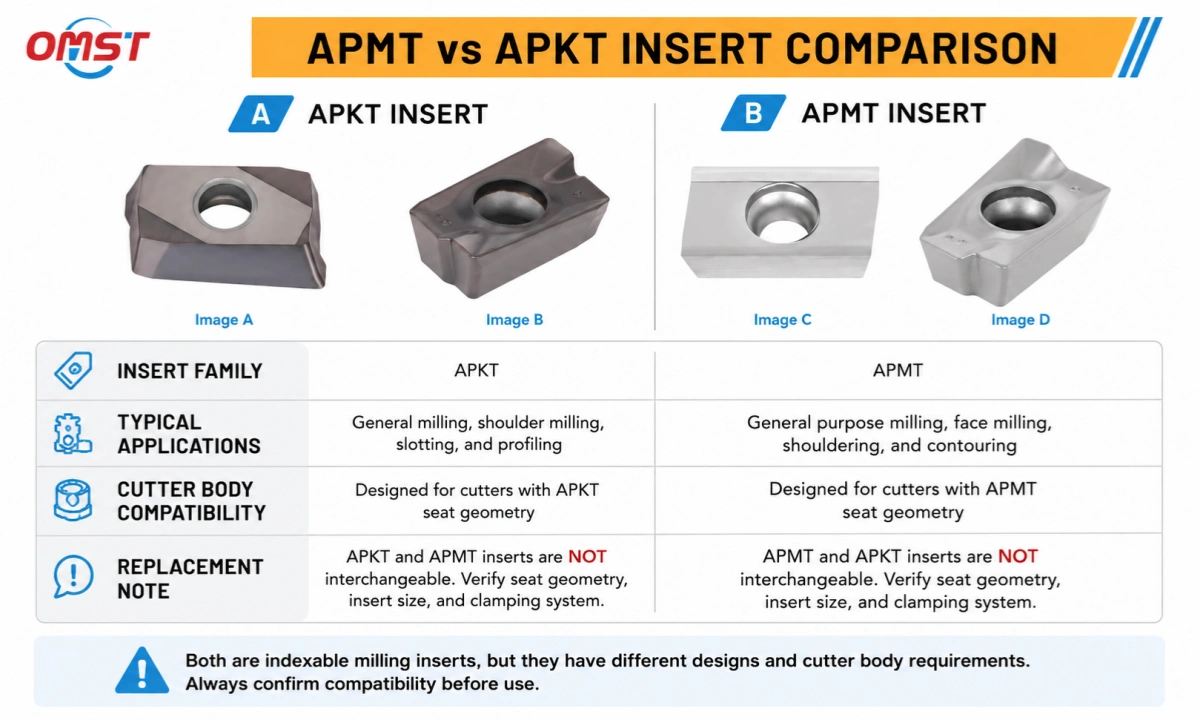
Геометрия пластин и современный дизайн
Геометрия пластины влияет на сопротивление резанию, поток стружки, прочность кромки, качество поверхности, и срок службы инструмента. Поэтому, он должен соответствовать корпусу фрезы и условиям обработки..
Геометрия пластины APMT
Вставка APMT может включать в себя:
- Одна или несколько пригодных для использования режущих кромок
- Поверхность, образующая стружку
- Центральное отверстие для зажима
- Зазорная поверхность
- Определенная геометрия угла
- Режущая поверхность с покрытием или без покрытия
Однако, полную геометрию невозможно подтвердить только по названию APMT. Код размера и суффикс также необходимо просмотреть..
APKT Геометрия вставки
Пластины APKT используют собственную геометрию семейства и предназначены для соответствия карманам фрезы APKT.. Их стружколом, подготовка кромок, угол зазора, и форма угла может отличаться в зависимости от модели.
Поэтому, покупатели должны сравнивать существующую вставку непосредственно со спецификацией замены, а не полагаться только на фотографии продукта..
Почему важен суффикс модели
Суффикс после APMT или APKT может указывать на различия в:
- Конструкция стружколома
- Передовая подготовка
- Предполагаемый материал заготовки
- Покрытие или марка твердого сплава
- Направление резки
- Геометрия, зависящая от производителя
Например, PDFR, ПДЕР, МА, и M2L не должны иметь одинаковое значение у всех поставщиков.. Кроме того, суффикс, используемый одним производителем, может не соответствовать системе наименования другого производителя..
По этой причине, перед заказом на замену необходимо записать полную маркировку пластины..
Совместимость корпуса фрезы и гнезда пластины
Корпус фрезы определяет, какое семейство пластин, размер, и зажимную конструкцию можно использовать. Поэтому, обычно это лучшая отправная точка для выбора пластины.
Прежде чем выбирать между АПМТ и АПКТ, проверять:
- Модель корпуса фрезы
- Вставьте форму кармана
- Положение центрального винта
- Существующая маркировка пластины
- Вставьте длину и ширину
- Толщина пластины
- Угловой радиус
- Чертеж производителя
Слишком большая вставка, слишком маленький, или неправильно установлены, могут быть ненадежно закреплены. Более того, плохой контакт между пластиной и гнездом может повлиять на биение, вибрация, surface finish, и ультрасовременная жизнь.
Перед установкой необходимо очистить гнездо вставки.. Винт и карман также следует проверить на наличие повреждений..
Можно ли взаимозаменять вставки APMT и APKT??
На практике, Пластины APMT и APKT не являются взаимозаменяемыми автоматически, если совместимость не подтверждена производителем корпуса фрезы., технический чертеж, или физический осмотр.
Не выбирайте сменную вставку только потому, что:
- Продукты внешне похожи
- Обе модели содержат 1135
- Обе модели содержат 1604
- Общая длина выглядит одинаковой
- Центральные отверстия похожи
Небольшие размерные или геометрические различия могут помешать правильной посадке.. Кроме того, режущая кромка может не достичь заданного положения после установки.
Поэтому, покупатели должны предоставить модель корпуса фрезы и полную существующую маркировку пластины, когда это возможно..
APMT1135 против APKT1135
APMT1135 и APKT1135 содержат 1135 код размера. Однако, они принадлежат к разным семействам пластин.
Их различия могут включать:
- Вставить конструкцию сиденья
- Зазорная поверхность
- Ультрасовременная геометрия
- Структура центрального отверстия
- Стружколом
- Угловой радиус
- Совместимый корпус резака
Общий 1135 код не подтверждает взаимозаменяемость. Поэтому, карман резака и полный суффикс должны быть проверены.
APMT1604 против APKT1604
APMT1604 и APKT1604 представляют собой более крупные группы вставок, чем соответствующие им группы. 1135 версии. Тем не менее, они по-прежнему принадлежат к разным модельным семействам.
Покупатели должны сравнивать:
- Габаритные размеры
- Толщина пластины
- Центральное отверстие
- Положение винта
- Модель корпуса фрезы
- Геометрия кромки
- Требуемый радиус угла
- Существующий суффикс модели
Хотя обе модели включают 1604, они могут подходить к разным корпусам фрез и поддерживать разные конструкции вставных карманов..
APMT1135 против APMT1604
APMT1135 и APMT1604 принадлежат к одному и тому же семейству пластин., но они используют разные размеры.
Правильный выбор обычно зависит от уже используемого корпуса фрезы.. Пластина большего размера может быть установлена в корпус фрезы, рассчитанный на более высокие нагрузки резания, или фрезу другого диаметра.. Однако, это не следует рассматривать как универсальное правило.
Модель корпуса фрезы остается более важной, чем сам размер пластины..
APKT1135 против APKT1604
Тот же принцип применим к APKT1135 и APKT1604..
Покупатель должен рассмотреть:
- Диаметр фрезы
- Вставьте карманный размер
- Доступное пространство для обработки
- Режущая нагрузка
- Материал заготовки
- Требуемое качество поверхности
- Существующий корпус фрезы
Вставку APKT1604 нельзя установить в карман APKT1135 просто потому, что оба продукта относятся к семейству APKT..
Какая пластина лучше для торцевого фрезерования?
Ни одно из семейств пластин не является лучшим автоматически для любого применения торцевого фрезерования..
Более подходящий вариант зависит от:
- Конструкция корпуса фрезы
- Материал заготовки
- Твердый сплав
- Покрытие
- Количество зубьев фрезы
- Скорость резки
- Подача на зуб
- Жесткость машины
- Требования к отделке поверхности
Например, стабильный корпус фрезы с правильным гнездом пластины может обеспечить лучшие результаты, чем неправильно подобранная пластина с более совершенным покрытием.
Поэтому, покупатели должны сначала подтвердить корпус фрезы, а затем выбрать сплав и геометрию пластины..
Какая пластина лучше для фрезерования уступов?
Пластины APMT и APKT можно использовать для фрезерования уступов, если они установлены в совместимые корпуса фрез..
Однако, точность уступа зависит от комплектации инструмента. На это может повлиять:
- Геометрия корпуса фрезы
- Вставить позицию
- Биение фрезы
- Состояние сиденья вставки
- Жесткость машины
- Режущая нагрузка
- Краевой дизайн
Кроме того, не каждый корпус фрезы обеспечивает точный уступ под углом 90 градусов. Фактический угол стенки и профиль дна должны быть подтверждены из спецификации фрезы..
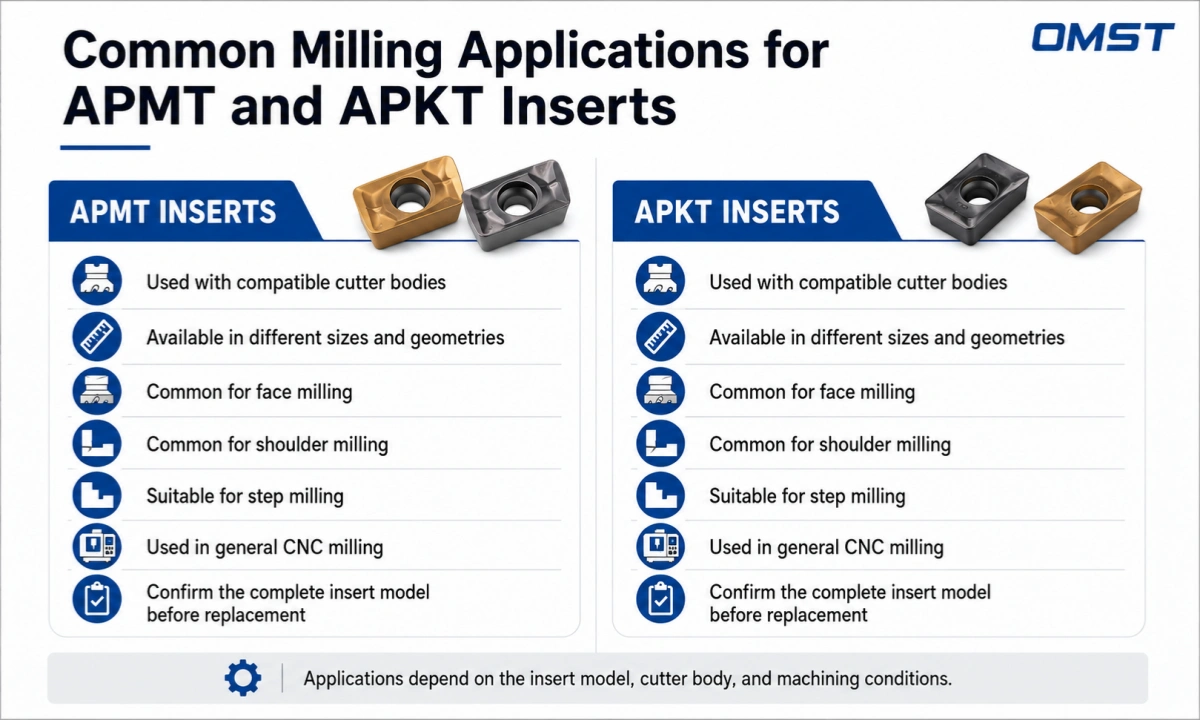
Вставки APMT и APKT: Как выбрать правильный тип
Практичный процесс выбора может снизить риск заказа неправильного продукта..
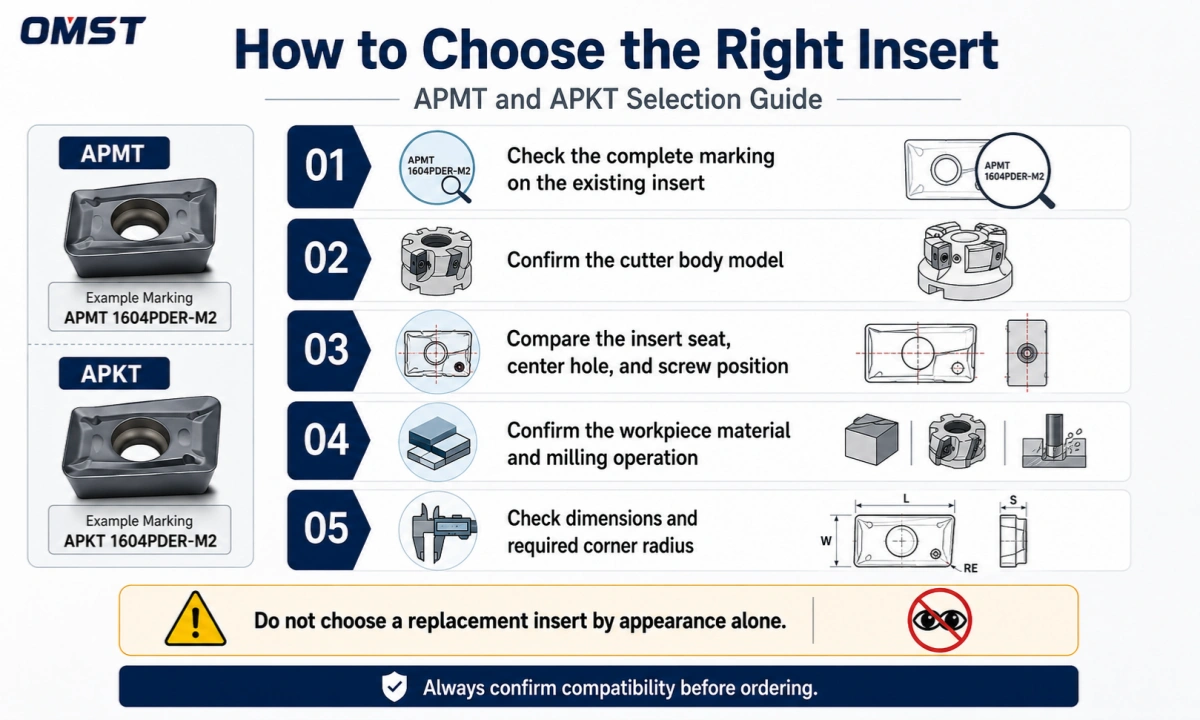
Проверьте полную маркировку пластины
Запишите все буквы и цифры, указанные на существующей вставке..
Не записывайте только:
- APMT1135
- АПМТ1604
- APKT1135
- APKT1604
Суффикс может потребоваться для идентификации правильного стружколома., край дизайн, или приложение.
Подтвердите модель корпуса резака
Проверьте гравировку на корпусе резака., держатель инструмента, режущая головка, или оригинальная упаковка.
Модель корпуса фрезы часто предоставляет более достоверную информацию о совместимости, чем изображение вставки..
Проверьте гнездо пластины и положение винта.
Сравните форму вставного кармана, центральное отверстие, зажимной винт, и посадочные поверхности.
Если возможно, предоставить четкие фотографии:
- Существующая вставка
- Пустой вставной карман
- Маркировка корпуса фрезы
- Зажимной винт
Подтвердите материал заготовки
Различные материалы предъявляют разные требования к режущей кромке..
Общие группы заготовок включают в себя:
- Углеродистая сталь
- Легированная сталь
- Нержавеющая сталь
- Чугун
- Алюминий
- Медь и латунь
- Закаленные материалы
Марка твердого сплава, покрытие, Стружколом и стружколом должны соответствовать материалу и условиям обработки..
Определите операцию фрезерования
Подтвердите, включает ли операция:
- Торцевое фрезерование
- Фрезерование уступов
- Ступенчатое фрезерование
- Боковое фрезерование
- Профильное фрезерование
- Черновая обработка
- Получистовая обработка
- Прерывистая резка
Эта информация помогает определить, может ли потребоваться более прочная кромка или более острая геометрия..
Подтвердите угловой радиус
Радиус угла может варьироваться в пределах одного и того же базового размера пластины..
Поэтому, покупатели должны предоставить необходимый радиус или полную существующую модель.. Неправильный радиус может повлиять на геометрию детали., surface finish, и остаток по углам.
Просмотрите условия резания
Следующая информация может улучшить выбор пластины.:
| Информация | Почему это важно |
| Жесткость машины | Влияет на вибрацию и стабильность кромки |
| Скорость резки | Влияет на тепло и износ |
| Скорость подачи | Влияет на толщину стружки и нагрузку резания |
| Осевая глубина резания | Влияет на взаимодействие кромок |
| Радиальное зацепление | Влияет на силу резания и образование стружки. |
| Состояние охлаждающей жидкости | Влияет на выделение тепла и удаление стружки |
| Прерывистая резка | Может потребоваться более жесткая режущая кромка |
| Требование к поверхности | Помогает определить потребности в черновой или чистовой обработке |
Начальные параметры резки должны быть тщательно проверены.. Затем, их можно регулировать в зависимости от износа инструмента, нагрузка шпинделя, форма чипа, вибрация, и качество поверхности.
Распространенные ошибки выбора APMT и APKT
Выбор вставки только по внешнему виду
Многие сменные фрезерные пластины имеют аналогичную прямоугольную или параллелограммную форму.. Однако, небольшие различия в геометрии, положение отверстия, или посадочные поверхности могут повлиять на совместимость зажима и фрезы.
Выбирая только по 1135 или 1604 Код
Код размера составляет только часть полного обозначения пластины.. Это не подтверждает семейство пластин., угловой радиус, стружколом, марка твердого сплава, или совместимый корпус резака.
Игнорирование суффикса модели
Суффикс может указывать на важное различие в геометрии., передовая подготовка, конструкция стружколома, или приложение. Поэтому, покупатели должны включать полный суффикс при отправке запроса.
Использование неправильного корпуса фрезы
Несовместимый гнездо под пластину может повредить пластину во время установки или обработки.. Кроме того, неправильная установка может привести к повреждению корпуса фрезы, зажимной винт, или вставить сиденье.
Прямое копирование параметров резки
Параметры резки другого станка или поставщика могут не соответствовать фактической заготовке., диаметр фрезы, вылет инструмента, состояние охлаждающей жидкости, или жесткость машины.
По этой причине, Операторы ЧПУ должны корректировать параметры в соответствии с фактическими условиями обработки и оценивать износ инструмента., вибрация, форма чипа, и качество поверхности.
Информация для отправки перед заказом
Чтобы подтвердить правильность вставки, предоставьте как можно больше следующей информации:
- Полная текущая маркировка пластины
- Модель корпуса фрезы
- Вставьте фотографию сиденья
- Материал заготовки
- Твердость материала
- Операция обработки
- Требуемый радиус угла
- Условия резания
- Количество заказа
- Требования к упаковке
Эта информация помогает поставщику проверить совместимость перед предложением или отправкой..
Вопросы и ответы
В чем основное отличие вставок APMT и APKT?
Они принадлежат к разным семействам фрезерных пластин и могут иметь разную геометрию., вставить сиденья, режущие кромки, и совместимые корпуса фрез. Перед выбором необходимо проверить всю модель и корпус фрезы..
Взаимозаменяемы ли вставки APMT и APKT??
Не автоматически. Их следует заменять только после того, как производитель корпуса фрезы, чертеж продукта, или техническая проверка подтверждает совместимость.
Что значит 1135 среднее значение в модели фрезерной пластины?
Это часть обозначения размера пластины.. Однако, он не определяет полную геометрию, угловой радиус, стружколом, оценка, или совместимый корпус резака.
Что значит 1604 среднее значение в модели фрезерной пластины?
Это также часть обозначения размера пластины.. Покупателям по-прежнему нужна группа пластин, полный суффикс, модель корпуса фрезы, и размерная информация.
Влияет ли суффикс модели на совместимость пластин??
Это может. Суффикс может идентифицировать стружколом, передовой, приложение, оценка, или структура, специфичная для производителя.
Какая пластина подходит для фрезерования уступов?
Оба семейства могут поддерживать фрезерование уступов в сочетании с подходящими корпусами фрез.. Правильный выбор зависит от конструкции фрезы., материал, условия резания, и требуемая геометрия плеча.
Можно ли использовать вставки APMT и APKT из нержавеющей стали??
Для нержавеющей стали можно использовать подходящие версии с покрытием и твердые сплавы.. Однако, сплав пластины, стружколом, параметры резки, жесткость машины, и условия охлаждающей жидкости должны быть подтверждены.
Как проверить угловой радиус пластины??
Проверьте полную маркировку продукта, чертеж поставщика, оригинальная упаковка, или измеренная спецификация. Базовый код семейства и размера сам по себе не может подтвердить радиус..
Как определить правильную фрезерную пластину?
Начните с полной маркировки пластины и модели корпуса фрезы.. Затем подтвердите размеры, вставить сиденье, центральное отверстие, положение винта, угловой радиус, материал, и операции механической обработки.
Какую информацию я должен предоставить перед заказом?
Укажите текущую маркировку пластины, модель корпуса фрезы, фото вставки сиденья, материал заготовки, применение механической обработки, требуемый радиус угла, и количество заказа.
Тщательное сравнение вставок APMT и APKT может уменьшить проблемы совместимости и помочь покупателям избежать заказа неправильной модели на замену..
Запросить помощь в выборе вставок APMT или APKT
Выбор правильной вставки требует большего, чем просто сравнение общего названия модели или внешнего вида продукта..
Пожалуйста, пришлите OMIST текущую маркировку пластины., модель корпуса фрезы, фото вставки сиденья, материал заготовки, применение механической обработки, требуемый радиус угла, и количество заказа.
Наша команда поможет проверить семейство пластин, размер, совместимость с корпусом фрезы, и доступные варианты продукта. После подтверждения технической информации, мы предоставим предложение на основе ваших требований.