 Präzisions-Fräser,Schneidwerkzeuge für die CNC-Bearbeitung jedes Materials

A 2 Der Nutfräser wird häufig für die Aluminiumbearbeitung verwendet, Schlitzung über die gesamte Breite, Taschenfräsen, Seitenfräsen, und leichtes Schruppen. Es ist auch für Kupfer geeignet, brass, ausgewählte Kunststoffe, und andere Anwendungen, bei denen die Spanabfuhr Priorität hat.
Die beiden Schneiden hinterlassen relativ breite Nutrillen. daher, Der Fräser bietet mehr Platz für Späne als viele Werkzeuge mit höherer Spanzahl. Dies kann dazu beitragen, das Ansammeln von Spänen bei geschlossenen Betrieben oder bei Vorgängen mit hohem Spänevolumen zu reduzieren.
Jedoch, Zweiflöten sind nicht automatisch für jede Aufgabe die beste Wahl. Das richtige Werkzeug hängt immer noch vom Werkstückmaterial ab, Schneidvorgang, Werkzeugeinsatz, erforderliches Finish, Steifigkeit der Maschine, und spanabhebendes Verfahren.
Schnelle Antwort
Was ist ein 2 Nutenfräser verwendet für?
Zu den typischen Anwendungen gehören::
- Schlitzung aus Aluminium
- Taschenfräsen
- Schlitzschneiden über die gesamte Breite
- Seitenfräsen in Nichteisenmaterialien
- Leichtes Schruppen
- Bearbeitung von Kupfer und Messing
- Ausgewählte Kunststoffbearbeitung
- Operationen, bei denen die Späne schwer zu entfernen sind
Ein zweischneidiger Fräser ist besonders nützlich, wenn der Spanraum und die Spanabfuhr wichtiger sind als die Erhöhung der Anzahl der Schneidkanten. Im Gegensatz, Bei größerer Kernfestigkeit kann eine höhere Anzahl an Rillen vorzuziehen sein, mehr Schneidkontakte, oder eine feine Oberflächenbeschaffenheit ist die Hauptanforderung.
Was ist ein 2-schneidiger Schaftfräser??
Ein Schaftfräser mit zwei Schneiden hat zwei spiralförmige Schneidkanten und zwei Nuten entlang des Fräserkörpers. Diese Rillen sind Teil der Schneidkante und bieten außerdem Platz für Späne, die den Schneidbereich verlassen.
Im Vergleich zu vielen vier- oder sechsschneidigen Werkzeugen gleichen Durchmessers, Ein zweischneidiges Design bietet normalerweise mehr Platz für die Spannuten. Infolge, Es wird häufig für Materialien in Betracht gezogen, die große Späne produzieren, und für Operationen, bei denen der Fräser vom Werkstück umgeben ist.
Die Anzahl der Nuten ist nur ein Teil des Werkzeugdesigns. Fräserdurchmesser, Flötenlänge, Rumpfstärke, Helixwinkel, Kantenvorbereitung, Beschichtung, und Endgeometrie wirken sich auch auf die Leistung aus.
Die besten Einsatzmöglichkeiten eines 2-schneidigen Schaftfräsers auf einen Blick
| Anwendung | Warum zwei Flöten helfen können | Wichtiger Zustand |
|---|---|---|
| Schlitzung aus Aluminium | Bietet mehr Platz für den Chip | Scharfe Geometrie und zuverlässige Spanabfuhr |
| Schlitzung über die gesamte Breite | Hilft, ein hohes Spanvolumen zu beseitigen | Geeignete Schnitttiefe und Kühlmittel- oder Luftzufuhr |
| Taschenfräsen | Reduziert das Risiko einer Chip-Packung | Taschentiefe und Eintrittsmethode müssen berücksichtigt werden |
| Kupfer und Messing | Unterstützt die Spanabfuhr | Legierungsqualität und Gratanforderungen beeinflussen die Auswahl |
| Kunststoffe | Bietet Platz für die Spanabfuhr | Kunststofftyp und Wärmekontrolle sind wichtig |
| Seitenfräsen | Geeignet für viele Nichteisenanwendungen | Radialer Eingriff und Oberflächenbeschaffenheit müssen überprüft werden |
| Leichtes Schruppen | Unterstützt den spanintensiven Materialabtrag | Maschinensteifigkeit und Werkzeugreichweite bleiben wichtig |
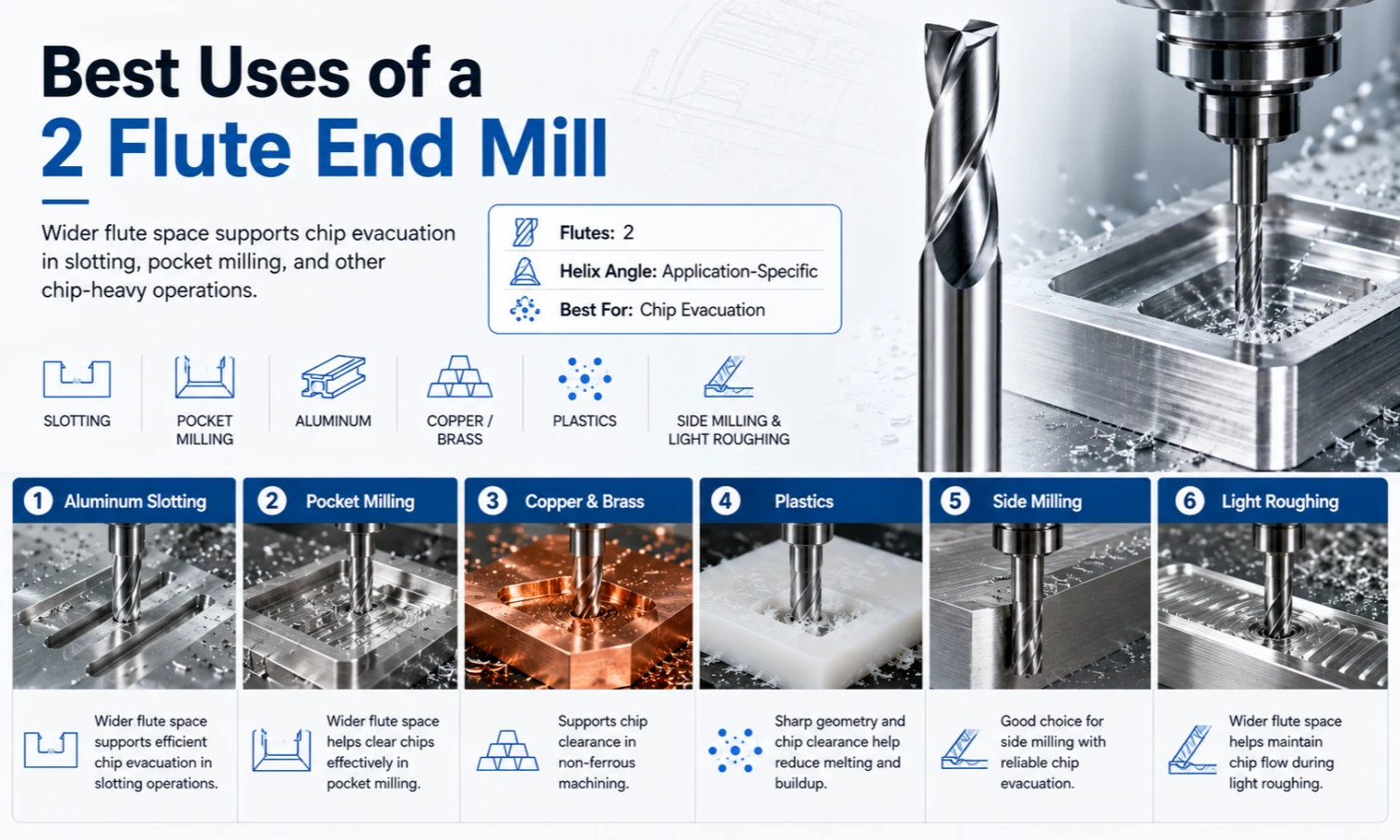
Hauptanwendungen eines 2-schneidigen Schaftfräsers
Aluminiumbearbeitung
Die Aluminiumbearbeitung ist eine der häufigsten Anwendungen für a 2 Nutfräser.
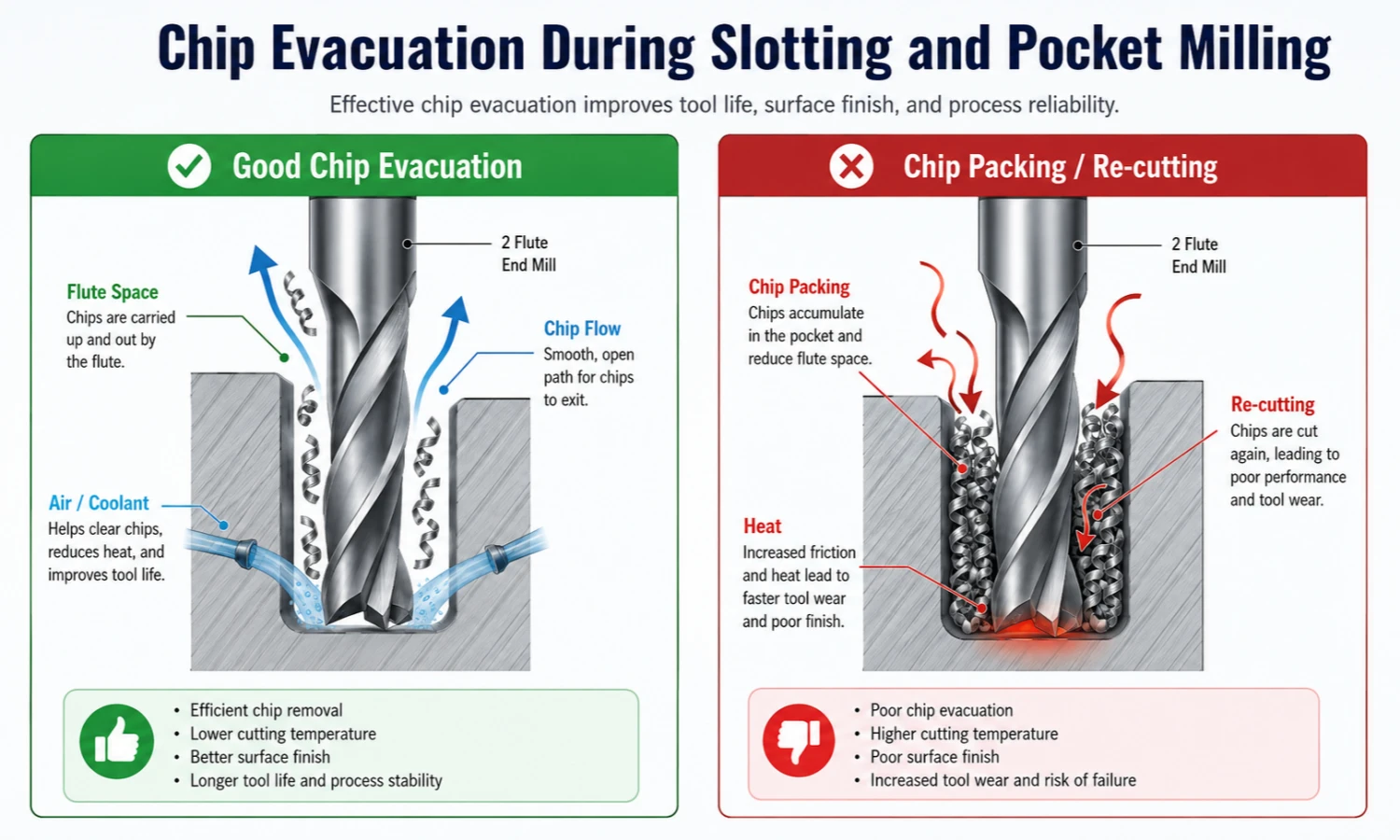
Viele Aluminiumlegierungen erzeugen relativ große oder kontinuierliche Späne. Wenn diese Chips in einem Schlitz oder einer Tasche verbleiben, Sie können nachgeschnitten oder gegen das Werkstück gedrückt werden. Dies kann die Hitze erhöhen, zu Aufbauschneidenbildung führen, und die Schnittstabilität verringern.
Oft kommt ein passender Aluminiumschneider zum Einsatz:
- Scharfe Schnittkanten
- Glatte oder polierte Nutoberflächen
- Ausreichender Flötenraum
- Eine unbeschichtete Ausführung oder eine geeignete reibungsarme Beschichtung
- Ein anwendungsspezifischer Spiralwinkel
- Zuverlässige Luft, Nebel, oder Kühlmittelzufuhr
Zwei Spannuten bieten nützlichen Spanraum, Die Anzahl der Nuten allein garantiert jedoch keine gute Aluminiumleistung. Die komplette Werkzeuggeometrie sollte zur Legierung passen, Werkzeugdurchmesser, Schnitttiefe, Maschinenzustand, und erforderliches Finish.
Schlitzung über die gesamte Breite
Beim Schlitzen über die gesamte Breite entsteht ein hohes Spanvolumen, da der Fräser über den gesamten Durchmesser in das Material eingreift.
Zusätzlich, Die Schlitzwände schränken die für die Spanabfuhr verfügbaren Wege ein. Späne können unter oder um den Fräser herum zurückbleiben, insbesondere bei tieferen Schnitten.
Ein zweischneidiges Werkzeug kann Abhilfe schaffen, da die breiteren Spannuten mehr Platz für Späne bieten. Trotzdem, Eine stabile Schlitzung hängt auch davon ab:
- Schlitztiefe
- Fräserdurchmesser
- Flötenlänge
- Werkzeugüberhang
- Kühlmittel- oder Luftzugang
- Steifigkeit der Maschine
- Werkstückspannung
- Schnittparameter
Für tiefe Schlitze, Verwenden Sie nur die Nutlänge und Gesamtreichweite, die für die Funktion erforderlich sind. Eine übermäßige Werkzeugverlängerung kann die Durchbiegung und das Rattern verstärken.
Taschenfräsen
Das Taschenfräsen kombiniert Materialabtrag mit eingeschränktem Spanfluss. daher, Das Werkzeug muss effizient schneiden, während die Späne den umschlossenen Bereich verlassen.
Für Aluminiumtaschen kommt oft ein Zweischneider in Betracht, grobe Taschenbearbeitung, und andere Anwendungen, bei denen die Chip-Packung Probleme verursacht.
Jedoch, Taschentiefe und Eingabemethode wirken sich auch auf die Werkzeugauswahl aus. Eine flache offene Tasche schafft andere Bedingungen als eine tiefe geschlossene Tasche. Ebenfalls, Der seitliche Eingriff nach dem Einstieg erfordert möglicherweise eine andere Strategie als beim ersten Taschenstart.
Wenn Späne in der Tasche bleiben, Verbessern Sie die Luft- oder Kühlmittelzufuhr, bevor Sie die Schnittlast erhöhen.
Kupfer und Messing
Sowohl Kupfer als auch Messing sind Nichteisenmaterialien, aber sie bearbeiten nicht auf die gleiche Weise.
Reines Kupfer kann duktil sein und lange Späne oder Grate erzeugen. In der Zwischenzeit, Unterschiedliche Messinglegierungen können zu kürzeren Spänen führen und erfordern eine unterschiedliche Kantenvorbereitung.
Für diese Materialien, Ein zweischneidiger Fräser kann die Spanabfuhr unterstützen. Jedoch, Das genaue Werkzeug sollte auch widerspiegeln:
- Materialqualität
- Gratanforderungen
- Ziel für die Oberflächenbeschaffenheit
- Werkzeugeinsatz
- Fräserdurchmesser
- Kühlmittel- oder Schmiermethode
Eine scharfe Schneidgeometrie ist besonders wichtig, wenn Reibung oder Materialanhaftung ein Problem darstellen.
Kunststoffe und ausgewählte Verbundwerkstoffe
Für ausgewählte technische Kunststoffe werden auch Zweischneidefräser eingesetzt, da der Spannutenraum dazu beiträgt, Späne aus der Schneidzone zu entfernen.
Die Kunststoffbearbeitung kann zu Problemen führen, z:
- Schmelzen
- Reiben
- Chipverpackung
- Kantenriss
- Gratbildung
- Materialverformung
Die richtige Geometrie hängt davon ab, ob der Kunststoff weich ist, starr, gefüllt, verstärkt, oder hitzeempfindlich. daher, Es sollte nicht davon ausgegangen werden, dass ein allgemeiner Fräser für jeden Kunststoff geeignet ist.
Für ausgewählte Verbundwerkstoffe können auch anwendungsspezifische Werkzeuggeometrien eingesetzt werden. Jedoch, Verbundwerkstoffe variieren stark, und einige erfordern eine spezielle Komprimierung, Diamantschliff, beschichtet, oder scheuerbeständige Fräser.
Seitenfräsen und leichtes Schruppen
A 2 Der Nutenfräser kann Seitenfräsen durchführen, Profilierung, und leichtes Schruppen, wenn das Werkzeug zum Material und Eingriff passt.
Beim Seitenfräsen, Späne haben in der Regel mehr Platz als beim Schlitzen über die gesamte Breite. daher, Der Flötenraum ist möglicherweise weniger restriktiv. Werkzeugsteifigkeit, radialer Eingriff, Maßhaltigkeit, und Oberflächenbeschaffenheit könnten wichtiger werden.
Zum leichten Schruppen in Aluminium oder anderen Nichteisenmaterialien, Ein zweischneidiges Design kann eine effiziente Spanabfuhr unterstützen. Jedoch, Schweres Schruppen erfordert möglicherweise eine spezielle Schruppgeometrie, Spanbrecherprofil, oder eine andere Flötenzählung.
Wählen Sie den Fräser nicht nur deshalb aus, weil der Vorgang als „Schruppen“ bezeichnet wird. Überprüfen Sie das Chipvolumen, Schnitttiefe, Maschinenleistung, Werkzeugreichweite, und erforderliche Materialabtragsleistung.
Warum zwei Schneiden bei spanintensiven Bearbeitungen gut funktionieren
Mehr Platz für die Flöte
Bei einem Fräser ist der Platz zwischen seinen Schneidkanten und dem Kern begrenzt.
Wenn die Anzahl der Flöten zunimmt, Die verfügbaren Nutennuten werden normalerweise kleiner, sofern nicht die gesamte Werkzeuggeometrie geändert wird. Mit zwei Flöten, Der Spanbildung und -abfuhr kann mehr Platz zur Verfügung gestellt werden.
Dies ist nützlich während:
- Schlitzung über die gesamte Breite
- Bearbeitung tiefer Taschen
- Aluminiumbearbeitung
- Kunststoffschneiden
- Andere Operationen mit hohem Chipvolumen
Jedoch, Mehr Flötenraum kann auch eine andere Kernstruktur bedeuten. daher, Die erforderliche Steifigkeit sollte zusammen mit der Spanabfuhr berücksichtigt werden.
Spanabfuhr und Aufbauschneide
Eine gute Spanabfuhr verhindert, dass Späne wiederholt geschnitten werden.
Nachschneiden kann zunehmen:
- Schnitttemperatur
- Werkzeugverschleiß
- Modernster Schaden
- Oberflächenspuren
- Spanschweißen
- Aufbaukante
- Maschinenbelastung
Aluminium und andere duktile Materialien können bei Hitze an der Schneidkante haften, Reibung, oder die Schmierbedingungen sind ungeeignet.
Ein scharfer Fräser mit geeigneten Nutoberflächen kann Abhilfe schaffen. Zusätzlich, richtig gerichtete Luft, Nebel, oder Kühlmittel können Späne entfernen, bevor sie sich im Inneren der Struktur ansammeln.
Was Flötengraf Ihnen nicht sagen kann
Die Anzahl der Flöten lässt sich nicht unabhängig bestimmen:
- Schnittlast
- Werkzeugsteifigkeit
- Tauchfähigkeit
- Maximale Schnitttiefe
- Geeignetes Werkstückmaterial
- Erforderliche Oberflächenbeschaffenheit
- Sichere Spindelgeschwindigkeit
- Vorschubgeschwindigkeit
- Standzeit
Zum Beispiel, Zwei Werkzeuge mit der gleichen Spannutenzahl können unterschiedliche Kerndurchmesser haben, Helixwinkel, Endgeometrien, Beschichtungen, und Hartmetallsorten.
Für eine umfassendere Erklärung der Nutengeometrie und -auswahl, Lesen Sie unsere Design der Schaftfräsernut und Führung zur Spanabfuhr.
Kann ein 2-schneidiger Schaftfräser eintauchen??
Einige zweischneidige Schaftfräser mit Mittenschnitt unterstützen Ramping, spiralförmiger Eintritt, Taschenstart, oder kontrollierter Taucheinstieg.
Jedoch, Zwei Spannuten bedeuten nicht automatisch, dass der Fräser vertikal eintauchen kann. Die Endschneiden müssen bis zur Werkzeugmitte reichen, und die Eingabemethode muss zum Material und zum Fräserdesign passen.
Beim geraden Eintauchen entstehen auch andere Schnittlasten und Spanflussbedingungen als beim Seitenfräsen. daher, Rampen, spiralförmiger Eintritt, oder Vorbohren kann bei tieferen oder anspruchsvolleren Anwendungen eine bessere Kontrolle ermöglichen.
Für eine detaillierte Anleitung, lesen kann ein 2 Nutfräser-Eintauchen.
Wann ist ein 2-schneidiger Schaftfräser nicht die erste Wahl??
Feine Verarbeitung mit leichtem Eingriff
Während der leichten Endbearbeitung, Das Spanvolumen kann gering sein. In dieser Situation, Große Nuten sind möglicherweise weniger wichtig als die Anzahl der Schneidkontakte und die Stabilität des Fräsers.
Bei manchen Anwendungen kann ein Werkzeug mit einer höheren Spanzahl eine feinere oder gleichmäßigere Oberfläche erzielen. Jedoch, Das Ergebnis hängt immer noch vom Rundlauf ab, Werkzeuggeometrie, Steifigkeit der Maschine, radialer Eingriff, und Schnittparameter.
Bei richtiger Steuerung von Werkzeug und Prozess kann auch ein Zweischneider eine gute Oberfläche erzeugen.
Anwendungen, die eine größere Kernstärke erfordern
Tiefe Funktionen, lange Überhänge, hoher Schnittdruck, oder instabile Aufbauten können eine höhere Werkzeugsteifigkeit erfordern.
Ein Fräser mit einem stärkeren Kern kann die Durchbiegung verringern. Jedoch, Die Erhöhung der Flötenanzahl ist nicht die einzige Lösung. Fräserdurchmesser, Flötentiefe, Flötenlänge, Werkzeugmaterial, Zustand des Halters, und Maschinensteifigkeit wirken sich auch auf die Festigkeit aus.
Stahl und hitzebeständige Materialien
Ein zweischneidiges Werkzeug ist nicht auf Aluminium oder Kunststoffe beschränkt. Bei einigen Anwendungen zum Schlitzen von Stahl werden möglicherweise auch zwei oder drei Spannuten verwendet, wenn die Spanabfuhr schwierig ist.
Jedoch, Stahlseitenfräsen, Halbfertigbearbeitung, Beim Schlichten können vier oder mehr Spannuten zum Einsatz kommen, wenn der Spanraum ausreichend ist und zusätzliche Schneidkontakte sinnvoll sind.
Edelstahl und hitzebeständige Materialien erfordern ebenfalls eine sorgfältige Hitzekontrolle, Kaltverfestigung, Werkzeugeinsatz, Beschichtung, und Kantenfestigkeit.
Für einen gezielten Vergleich, lesen 2 Nutfräser vs 4 Flöte.
So entscheiden Sie, ob zwei Flöten für die Operation geeignet sind
Bevor Sie sich für einen Zweischneider entscheiden, Überprüfen Sie den vollständigen Bearbeitungszustand.
Stellen Sie die folgenden Fragen:
- Entsteht bei der Operation ein hohes Spanvolumen??
- Führt der Fräser Nuten über die gesamte Breite aus??
- Ist die Tasche tief oder geschlossen??
- Ist die Späneabfuhr begrenzt??
- Neigt das Material zur Bildung von Aufbauschneiden??
- Ist das erforderliche Finish wichtiger als der Nutraum??
- Ist der Werkzeugüberstand länger als nötig??
- Ist der Maschinen- und Vorrichtungsaufbau starr??
- Kann lüften, Nebel, oder Kühlmittel in die Schneidzone gelangen?
- Erfordert die Operation eine Mittenschnittgeometrie??
Wählen Sie zwei Spannuten, wenn der Spanraum besonders wichtig ist und die Fräserstruktur für die Bearbeitung geeignet ist.
Wählen Sie eine andere Spananzahl, wenn die Spanabfuhr bereits stabil ist und der Prozess mehr Schneidkontakte benötigt, größere Rumpfstärke, oder eine andere Balance zwischen Schruppen und Schlichten.
Für eine breitere Auswahlhilfe, lesen vergleichen 2, 4, Und 6 Schaftfräser mit Nut.
FAQ über 2 Verwendungsmöglichkeiten für Nutfräser
Ist ein 2-schneidiger Schaftfräser nur für Aluminium?
NEIN. Aluminium ist eine häufige Anwendung, aber auch für Kupfer werden Zweischneider verwendet, brass, ausgewählte Kunststoffe, Seitenfräsen, Schlitzen, Taschenbildung, und andere Vorgänge, bei denen die Spanabfuhr wichtig ist.
Die genaue Werkzeuggeometrie sollte zum Werkstück und den Schnittbedingungen passen.
Ist ein 2-schneidiger Schaftfräser, der sich zum Nutenfräsen über die gesamte Breite eignet?
Ja, Zum Schlitzen über die gesamte Breite wird üblicherweise ein geeigneter Zweischneidefräser verwendet, insbesondere in Aluminium und anderen Nichteisenmaterialien.
Die breiteren Nuten bieten Platz für Späne. Jedoch, Schlitztiefe, Kühlmittelzufuhr, Werkzeugreichweite, und Maschinensteifigkeit müssen ebenfalls berücksichtigt werden.
Kann ein 2-schneidiger Schaftfräser zum Seitenfräsen verwendet werden??
Ja. Ein zweischneidiges Werkzeug kann Seitenfräsen und Profilieren durchführen.
Beim Seitenfräsen, radialer Eingriff, Werkzeugsteifigkeit, erforderliche Genauigkeit, und die Oberflächenbeschaffenheit kann wichtiger sein als der maximale Nutraum.
Kann ein 2-schneidiger Schaftfräser Stahl bearbeiten??
Ja, Einige Schaftfräser mit zwei Schneiden können Stahl bearbeiten, insbesondere beim Schlitzen oder anderen Vorgängen, bei denen die Spanabfuhr eingeschränkt ist.
Jedoch, Die richtige Wahl hängt von der Stahlsorte ab, Schnitttiefe, Fräsergeometrie, Beschichtung, Steifigkeit der Maschine, und Kühlmittelmethode.
Kann ein 2-schneidiger Schaftfräser eintauchen??
Einige mittig schneidende Zweischneidefräser können ein kontrolliertes Eintauchen unterstützen, Rampen, oder spiralförmiger Eintritt.
Bestätigen Sie immer die Endgeometrie, bevor Sie den axialen Eintritt programmieren.
Erzeugt ein 2-Schneiden-Fräser immer eine rauere Oberfläche??
NEIN. Die Oberflächenbeschaffenheit hängt nicht nur von der Anzahl der Nuten ab.
Werkzeugunrundheit, Spitzenqualität, Vorschub pro Zahn, radialer Eingriff, Maschinenstabilität, materieller Zustand, und Werkzeugweg wirken sich alle auf die fertige Oberfläche aus.
Wann sollte ich stattdessen drei oder vier Flöten wählen??
Ziehen Sie drei oder vier Spannuten in Betracht, wenn die Spanabfuhr stabil bleibt und der Vorgang mehr Schneidkontakte erfordert, größere Steifigkeit, oder höheres Veredelungspotenzial.
Drei Spannuten können für ein Gleichgewicht zwischen Spanraum und Kantenanzahl sorgen. Vier Spannuten eignen sich möglicherweise für die Stahlbearbeitung, Seitenfräsen, und Endbearbeitungsarbeiten.
Verwandte Leitfäden
Weitere Produkt- und Anwendungsinformationen, besuchen:
Kann ein 2 Nutfräser-Eintauchen?
Vergleichen 2, 4, Und 6 Schaftfräser mit Nut
Design und Auswahl der Schaftfräsernut
Brauche ein 2 Nutfräser für Ihre Anwendung?
Senden Sie uns Ihr Werkstückmaterial, Bearbeitungsvorgang, erforderliche Fräsergröße, Zeichnung, Referenzmodell, aktuelle Werkzeuginformationen, und Menge, sofern verfügbar. Wir überprüfen die bekannten Anforderungen und helfen bei der Festlegung einer geeigneten Standard- oder kundenspezifischen Werkzeugrichtung.
Sehen Sie sich unseren Standard und unsere Sonderanfertigungen an Vollhartmetall 2 Nutfräser Optionen.
E-Mail: sales@cutterbest.com