 Präzisions-Fräser,Schneidwerkzeuge für die CNC-Bearbeitung jedes Materials

Wozu dient ein Gewindefräser?? In der CNC-Bearbeitung, Es wird verwendet, um präzise Innen- und Außengewinde durch einen kontrollierten Fräswerkzeugweg zu bearbeiten.
Im Gegensatz zum Klopfen, Durch das Gewindefräsen haben Maschinisten mehr Kontrolle über die Gewindegröße, Tiefe, und Spanabfuhr. daher, Viele CNC-Werkstätten verwenden Gewindefräsen für Sacklöcher, harte Materialien, benutzerdefinierte Gewindegrößen, und Präzisionsteile.
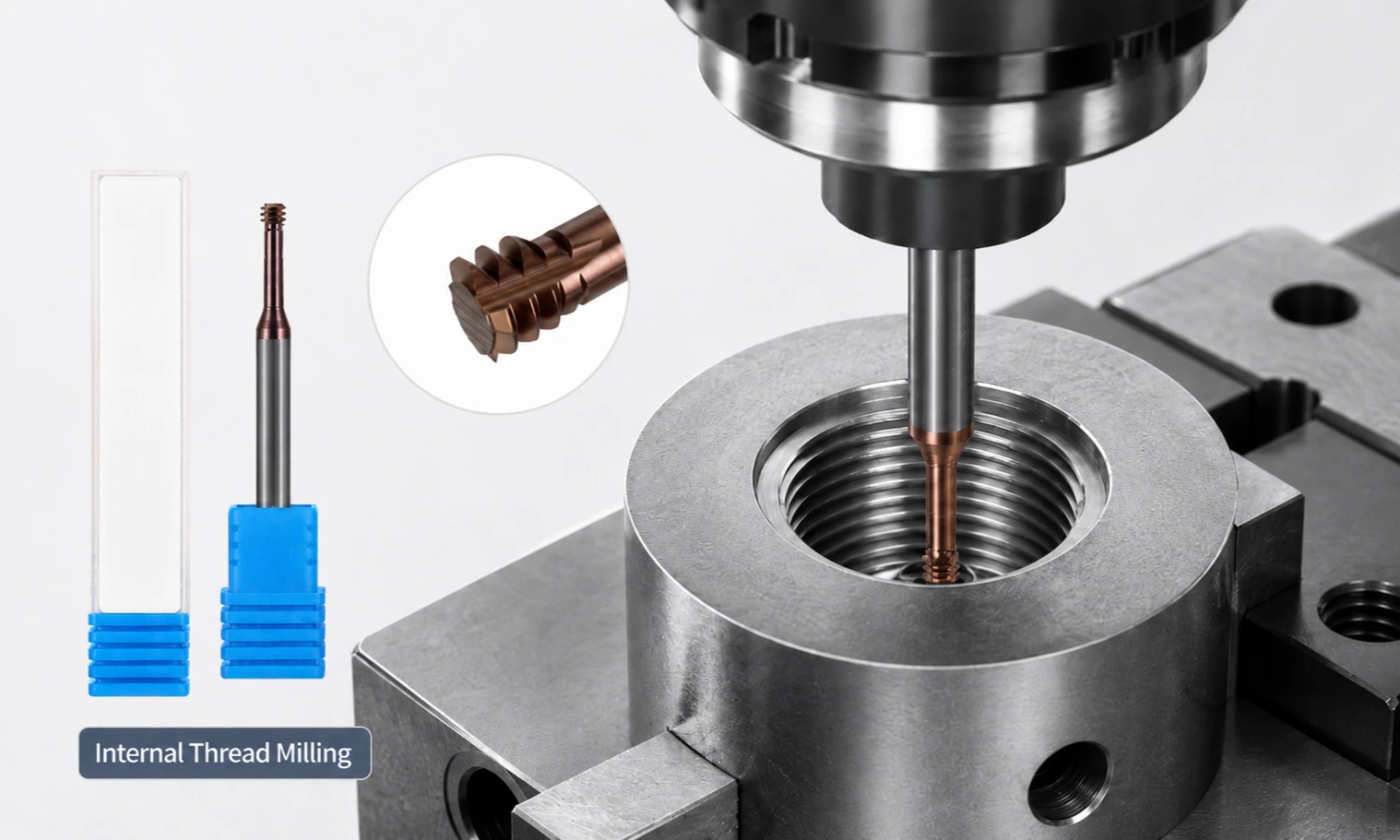
Was ist ein Gewindefräser??
Ein Gewindefräser ist ein Schneidwerkzeug, das Gewinde auf einer CNC-Fräsmaschine oder einem Bearbeitungszentrum bearbeitet. Es folgt einem programmierten spiralförmigen Werkzeugweg und schneidet das Gewindeprofil schrittweise innerhalb oder außerhalb des Werkstücks.
In einfachen Worten, Das Werkzeug drückt nicht wie ein Gewindebohrer direkt durch das Loch. Stattdessen, Es bewegt sich um das Loch herum, während es die Gewindeform schneidet. Infolge, Der Prozess ermöglicht eine bessere Kontrolle über die Gewindegenauigkeit und die Werkzeugbewegung.
Maschinenbauer verwenden häufig Gewindefräser für:
- Interne Threads
- Externe Threads
- Sacklöcher
- Durchgangslöcher
- Benutzerdefinierte Gewindegrößen
- Präzisions-CNC-Komponenten
Für kundenspezifische Hartmetall-Gewindefräswerkzeuge, Sie können unsere ansehen Gewindefräser.
Wofür wird ein Gewindefräser verwendet??
Ein Gewindefräser wird hauptsächlich zur CNC-Gewindebearbeitung eingesetzt. Es können Gewinde in unterschiedlichen Materialien und Teilestrukturen hergestellt werden, insbesondere wenn das Gewinde eine hohe Genauigkeit oder ein nicht standardmäßiges Design erfordert.
Innengewindefräsen
Beim Innengewindefräsen werden Gewinde in einem Loch erzeugt. Diese Methode ist bei mechanischen Teilen üblich, Formkomponenten, Automobilteile, und Präzisionsbaugruppen.
Zum Beispiel, Ein vorgebohrtes Loch kann mit einem Hartmetall-Gewindefräser bearbeitet werden, um ein sauberes Innengewinde zu erzeugen. Weil der Werkzeugweg durch CNC-Programmierung gesteuert wird, Der Prozess kann die Thread-Konsistenz verbessern.
Außengewindefräsen
Beim Außengewindefräsen werden Gewinde am Außendurchmesser eines Teils erzeugt. Diese Anwendung wird häufig für Wellen verwendet, Anschlüsse, Beschläge, und kundenspezifische mechanische Komponenten.
Im Vergleich zu herkömmlichen Gewindeschneidmethoden, CNC-Gewindefräsen bietet mehr Flexibilität, wenn die Gewindegröße oder -steigung eine besondere Kontrolle erfordert.
Sackloch-Gewindebearbeitung
Das Gewindefräsen eignet sich für Sacklöcher, da das Werkzeug nicht mit dem gleichen Risiko wie bei einem Gewindebohrer den Boden erreichen muss. Zusätzlich, Späne können während des Schneidvorgangs leichter abtransportiert werden.
Daher ist das Gewindefräsen eine gute Wahl, wenn das Teil eine begrenzte Lochtiefe hat oder ein Werkzeugbruch zu ernsthaften Produktionsproblemen führen würde.
Benutzerdefinierte und nicht standardmäßige Gewindegrößen
Viele CNC-Teile verwenden spezielle Gewindeformen, einzigartige Stellplätze, oder nicht standardmäßige Tiefen. In diesen Fällen, Ein kundenspezifischer Gewindefräser ist möglicherweise die bessere Wahl.
Aus diesem Grund, Käufer schicken oft Zeichnungen, Thread-Standards, oder Musterdetails, bevor Sie ein individuelles Werkzeug bestellen.
Häufige Anwendungen von Gewindefräsern
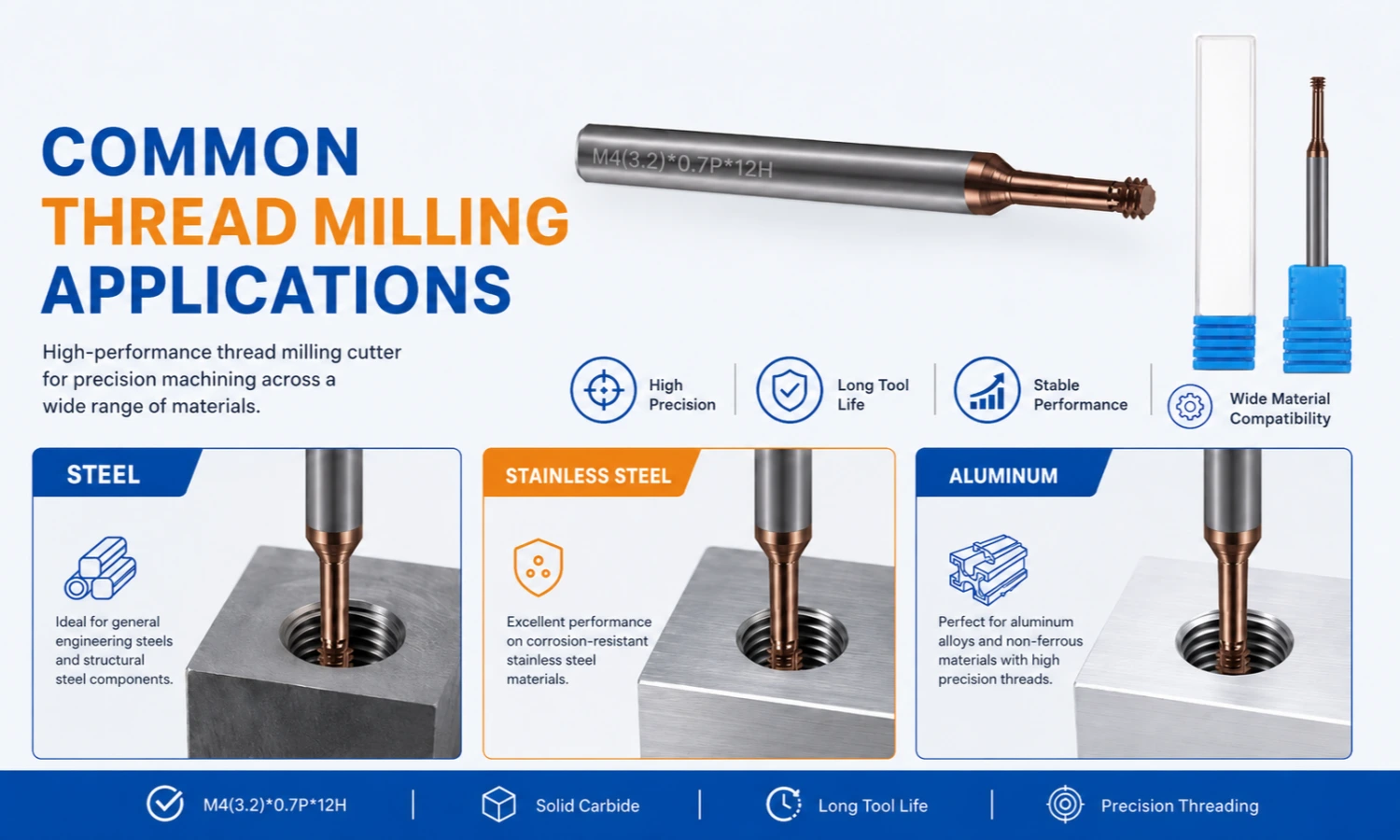
Gewindefräser werden in vielen CNC-Bearbeitungsbranchen eingesetzt. Sie sind besonders hilfreich, wenn das Teil einen stabilen Schnitt erfordert, genaues Gewindeprofil, und flexible Werkzeugsteuerung.
| Anwendungsbereich | Warum Gewindefräsen nützlich ist |
| Präzisions-CNC-Teile | Hilft bei der Kontrolle der Gewindegröße und -steigung |
| Formenbauteile | Unterstützt präzise Gewinde in kundenspezifischen Teilen |
| Automobilteile | Geeignet für die wiederholbare Gewindebearbeitung |
| Luft- und Raumfahrtkomponenten | Hilft bei der Bearbeitung hochwertiger Teile mit besserer Kontrolle |
| Teile aus Edelstahl | Reduziert das Risiko von Werkzeugbrüchen im Vergleich zum Gewindeschneiden |
| Sacklochteile | Verbessert die Spanabfuhr und Tiefenkontrolle |
| Kundenspezifische Maschinenteile | Unterstützt nicht standardmäßige Gewindegrößen und Zeichnungen |
In vielen Fällen, Gewindefräsen funktioniert auch zusammen mit Bohren und Anfasen. Vor dem Gewindefräsen, Das Werkstück benötigt in der Regel ein vorgebohrtes Loch. Für Lochwerkzeuge, Sie können es überprüfen Hartmetallbohrer.
Warum Gewindefräsen anstelle von Gewindeschneiden verwenden??
Klopfen ist immer noch üblich, und es funktioniert gut für viele Standardthreads. Jedoch, Gewindefräsen bietet in einigen CNC-Bearbeitungssituationen mehr Flexibilität.
Bessere Kontrolle für Sacklöcher
Ein Gewindebohrer muss normalerweise tief in das Loch eindringen, um das Gewinde zu formen oder zu schneiden. Wenn Späne das Loch verstopfen, der Wasserhahn könnte brechen. Jedoch, Ein Gewindefräser trägt Material über eine Fräsbahn ab, so kann die Spanabfuhr einfacher sein.
Geringeres Risiko eines Werkzeugbruchs
Werkzeugbruch kann das Teil beschädigen, vor allem in Edelstahl, legierter Stahl, oder teure Komponenten. Durch Gewindefräsen kann dieses Risiko verringert werden, da die Schnittkräfte oft leichter zu kontrollieren sind.
Flexible Kontrolle der Gewindegröße
In einigen Fällen, Ein Gewindefräswerkzeug kann durch Änderung des CNC-Programms unterschiedliche Gewindedurchmesser bei gleicher Steigung bearbeiten. Dies hängt von der Gewindenorm und der Werkzeugkonstruktion ab, aber es gibt Maschinisten mehr Flexibilität.
Geeignet für harte oder schwierige Materialien
Gewindefräsen eignet sich gut für Materialien, die sich möglicherweise nur schwer schneiden lassen. Zum Beispiel, Edelstahl und legierter Stahl benötigen oft einen stabilen Schnitt, richtige Beschichtung, und gute Spankontrolle.
Dieser Artikel gibt nur einen grundlegenden Vergleich. Ein detaillierter Vergleich zwischen Gewindefräsen und Gewindeschneiden sollte in einem separaten Leitfaden behandelt werden.
Welche Materialien können mit Gewindefräsern bearbeitet werden??
Gewindefräser können viele gängige Werkstückmaterialien bearbeiten. Jedoch, die Werkzeugkonstruktion, Beschichtung, und Schnittparameter sollten zum Material passen.
Stahl und legierter Stahl
Stahl und legierter Stahl sind gängige Materialien zum Gewindefräsen. Ein beschichteter Hartmetall-Gewindefräser kann zur Verbesserung der Standzeit und Schnittstabilität beitragen.
Edelstahl
Edelstahl erzeugt bei der Bearbeitung oft mehr Wärme. daher, Beschichtungsauswahl, Schnittgeschwindigkeit, und Spanabfuhr sind wichtig.
Aluminium und Nichteisenmaterialien
Aluminium benötigt in der Regel scharfe Schneidkanten und eine gute Spanabfuhr. Zusätzlich, Das Werkzeug sollte während der Bearbeitung eine Aufbauschneide vermeiden.
Gusseisen und andere bearbeitbare Materialien
Gusseisen, Messing, Kupferlegierungen, und andere bearbeitbare Materialien können ebenfalls mit Gewindefräsen bearbeitet werden. Die Wahl des besten Werkzeugs hängt vom Design des Teils und den Schnittbedingungen ab.
So wählen Sie den richtigen Gewindefräser aus
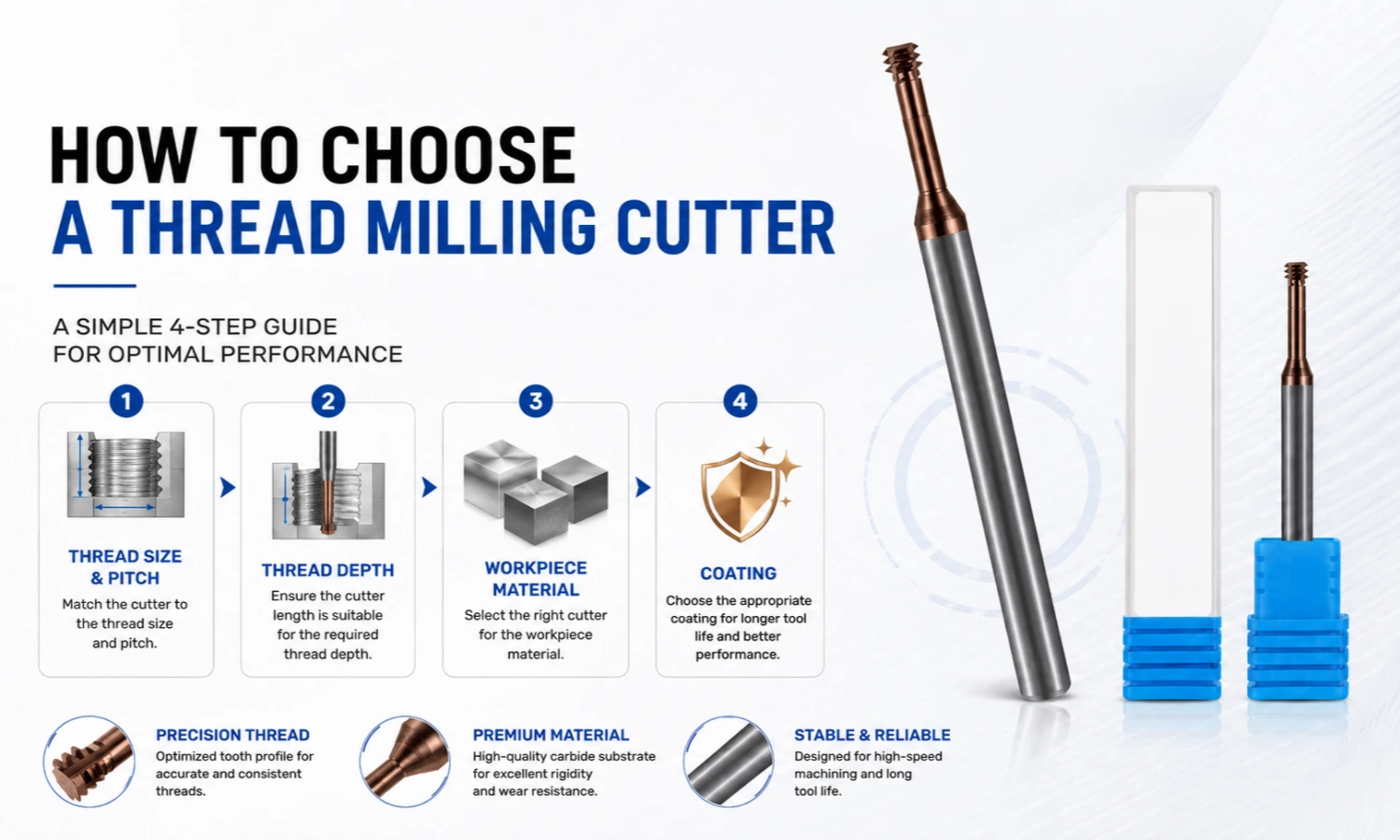
Die Auswahl des richtigen Gewindefräsers beginnt mit den Gewindedetails und der Werkstückbeschaffenheit. Bevor Sie eine Bestellung aufgeben, Käufer sollten mehrere wichtige Punkte bestätigen.
Bestätigen Sie die Gewindegröße und Steigung
Erste, Bestätigen Sie den Gewindestandard, Größe, und Tonhöhe. Zu den gängigen Standards gehören metrische Standards, UNC, UNF, NVV, und benutzerdefinierte Gewindeformen.
Wenn die Steigung oder das Gewindeprofil nicht dem Standard entspricht, Möglicherweise ist ein benutzerdefiniertes Werkzeug erforderlich.
Überprüfen Sie die Gewindetiefe und den Lochtyp
Nächste, Überprüfen Sie die Gewindetiefe und den Lochtyp. Sacklöcher, tiefe Löcher, und Durchgangslöcher erfordern möglicherweise unterschiedliche Schnittlängen oder Halsdesigns.
Aus diesem Grund, Bei der Angebotsanfrage ist die Lochtiefe anzugeben.
Passen Sie das Werkzeug an das Werkstückmaterial an
Das Werkstückmaterial beeinflusst die Hartmetallsorte, Beschichtung, Kantendesign, und Schnittparameter. Für Edelstahl oder legierten Stahl, Eine verschleißfeste Beschichtung kann zur Verbesserung der Werkzeugleistung beitragen.
Wählen Sie die richtige Beschichtung
Beschichtungen wie TiAlN, Altin, TiSiN, Eine Nanobeschichtung kann die Standzeit von Werkzeugen in verschiedenen Materialien verbessern. Jedoch, Die beste Wahl hängt von der Schnittgeschwindigkeit ab, Kühlmittelverbrauch, und Werkstückhärte.
Senden Sie eine Zeichnung für kundenspezifische Gewindefräswerkzeuge
Für kundenspezifische Gewindefräswerkzeuge, Mithilfe von Zeichnungen kann der Lieferant schneller die korrekte Konstruktion bestätigen. Eine Zeichnung kann die Gewindegröße zeigen, Tonhöhe, Tiefe, Toleranz, Schaftgröße, und besondere Anforderungen.
Für andere nicht standardmäßige Fräswerkzeuge, Sie können es auch überprüfen Kundenspezifische Schaftfräser.
Wann sollten Sie einen kundenspezifischen Gewindefräser verwenden??
Ein Standard-Gewindefräser passt möglicherweise nicht für jede Aufgabe. In einigen Anwendungen, Ein kundenspezifischer Hartmetall-Gewindefräser liefert bessere Ergebnisse.
Möglicherweise benötigen Sie ein benutzerdefiniertes Tool:
- Die Gewindegröße ist nicht standardmäßig
- Der Platz ist etwas Besonderes
- Die Gewindetiefe ist ungewöhnlich
- Das Werkstückmaterial ist schwer zerspanbar
- Das Teil erfordert eine spezielle Beschichtung
- Der Kunde benötigt eine OEM-Logomarkierung oder -verpackung
- Das Werkzeug muss zu einem vorhandenen Muster oder einer Zeichnung passen
Zusätzlich, Kundenspezifische Werkzeuge sind nützlich für Händler und CNC-Bearbeitungsunternehmen, die eine stabile Versorgung für wiederholte Produktionen benötigen.
Verwandte Schneidwerkzeuge für die Gewindebearbeitung
Für die Gewindebearbeitung ist oft mehr als ein Werkzeug erforderlich. Ein typischer Prozess kann das Bohren umfassen, Anfasen, Gewindefräsen, und Inspektion.
Vor der Gewindebearbeitung, Viele Teile müssen vorbereitet werden. Nach der Gewindebearbeitung, Einige Teile müssen möglicherweise auch an den Kanten abgeschrägt oder entgratet werden.
Zur Unterstützung des gesamten Bearbeitungsprozesses, Möglicherweise benötigen Sie auch Fasenfräser zur Kantenvorbereitung vor oder nach der Gewindebearbeitung, Und Hartmetall-Schaftfräser für allgemeine Hartmetallfräsanwendungen.
Häufig gestellte Fragen
Was ist ein Gewindefräser??
Ein Gewindefräser ist ein CNC-Schneidwerkzeug, mit dem Gewinde durch einen Fräsprozess bearbeitet werden. Es folgt einem programmierten Werkzeugweg und schneidet das Gewindeprofil innerhalb oder außerhalb des Werkstücks.
Kann man mit einer Fräsmaschine Gewinde schneiden??
Ja. Eine CNC-Fräse oder ein Bearbeitungszentrum kann mit einem Gewindefräser Gewinde schneiden. Die Maschine verwendet einen spiralförmigen Werkzeugweg, um das Gewinde zu erstellen.
Welche Nachteile hat das Gewindefräsen??
Das Gewindefräsen erfordert in der Regel eine CNC-Programmierung und eine geeignete Maschine. Bei einfachen Standardgewinden kann die Einrichtung auch mehr Zeit in Anspruch nehmen als das Gewindeschneiden. Jedoch, es bietet eine bessere Flexibilität für Sacklöcher, Sondergrößen, und schwierige Materialien.
Wie genau ist das Gewindefräsen??
Beim Gewindefräsen können mit dem Werkzeug präzise Gewinde erzeugt werden, Maschine, Programm, und Schnittparameter korrekt sind. Die endgültige Genauigkeit hängt von der Werkzeugqualität ab, Steifigkeit der Maschine, Werkstückmaterial, und Inspektionsanforderungen.
Ist das Gewindefräsen schneller als das Gewindeschneiden??
Das Tippen kann einfacher schneller sein, Standardlöcher in der Großserienfertigung. Jedoch, Gewindefräsen kann effizienter sein, wenn das Teil eine Sacklochkontrolle erfordert, benutzerdefinierte Gewindegrößen, oder geringeres Werkzeugbruchrisiko.
Kann ein Gewindefräser verschiedene Gewindedurchmesser schneiden??
In einigen Fällen, Ein Fräser kann durch Änderung des CNC-Programms unterschiedliche Gewindedurchmesser bei gleicher Steigung bearbeiten. Jedoch, Dies hängt vom Thread-Standard ab, Werkzeugprofil, und Bearbeitungsanforderungen.
Ist das Gewindefräsen für Sacklöcher geeignet??
Ja. Das Gewindefräsen ist oft eine gute Wahl für Sacklöcher, da es eine bessere Kontrolle über die Gewindetiefe und die Spanabfuhr ermöglicht.
Abschluss
Ein Gewindefräser wird für die CNC-Innen- und Außengewindebearbeitung eingesetzt. Es ist besonders nützlich für Sacklöcher, benutzerdefinierte Gewindegrößen, harte Materialien, und Präzisionsteile.
Bei der Auswahl eines Gewindefräswerkzeugs, Käufer sollten die Gewindegröße bestätigen, Tonhöhe, Gewindetiefe, Werkstückmaterial, Beschichtung, und Zeichnungsanforderungen. Für kundenspezifische Hartmetall-Gewindefräser, Sie können unsere überprüfen Gewindefräser oder Schicken Sie uns eine E-Mail mit Ihren Bearbeitungsdetails.