 精密フライスカッター,あらゆる材料を加工するCNC用の切削工具

A 6 フルートエンドミルは主に制御された側面フライス加工に使用されます。, プロファイルフライス加工, contour milling, 中仕上げ, そして仕上げ. 6 つの切れ刃により頻繁な切削接触が可能, 良好な工具剛性をサポートできます, 安定した壁面加工, よりスムーズなフィニッシュパス.
しかし, 溝が増えると切りくずを排出するスペースが少なくなります. したがって, 標準の 6 枚刃カッターは通常、全幅の深い溝加工には最適な選択ではありません, 激しい荒削り, または大きな切りくずを生成する材料の積極的な切削.
実際に, 最大の材料除去よりも表面品質と切削安定性が重要な場合、6 枚刃工具が最適に機能します。.
とは何ですか 6 フルートエンドミル?
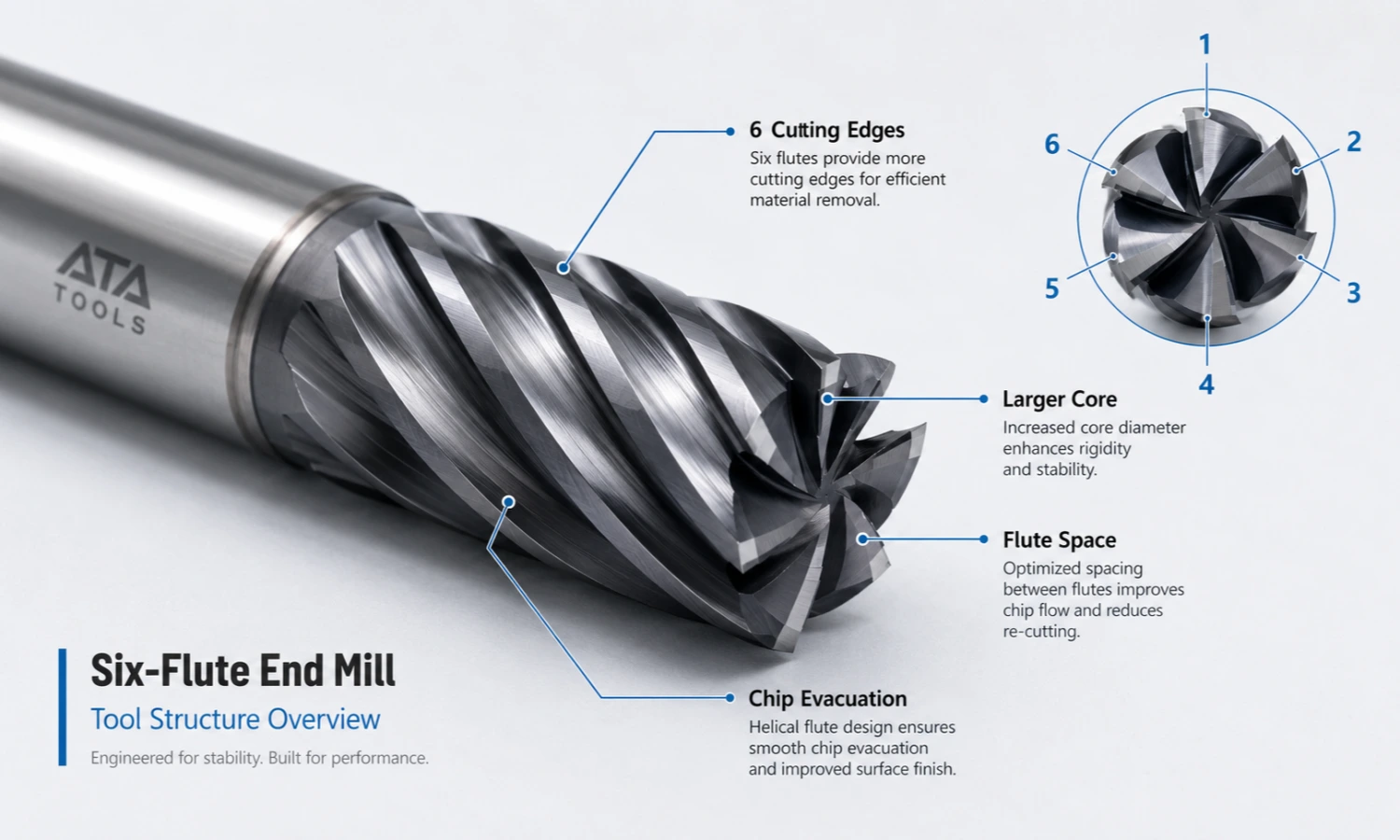
A 6 フルートエンドミルは、切削部の周囲に6つの切れ刃を備えています。. スピンドルが回転するたびに 6 つの切れ刃がワークに接触します。.
2枚刃、4枚刃カッターとの比較, 6 枚刃の設計では、通常、工具コアが大きくなり、溝のスペースが小さくなります。. より大きなコアにより工具の剛性をサポートできます, 追加の切れ刃により、より多くの歯に切削動作を分散させることができます。.
主なトレードオフは切りくずの排出です. フルートスペースが小さいため、保持される切りくずが少なくなります, そのため、カッターには制御された噛み合いと切りくずが切断領域から離れるための明確な経路が必要です.
そのため, 6 枚刃工具は通常、深い溝加工や重荒加工よりも側面切削や仕上げ加工の方が優れた性能を発揮します。.
フライスの種類と構造を一般的に説明するには, 私たちのを読んでください エンドミルカッターガイド.
の主な用途 6 フルートエンドミル
最適なアプリケーションにはチップ量の制御が必要です, 安定した機械状態, 良好な壁の品質または表面仕上げの必要性.
側面および輪郭フライス加工
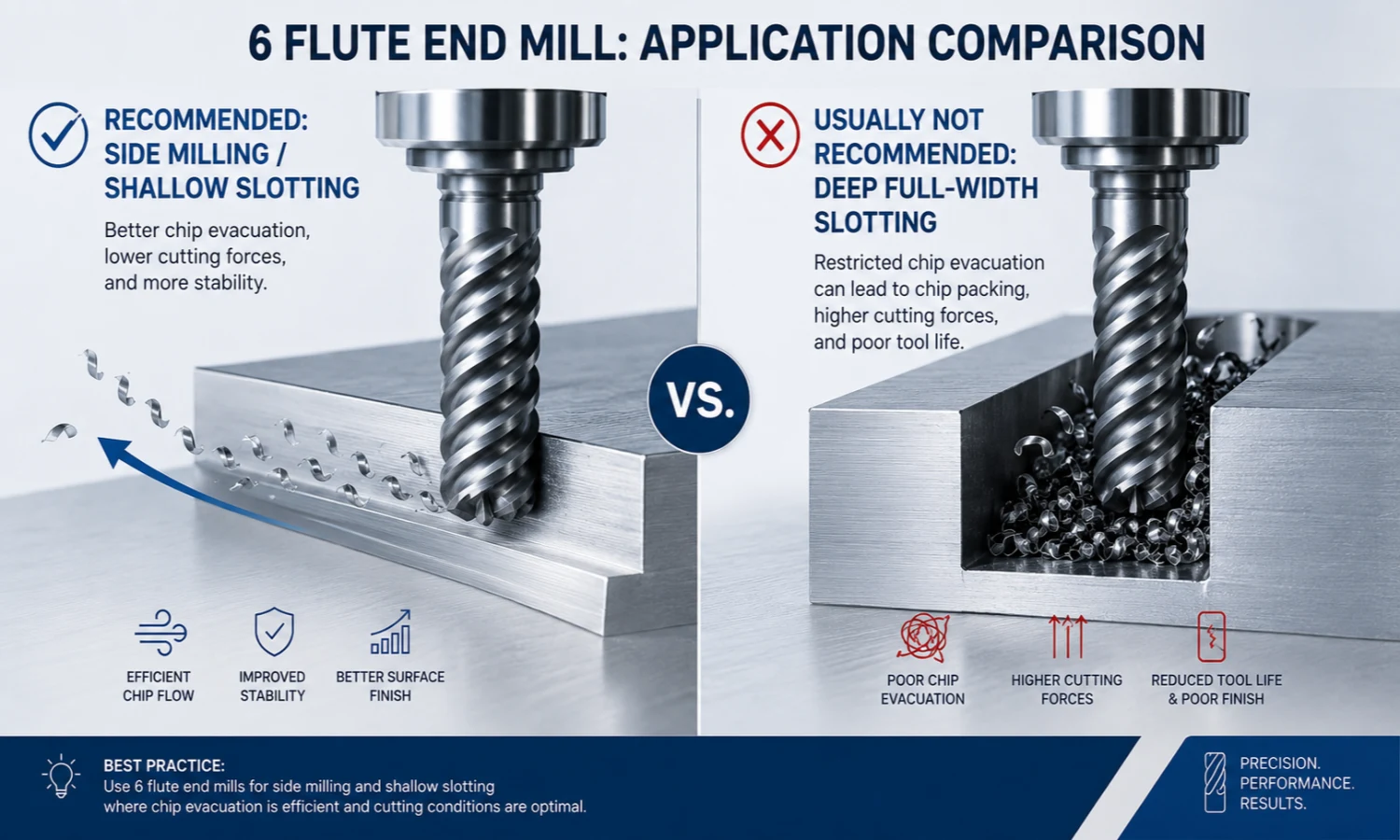
6 枚刃カッターは、通常、工具直径の一部のみがワークピースと噛み合うため、側面フライス加工に適しています。. これにより、全幅スロッティングよりも切りくずが逃げる余地が多くなります。.
一般的な用途には、真っ直ぐな側壁が含まれます。, 肩, 外部プロファイル, 精密部品の特徴. 追加の切れ刃は、半径方向の切削幅が制御されたままの場合でも、安定した工具接触をサポートします。.
まだ, 結果はフルートの数以外にも依存します. 工具振れ, ホルダーの状態, 機械剛性, 切断幅, とツールのオーバーハングはすべてサイドウォールの品質に影響します.
Contour Milling
輪郭フライス加工には、湾曲したまたは不規則なワークピースのプロファイルに従うことが含まれます. 剛性の高い 6 枚刃ツールが輪郭に沿って移動する際に一貫した接触をサポートします.
これにより、設計が金型コンポーネントに役立ちます, ツーリングパーツ, 機械部品, およびその他の精密プロファイル. しかし, 長い工具の突き出しや不安定なホルダーでも振動が発生する可能性があります.
したがって, ツールはアプリケーションが許す限り短くする必要があります, 特に急な輪郭や深い輪郭を加工する場合.
中仕上げ
中仕上げでは、荒加工後に残った材料を除去し、最終パスに向けて表面を準備します。.
残り在庫を管理するこの段階では6枚刃工具が適しています. 追加の刃先により切削動作が分散され、一貫した壁形状の維持に役立ちます。.
6枚刃を使用する前に, 荒加工の際に不均一な取りしろや過剰な取りしろが残されていないことを確認してください。. 大きくて不規則なストックは個々の刃先に過負荷をかける可能性があります.
仕上げ
仕上げは最も一般的なものの 1 つです 6 フルートエンドミルの用途.
刃先の数が多いほど、速度が上がるとより細かい切削痕が残る可能性があります。, 餌, ツールパス, 材料と機械のセットアップが一致している. 結果として, 6 枚刃カッターは直線壁の仕上げによく選択されます, プロフィール, 肩, および精密な表面.
しかし, 刃数だけでは特定の表面粗さを保証するものではありません. ホルダー精度, 工具振れ, 機械の状態, ワークの安定性, 切断パラメータ, 工具の摩耗も最終表面に影響を与えます.
浅溝加工と高速加工
6 枚刃カッターは、切りくずが切削領域から効果的に離れることができれば、浅いスロットを加工できます。. 軽いスロッティングはうまくいくかもしれない, 特に軸方向の深さと切りくずの体積が低いままの場合.
深い全幅スロッティングは異なります. その場合, カッターは材料に囲まれたままになります, 一方、より小さなフルートスペースはすべてのチップをスロットから運び出す必要があります. 切りくずのパッキングと熱が急速に上昇する可能性があります.
6枚刃工具で高速加工にも対応, しかし、スピンドル速度が高いだけでは十分ではありません. 完全なセットアップでは熱を制御する必要があります, なくなる, 振動, および切りくず排出.
クイックアプリケーションガイド
| 機械加工作業 | 一般的な適合性 | 主な考慮事項 |
|---|---|---|
| 側面フライス加工 | 推奨 | 制御されたラジアルかみ合いを使用する |
| プロファイルフライス加工 | 推奨 | ホルダーの精度とツールの突き出し量を確認してください |
| Contour Milling | 推奨 | 厳格な設定を維持する |
| 中仕上げ | 推奨 | 残りの在庫を一定に保つ |
| 仕上げ | 推奨 | 振れと切削パラメータの制御 |
| 浅い溝加工 | 条件付き | チップがスロットから出ることができることを確認してください |
| 全幅の深い溝加工 | 通常は推奨されません | 溝のスペースが限られているため、切りくずの排出が制限されます |
| 重荒加工 | 通常は推奨されません | フルート数が少ないほど、より多くのチップスペースが得られます |
どの材質が適しているか 6 フルートエンドミル?
正しい選択はワークの材質によって異なります, 硬度, 切断作業, 機械剛性, 冷却水の状態, そしてツールの設計.
鋼用に作られた工具を自動的にアルミニウムやチタンに使用すべきではありません. 同じ笛数でも, 最先端の形状やその他のツールの機能は変更する必要がある場合があります.
鋼および合金鋼
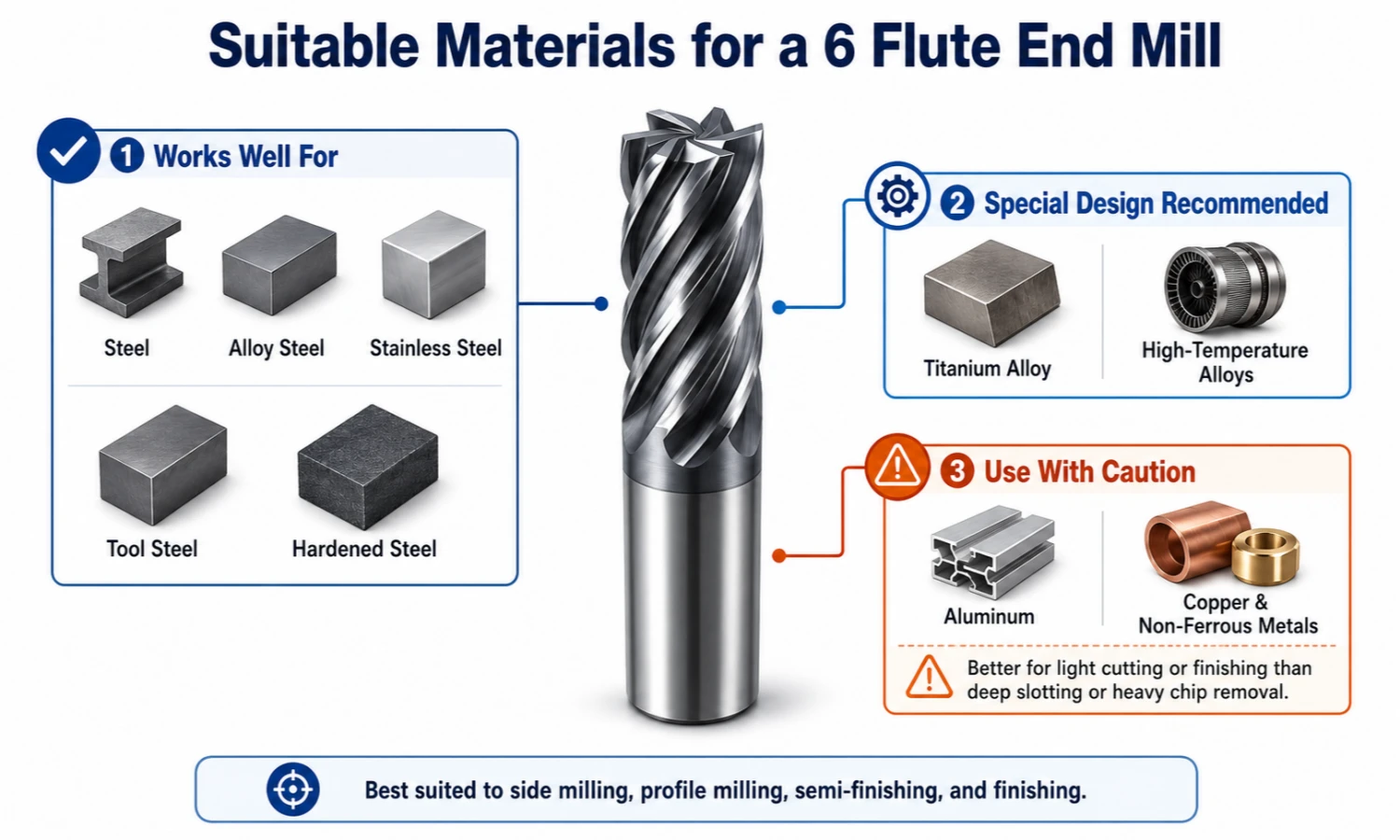
鋼と合金鋼は 6 枚刃工具の一般的な適用分野です.
カッターは制御された側面フライス加工を処理できます, プロファイルフライス加工, 中仕上げ, 超硬グレードの場合の仕上げ, 切断形状, とコーティングは材料の硬さに一致します.
6 つのフルートは、安定した壁やきれいな仕上げパスが必要な作業に特に役立ちます。. 対照的に, 重度の荒加工には通常、より多くのチップスペースが必要です.
ステンレス鋼
6枚刃カッター缶加工機 304, 316, および他のステンレス鋼グレード. しかし, ステンレス鋼は熱を発生する可能性があり、切断動作が不安定になると加工硬化する可能性があります。.
したがって, カッターは一貫した切断を維持する必要があります. 切断形状, コーティング, 冷却剤, スピード, および送りはすべてステンレス鋼のグレードと加工操作に一致する必要があります.
通常、6 枚刃の設計は、ステンレス鋼の深い溝加工よりも、制御された側面の切削と仕上げに適しています。.
工具鋼と焼き入れ鋼
6枚刃工具は鋼材の加工も可能, プリハードン鋼, 工具シリーズが材料の硬度と一致する場合、硬化鋼.
より硬い材料には適切な超硬グレードが必要です, エッジ強度, コーティング, および切断形状. 結果として, 1 つの標準カッターをすべての硬度範囲に対応する万能のソリューションとして扱うべきではありません.
高硬度材用, 安定した機械状態と低い工具振れがさらに重要になる.
チタンおよび難削材
特別に設計された 6 枚刃工具は、チタンやその他の難削材に適しています。.
しかし, 熱制御, 切削負荷, エッジ強度, クーラントの供給, 工具のオーバーハングには細心の注意が必要です. 標準的な鋼材の切断形状では最良の結果が得られない可能性があります.
カッターを選ぶ前に, 正確なチタングレードを確認する, 機械加工作業, 切込み深さ, クーラント方式, そして機械の状態.
できる? 6 アルミカットフルートエンドミル?
はい, ただし、カッターがアルミニウムに適した形状を使用しており、操作によって過度の切りくずが発生しない場合に限ります。.
アルミニウムは、スチールよりも大きくて粘着性の高い切りくずを生成することがよくあります. したがって, 深いスロットと重荒加工は、通常、2 つまたは 3 つのフルートを使用すると、より大きなフルート スペースが得られるため、より効果的に機能します。.
6 枚刃工具は、鋭利な刃先を備えている場合でも、アルミニウムの軽度の側面フライス加工や仕上げ加工に適している場合があります。, 効果的な切りくず処理, 切りくずを避難させるのに十分なスペース.
いつ選択すべきか 6 フルートエンドミル?
以下の条件のほとんどが当てはまる場合は、6 枚刃カッターを選択してください:
- 表面仕上げは最大限の材料除去よりも重要です.
- 加工には側面フライス加工が含まれます, プロファイリング, 中仕上げ, または仕上げ.
- 機械とホルダーの剛性が高い.
- 半径方向の切断幅は制御されたままになります.
- 工具の突き出し量は適度に短く保たれます.
- 切りくずは切削領域から効果的に排出されます.
- ワークの材質や硬度に合わせたカッター設計.
これらの条件は、ツールの主な強みを発揮するのに役立ちます: 剛性, 頻繁な切断接触, 一貫した壁面加工.
いつですか 6 フルートエンドミルは最良の選択ではない?
刃先の数が増えても、カッターがあらゆる作業に適したものになるわけではありません. 一部のアプリケーションでは, 工具の剛性よりも溝スペースの減少の方が大きな問題となる.
全幅の深い溝加工
全幅スロッティング中, カッターは直径全体にわたって材料にかみ合います. 切りくずはフルートのスペースを通ってスロットから出なければなりません.
6 フルート設計はフルートのスペースが小さいため, 深いスロット内に切りくずが溜まる可能性がある. これにより熱が増加する可能性があります, 切削負荷, エッジが損傷する危険性があります.
深いスロット用, 通常、フルート数が少ないほど、より安全な切りくず排出が可能になります。.
重荒加工
激しい荒加工では大量の材料が除去されます. 結果として, より多くの切りくずが発生し、カッターにかかる負荷が高くなります.
2枚刃, 3枚刃, 4枚刃, または専用の荒加工ツールを使用すると、多くの場合、切りくずの流れのためにより多くのスペースが提供されます。. 最良の選択は材料と荒加工方法によって異なります.
大きな切りくずが発生する材質
アルミニウムなどの柔らかい素材は、積極的な切断中に大きな切りくずや粘着性のある切りくずが発生する可能性があります。.
このような状況では, 刃数の多いカッターでは刃の内側に切りくずが詰まる可能性があります. 通常、刃数が少ないほど、重いアルミニウムの切削をより効果的に処理できます。.
不安定なセットアップと長いツールオーバーハング
6枚刃設計により優れたコア剛性を実現, ただし、すべてのセットアップの問題を修正できるわけではありません.
長いオーバーハング, 磨耗したホルダー, 高い振れ, ワーク保持力が弱い, または、機械が不安定な場合でも振動や切削痕が発生する可能性があります. 重症の場合, エッジ欠けの原因にもなる可能性があります.
したがって, フルート数を変更する前にオーバーハングを減らし、完全なセットアップを確認してください。.
多刃エンドミルの主な欠点は何ですか?
刃数の多いエンドミルの主な欠点は、刃のスペースが減少することです。.
フルートの本数が増えると, 通常、各フルートにはチップを運ぶスペースが少なくなります. これにより、切りくずの排出がより困難になる可能性があります, 特に深溝加工時, 激しい荒削り, または高度な材料除去.
切りくずが切削領域から出られない場合, 再度切断されたり、工具とワークの間に詰め込まれたりする可能性があります。. 結果として, 熱と切断圧力が増加する可能性があります.
正しいフルート数は 3 つの要素のバランスをとる必要があります:
- 切りくず排出
- 工具剛性
- 表面品質
6 枚刃工具により、剛性と仕上げの安定性が向上します。, 一方、刃の低いカッターは、大量の切りくずをより効率的に処理できる可能性があります。.
4 フルートとか 6 フルートエンドミル?
通常は 4 枚刃エンドミルがより汎用性の高いオプションです. チップスペース間の実用的なバランスを提供します, 工具剛性, そして表面仕上げ.
6枚刃工具はより専門的です. 通常は制御された側面フライス加工に適しています, 中仕上げ, 安定した接触と壁の品質が最大の切りくず排出よりも重要な場合の仕上げ加工.
最終的な選択はワークの材質によって異なります, 切込み深さ, ラジアルかみ合い, 機械剛性, そして加工目標.
2 つのツールの詳細な比較については、, 読む 4 フルート対 6 フルートエンドミル.
より広範なフルート数の概要については、, 読む 2 フルート対 4 フルート対 6 フルートエンドミル.
よくある質問
「6フルート」とは 6 mm 切断径?
No. 「6枚刃」とは切れ刃の数を指します。.
切削直径は別の工具寸法です. 6 枚刃カッターはさまざまな切断直径に対応できます.
できる? 6 深溝加工に使用するフルートエンドミル?
標準の 6 枚刃カッターは、通常、全幅の深い溝加工の最初の選択肢ではありません。.
フルートスペースが小さいため、切りくず排出が制限される可能性があります. 通常、刃の低いカッターは切りくずがスロットから出るためのより多くのスペースを提供します。.
です 6 ステンレス鋼用フルートエンドミル?
はい, 特に制御された側面フライス加工の場合, プロファイルフライス加工, 中仕上げ, そして仕上げ.
しかし, カッターの形状, コーティング, 冷却剤, スピード, 送りはステンレス鋼のグレードと加工操作に一致する必要があります.
結論
とは何ですか 6 に使用されるフルートエンドミル? 主に制御された側面フライス加工に使用されます, プロファイルフライス加工, contour milling, 中仕上げ, そして仕上げ.
その主な強みは工具剛性です。, 安定した切削接触, 壁の質, そして仕上げのパフォーマンス. 主な制限はチップスペースの減少です.
したがって, 6 本のフルートをあらゆるジョブに最適な選択肢として扱うことは避けてください。. 全幅の深い溝加工, 激しい荒削り, 不安定なセットアップ, 大きなチップの加工では通常、フルートが少ない方がメリットが得られます.
標準およびカスタムツールオプションの場合, 私たちのものを見る 6 フルート超硬エンドミル.