 정밀 밀링 커터,모든 재료를 가공하는 CNC용 절삭 공구

A의 주요 차이점은 4 플루트 대 6 플루트 엔드밀 비교는 칩 배출과 공구 강성의 균형입니다..
에이 4 플루트 엔드밀은 더 많은 플루트 공간을 제공합니다.. 그러므로, 일반적으로 적당한 슬로팅에 더 유연합니다., 사이드 밀링, 프로파일 밀링, 절삭 조건 변경.
대조적으로, 에이 6 플루트 엔드밀에는 절삭날이 더 많고 일반적으로 코어가 더 강합니다.. 제어된 반마무리 및 마무리 작업 중에 더 나은 안정성을 제공할 수 있습니다., 특히 벽 품질과 표면 마감이 주요 목표인 경우.
플루트 카운트가 항상 더 좋은 것은 아닙니다. 올바른 선택은 가공 작업에 따라 달라집니다., 칩량, 약혼 중단, 기계 강성, 도구 돌출부, 그리고 필수 마무리.
주요 차이점 4 플루트와 6 플루트 엔드밀
4 플루트 엔드밀: 더 많은 칩 공간과 다양성
에이 4 플루트 엔드밀에는 6날 설계보다 플루트 사이에 더 많은 공간이 있는 4개의 절삭날이 있습니다.. 결과적으로, 칩이 절삭 영역을 더 쉽게 떠날 수 있습니다..
이 설계는 칩 배출의 실질적인 균형을 제공합니다., 핵심 근력, 절단 안정성. 일반강 및 스테인레스강 가공에 일반적으로 선택됩니다., 적당한 슬로팅, 사이드 밀링, 프로파일 밀링, 그리고 반 마무리.
4날 커터는 생산 중 절삭 맞물림이나 가공 조건이 변경되는 경우에도 더 관대합니다..
표준 크기의 경우, 센터 커팅 디자인, 코팅, 그리고 맞춤 옵션, 우리의 검토 4 플루트 초경 엔드밀.
더 넓은 적용 가이드를 원하시면, 읽다 은 무엇입니까? 4 플루트 엔드밀에 사용됨.
6 플루트 엔드밀: 마무리를 위한 더 높은 강성
에이 6 플루트 엔드밀에는 6개의 절삭날이 있고 플루트 공간이 더 적습니다.. 추가 절삭날과 더 강한 코어로 강성을 향상시킬 수 있습니다., 벽 안정성, 제어된 가공 중 표면 일관성.
그러므로, 이 디자인은 사이드 밀링에 자주 사용됩니다., 프로파일 마무리, 준결승, 강철로 마무리, 스테인레스 스틸, 및 합금강.
하지만, 작은 플루트 공간으로 인해 칩 배출이 제한됩니다.. 6날 커터는 일반적으로 깊은 전폭 슬롯에 대한 첫 번째 선택이 아닙니다., 무거운 황삭, 또는 높은 칩 볼륨을 생성하는 작업.
제품 크기 및 사용자 정의 옵션, 우리의 검토 6 플루트 초경 엔드밀.
해당 응용 프로그램에 대한 자세한 내용은, 읽다 은 무엇입니까? 6 플루트 엔드밀에 사용됨.
4 플루트 대 6 플루트 엔드밀 비교
| 비교 요인 | 4 플루트 엔드밀 | 6 플루트 엔드밀 |
|---|---|---|
| 칩 공간 | 더 | 더 적은 |
| 칩 배출 | 더 나은 | 더 제한적 |
| 코어 강성 | 좋은 | 더 높은 |
| 일반강 가공 | 더욱 다재다능함 | 더욱 전문화된 |
| 보통의 슬로팅 | 더 나은 선택 | 일반적으로 선호되지 않음 |
| 사이드 밀링 | 적합한 | 통제된 참여에 적합 |
| 프로파일 밀링 | 적합한 | 안정적인 마무리 패스에 적합 |
| 준마무리 | 적합한 | 종종 더 나은 |
| 마무리 손질 | 좋은 | 더 나은 마무리 가능성 |
| 무거운 황삭 | 더 적합 | 이상적이지 않음 |
| 기계 설정 | 더 관대함 | 견고한 설정에서 최고의 성능을 발휘합니다. |
| 최고의 사용 | 일반 가공 및 적당한 칩 제거 | 제어된 반마무리 및 마무리 |
| 주의해서 사용하세요 | 더 많은 절삭날이 도움이 될 수 있는 매우 가벼운 마무리 | 깊은 슬롯, 칩 배출 불량, 긴 돌출부, 또는 불안정한 설정 |
이 표는 일반적인 선택 지침을 제공합니다.. 실제 성능은 초경 등급에 따라 달라집니다., 코팅, 나선 각도, 공구 직경, 플루트 길이, 홀더 상태, 냉각수 공급, 및 절단 매개변수.
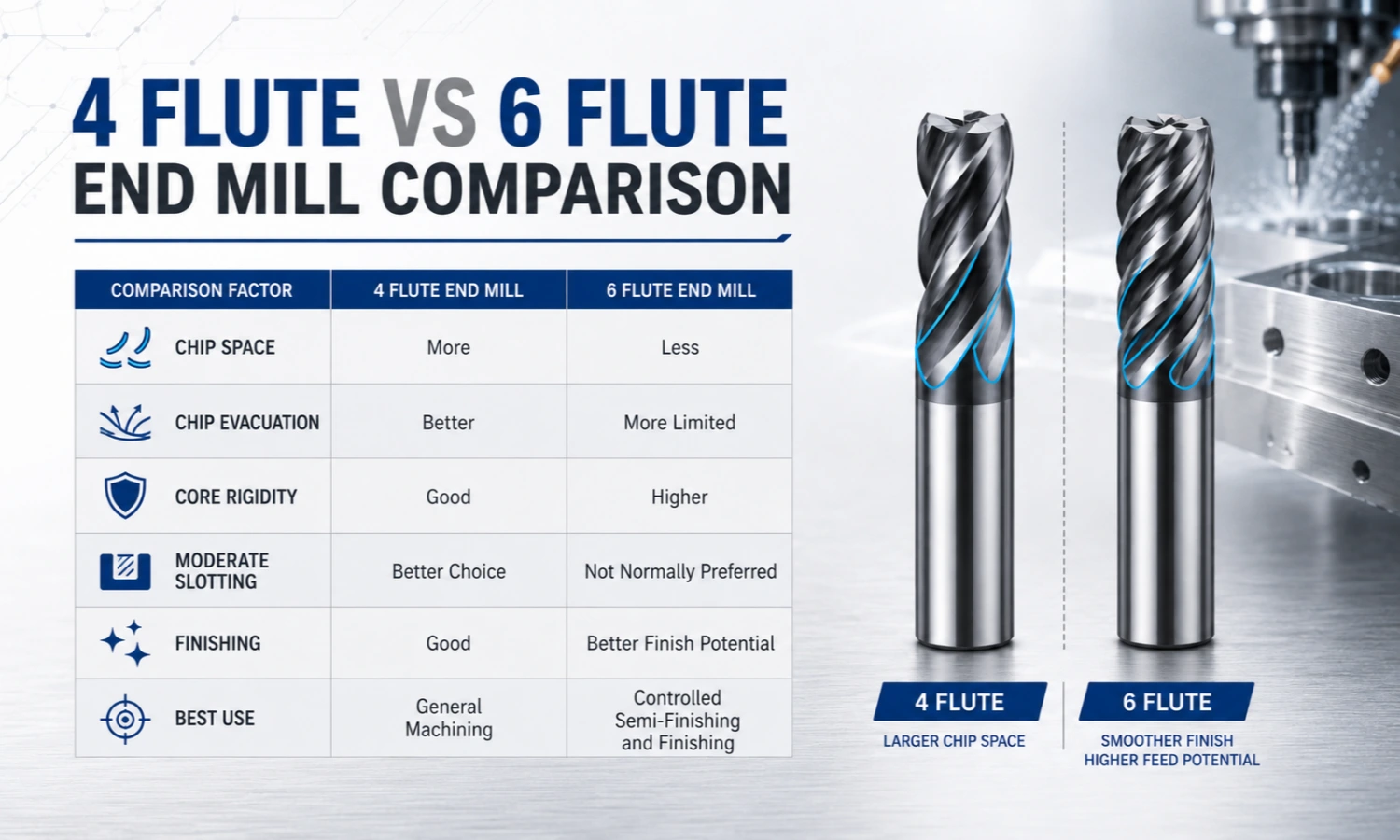
4 플루트 대 6 강용 플루트 엔드밀
두 플루트 개수 모두 강철을 가공할 수 있습니다.. 하지만, they suit different operations.
에이 4 flute end mill is generally the more flexible option for general steel machining. Its larger flute space supports moderate chip removal, changing cutting engagement, 사이드 밀링, 프로파일 밀링, and light-to-moderate slotting.
에이 6 flute end mill becomes more useful when the operation focuses on controlled semi-finishing or finishing. Its additional cutting edges can improve wall quality and surface consistency. 하지만, the machine, 보유자, 워크홀딩, and toolpath should remain stable.
선택하다 4 Flute for General Steel Machining
A four-flute cutter is a practical choice when:
- The operation includes moderate slotting.
- Chip evacuation remains important.
- Cutting engagement may change.
- One tool needs to cover several operations.
- The setup is not optimized only for finishing.
선택하다 6 Flute for Controlled Finishing
A six-flute cutter may provide better results when:
- 작업에는 주로 반제품 마무리 또는 마무리 작업이 포함됩니다..
- 더 나은 벽 품질이 필요합니다.
- 방사형 맞물림은 가볍고 제어된 상태로 유지됩니다..
- 기계와 홀더는 우수한 강성을 제공합니다..
- 최대 칩 공간보다 표면 품질이 더 중요합니다..
많은 워크샵에서, 4개의 플루트 디자인이 범용 시작점 역할을 합니다.. 6개 플루트 공구는 작업이 안정되고 마무리에 중점을 둘 때 더욱 전문적인 선택을 제공합니다..
4 플루트 대 6 스테인레스강용 플루트 엔드밀
스테인리스강은 열을 발생시킬 수 있으며, 절삭 조건이 불안정해지면 경화될 수 있습니다.. 그러므로, 칩 배출, 약혼 중단, 코팅, 도구 기하학, 그리고 기계 강성이 모두 중요합니다.
에이 4 플루트 엔드밀은 일반적으로 일반 스테인레스강 가공의 실용적인 시작점입니다.. 칩 공간과 코어 강도 사이의 유용한 균형을 제공합니다., 프로파일 밀링을 처리할 수 있도록, 사이드 밀링, 적당한 재료 제거, 그리고 반 마무리.
에이 6 플루트 엔드밀이 더욱 전문화되었습니다.. 치수 일관성이 유지되는 제어된 준마무리 및 마무리 패스에서 좋은 성능을 발휘할 수 있습니다., 벽 품질, 더 매끄러운 표면이 주요 목표입니다..
하지만, 칩 양과 절삭 맞물림은 계속 제어되어야 합니다.. 그렇지 않으면, 절삭날 주변에 칩과 열이 모일 수 있습니다..
특수 스테인레스 스틸 마감용, 플루트가 5개 이상이고 나선 각도가 더 높은 공구도 일반적입니다.. 비록 그렇다 하더라도, 추가 플루트는 칩 배출 시에만 도움이 됩니다., 런아웃, 도구 보유, 및 설정 강성은 제어 상태로 유지됩니다.. 가변 나선 또는 가변 피치 형상은 진동 제어를 향상시킬 수도 있습니다..
일반적으로:
- 선택하다 4 더 큰 다양성과 더 넓은 칩 공간을 위한 플루트.
- 선택하다 6 제어된 마감 처리 및 더 높은 표면 품질 요구 사항을 위한 플루트.
선택하는 방법 4 플루트 또는 6 3단계 플루트 엔드밀
단계 1: 가공 작업부터 시작하세요
첫 번째, 주요 작업을 식별.
선택하세요 4 작업에 적당한 슬로팅이 포함된 경우 플루트 엔드밀, changing cutting engagement, 또는 일반 측면 및 프로파일 밀링. 더 넓은 플루트 공간은 칩이 절삭 영역을 떠나는 더 안전한 경로를 제공합니다..
다음을 고려해보세요. 6 작업이 제어된 측면 맞물림을 사용하고 준정삭 또는 정삭에 중점을 둘 때 플루트 엔드밀.
중황삭용, 전용 황삭 커터가 표준 4날 또는 6날 정삭 공구보다 더 적합할 수 있습니다..
단계 2: 칩 배출 및 설정 강성 확인
다음, 전체 가공 설정 검토.
6날 커터는 다음과 같은 경우에 최고의 성능을 발휘합니다.:
- 절단 맞물림은 제어된 상태로 유지됩니다..
- 기계와 홀더는 우수한 강성을 제공합니다..
- 공구 오버행은 최대한 짧게 유지됩니다..
- 절삭유나 공기가 절단 영역에 도달할 수 있음.
- 재절단 없이 칩이 가공물에서 나올 수 있음.
4개의 플루트 공구는 일반적으로 설정이 덜 견고하거나 절삭 조건이 변경될 때 더 관대합니다..
더 높은 플루트 개수는 불안정한 홀더를 교정할 수 없습니다., 과도한 돌출부, 열악한 작업장, 또는 칩 배출이 차단됨.
단계 3: 표면 마감 우선 순위 설정
마지막으로, 칩 컨트롤과 마무리 품질 중 어느 것이 더 높은 우선순위인지 결정.
다재다능한 경우 4개의 플루트를 선택하십시오., 칩 배출, 적당한 재료 제거가 가장 중요합니다..
설정이 안정적이고 작업이 벽 품질을 목표로 하는 경우 6개의 플루트를 선택하십시오., 차원 일관성, 표면이 더욱 매끄럽게 마감되었습니다..
피드가 올바르게 설정된 경우 절단 모서리가 많을수록 각 모서리에 전달되는 하중이 줄어듭니다.. 하지만, 칩 컨트롤이 불량하거나 과도한 열로 인해 이러한 이점이 사라질 수 있습니다..
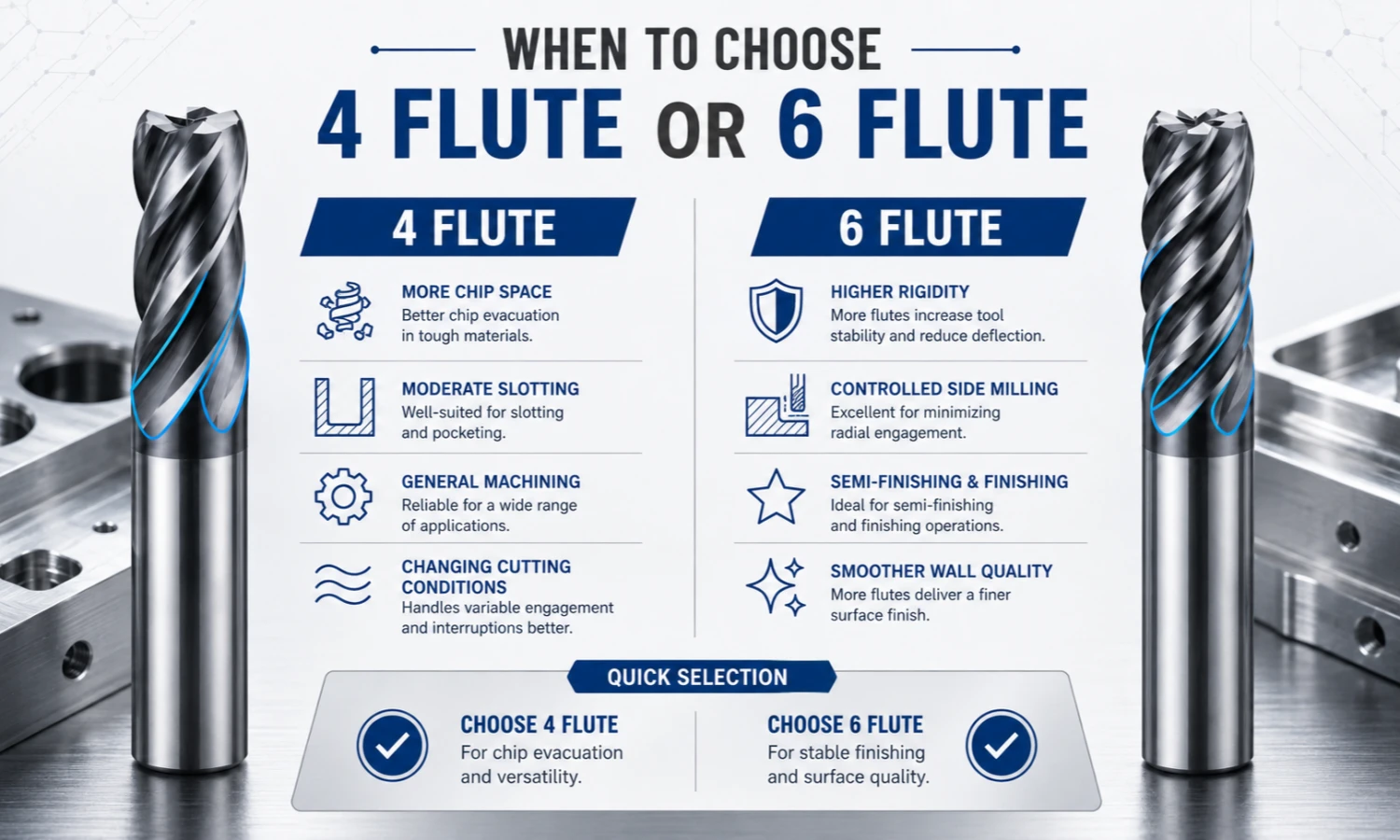
언제 확인해야 할 사항 6 플루트 엔드밀은 결과를 개선하지 않습니다
6날 커터는 자동으로 더 나은 마감을 생성하지 않습니다.. When the result becomes worse, inspect the complete cutting condition before blaming the tool.
| Machining Sign | 가능한 원인 | First Point to Check |
|---|---|---|
| Chips collect around the cutting edges | Chip volume is too high for the available flute space | Reduce cutting engagement or consider a 4 플루트 디자인 |
| Cutting temperature rises quickly | Chips remain in the cutting zone or coolant access is limited | Improve chip evacuation and coolant delivery |
| Wall chatter or vibration marks appear | Tool overhang or the complete setup lacks rigidity | Check holder, 위에 걸리다, 워크홀딩, 및 도구 경로 |
| Surface finish does not improve | 런아웃, 밥을 먹이다, or cutting engagement is unsuitable | Check runout and adjust the finishing strategy |
| Cutting edges chip unexpectedly | 칩 재절삭, 열, or unstable engagement | Review chip control, 코팅, 및 절단 조건 |
These are general troubleshooting signs rather than fixed cutting rules. The correct adjustment depends on the cutter design, 공작물 재료, 기계, 보유자, and machining parameters.
Practical Selection Examples
General Steel with Moderate Slotting
For moderate slotting or changing cutting engagement in general steel, 에이 4 flute end mill is normally the more flexible choice.
Its larger flute space supports chip evacuation, while the four-flute core still provides useful rigidity for side and profile milling.
If the operation changes to a light final side-finishing pass, 에이 6 flute cutter can be evaluated separately.
Stainless Steel Profile Finishing
When stainless steel is machined with light and stable side engagement, a rigid setup, and a clear finishing target, 에이 6 flute end mill may provide better finishing potential.
하지만, if chips begin to collect or cutting temperature rises quickly, 에이 4 flute design may provide a safer balance between flute space and cutting stability.
이 예는 재료 이름만으로 플루트 개수를 선택하는 대신 플루트 개수를 작업과 일치시켜야 하는 이유를 보여줍니다..
자주 묻는 질문
a의 주요 차이점은 무엇입니까? 4 플루트와 6 플루트 엔드밀?
가장 큰 차이점은 칩 배출과 강성의 균형입니다..
에이 4 플루트 엔드밀은 더 많은 플루트 공간과 더 큰 다양성을 제공합니다.. 대조적으로, 에이 6 플루트 엔드밀은 더 많은 절삭날을 제공합니다., 더 높은 코어 강성, 안정된 조건에서 더 나은 마무리 가능성.
는 4 플루트 또는 6 강철에 더 적합한 플루트 엔드밀?
에이 4 플루트 엔드밀은 일반적으로 일반 철강 가공에 더 좋습니다., 적당한 슬로팅, 절삭 조건 변경.
에이 6 플루트 커터는 제어된 사이드 밀링 중에 더 나은 성능을 발휘하는 경우가 많습니다., 준결승, 표면 품질이 주요 목표일 때 마무리.
언제 사용을 피해야 합니까? 6 플루트 엔드밀?
에이 6 플루트 엔드밀은 일반적으로 깊은 전폭 슬롯에 대한 첫 번째 선택이 아닙니다., 무거운 황삭, 높은 칩 볼륨 작업, 냉각수 접근 불량, 또는 불안정한 설정.
플루트 공간이 작기 때문에 칩 재절삭이 증가하고 절삭 맞물림이 너무 높을 때 열이 발생할 수 있습니다..
플루트 수가 많을수록 항상 더 나은 표면 마감이 생성됩니까??
아니요. 플루트 수가 많을수록 마무리 잠재력이 향상될 수 있습니다., 하지만 결과는 런아웃에 따라 달라집니다., 치아 당 공급, 도구 기하학, 기계 강성, 홀더 상태, 칩 배출, 공작물 안정성.
절삭 영역에 칩이나 열이 남아 있는 경우, 6날 커터로는 표면이 개선되지 않을 수 있습니다..
다음 중에서 어떻게 선택하나요? 4 플루트와 6 플루트 엔드밀?
가공 작업 및 칩 볼륨부터 시작하세요.. 그런 다음 절단 참여를 확인하십시오., 도구 돌출부, 홀더 상태, 및 기계 강성.
칩 배출과 다양성이 더 중요한 경우 4개의 플루트를 선택하십시오.. 설정이 안정적이고 제어된 마무리가 주요 목표인 경우 6개의 플루트를 선택하십시오..
결론
비교할 때 4 플루트 대 6 플루트 엔드밀, 가공 목표부터 시작.
4날 커터는 일반 강 및 스테인리스강 가공에 더 많은 칩 공간과 더 큰 유연성을 제공합니다., 적당한 슬로팅, 사이드 밀링, 절삭 조건 변경.
6날 커터는 절삭 맞물림이 제어된 상태에서 더 높은 강성과 더 나은 정삭 가능성을 제공합니다.. 그러므로, 더 나은 벽 품질과 매끄러운 표면이 요구되는 안정적인 반마무리 및 마무리 작업에 적합합니다..
플루트 수만으로 커터를 선택하는 대신, 도구와 재료를 일치시키세요, 칩량, 절단 깊이, 기계 강성, 도구 보유, 그리고 필수 마무리.
다음 중에서 선택하는 데 도움이 필요합니다. 4 플루트와 6 플루트 엔드밀?
올바른 플루트 수를 선택하면 칩 컨트롤이 향상될 수 있습니다., 절단 안정성, 공구 수명, 표면 품질.
공작물 재료를 보내주십시오., 재료 경도, 절단 직경, 플루트 길이, 가공 작업, 코팅 요구 사항, 수량. 도면을 제공할 수도 있습니다., 도구 참조, 사양이 미비한 경우 지원서 사진 또는.
이용 가능한 정보를 검토하고 적합한 표준 또는 맞춤형 초경 엔드밀을 선택하도록 도와드리겠습니다..
귀하의 요구 사항을 다음 주소로 직접 이메일로 보내주십시오. sales@cutterbest.com.