 정밀 밀링 커터,모든 재료를 가공하는 CNC용 절삭 공구

소개
엔드밀 커터는 CNC 가공에서 가장 널리 사용되는 절삭 공구 중 하나입니다.. 슬로팅과 같은 밀링 작업을 위해 설계되었습니다., 프로파일링, 컨투어링, 사이드 밀링, 그리고 다양한 재료로 마무리. 일반 드릴비트와는 다르게, 엔드밀 커터는 여러 방향으로 절단할 수 있습니다., 복잡한 가공 작업에 더욱 다양한 기능을 제공합니다..
그래서, 엔드밀 커터는 정확히 어떤 용도로 사용되나요?? 간단히 말해서, 알루미늄을 가공할 때 재료를 정확하고 효율적으로 제거하는 데 사용됩니다., 강철, 스테인레스 스틸, 주철, 플라스틱, 및 기타 공작물 재료. 올바른 도구 형상, 플루트 수, 코팅은 가공 성능과 공구 수명에 큰 차이를 가져올 수 있습니다..
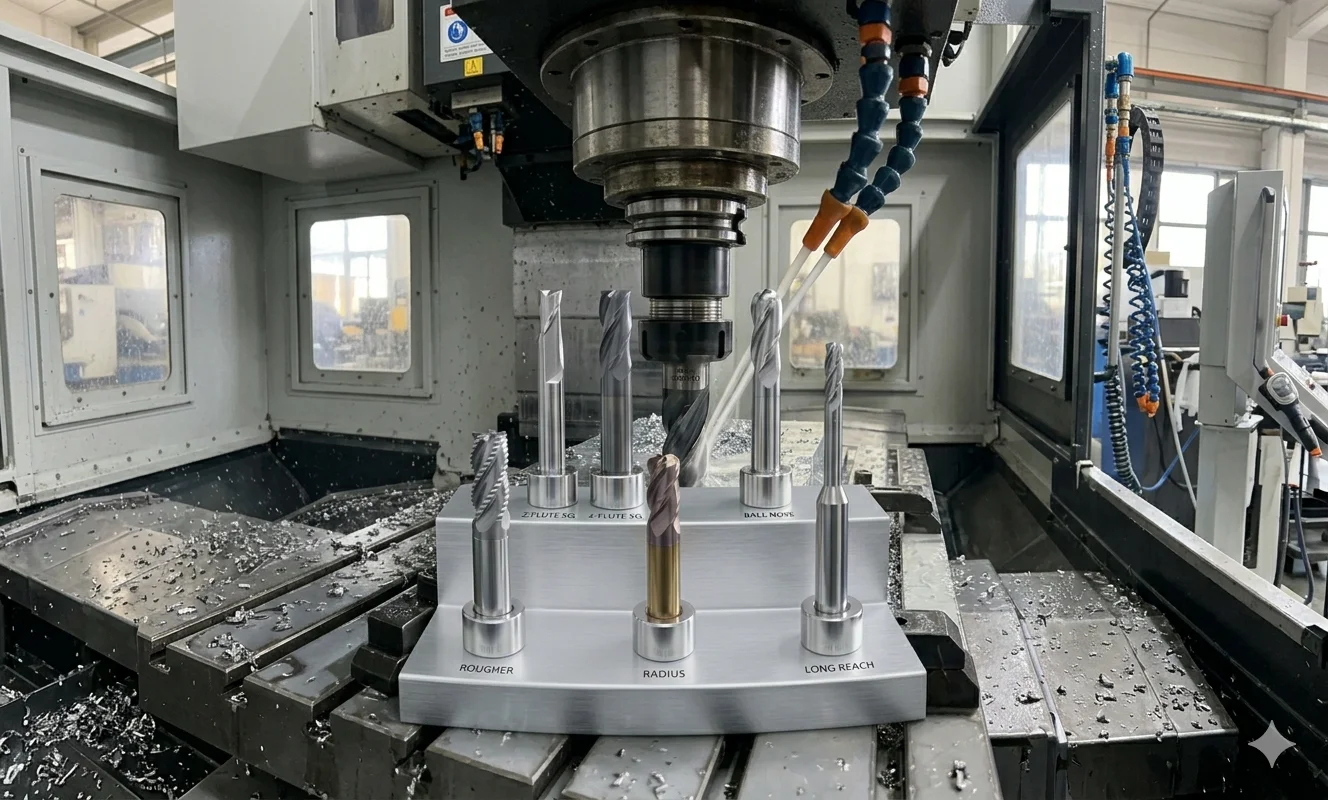
엔드밀 커터란??
엔드밀 커터는 CNC 기계 및 밀링 머신에 사용되는 회전식 절삭 공구입니다.. 끝 부분과 측면을 따라 절단 모서리가 있습니다., 수직, 측면 모두 절단 가능. 이 디자인 때문에, 정밀도가 요구되는 광범위한 밀링 작업을 수행할 수 있습니다., 유연성, 반복 가능한 정확도.
엔드밀 커터는 일반적으로 고속도강이나 솔리드 초경으로 제작됩니다., 더 높은 절삭 속도를 위해서는 카바이드 엔드밀 커터가 선호됩니다., 더 나은 내마모성, 금속 가공 분야의 사용 수명 연장.
이 도구를 처음 사용하는 경우,당신은 또한 우리의 가이드를 읽을 수 있습니다 엔드밀 커터란?.
엔드밀 커터의 주요 용도
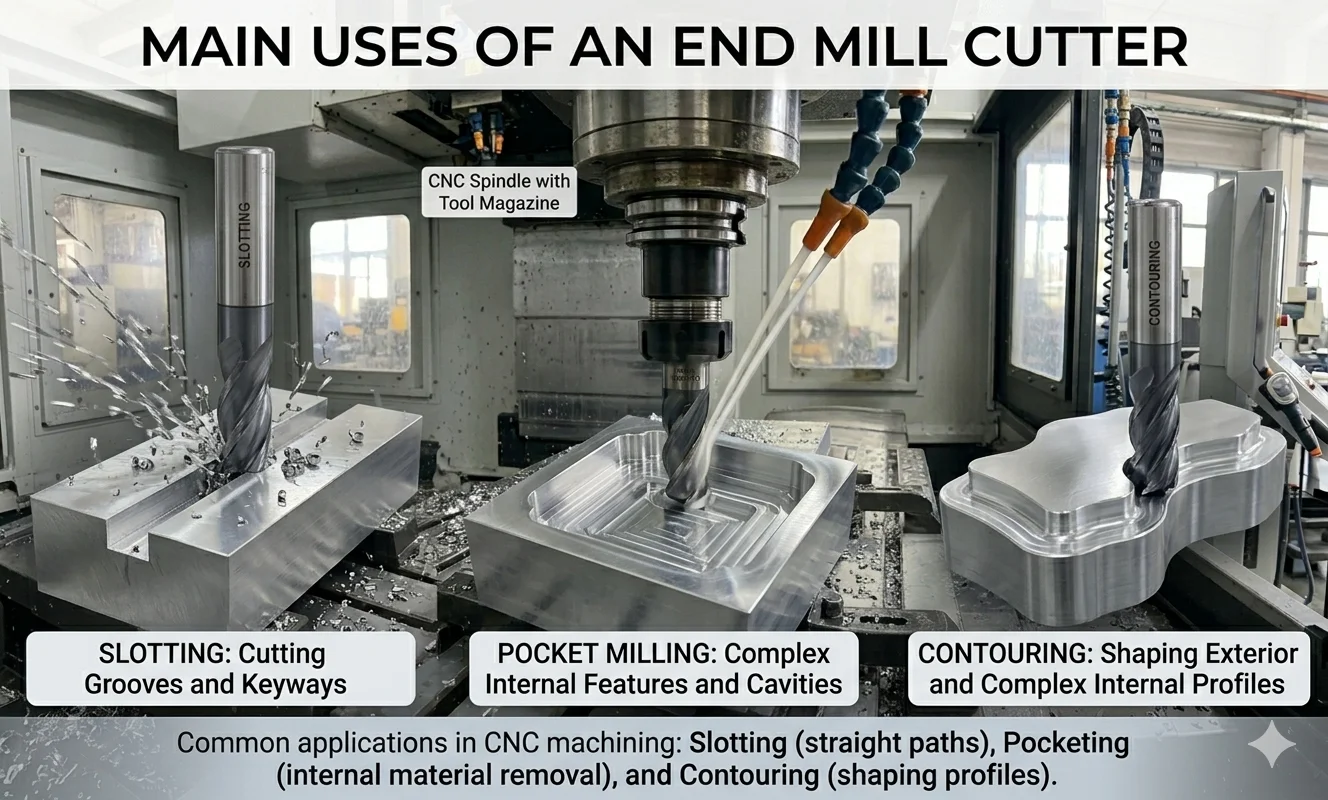
엔드밀 커터는 많은 CNC 가공 작업에 사용됩니다.. 다음은 가장 일반적인 응용 프로그램입니다..
1. 슬롯 밀링
엔드밀 커터의 가장 일반적인 용도 중 하나는 슬롯 밀링입니다.. 직선 또는 곡선 슬롯을 공작물에 높은 정확도로 절단하는 데 사용됩니다.. 이 슬롯은 키 홈에 사용될 수 있습니다., 그루브, 가이드 트랙, 또는 기계 구성 요소의 조립 기능.
이러한 유형의 작업에는, 플루트 수와 칩 배출이 특히 중요합니다.. 많은 경우, 2 플루트 엔드밀은 칩을 더 쉽게 제거하기 때문에 부드러운 재료에 선호됩니다..
2. 사이드 밀링
엔드밀 커터는 사이드 밀링에도 널리 사용됩니다.. 이 과정에서, 측면 절삭날은 공작물의 수직 표면에서 재료를 제거합니다.. 어깨를 가공할 때 유용합니다., 단계, 청소가 필요한 측벽, 정확한 마감.
사이드 밀링은 정밀 금속 부품에서 일반적입니다., 금형, 툴링 구성 요소, 및 일반 CNC 생산작업.
3. 컨투어링 및 프로파일링
복잡한 형상 및 곡면용, 엔드밀 커터는 윤곽 가공 및 프로파일링에 자주 사용됩니다.. 이러한 작업은 금형 제작에 중요합니다., 다이 생산, 항공우주 부품, 및 맞춤형 가공 구성 요소.
볼 노즈 엔드밀과 코너 반경 엔드밀은 곡선 모양에서 더 부드러운 전환과 더 나은 표면 마감을 생성할 수 있기 때문에 이러한 종류의 작업에 자주 선택됩니다..
더 많은 기하학 옵션을 보려면, 당신은 또한 우리의 가이드를 읽을 수 있습니다 엔드밀 커터의 종류.
4. 포켓밀링
엔드밀 커터는 공작물 내부의 포켓이나 오목한 영역을 가공하는 데 자주 사용됩니다.. 포켓 밀링은 중량 감소가 필요한 부품에서 흔히 사용됩니다., 내부 공동, 또는 제한된 영역 내에서 정확한 재료 제거.
이 작업에는 안정적인 절단 성능이 필요합니다., 좋은 칩 컨트롤, 정확성과 표면 품질을 유지하기 위한 올바른 도구 경로.
5. 표면 마무리
엔드밀 커터의 또 다른 중요한 용도는 정삭입니다.. 거친 가공 후 대부분의 재료가 제거됩니다., 적절한 엔드밀을 사용하면 치수 정확도와 표면 평활도를 향상시킬 수 있습니다..
마무리 도구는 필요한 공차에 따라 선택됩니다., 공작물 재료, 최종 표면 품질. 많은 경우, 코팅 초경 엔드밀 커터는 보다 안정적인 정삭 성능을 제공합니다..
6. 스텝 밀링 및 직각 가공
엔드밀 커터는 계단식 표면을 가공하는 데에도 사용됩니다., 어깨, 및 다단계 기능. 이러한 작업은 구조 부품에서 일반적입니다., 비품, 기계 부품, 및 정밀 어셈블리.
이러한 기능에는 날카로운 전환과 치수 정확도가 필요한 경우가 많기 때문입니다., 공구 강성과 형상이 중요한 역할을 합니다..
다양한 소재에 대한 엔드밀 커터 용도
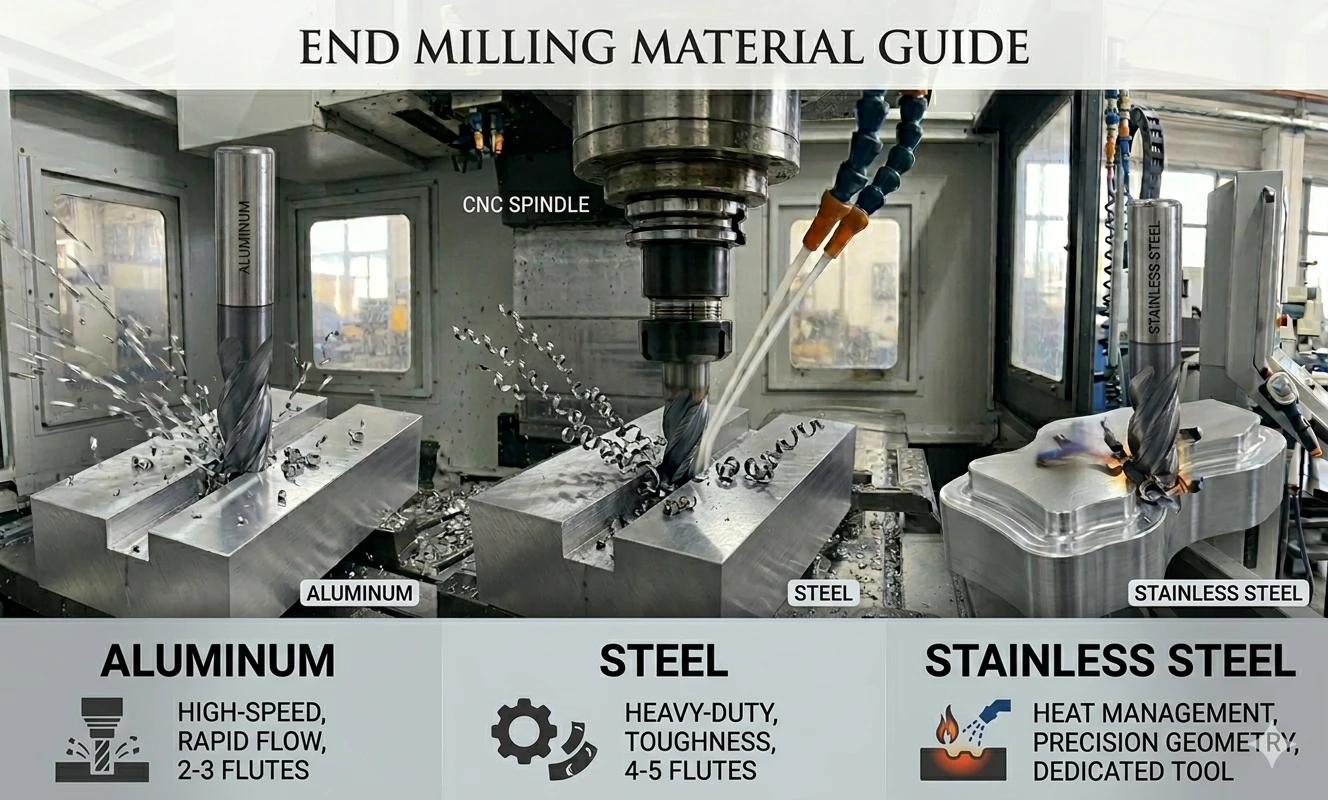
재료마다 다른 엔드밀 커터 디자인이 필요합니다.. 가공물 소재에 적합한 커터를 선택하면 절단 효율성이 향상됩니다., 마모를 줄이다, 그리고 더 나은 결과를 얻으세요.
알루미늄용 엔드밀 커터
알루미늄 가공시, 엔드밀 커터는 주로 슬로팅에 사용됩니다., 포켓 밀링, 사이드 밀링, 그리고 마무리. 알루미늄은 더 큰 칩을 생산합니다., 따라서 플루트 수가 적고 칩 배출이 좋은 공구가 선호되는 경우가 많습니다..
고나선형 초경 엔드밀은 절삭 부드러움을 향상시키고 칩 축적을 줄이는 데 도움이 되기 때문에 일반적으로 알루미늄에 사용됩니다..
강용 엔드밀 커터
탄소강 및 합금강용, 엔드밀 커터는 사이드 밀링에 자주 사용됩니다., 컨투어링, 숄더 가공, 그리고 반 마무리. 강철은 일반적으로 더 나은 강성과 더 강한 내마모성을 요구합니다., 그래서 4 플루트 카바이드 엔드밀이 일반적인 선택입니다..
TiAlN 또는 AlTiN과 같은 코팅은 강 가공에서 성능을 향상하고 공구 수명을 연장하는 데 자주 사용됩니다..
스테인레스강용 엔드밀 커터
스테인레스강은 열을 발생시키고 공구 마모를 유발하는 경향이 있기 때문에 가공하기가 더 어렵습니다.. 스테인레스 스틸 응용 분야, 엔드밀 커터는 일반적으로 프로파일링에 사용됩니다., 마무리 손질, 제어된 사이드 밀링.
올바른 코팅, 플루트 기하학, 절삭 안정성을 유지하고 모서리 마모를 줄이는 데 절삭 매개변수가 중요합니다..
엔드밀 커터가 널리 사용되는 이유
엔드밀 커터는 정밀도를 겸비하고 있어 인기가 높습니다., 유연성, 하나의 도구 범주에서 효율성. 높은 반복성으로 다양한 작업을 수행할 수 있습니다., 단순하고 복잡한 가공 작업 모두에 적합합니다..
제한된 절삭 공구에 비해, 엔드밀 커터를 사용하면 제조업체가 슬롯을 가공할 수 있습니다., 충치, 윤곽, 측벽, 공구 교체 횟수를 줄여 표면 마감 처리. 결과적으로, 생산성과 가공 일관성을 향상시키는 데 도움이 됩니다..
작업에 적합한 엔드밀 커터를 선택하는 방법
용도에 따라 적합한 엔드밀 커터가 달라집니다., 재료, 그리고 필수 마무리. 일반적으로, 구매자는 고려해야합니다:
- 공작물 재료
- 플루트 수
- 공구 직경
- 코팅 종류
- 도구 형상
- 절입깊이 및 가공방법
예를 들어, 2 플루트 커터는 알루미늄에 자주 사용됩니다., ~하는 동안 4 플루트 커터는 강철 및 범용 금속 가공에 더 일반적입니다.. 볼 노즈 도구는 곡면에 적합합니다., 슬롯과 숄더에는 플랫 엔드밀이 더 좋습니다..
모든 작업에 하나의 커터를 사용하는 대신, 커터 디자인을 가공 목표에 맞추는 것이 더 좋습니다.
좀 더 자세한 플루트 비교를 원하시면, 가이드를 참조하세요 2 플루트 대 4 플루트 엔드밀.
초경 엔드밀 커터가 선호되는 이유
초경 엔드밀 커터는 더 높은 경도를 제공하기 때문에 현대 CNC 가공에서 널리 선호됩니다., 더 나은 내마모성, 많은 표준 공구 재료보다 안정적인 절삭 성능.
산업용 구매자를 위한, 초경 공구는 강철을 가공할 때 특히 매력적입니다., 스테인레스 스틸, 기타 까다로운 재료. 형상과 코팅을 올바르게 선택하면 더 높은 절삭 속도를 지원하고 공구 수명을 연장할 수 있습니다..
이러한 이유로, 많은 제조업체, 유통업체, 및 기계 공장에서는 생산 효율성과 일관된 결과를 위해 초경 엔드밀 커터를 선택합니다..
결론
그래서, 엔드밀 커터는 어떤 용도로 사용되나요?? 주로 Slotting 등 CNC Milling 작업에 사용됩니다., 사이드 밀링, 컨투어링, 프로파일링, 포켓 밀링, 다양한 재료에 걸쳐 마감 처리. 다재다능함으로 인해 정밀 가공에서 가장 중요한 절삭 공구 중 하나가 되었습니다..
하지만, 최고의 성능은 올바른 플루트 수 선택에 달려 있습니다., 기하학, 코팅, 그리고 작업에 필요한 재료. 알루미늄 가공 여부, 강철, 아니면 스테인레스 스틸, 올바른 엔드밀 커터를 선택하면 가공 효율성과 최종 부품 품질이 모두 향상될 수 있습니다..
강철용 초경 엔드밀 커터를 찾고 있습니다, 알류미늄, 아니면 스테인레스 스틸?
우리를 방문하세요 초경 엔드밀 커터 제품 페이지 또는 OEM 및 맞춤형 툴링 솔루션에 대해 문의해 주세요..