 Precision Milling Cutters,Cutting Tools for CNC Machining Every Material

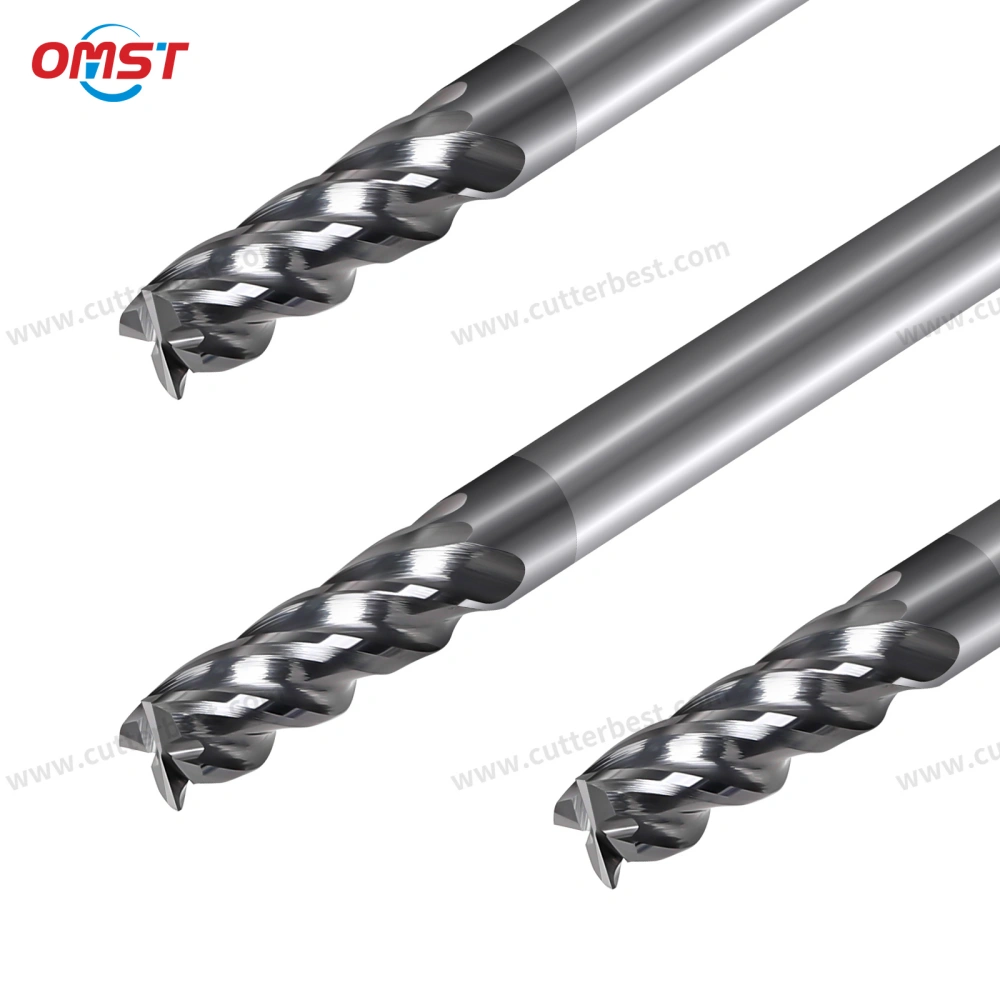
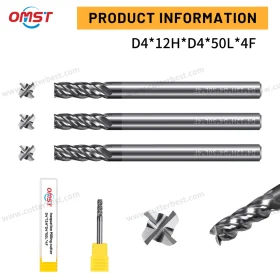
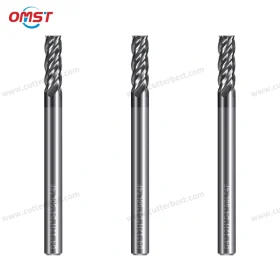
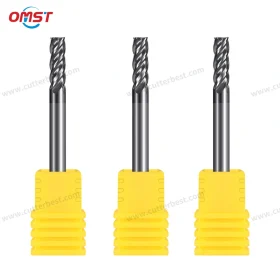
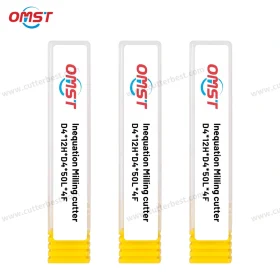
4 Flute Carbide End Mill Overview
A 4 flute carbide end mill combines four cutting edges with a strong solid carbide core. This design provides good rigidity, wear resistance, and stable cutting performance when machining steel, stainless steel, alloy steel, and tool steel.
Its flat or square cutting end produces flat-bottom features, straight side walls, steps, slots, and square shoulders. Meanwhile, the four-flute structure supports consistent surface quality during finishing and semi-finishing operations.
For a detailed explanation of its applications, read what is a 4 flute end mill used for.
4 Flute Square End Mill Design
Flat and Square End Geometry
The flat cutting end creates a level bottom surface and a clear transition between the bottom and side wall. As a result, it works well for flat-bottom slots, pockets, steps, profiles, and square shoulders.
Sharp corners, small chamfers, corner radii, and other edge preparations can be selected according to the machining application. A sharp corner creates a clear square profile, while a chamfered or radiused corner can improve cutting-edge strength.
For more flat-bottom milling options across different flute counts, review our flat end mill.
Center-Cutting and Helix Options
The cutting edges extend across the center of the tool. Therefore, the cutter can support vertical plunging, ramp entry, helical interpolation, side entry, and light slotting.
The suitable entry method depends on the cutting diameter, flute length, workpiece material, machine rigidity, and cutting parameters. Deep plunging or heavy slotting may require a different flute count or tool geometry.
Common helix angles range from 30° to 45°. A lower helix angle can provide a stronger cutting edge, while a higher helix angle may improve cutting smoothness and surface finish.
Variable-helix designs can also be evaluated when the application requires better vibration control.
4 Flute End Mill Material and Coating Selection
The carbide grade, coating, and cutting geometry should match the workpiece material and hardness. The following table provides general selection guidance.
| Workpiece Material | Typical Workpiece Hardness | Recommended Coating | Common Applications |
|---|---|---|---|
| General Steel | Up to HRC 45 | TiN or TiAlN | Side milling, profile milling, and finishing |
| Stainless Steel | Up to HRC 45 | TiAlN or AlTiN | Profile milling, semi-finishing, and controlled side milling |
| Alloy Steel | Up to HRC 50 | TiAlN or AlTiN | Finishing, contour milling, and general CNC machining |
| Tool Steel / Pre-Hardened Steel | Up to HRC 55 | AlTiN or TiSiN | Mold components, profiles, and precision finishing |
| Hardened Steel / Die Steel | Up to HRC 65 | AlTiN or TiSiN | Light finishing with application-specific geometry |
These values are general recommendations rather than fixed machining limits. Final tool selection also depends on cutting depth, coolant conditions, machine rigidity, tool holding, and required tool life.
Stainless steel can generate heat and work hardening. Therefore, stable tool holding and controlled overhang are important.
Hardened steel may require a special carbide grade and cutting-edge preparation. Please confirm the exact workpiece hardness during the quotation process.
Specification Options
We supply common metric sizes and can also evaluate inch-size and custom requirements.
| Specification | Available Range or Option |
|---|---|
| Cutting Diameter | 1–20 mm |
| Shank Diameter | 3–20 mm |
| Length of Cut | 3–50 mm |
| Overall Length | 38–200 mm |
| Helix Angle | 30°–45° or custom |
| End Style | Sharp corner, chamfer, or corner radius |
| Metric Sizes | Available |
| Inch Sizes | Available |
| Center Cutting | Available |
| Custom Dimensions | Available according to requirements or drawings |
Common shank diameters include 4 mm, 6 mm, 8 mm, 10 mm, 12 mm, 16 mm, and 20 mm. Common overall lengths include 50 mm, 60 mm, 75 mm, and 100 mm.
Actual availability depends on the complete combination of cutting diameter, flute length, shank diameter, coating, and geometry. Common sizes may support faster delivery, while special combinations may require custom production.
Long and Special-Size Options
We can provide extended flute lengths, extra-long overall lengths, long-reach or reduced-neck designs, special shank sizes, custom helix angles, and metric or inch dimensions.
Center-cutting geometry, corner chamfers, corner radii, coatings, and other non-standard features can also be produced according to your drawing or machining requirements.
A longer tool may have lower rigidity. Therefore, the cutting depth, reach, and machining operation should be considered when selecting an extended-length end mill.
Recommended Machining Applications
The strong four-flute core and square-end geometry suit side milling, profile milling, contour milling, finishing, semi-finishing, square-shoulder machining, and light slotting.
Its center-cutting design also supports plunging, ramping, and helical entry under suitable machining conditions.
Four flutes provide good rigidity and surface stability. However, they offer less space for chip evacuation than a two-flute design. Therefore, deep slots, aluminum, and other chip-intensive operations may require a lower flute count.
To compare chip evacuation, cutting rigidity, and flute selection, read 2 flute vs 4 flute end mill.
Aluminum machining considerations are explained in are 4 flute end mills good for aluminum.
For finishing-focused flute selection, read 4 flute vs 6 flute end mill.
A 6 flute carbide end mill may suit lighter finishing cuts that require more cutting edges.
Heavy material removal is better handled with dedicated roughing end mills.
Cutting Performance and Quality
Solid carbide provides high hardness, wear resistance, and cutting-edge stability. Meanwhile, the four-flute design creates a strong core for stable machining of steel and stainless steel.
This combination can improve cutting rigidity, surface quality, dimensional consistency, and tool life under suitable machining conditions.
However, final performance also depends on the tool geometry, coating, holder, coolant method, machine condition, and cutting parameters.
Dimensional and Runout Inspection
We inspect key dimensions, cutting edges, and runout before shipment to help maintain consistent product quality.
Custom Manufacturing and OEM Supply
We supply standard and custom 4 flute carbide end mills for distributors, tooling suppliers, CNC machining workshops, and industrial buyers.
Custom options include cutting and shank diameters, flute and overall lengths, neck and reach dimensions, helix angles, center-cutting geometry, corner treatments, carbide grades, coatings, tolerances, laser marking, and OEM packaging.
We can also produce non-standard tools according to drawings or reference samples. MOQ, lead time, and pricing depend on the specification, coating, quantity, and packaging requirements.
Frequently Asked Questions
What materials can a 4 flute carbide end mill machine?
It can machine general steel, stainless steel, alloy steel, tool steel, pre-hardened steel, and selected hardened steels.
The suitable carbide grade, coating, and geometry depend on the workpiece material and hardness.
Is this 4 flute square end mill center cutting?
Yes. Its center-cutting geometry allows the cutting edges to extend across the tool center.
Therefore, it can support plunging, ramping, and helical entry under suitable machining conditions.
What coating should I choose for steel or stainless steel?
TiN or TiAlN can suit general steel. TiAlN and AlTiN are common options for stainless steel and alloy steel, while AlTiN or TiSiN may suit harder tool steels.
The final selection should also consider machining speed, coolant, cutting depth, and tool life requirements.
Can you produce long or custom 4 flute end mills?
Yes. We can evaluate extended flute lengths, extra-long overall lengths, reduced-neck designs, special shanks, custom helix angles, coatings, and drawing-based tools.
What information is required for a quotation?
Please provide the available dimensions, workpiece material, hardness, machining operation, coating preference, and quantity.
A drawing, reference model, or product photo will help when the specification is incomplete or non-standard.
Send Your 4 Flute End Mill Requirement
Need a standard or custom 4 flute carbide end mill for steel, stainless steel, alloy steel, tool steel, or hardened steel?
Send us your available dimensions, workpiece material, hardness, machining operation, coating preference, and quantity. You can also send a drawing, reference model, or product photo if the specification is incomplete.
We will review your application and help confirm a suitable square-end design, center-cutting geometry, coating, and size option.
Email your requirement directly to sales@cutterbest.com.