 Cortadores de fresagem de precisão,Ferramentas de corte para usinagem CNC de todos os materiais

Diamond coated end mills are mainly used for graphite, PRFC, PRFV, high-silicon aluminum, and other abrasive non-ferrous materials. These materials can wear ordinary carbide tools quickly, so a diamond coating helps improve wear resistance, estabilidade de corte, e vida útil da ferramenta.
In graphite machining, diamond coated tools help reduce edge wear during electrode milling, usinagem de moldes, and fine-detail cutting. In CFRP and composite machining, they help maintain a sharp cutting edge and reduce fiber pull-out, fuzzing, and delamination.
For standard or custom tools, you can check our fresas de topo revestidas de diamante.
In this guide, we explain what diamond coated end mills do, why they work well for graphite and CFRP, and how to choose a suitable tool for your machining project.
When Abrasive Materials Create Machining Challenges
Na usinagem CNC, different materials create different cutting problems. Aço, titânio, grafite, and composites do not behave the same way at the cutting edge. Por esta razão, tool selection should always match the workpiece material.
Graphite contains fine abrasive particles. These particles wear the cutting edge quickly and may reduce dimensional stability during long cutting cycles. Além disso, graphite dust can affect machining stability and workshop cleanliness.
CFRP creates another challenge. The tool must cut through fibers and resin cleanly. If the cutting edge becomes dull, the tool may pull the fibers instead of cutting them. Como resultado, the workpiece may show delamination, burrs, fuzzing, or poor edge quality.
Because of these machining problems, graphite and CFRP often need tools with better wear resistance and stable cutting geometry.
O que são fresas de topo com revestimento de diamante?
Diamond coated end mills are solid carbide milling tools with a diamond coating on the cutting surface. The coating improves wear resistance when the tool machines abrasive materials such as graphite, PRFC, PRFV, e alumínio com alto teor de silício.
Unlike general-purpose end mills, diamond coated milling tools are not mainly designed for steel or stainless steel. Their main value is in abrasive non-ferrous materials, where ordinary carbide tools may wear too quickly and lose stable cutting performance.
For broader graphite milling applications, você também pode revisar nosso fresa de diamante.
If you want to understand general tool structures first, você também pode ler nosso end mill cutter basics.
Why Standard Tools Struggle with Graphite and CFRP
Graphite Causes Rapid Edge Wear
Graphite is brittle, dusty, and highly abrasive. Although it is not very hard like hardened steel, it can still wear the cutting edge very fast. Once the edge becomes rounded, surface finish declines and dimensional accuracy becomes harder to control.
This problem matters in graphite electrode machining. Fine details, sharp corners, and stable tool diameter all affect the final result. Portanto, graphite milling tools need strong wear resistance and stable cutting performance.
CFRP Requires Clean Cutting
CFRP is difficult because the tool must cut fibers and resin at the same time. A dull tool may push or pull the fibers instead of cutting them cleanly.
Como resultado, manufacturers may see delamination, fuzzing, burrs, or heat-related damage. Portanto, tool sharpness and wear resistance both matter in CFRP machining.
For general steel or stainless steel machining, Cortador de moinho de fim de metal duro options may be more suitable.
Main Applications in Graphite Machining
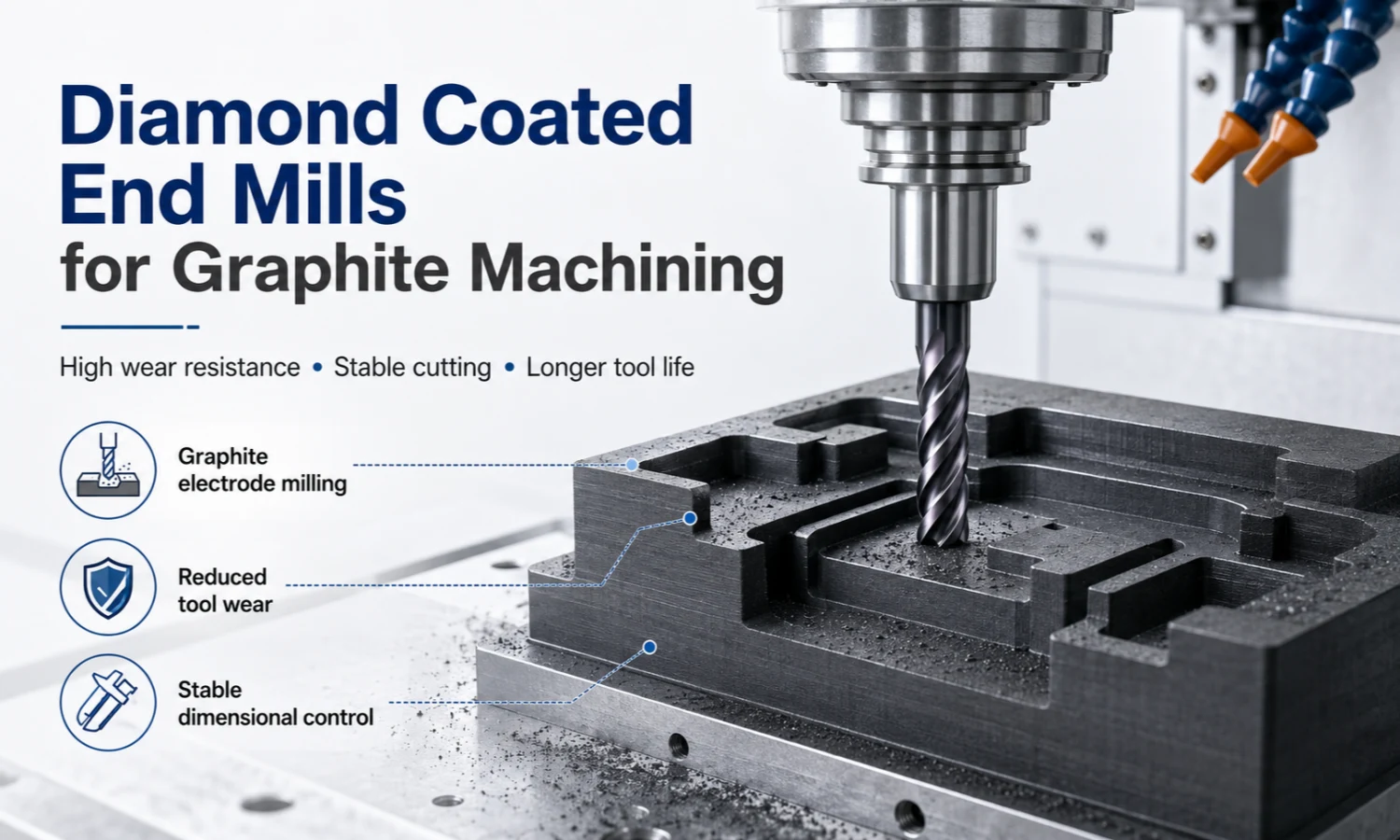
Graphite Electrode Milling
Graphite electrode machining is one of the most common applications for diamond coated end mills. These electrodes play an important role in EDM mold and cavity production.
In this type of machining, the tool needs to keep edge sharpness and dimensional consistency for as long as possible. A diamond coating helps reduce tool wear and supports better repeatability during production.
Graphite Mold and Contour Machining
Manufacturers also use diamond coated tools for graphite molds, deep cavities, thin walls, and complex 3D shapes. In these operations, stable tool geometry is important because vibration, vestir, or diameter loss can quickly affect the finished part.
For long-run graphite machining, diamond coated tools help maintain more consistent cutting results.
Main Applications in CFRP and Composite Machining
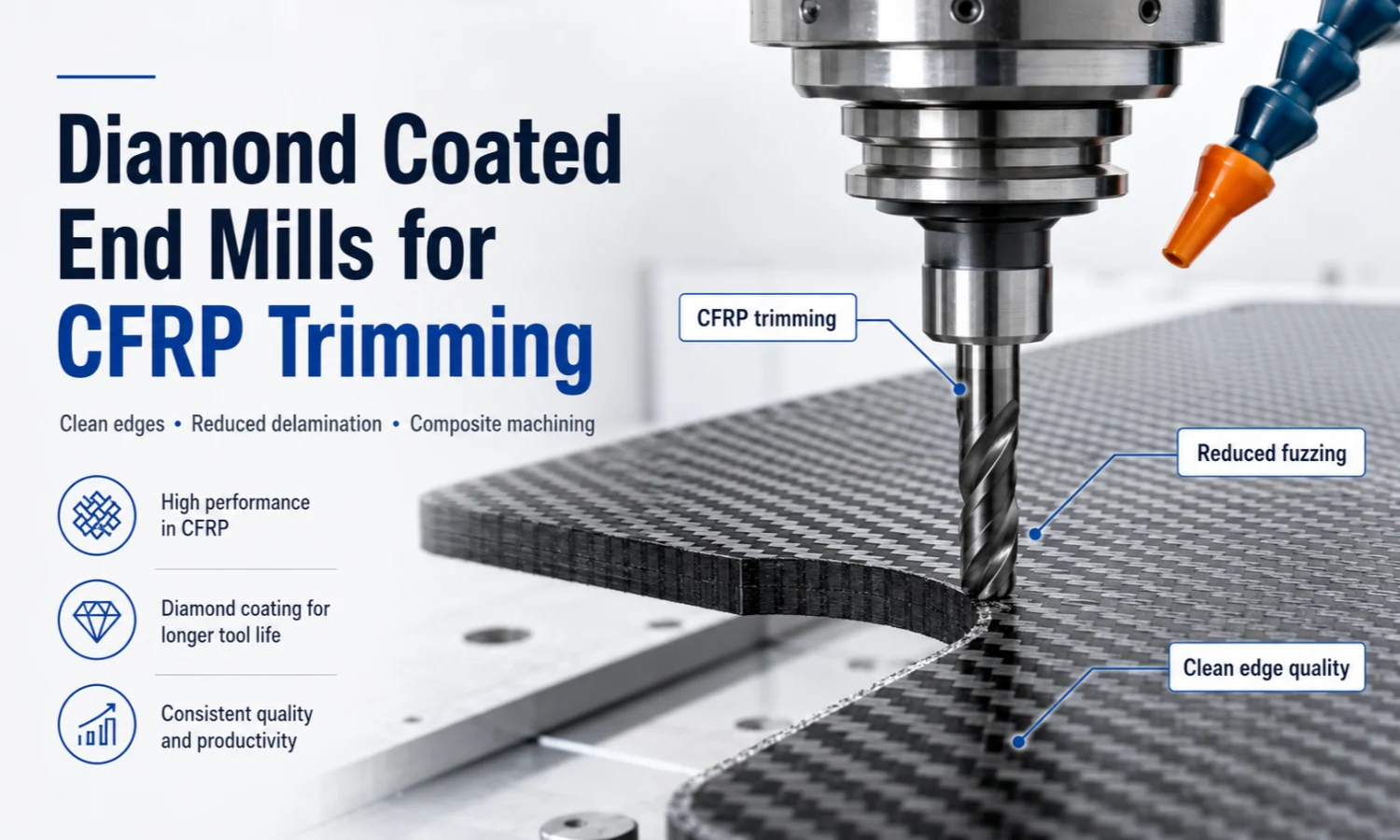
CFRP Trimming and Profiling
Diamond coated end mills can support CFRP trimming, ranhura, and contour milling. These operations need clean edge quality and reliable cutting behavior, especially in aerospace, automotivo, and advanced composite applications.
Because CFRP is abrasive, a wear-resistant cutting edge helps the tool maintain performance during longer production runs.
Reducing Delamination and Fuzzing
In CFRP machining, surface quality is not only about appearance. Edge defects can affect assembly, product performance, and downstream processing.
A suitable diamond coated tool helps maintain a sharper cutting edge. Como resultado, it can reduce fiber pull-out, fuzzing, and unstable edge quality.
Key Benefits of Diamond Coated Tools
Better Wear Resistance
The main advantage of diamond coated end mills is wear resistance. In abrasive materials, this usually means longer usable tool life compared with standard uncoated tools.
More Stable Cutting Performance
A stable cutting edge leads to more consistent machining results. Portanto, these tools work well when process control and repeatability are important.
Better Surface and Edge Quality
When the tool stays sharp for longer, it becomes easier to maintain clean edges and stable surface finish. This is especially important in graphite detail machining and CFRP trimming.
Fewer Tool Changes
Longer tool life can reduce downtime caused by frequent tool replacement. In batch production, this may also improve efficiency and cost control.
When Should You Not Use Diamond Coated End Mills?
Diamond coated end mills are not the first choice for steel, aço inoxidável, titânio, ou outros materiais ferrosos. These materials usually need carbide end mills with suitable coatings such as TiAlN, AlTiN, or other application-specific coatings.
If your main workpiece is steel or stainless steel, um Cortador de moinho de fim de metal duro pode ser mais adequado.
This is why tool selection should start with the workpiece material. Diamond coated tools are valuable in graphite and composite machining, but they are not universal tools for every CNC milling job.
Como escolher a fresa de topo com revestimento de diamante certa
Choosing the right tool depends on the material, método de usinagem, required finish, and tool size. A good selection process usually starts with three questions.
What Material Are You Machining?
Para grafite, resistência ao desgaste, chip evacuation, and dimensional stability are important. For CFRP and GFRP, edge quality and cutting behavior usually matter more. Portanto, the same tool design may not work equally well for every material.
What Operation Are You Performing?
Desbaste, acabamento, trimming, ranhura, fresamento de contorno, and fine-detail machining all need different tool geometries. Diâmetro de corte, contagem de flauta, comprimento da flauta, and end type should match the actual job.
Do You Need Standard or Custom Geometry?
Standard tools may work for common machining tasks. No entanto, custom tools may fit deep cavities, detalhes finos, thin walls, or special composite parts better.
For non-standard sizes, special flute design, or drawing-based production, you can check our fresas de topo personalizadas.
What Tool Features Matter Most?
Coating Type
Different diamond coating structures support different machining goals. A thicker coating may improve wear resistance, while a sharper edge may matter more for fine finishing or composite trimming.
Contagem de Flauta
Lower flute counts generally provide more chip space. Higher flute counts may support better finishing in some applications. The best choice depends on material, cutting strategy, e condições da máquina.
Geometry and Rigidity
For graphite and CFRP, tool rigidity matters as much as coating performance. A suitable neck design, flute structure, and cutting edge geometry can improve stability and reduce vibration or edge damage.
Frequently Asked Questions
What materials can diamond coated end mills machine?
Diamond coated end mills machine graphite, PRFC, PRFV, high-silicon aluminum, and abrasive non-ferrous materials. Common applications include graphite electrodes, moldes de grafite, composite trimming, and high-wear milling operations.
Are diamond coated end mills suitable for graphite?
Sim. Graphite is abrasive, so diamond coating helps improve wear resistance and cutting stability during graphite machining.
Can diamond coated end mills cut steel?
We do not recommend them for steel or stainless steel. For ferrous materials, carbide end mills with suitable coatings usually work better. You can compare our Cortador de moinho de fim de metal duro options here.
Why do manufacturers use diamond coated tools for CFRP?
Manufacturers use them because they help maintain edge sharpness for longer. This can improve cutting quality and reduce common defects such as fuzzing, delamination, and fiber pull-out.
Can I request custom sizes?
Sim. Many CNC applications need non-standard diameters, comprimentos de flauta, overall lengths, or special geometries. If you send your drawing, amostra, or machining requirement, we can check whether a custom solution fits your project.
Conclusão
Diamond coated end mills help machine graphite, PRFC, PRFV, high-silicon aluminum, and other abrasive materials that quickly wear conventional tools. Their main value comes from better wear resistance, more stable cutting performance, and improved machining consistency.
If your current tools wear too quickly, produce unstable edges, or require frequent replacement, diamond coated tools may offer a practical solution. For manufacturers working with graphite electrodes, moldes de grafite, or CFRP components, the right tool can make a clear difference in quality and efficiency.
Get the Right Diamond Coated End Mill for Your Application
If you are machining graphite, PRFC, PRFV, high-silicon aluminum, or other abrasive non-ferrous materials, choosing the right tool geometry and coating is important.
Please send us your workpiece material, desenho, tamanho da ferramenta, operação de usinagem, e quantidade. Our team can review your application and recommend a suitable diamond coated end mill solution for your project.