 Cortadores de fresagem de precisão,Ferramentas de corte para usinagem CNC de todos os materiais

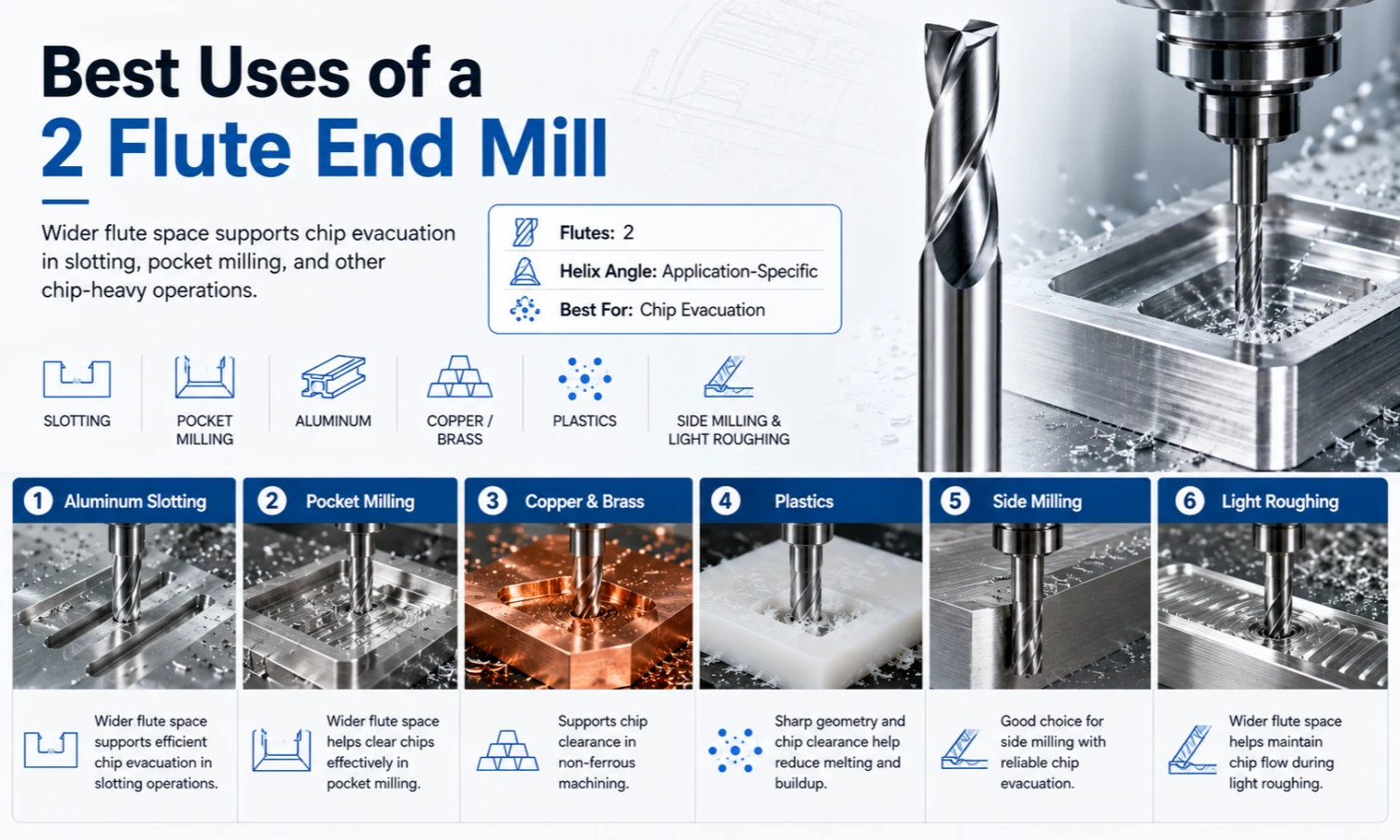
A 2 flute end mill is commonly used for aluminum machining, ranhura de largura total, fresagem de bolso, fresagem lateral, and light roughing. It is also suitable for copper, brass, plásticos selecionados, and other applications where chip evacuation is a priority.
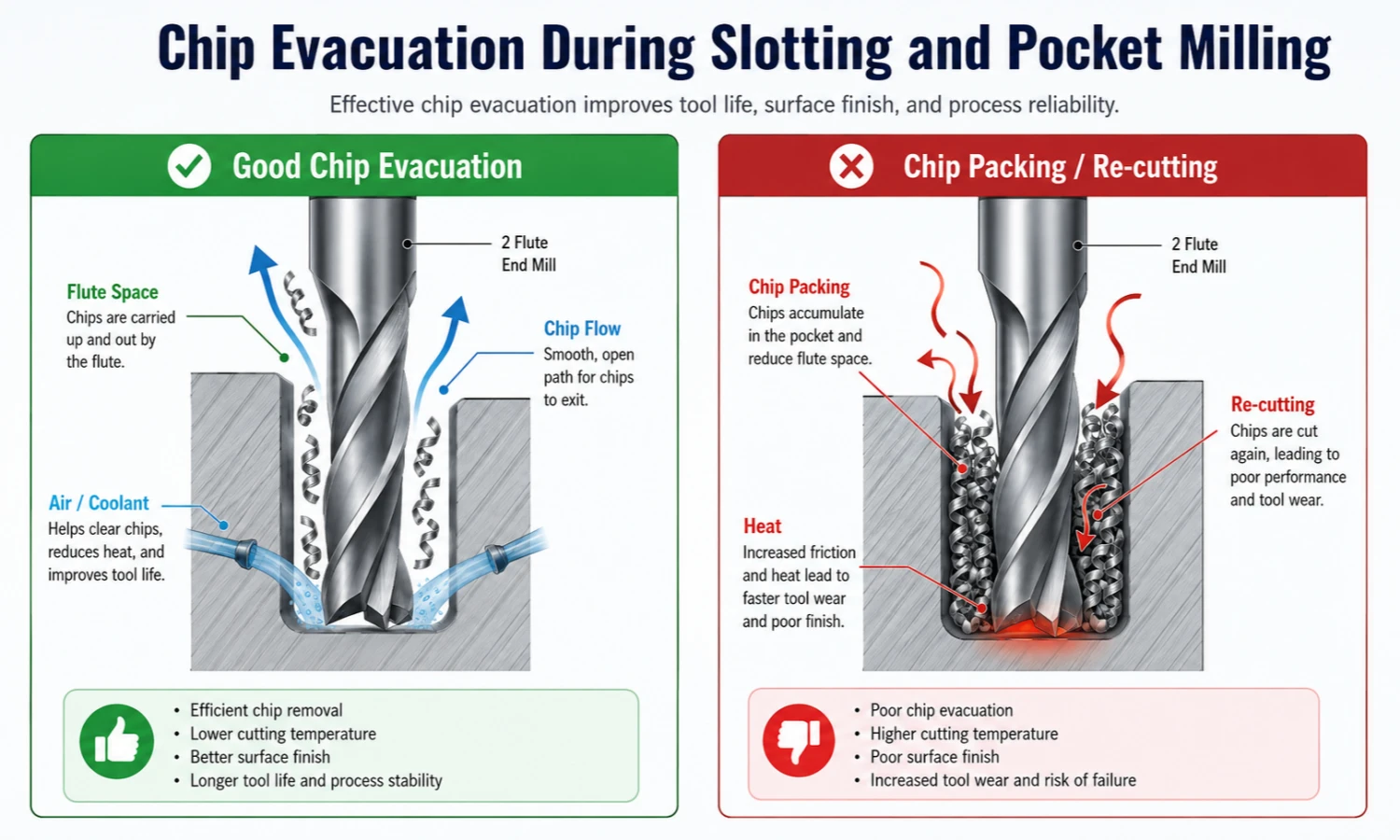
The two cutting edges leave relatively wide flute grooves. Portanto, the cutter provides more space for chips than many higher-flute-count tools. This can help reduce chip packing during closed or high-chip-volume operations.
No entanto, two flutes are not automatically the best choice for every job. The correct tool still depends on the workpiece material, operação de corte, envolvimento da ferramenta, acabamento necessário, rigidez da máquina, e método de remoção de chips.
Resposta rápida
O que é um 2 fresa de topo de flauta usada para?
Os usos típicos incluem:
- Aluminum slotting
- Fresamento de bolso
- Full-width slot cutting
- Side milling in non-ferrous materials
- Desbaste leve
- Copper and brass machining
- Selected plastic machining
- Operations where chips are difficult to remove
A two-flute cutter is especially useful when flute space and chip evacuation matter more than increasing the number of cutting edges. Em contraste, a higher flute count may be preferred when greater core strength, more cutting contacts, or a fine surface finish is the main requirement.
What Is a 2-Flute End Mill?
A two-flute end mill has two helical cutting edges and two flute grooves along the cutter body. These grooves form part of the cutting edge and also provide space for chips to leave the cutting zone.
Compared with many four-flute or six-flute tools of the same diameter, a two-flute design normally provides more flute space. Como resultado, it is often considered for materials that produce large chips and for operations where the cutter is surrounded by the workpiece.
Flute count is only one part of the tool design. Diâmetro do cortador, comprimento da flauta, força central, ângulo de hélice, preparação de borda, revestimento, and end geometry also affect performance.
Best Uses of a 2-Flute End Mill at a Glance
| Application | Why Two Flutes Can Help | Condição Importante |
|---|---|---|
| Aluminum slotting | Provides more chip space | Sharp geometry and reliable chip removal |
| Slots de largura total | Helps clear a high chip volume | Suitable cutting depth and coolant or air delivery |
| Fresamento de bolso | Reduces the risk of chip packing | Pocket depth and entry method must be considered |
| Cobre e latão | Supports chip clearance | Alloy grade and burr requirements affect selection |
| Plásticos | Provides space for chip removal | Plastic type and heat control are important |
| Fresamento lateral | Can suit many non-ferrous applications | Radial engagement and surface finish must be checked |
| Desbaste leve | Supports chip-heavy material removal | Machine rigidity and tool reach remain important |
Main Uses of a 2-Flute End Mill
Usinagem de alumínio
Aluminum machining is one of the most common applications for a 2 moinho de extremidade de flauta.
Muitas ligas de alumínio produzem cavacos relativamente grandes ou contínuos. If those chips remain inside a slot or pocket, eles podem ser recortados ou comprimidos contra a peça de trabalho. This can increase heat, cause built-up edge, and reduce cutting stability.
A suitable aluminum cutter often uses:
- Arestas de corte afiadas
- Superfícies de flauta lisas ou polidas
- Adequate flute space
- An uncoated design or a suitable low-friction coating
- An application-specific helix angle
- Ar confiável, névoa, ou entrega de refrigerante
Two flutes provide useful chip space, but flute count alone does not guarantee good aluminum performance. The complete tool geometry should match the alloy, diâmetro da ferramenta, profundidade de corte, condição da máquina, e acabamento necessário.
Slot de largura total
A abertura de canais em toda a largura cria um alto volume de cavacos porque a fresa envolve o material em todo o seu diâmetro.
Além disso, the slot walls restrict the paths available for chip evacuation. Chips can remain below or around the cutter, especially during deeper cuts.
A two-flute tool can help because the wider flute grooves provide more space for chips. No entanto, stable slotting also depends on:
- Profundidade do slot
- Diâmetro do cortador
- Comprimento da flauta
- Saliência da ferramenta
- Coolant or air access
- Rigidez da máquina
- Fixação da peça
- Parâmetros de corte
For deep slots, use only the flute length and overall reach required by the feature. Excessive tool extension can increase deflection and chatter.
Fresamento de Bolso
Pocket milling combines material removal with restricted chip flow. Portanto, the tool must cut efficiently while chips leave the enclosed area.
A two-flute cutter is often considered for aluminum pockets, rough pocket machining, and other applications where chip packing creates problems.
No entanto, pocket depth and entry method also affect tool selection. A shallow open pocket creates different conditions from a deep closed pocket. Da mesma maneira, side engagement after entry may require a different strategy from the initial pocket start.
When chips remain inside the pocket, improve air or coolant delivery before increasing the cutting load.
Cobre e Latão
Copper and brass are both non-ferrous materials, but they do not machine in the same way.
Pure copper can be ductile and may produce long chips or burrs. Enquanto isso, different brass alloys may produce shorter chips and require different edge preparation.
Para esses materiais, a two-flute cutter can support chip clearance. No entanto, the exact tool should also reflect:
- Grau do material
- Burr requirements
- Surface-finish target
- Tool engagement
- Diâmetro do cortador
- Coolant or lubrication method
Sharp cutting geometry is especially important when rubbing or material adhesion is a concern.
Plásticos e materiais compósitos selecionados
Two-flute cutters are also used for selected engineering plastics because the flute space helps remove chips from the cutting zone.
Plastic machining may create problems such as:
- Melting
- Rubbing
- Chip wrapping
- Edge tearing
- Formação de rebarbas
- Material deformation
The correct geometry depends on whether the plastic is soft, rigid, filled, reforçado, or heat sensitive. Portanto, one general cutter should not be treated as suitable for every plastic.
Application-specific tool geometry may also be used for selected composite materials. No entanto, composites vary widely, and some require specialized compression, diamond-cut, coated, or abrasive-resistant cutters.
Side Milling and Light Roughing
A 2 flute end mill can perform side milling, perfil, and light roughing when the tool matches the material and engagement.
Durante o fresamento lateral, chips usually have more space to leave than during full-width slotting. Portanto, flute space may be less restrictive. Rigidez da ferramenta, engate radial, precisão dimensional, and surface finish may become more important.
For light roughing in aluminum or other non-ferrous materials, a two-flute design can support efficient chip removal. No entanto, heavy roughing may require a dedicated roughing geometry, chipbreaker profile, or another flute count.
Do not select the cutter only because the operation is described as “roughing.” Review the chip volume, profundidade de corte, potência da máquina, alcance da ferramenta, and required material-removal rate.
Why Two Flutes Work Well in Chip-Heavy Operations
More Flute Space
Uma fresa tem espaço limitado entre suas arestas de corte e o núcleo.
When the number of flutes increases, the available flute grooves normally become smaller unless the complete tool geometry is changed. Com duas flautas, more space can be allocated to chip formation and evacuation.
This is useful during:
- Slots de largura total
- Deep pocket machining
- Usinagem de alumínio
- Plastic cutting
- Outras operações de alto volume de chips
No entanto, more flute space can also mean a different core structure. Portanto, the required rigidity should be considered together with chip evacuation.
Chip Evacuation and Built-Up Edge
Good chip evacuation helps prevent chips from being cut repeatedly.
Re-cutting can increase:
- Temperatura de corte
- Desgaste da ferramenta
- Danos de ponta
- Marcas de superfície
- Chip welding
- Borda construída
- Machine load
Aluminum and other ductile materials may adhere to the cutting edge when heat, atrito, or lubrication conditions are unsuitable.
A sharp cutter with suitable flute surfaces can help. Além disso, correctly directed air, névoa, or coolant can remove chips before they collect inside the feature.
O que a contagem de flautas não pode lhe dizer
Flute count does not independently determine:
- Carga de corte
- Rigidez da ferramenta
- Plunge capability
- Maximum cutting depth
- Suitable workpiece material
- Acabamento superficial necessário
- Safe spindle speed
- Taxa de alimentação
- Vida útil da ferramenta
Por exemplo, two tools with the same flute count may have different core diameters, ângulos de hélice, end geometries, revestimentos, e classes de metal duro.
For a broader explanation of flute geometry and selection, leia nosso end mill flute design and chip evacuation guide.
Can a 2-Flute End Mill Plunge?
Some center-cutting two-flute end mills support ramping, entrada helicoidal, bolso começando, or controlled plunge entry.
No entanto, two flutes do not automatically mean that the cutter can plunge vertically. The end cutting edges must reach the tool center, and the entry method must suit the material and cutter design.
Straight plunging also creates different cutting loads and chip-flow conditions from side milling. Portanto, rampa, entrada helicoidal, or pre-drilling may provide better control in deeper or more demanding applications.
Para orientação detalhada, ler pode um 2 mergulho da fresa de topo de flauta.
When Is a 2-Flute End Mill Not the First Choice?
Fine Finishing With Light Engagement
During light finishing, chip volume may be low. In that situation, large flute grooves may be less important than the number of cutting contacts and the stability of the cutter.
A higher-flute-count tool may support a finer or more consistent finish in some applications. No entanto, the result still depends on runout, geometria da ferramenta, rigidez da máquina, engate radial, e parâmetros de corte.
A two-flute cutter can still produce a good surface when the tool and process are correctly controlled.
Applications Requiring Greater Core Strength
Deep features, long overhangs, high cutting pressure, or unstable setups may require greater tool rigidity.
A cutter with a stronger core may reduce deflection. No entanto, increasing the flute count is not the only solution. Diâmetro do cortador, profundidade da flauta, comprimento da flauta, material de ferramenta, condição de titular, and machine rigidity also affect strength.
Steel and Heat-Resistant Materials
A two-flute tool is not limited to aluminum or plastics. Some steel slotting applications may also use two or three flutes when chip evacuation is difficult.
No entanto, steel side milling, semi-acabamento, or finishing may use four or more flutes when chip space is sufficient and additional cutting contacts are useful.
Stainless steel and heat-resistant materials also require careful control of heat, endurecimento por trabalho, envolvimento da ferramenta, revestimento, e resistência da borda.
For a focused comparison, ler 2 fresa de topo de flauta vs 4 flauta.
How to Decide Whether Two Flutes Fit the Operation
Before selecting a two-flute cutter, review the complete machining condition.
Ask the following questions:
- Does the operation create a high chip volume?
- Is the cutter performing full-width slotting?
- O bolso é profundo ou fechado?
- Is chip evacuation limited?
- Does the material tend to form built-up edge?
- Is the required finish more important than flute space?
- Is the tool overhang longer than necessary?
- A configuração da máquina e do acessório é rígida??
- Can air, névoa, or coolant reach the cutting zone?
- A operação requer geometria de corte central?
Choose two flutes when chip space is a major requirement and the cutter structure suits the operation.
Choose another flute count when chip evacuation is already stable and the process needs more cutting contacts, greater core strength, or a different balance between roughing and finishing.
For broader selection guidance, ler comparar 2, 4, and 6 fresas de topo de flauta.
Perguntas frequentes sobre 2 Flute End Mill Uses
Is a 2-Flute End Mill Only for Aluminum?
Não. Aluminum is a common application, but two-flute cutters are also used for copper, brass, plásticos selecionados, fresagem lateral, ranhura, embolsar, and other operations where chip evacuation is important.
The exact tool geometry should match the workpiece and cutting conditions.
Is a 2-Flute End Mill Suitable for Full-Width Slotting?
Sim, a suitable two-flute cutter is commonly used for full-width slotting, especialmente em alumínio e outros materiais não ferrosos.
The wider flute grooves provide space for chips. No entanto, profundidade do slot, entrega de refrigerante, alcance da ferramenta, and machine rigidity must also be considered.
Can a 2-Flute End Mill Be Used for Side Milling?
Sim. A two-flute tool can perform side milling and profiling.
Durante o fresamento lateral, engate radial, rigidez da ferramenta, required accuracy, and surface finish may become more important than maximum flute space.
Can a 2-Flute End Mill Machine Steel?
Sim, some two-flute end mills can machine steel, particularly during slotting or other operations where chip evacuation is restricted.
No entanto, the correct choice depends on the steel grade, profundidade de corte, geometria do cortador, revestimento, rigidez da máquina, e método de refrigerante.
Can a 2-Flute End Mill Plunge?
Some center-cutting two-flute cutters can support controlled plunging, rampa, ou entrada helicoidal.
Always confirm the end geometry before programming axial entry.
Does a 2-Flute Cutter Always Produce a Rougher Finish?
Não. Surface finish depends on more than flute count.
Excentricidade da ferramenta, cutting-edge quality, alimentação por dente, engate radial, estabilidade da máquina, material condition, and toolpath all affect the finished surface.
When Should I Choose Three or Four Flutes Instead?
Consider three or four flutes when chip evacuation remains stable and the operation needs more cutting contacts, greater rigidity, or higher finishing potential.
Three flutes may provide a balance between chip space and edge count. Four flutes may suit some steel machining, fresagem lateral, e operações de acabamento.
Guias Relacionados
For additional product and application information, visit:
Carboneto sólido 2 moinho de extremidade de flauta
Pode um 2 mergulho da fresa de topo de flauta?
2 fresa de topo de flauta vs 4 flauta
Comparar 2, 4, and 6 fresas de topo de flauta
Projeto e seleção do canal da fresa de topo
Precisa de um 2 Fresa de topo de canal para sua aplicação?
Envie-nos o material da sua peça, operação de usinagem, tamanho de cortador necessário, desenho, modelo de referência, informações atuais da ferramenta, e quantidade quando disponível. We will review the known requirements and help confirm a suitable standard or custom tool direction.
Veja nosso padrão e personalizado carboneto sólido 2 moinho de extremidade de flauta opções.
E-mail: sales@cutterbest.com