 Cortadores de fresagem de precisão,Ferramentas de corte para usinagem CNC de todos os materiais

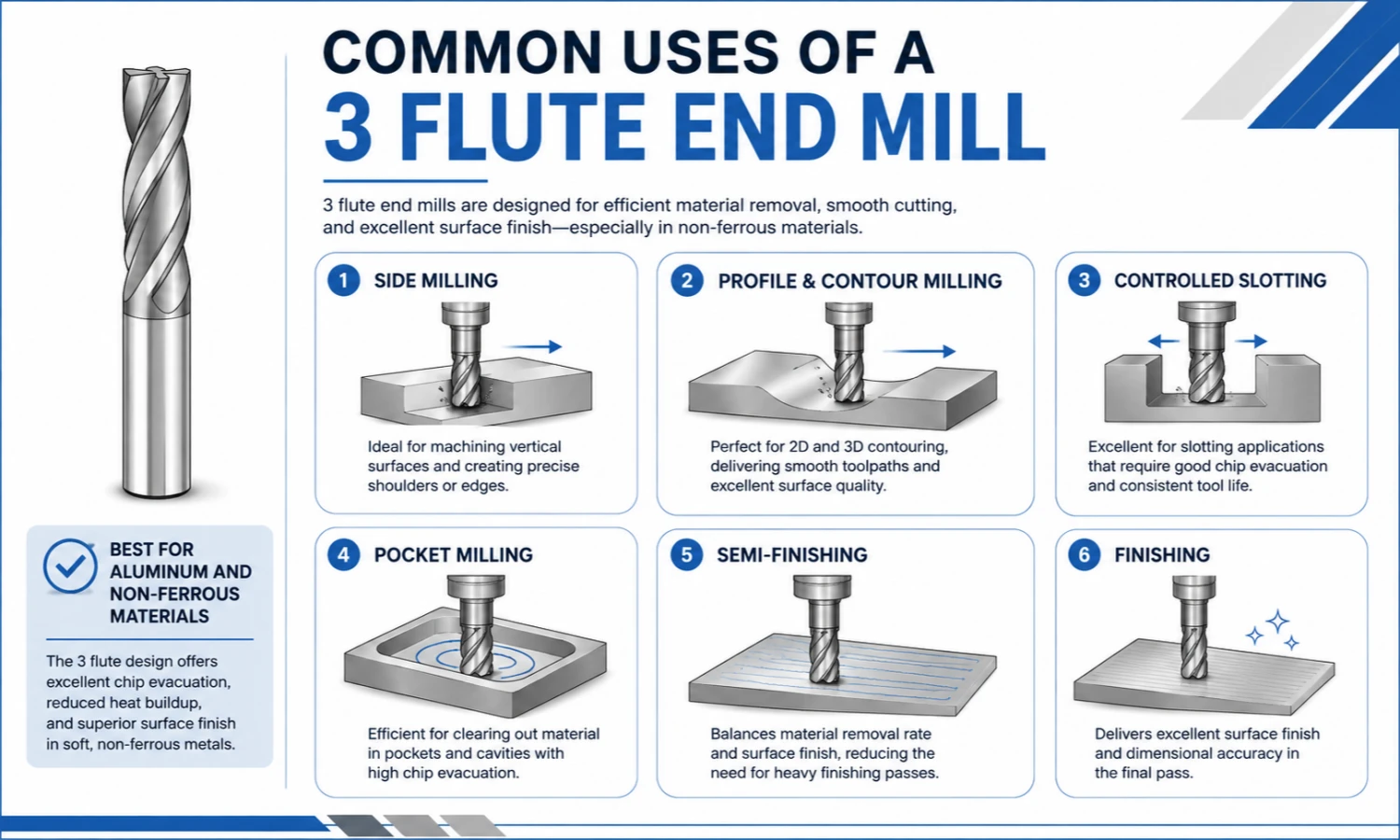
A 3 A fresa de topo de canal é usada principalmente para usinagem de alumínio, fresagem lateral, fresagem de perfil, ranhura controlada, fresagem de bolso, semi-acabamento, e acabamento. Suas três arestas de corte proporcionam um equilíbrio prático entre o espaço dos cavacos, rigidez do cortador, e qualidade da superfície.
Comparado com um 2 cortador de flauta, a terceira aresta de corte aumenta o envolvimento da ferramenta e suporta fresamento lateral mais estável. Ao mesmo tempo, um projeto de três canais normalmente retém mais espaço para cavacos do que muitas ferramentas de canais mais altos.
Este equilíbrio torna a fresa útil para peças de alumínio que exigem paredes limpas e remoção controlada de cavacos. No entanto, a escolha correta ainda depende da operação, profundidade de corte, alcance da ferramenta, configuração da máquina, e método de refrigerante.
Resposta rápida: Usos comuns de um 3 Fresa de topo de flauta
As aplicações típicas incluem:
- Usinagem de alumínio e ligas de alumínio
- Fresamento lateral
- Fresamento de perfil e contorno
- Slot controlado
- Fresamento de bolso
- Fresamento escalonado e a 90 graus
- Semiacabamento
- Acabamento
Uma fresa de três canais funciona melhor quando o processo de usinagem precisa tanto de escoamento de cavacos quanto de corte estável. É especialmente útil para operações de perfilamento e acabamento onde a qualidade da parede é importante.
For deep full-width slots or heavy roughing, um 2 flute tool may work better because it offers larger flute spaces.
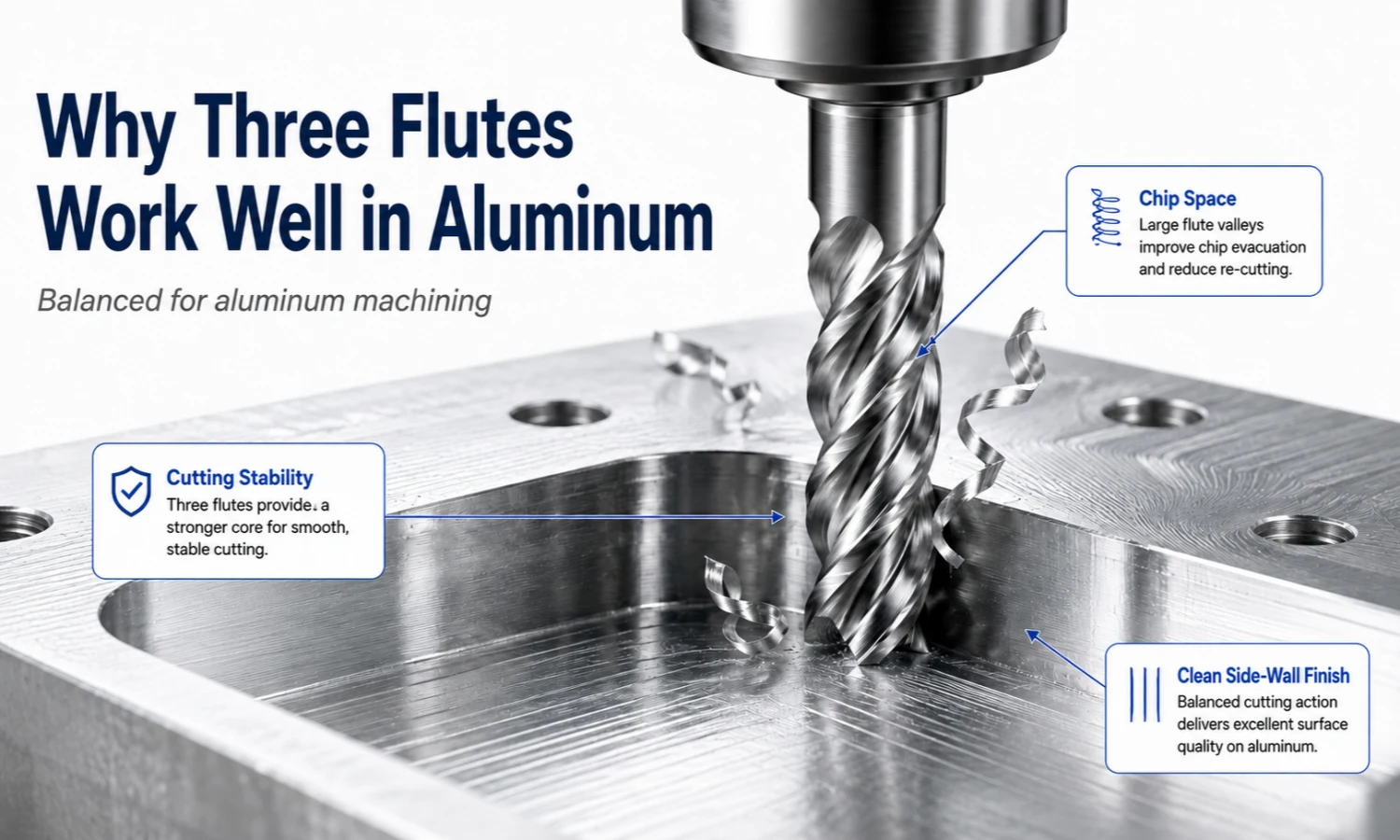
Why Three Flutes Work Well in Aluminum
Flute Space Helps Control Aluminum Chips
Aluminum often produces large or continuous chips. If these chips remain inside the cutting area, they may be recut, collect in the flutes, or stick to the cutting edge.
A three-flute cutter keeps useful chip space while adding another cutting edge. Portanto, it can remove aluminum efficiently when the toolpath, refrigerante, explosão de ar, velocidade, and feed support smooth chip evacuation.
The cutter does not solve poor chip control by itself. Deep engagement, excessive tool load, or weak coolant delivery can still cause chip packing.
A Stronger Core Supports Cutting Stability
In comparable cutter designs, adding a third flute usually increases the core section compared with a two-flute tool. A stronger core can reduce tool deflection and support more stable engagement.
This matters during side milling, perfil, e acabamento. Less deflection can help maintain wall geometry and produce a more consistent surface.
No entanto, tool length also matters. A long flute length or excessive overhang can reduce rigidity even when the cutter has a strong core.
More Cutting-Edge Engagement Can Improve Finish
The additional cutting edge increases the number of cutting engagements per tool revolution. Como resultado, the tool can support a smoother and more consistent finish under suitable conditions.
Acabar, condição de titular, alimentação por dente, geometria da borda, and machine rigidity still affect the final result. Flute count is important, but it is only one part of the cutting system.
Main 3 Flute End Mill Applications
Fresamento lateral e perfilamento
Fresamento lateral e fresamento de perfil são usos comuns de uma fresa de três canais. Essas operações precisam de contato estável, geometria precisa da parede, e remoção controlada de cavacos.
A terceira aresta de corte suporta o engate regular com a peça de trabalho. Enquanto isso, os espaços das flautas deixam espaço para lascas de alumínio.
Esta combinação combina com paredes retas, perfis externos, contornos internos, e arestas dos componentes.
Slot controlado
A 3 A fresa de topo de canal pode usinar canais quando a profundidade do canal e as condições de controle de cavacos forem adequadas.
Para ranhuras rasas ou controladas, fornece um bom equilíbrio entre remoção de material e estabilidade. No entanto, ranhuras em toda a largura colocam todas as três arestas de corte em contato com o material e deixam menos espaço para cavacos.
Se os chips começarem a se acumular dentro de uma fenda profunda, reduzir a carga de corte, melhorar o fornecimento de refrigerante ou ar, or move to a 2 cortador de flauta.
Fresamento de Bolso
Pocket milling requires both stable cutting and an effective toolpath. The cutter must remove material while allowing chips to leave the pocket.
Uma entrada em rampa, entrada helicoidal, or adaptive toolpath can reduce chip recutting. Em contraste, aggressive full-width engagement may overload the cutter or trap chips.
Toolpath design therefore matters as much as flute count.
Semiacabamento e Acabamento
Three-flute cutters also work well for semi-finishing and finishing aluminum parts.
The additional cutting edge can support cleaner walls and a more uniform surface than some two-flute tools. Portanto, this flute count is useful when surface quality matters more than maximum chip volume.
What Materials Can a 3 Flute End Mill Cut?
Alumínio e ligas de alumínio
Aluminum is the main application for many three-flute tools. The design combines chip space with the rigidity needed for side milling, perfil, embolsar, e acabamento.
Before selecting the cutter, review the aluminum grade, operação, profundidade de corte, chip form, método de refrigeração, e exigência de acabamento.
Cobre e Latão
A three-flute carbide cutter can also machine copper and brass when its edge geometry and cutting conditions suit the material.
Sharp cutting edges and good chip control help reduce burrs and maintain surface quality. No entanto, copper and brass do not behave exactly like aluminum, so one tool design may not suit every grade.
Plastics and Other Non-Ferrous Materials
Some plastics and other non-ferrous materials can also be machined with a three-flute tool.
For plastics, heat buildup and chip melting may become important. Portanto, use a tool geometry and coolant method that keep the cutting zone clear.
Materiais Compostos
A three-flute cutter may suit selected composites, but composite structures vary widely. Fiber direction, resin content, qualidade de borda, and delamination risk can change the required geometry.
For composite applications, confirm the material structure and cutting goal before choosing the tool.
Common Problems and Practical Checks
| Problema de usinagem | Practical Check |
|---|---|
| Chips collect inside a slot | Reduce engagement, improve coolant or air blast, or consider a 2 cortador de flauta |
| Aluminum sticks to the edge | Check chip evacuation, lubrication, geometria da borda, and surface treatment |
| Side walls look rough | Check runout, balanço da ferramenta, condição de titular, alimentar, and radial engagement |
| Chatter or vibration occurs | Shorten tool reach, melhorar a fixação, e reduzir o envolvimento instável |
| Tool life is inconsistent | Review runout, recortamento de cavacos, carga de corte, refrigerante, and tool selection |
| Burrs remain on the part | Verifique a nitidez das bordas, desgaste da ferramenta, cutting direction, and finishing parameters |
These symptoms do not always come from flute count. Por exemplo, changing from two flutes to three flutes will not correct excessive runout or a weak tool holder.
Start by checking the complete setup. Then adjust the flute count if chip space, rigidez, or cutting-edge engagement remains the main problem.
When Is a 3 Flute End Mill a Good Choice?
Choose a three-flute cutter when:
- The workpiece is aluminum or another suitable non-ferrous material
- The operation includes side milling or profiling
- Wall quality is important
- Semi-finishing or finishing is required
- A 2 flute tool does not provide enough stability
- A higher-flute tool leaves insufficient chip space
- The toolpath and coolant method can control chip evacuation
The cutter is not automatically the best option for every aluminum job. Profundidade de corte, engate radial, alcance da ferramenta, rigidez da máquina, and chip form should guide the final decision.
When Should You Choose Another Flute Count?
Different flute counts suit different materials, chip-control needs, and machining operations. The following comparison provides a quick selection reference.
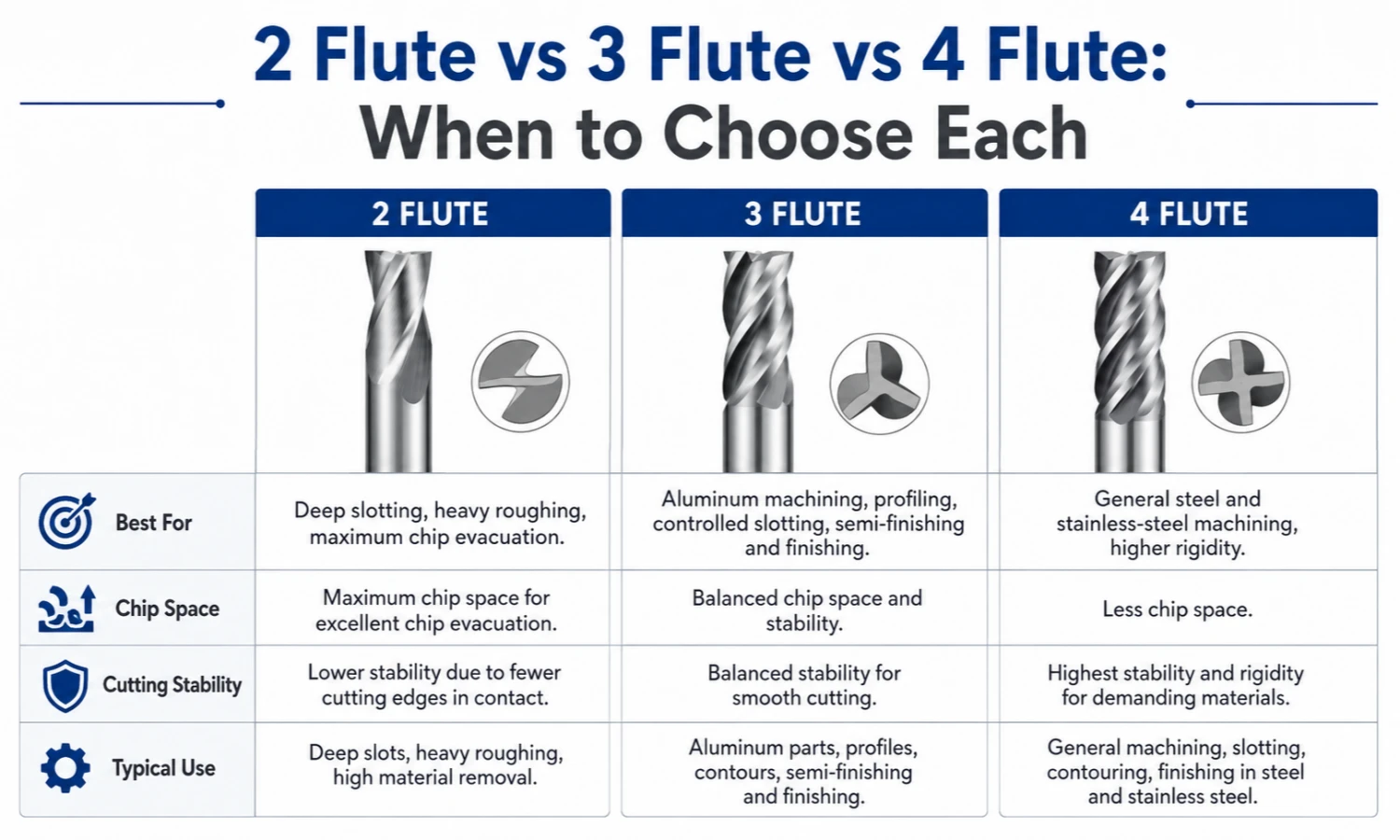
Escolher 2 Flutes for Deep Slotting and Heavy Roughing
A 2 flute cutter provides larger flute spaces. It is often the better choice for:
- Ranhura profunda em largura total
- Heavy aluminum roughing
- Large chip loads
- Operations where maximum chip evacuation is the main concern
A three-flute cutter becomes more attractive when wall quality and cutting stability matter more.
Para uma comparação detalhada, leia nosso 2 flauta vs. 3 flute end mill for aluminum guide.
Você também pode ver nosso 2 Fresa de topo de flauta for deep slotting and aluminum roughing.
Considerar 4 Flutes for Steel and Stainless Steel
A 4 flute cutter provides more cutting edges and often has a stronger core than a lower-flute tool. It is commonly selected for general steel and stainless-steel machining, where chip volume may be lower and rigidity is important.
No entanto, four flutes are not automatically better. A escolha correta depende do material, chip form, profundidade de corte, e operação.
For steel and stainless-steel applications, veja nosso 4 Fresas de topo de flauta.
How to Select a 3 Fresa de topo de flauta
Comece com o material da peça de trabalho
Primeiro, identify the material and grade. Alumínio, copper, brass, plásticos, and composites produce different chips and cutting temperatures.
The material affects the required edge geometry, surface treatment, and chip-control method.
Match the Tool to the Operation
Próximo, identificar a operação principal.
A cutter used for side milling may need a different flute length and edge design from one used for slotting, embolsar, ou acabamento.
Full-width engagement also creates different chip-control demands from light radial finishing.
Choose Suitable Dimensions and Reach
Important dimensions include:
- Diâmetro de corte
- Comprimento da flauta
- Comprimento total
- Diâmetro da haste
- Comprimento do pescoço, when required
Use the shortest practical flute length and overall length. A shorter setup generally improves rigidity and reduces vibration.
Long-reach tools can access deep or restricted features. No entanto, additional overhang increases deflection risk, so the cutting strategy must match the setup.
Review Edge Geometry and Surface Treatment
Edge geometry and surface treatment should match the material, operação, condição do líquido refrigerante, chip-adhesion risk, e vida útil necessária da ferramenta.
Para alumínio, sharp cutting edges and smooth chip flow are especially important. The correct option should be selected for the application rather than chosen only by coating name.
Confirm Starting Parameters for the Actual Tool
A single speed and feed value cannot fit every three-flute cutter.
Diâmetro da ferramenta, comprimento da flauta, design de borda, revestimento, classe da peça, rigidez da máquina, titular, refrigerante, profundidade axial, and radial engagement all affect the starting parameters.
Portanto, use parameters supplied for the confirmed tool specification. Begin with a controlled trial, then review chip form, acabamento superficial, carga do fuso, sound, and cutter wear.
Frequently Asked Questions
O que é um 3 fresa de topo de flauta usada para?
It is mainly used for aluminum operations that require controlled chip evacuation, corte estável, and clean side walls.
It is selected when the operation needs both chip evacuation and stable cutting.
Is a Three-Flute Cutter Suitable for Deep Slotting?
It may work in controlled slots, but it is not normally the first choice for very deep full-width slotting.
Deep slots leave less room for chips to escape. In that situation, um 2 cortador de flauta, lighter engagement, or a different toolpath may provide better chip control.
Why does aluminum stick to the cutting edge?
Aluminum may stick when chips are not removed quickly, lubrication is insufficient, the cutting edge is worn, or the tool geometry does not suit the material.
Check coolant or air delivery, recortamento de cavacos, carga de corte, condição de borda, and surface treatment.
Can a Three-Flute Cutter Machine Steel?
Uma fresa de três canais pode ser projetada para aplicações de aço selecionadas. No entanto, muitas ferramentas de três canais destinam-se principalmente a alumínio e materiais não ferrosos.
Para usinagem geral de aço e aço inoxidável, um 4 ferramenta de canal pode oferecer um equilíbrio mais adequado entre rigidez e contagem de arestas.
Precisa de um 3 Fresa de topo de flauta para alumínio?
Para especificações do produto, dimensões personalizadas, geometria, revestimento, marcação, e opções de embalagem, veja nosso 3 fresa de topo plano de carboneto de flauta para alumínio.
Envie o material da peça, operação de usinagem, dimensões necessárias, quantidade, e qualquer desenho disponível ou informações atuais do cortador.
Envie seu desenho por e-mail, fotos de ferramentas, ou requisitos para sales@cutterbest.com.