 Freze de precizie,Scule de tăiere pentru prelucrarea CNC a fiecărui material

Într-o 2 flaut vs 4 flute end mill comparison, the main decision is how to balance chip evacuation, număr de vârf, tool support, and the required machining result.
A two-flute cutter is often preferred when chip removal is the main challenge. Typical examples include full-width slotting, enclosed pockets, and high-chip-volume machining in aluminum or other non-ferrous materials.
A four-flute cutter is often selected when chips can leave the cutting zone reliably and the operation benefits from more cutting contacts, greater core support, or stable side milling and finishing.
Cu toate acestea, flute count is not the only selection factor. Diametrul tăietorului, adâncimea flautului, atingerea instrumentului, materialul piesei de prelucrat, acoperire, logodnă, rigiditatea mașinii, and coolant delivery also affect the result.
Răspuns rapid
Use a 2-Freză de capăt pentru caneluri when the operation creates a high chip volume or restricts chip evacuation. It is a common starting direction for full-width slotting, buzunare adânci, prelucrarea aluminiului, and other chip-heavy cuts.
Use a 4-Freză de capăt pentru caneluri when chip space is sufficient and the process benefits from more cutting edges. It is commonly considered for side milling, profilare, semifinisare, finisare, and many steel applications.
Neither design is automatically better for every job. The correct choice depends on where the cutter is engaged, how chips leave the cut, and whether chip space, rigiditate, productivity, or finish is the main priority.
2 Flaut vs 4 Flute End Mill at a Glance
| Factor | 2-Flute Direction | 4-Flute Direction |
|---|---|---|
| Cutting Edges | Two cutting edges | Four cutting edges |
| Flute Space | More space for chips | Less space between cutting edges |
| Evacuare cip | Often useful in closed or chip-heavy cuts | Suitable when chips can leave the cut reliably |
| Core Support | Depends on flute depth and geometry | Often allows more core support |
| Full-Width Slotting | Common when chip volume is high | Requires adequate chip clearance |
| Frezare laterală | Suitable when chip evacuation remains important | Often useful with lighter radial engagement |
| Finisaj de suprafață | Can produce a good finish under stable conditions | More cutting contacts may support finishing |
| Material Direction | Common in aluminum and non-ferrous cuts | Common in many steel and finishing applications |
| Main Selection Focus | Chip space and evacuation | Cutting-edge count and tool support |
 Cum schimbă numărul de flaut performanța de tăiere
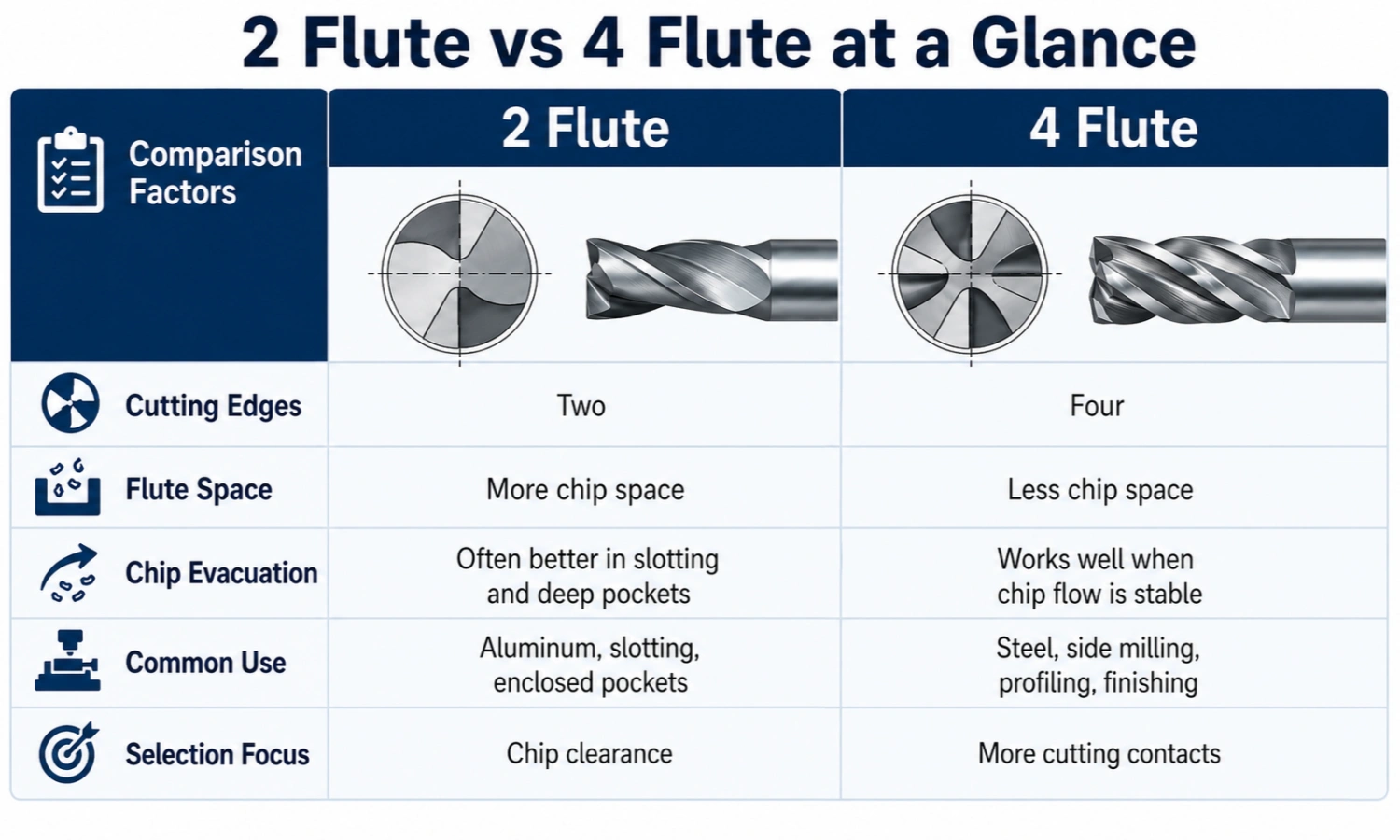
Flute Space and Chip Evacuation
A cutter has limited space between its cutting edges and core.
With two flutes, more of the cutter diameter can normally be allocated to the flute grooves. Prin urmare, chips have more space to form and move away from the cutting zone.
This can be useful during:
- Slot pe toată lățimea
- Deep or enclosed pocket milling
- Prelucrarea aluminiului
- Prelucrarea plasticului
- Other high-chip-volume operations
A four-flute cutter has more cutting edges within the same diameter. Ca urmare, the individual flute grooves are often smaller.
This does not mean that a four-flute tool cannot evacuate chips. În schimb, it means that the application must provide enough space, lichid de răcire, air, or toolpath movement for chips to leave the cut.
Cutting Edges and Feed Capacity
A two-flute cutter has two cutting contacts per revolution, while a four-flute cutter has four.
La aceeași viteză a axului și încărcare a așchiilor pe dinte, the four-flute tool would require a higher programmed feed because more cutting edges enter the material during each revolution.
Cu toate acestea, this higher feed is only practical when:
- Chip evacuation remains stable
- Machine power is sufficient
- Tool engagement is suitable
- Cutting heat is controlled
- The workpiece and holder are rigid
- The cutter geometry matches the material
Prin urmare, four flutes do not automatically mean faster machining. De asemenea, two flutes do not automatically mean lower productivity.
The usable feed depends on the overall machining conditions.
Core Support and Tool Rigidity
A four-flute design often allows more material to remain near the tool core. This can provide greater core support in some cutter designs.
Cu toate acestea, actual rigidity also depends on:
- Diametrul tăietorului
- Adâncimea flautului
- Lungimea flautului
- Overall tool length
- Contopirea sculei
- Helix angle
- Grad de carbură
- Starea titularului
A short two-flute cutter may be more stable than a long four-flute cutter of the same diameter. Din acest motiv, flute count should not be used as the only measure of tool rigidity.
Surface Finish and Cutting Stability
More cutting edges can provide more frequent cutting contacts. Prin urmare, o freză cu patru caneluri poate susține un finisaj consistent în timpul operațiunilor de frezare laterală și finisare adecvate.
Totuşi, finisajul suprafeței depinde și de:
- Executarea sculei
- Calitate de ultimă oră
- Hrănire pe dinte
- Angajarea radială
- Deformarea sculei
- Stabilitatea mașinii
- Prinderea piesei de prelucrat
- Strategia traseului uneltei
Un tăietor cu două caneluri bine selectat poate produce în continuare o suprafață bine finisată, în special în aluminiu și alte materiale neferoase.
Pentru o explicație mai largă a spațiului flaut, diametrul miezului, unghiul helixului, și selecția numărului de flaut, citeste-ne Ghid de proiectare și selecție a canelurilor pentru freza de capăt.
Când să folosiți o freză cu 2 fluturi
Full-Width Slotting
Fanterea pe toată lățimea cuplează cuțitul pe întregul diametru. în consecinţă, operațiunea produce un volum mare de cip, în timp ce pereții slotului restricționează căile de ieșire disponibile pentru cip.
O freză cu două caneluri este adesea luată în considerare deoarece canelurile sale mai largi oferă mai mult spațiu pentru așchii.
Stajarea stabilă depinde și de:
- Adâncimea slotului
- Diametrul tăietorului
- Lungimea flautului
- Contopirea sculei
- Livrare aer sau lichid de răcire
- Rigiditatea mașinii
- Parametrii de tăiere
O fantă mică și una adâncă nu creează aceleași condiții de tăiere. Prin urmare, instrumentul și strategia de tăiere ar trebui să se potrivească cu caracteristica reală.
Buzunare adânci sau închise
Așchiile pot rămâne într-un buzunar adânc sau închis în loc să părăsească zona de tăiere.
Când chipsurile sunt tăiate din nou, căldura de tăiere și încărcarea sculei pot crește. Urme de suprafață, marginea construită, și se pot dezvolta, de asemenea, deteriorarea marginii timpurii.
Un tăietor cu două caneluri poate oferi un spațiu util pentru așchii în aceste aplicații. Cu toate acestea, adâncimea buzunarului, metoda de intrare, angajare laterală, atingerea instrumentului, iar accesul la lichid de răcire trebuie încă revizuit.
Prelucrare aluminiu și neferoase
Multe aliaje de aluminiu produc așchii relativ mari sau continue. Cupru, alamă, iar materialele plastice selectate pot necesita, de asemenea, o îndepărtare sigură a așchiilor.
Pentru aceste materiale, poate folosi o unealtă cu două caneluri:
- Margini de tăiere ascuțite
- Suprafețe netede sau lustruite
- Spațiu potrivit pentru flaut
- Pregătirea marginilor specifică aplicației
- Aer de încredere, aburi, or coolant delivery
A two-flute design is not the only option for aluminum. Three-flute and application-specific four-flute cutters may also work well in certain side-milling or finishing conditions.
The selection should be based on the operation rather than the material name alone.
Other Chip-Heavy Operations
Two-flute tools can also support light roughing and selected steel slotting applications when chip evacuation is difficult.
The key question is:
Does the operation create more chips than the available flute space can remove reliably?
If the answer is yes, a lower flute count may provide a useful starting direction.
For detailed examples of two-flute applications, citire what a 2 flute end mill is used for.
View our standard and custom carbură solidă 2 Freză de capăt pentru caneluri opțiuni.
When to Use a 4-Flute End Mill
Side Milling and Profiling
During side milling, only part of the cutter diameter may engage the workpiece. Chips usually have more open space to leave than during full-width slotting.
In aceasta situatie, a four-flute tool may provide:
- Mai multe contacte de tăiere
- Greater core support in many designs
- Stable radial cutting
- Consistent profiling
- Improved productivity under suitable conditions
Cu toate acestea, radial engagement must remain appropriate. Heavy side engagement can still create heat, abatere, and chip-control problems.
Semi-Finishing and Finishing
Four-flute cutters are commonly used for semi-finishing and finishing because the operation often creates a lower chip volume than full-width roughing.
More cutting contacts may support:
- Consistent wall finishing
- Stable contour milling
- Smoother profiling
- Higher programmed feed under suitable conditions
Încă, a four-flute tool does not guarantee a better surface.
A alerga afară, hrana pe dinte, edge quality, calea sculei, angrenare radială, and machine rigidity remain important.
Steel and Stainless Steel Applications
Four-flute end mills are widely used for many steel and stainless steel machining operations.
In these materials, the tool may benefit from:
- Greater core support
- Mai multe muchii de tăiere
- Suitable coating
- Controlled radial engagement
- Stable machine and fixture conditions
Cu toate acestea, the material category alone does not determine the flute count.
De exemplu, full-width slotting in steel may still require two or three flutes when chip evacuation is limited. Stainless steel also requires careful control of cutting heat, work hardening, acoperire, și rezistența muchiei.
Operations With Stable Chip Evacuation
A four-flute cutter becomes more practical when chips can leave the cutting zone without packing around the tool.
This may occur during:
- Frezare laterală
- Shallow profiling
- Open-pocket finishing
- Semifinisare
- Light radial cuts
- Operations with effective coolant or air delivery
When chip space is no longer the main limitation, cutting-edge count and tool support can receive greater priority.
2 Flaut vs 4 Flute by Workpiece Material
The following table shows common starting directions rather than fixed rules.
| Material | Direcție comună de pornire | What May Change the Choice |
|---|---|---|
| Aluminiu | Two or three flutes for chip-heavy cuts | Frezare laterală, finisare, alloy grade and coolant |
| Cupru | Two flutes for chip clearance | Copper grade, burr control and finish |
| Brass | Two or more flutes may work | Brass grade, chip form and machining operation |
| Materiale plastice | One or two flutes are common | Plastic type, cutting heat and edge requirements |
| Oțel | Four flutes are common | Full slotting, diametrul sculei, coating and depth |
| Oţel inoxidabil | Four flutes suit many operations | Work hardening, logodnă, coolant and edge strength |
| Fontă | Several flute counts may work | Abrasiveness, dry cutting, dust and operation |
| Selected Composites | Application-specific cutter required | Material structure, abrasiveness and edge quality |
This table should be used as an initial guide. The final decision should also reflect tool diameter, depth of cut, starea mașinii, și finisajul necesar.
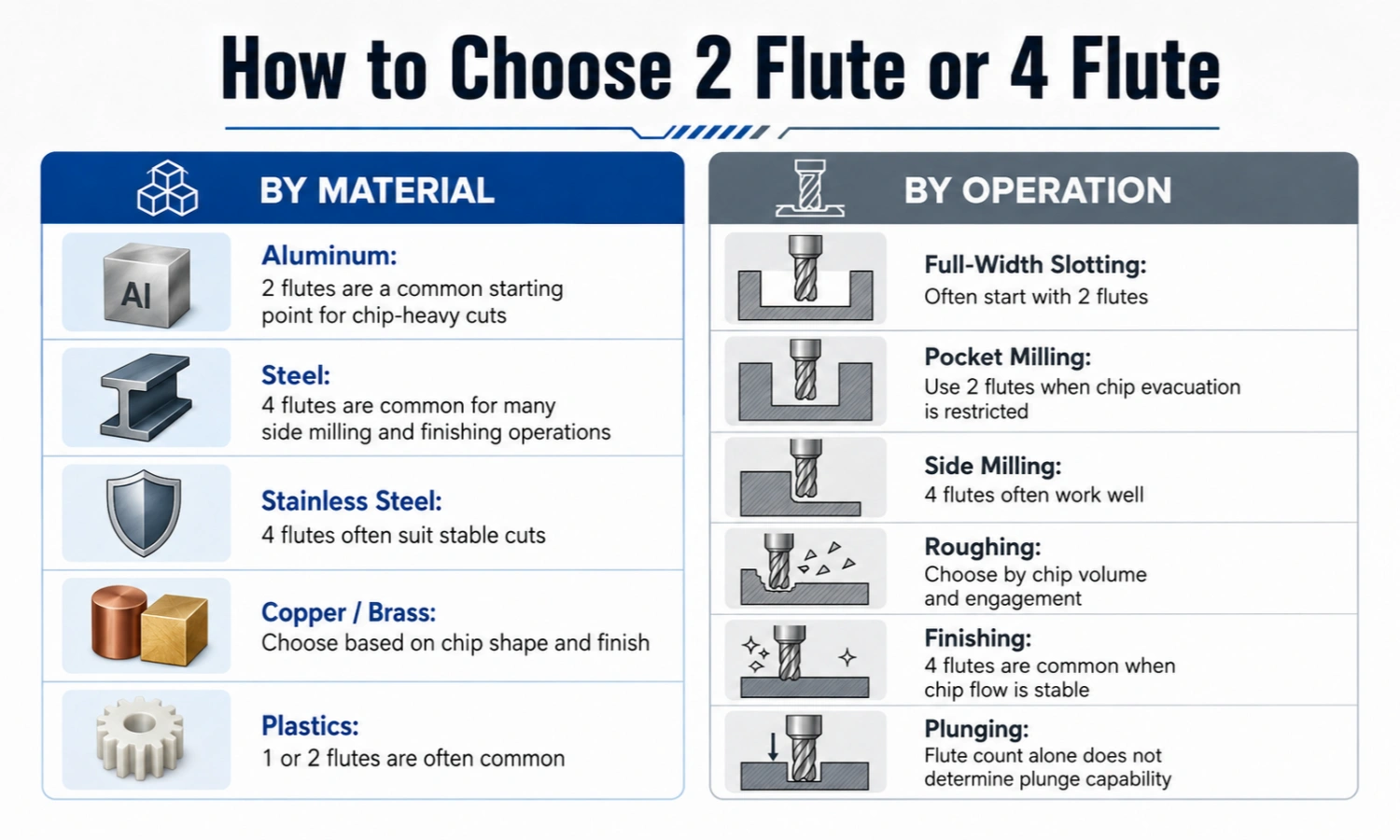
2 Flaut vs 4 Flute by CNC Operation
Slotting
For full-width slotting, two flutes are often a practical starting point because the operation produces a high chip volume and restricts chip movement.
A four-flute cutter may still perform shallow or controlled slotting when:
- The slot is not deep
- Evacuarea așchiilor este fiabilă
- The material produces manageable chips
- Cutting parameters are adjusted correctly
The deeper and more enclosed the slot becomes, the more important flute space usually becomes.
Frezarea buzunarului
Pocket milling includes both the entry move and the subsequent material-removal path.
A two-flute cutter may suit deep or enclosed pockets where chip packing is a concern. A four-flute cutter may suit side engagement or finishing after the main pocket has been opened.
Prin urmare, one pocket can involve different flute-count requirements during different stages of the operation.
Side Milling and Profiling
For side milling, chip evacuation is often less restricted than in full-width slotting.
Four flutes may support more cutting contacts and stable profiling. Cu toate acestea, two flutes can still work well when machining aluminum, materiale plastice, or other materials that benefit from additional chip space.
The selection should reflect radial engagement, required finish, și rigiditatea sculei.
Aspre
Roughing does not automatically mean that two flutes are required.
Full-width or high-chip-volume roughing may benefit from fewer flutes. În contrast, side roughing with controlled radial engagement may use three, patru, or more cutting edges.
Dedicated roughing end mills may also use chipbreaker or serrated geometry. Prin urmare, they should not be selected by flute count alone.
Finisare
Four-flute cutters are common in finishing because chip volume is often lower and more cutting contacts may improve machining continuity.
Cu toate acestea, flute count cannot compensate for:
- Excessive runout
- Unstable clamping
- Incorrect feed per tooth
- Conexiune lungă a sculei
- Poor toolpath
- Worn cutting edges
A two-flute cutter can also produce a good surface finish when it matches the material and cutting conditions.
Plunging and Ramping
Flute count does not determine whether an end mill can plunge.
Both two-flute and four-flute cutters may be manufactured with center-cutting or non-center-cutting geometry. Before programming straight plunging, rampă, or helical entry, confirm that the end cutting edges and tool design support the required movement.
For detailed guidance, citire can you plunge with an end mill.
Quick Selection Checklist
Before choosing between two and four flutes, confirma:
- What material are you machining?
- Is the operation full-width slotting or side milling?
- How much chip volume will be produced?
- Is chip evacuation restricted?
- Is the pocket deep or enclosed?
- Is surface finish more important than flute space?
- How long is the tool overhang?
- Is the machine and fixture setup rigid?
- Can coolant or air reach the cutting zone?
- Does the operation require center-cutting geometry?
- Is the cutter intended for roughing, semifinisare, sau finisare?
Choose two flutes when chip space is the main limitation.
Choose four flutes when chip evacuation is stable and the process benefits from more cutting contacts or greater core support.
For a broader flute-count comparison, citire comparaţie 2, 4, şi 6 freze cu cap de flaut.
FAQ About 2 Flaut vs 4 Freze pentru flaut
What Is the Main Difference Between 2 şi 4 Freze pentru flaut?
The main difference is the balance between flute space and cutting-edge count.
A two-flute cutter normally provides more space for chips. A four-flute cutter provides more cutting edges and often allows greater core support.
Actual performance still depends on the complete tool geometry and machining conditions.
Is 2 Flaut sau 4 Flute Better for Aluminum?
Two flutes are a common choice for aluminum slotting, buzunare, and other high-chip-volume cuts.
Cu toate acestea, a four-flute aluminum cutter may work well during side milling or finishing when its geometry provides adequate chip clearance.
The operation is as important as the material.
Este o freză cu 4 caneluri bună pentru oțel?
Da. Frezele cu patru caneluri sunt utilizate în mod obișnuit pentru frezarea laterală, semifinisare, si finisare in otel.
Cu toate acestea, canelarea pe toată lățimea sau tăieturile adânci pot necesita mai puține caneluri atunci când evacuarea așchiilor devine dificilă.
Înveliș, geometria frezei, rigiditate, iar condițiile de tăiere trebuie să se potrivească și cu calitatea oțelului.
Poate o freză cu 4 caneluri să taie aluminiu?
Da. Un tăietor cu patru caneluri poate prelucra aluminiu atunci când geometria sa canelului, pregătirea marginilor, iar condițiile de tăiere se potrivesc materialului.
Poate fi util pentru frezarea laterală mai ușoară sau finisarea. Pentru întărire adâncă sau pentru îndepărtarea așchiilor grele, mai puține flute sunt adesea mai ușor de gestionat.
Ce număr de flaut este mai bun pentru slotarea pe toată lățimea?
Două flute sunt adesea preferate, deoarece slotul pe lățime completă produce un volum mare de cip și limitează căile de ieșire a cipului.
Totuşi, un tăietor cu patru caneluri poate funcționa în fante puțin adânci atunci când evacuarea așchiilor rămâne stabilă și parametrii de tăiere sunt potriviți.
Care este mai bine pentru frezarea laterală?
Patru caneluri sunt adesea utile pentru frezarea laterală, deoarece așchiile au mai mult spațiu liber de lăsat, în timp ce muchiile de tăiere suplimentare pot susține productivitatea și finisarea.
Cu toate acestea, două flute pot fi încă preferate în aluminiu, materiale plastice, sau alte aplicații în care degajarea așchiilor rămâne importantă.
O freza cu 4 flute oferă întotdeauna un finisaj mai bun?
Nu. Mai multe muchii de tăiere pot ajuta la unele operațiuni de finisare, dar nu garantează o suprafață mai bună.
A alerga afară, edge quality, hrana pe dinte, angrenare radială, devierea sculei, stabilitatea mașinii, și traseul sculei afectează, de asemenea, rezultatul.
Poate o mașină de freza cu 2 caneluri din oțel inoxidabil?
Unele freze cu două caneluri pot prelucra oțel inoxidabil, în special în timpul creării sau operațiunilor în care evacuarea așchiilor este restricționată.
Cu toate acestea, stainless steel also requires a suitable carbide grade, acoperire, puterea muchiei, coolant strategy, and control of work hardening.
The exact application must be reviewed.
Does Flute Count Determine Plunge Capability?
Nu. Plunge capability depends on the end geometry, especially whether the cutter has center-cutting edges.
A two-flute or four-flute tool may be either center cutting or non-center cutting.
Always confirm the tool specification before axial entry.
Related Guides
For more information, citire:
Carbură solidă 2 Freză de capăt pentru caneluri
Ce este a 2 moara cu flaut folosit pt?
Can you plunge with an end mill?
Compare 2, 4, şi 6 freze cu cap de flaut
End mill flute design and selection
Need Help Choosing 2 sau 4 Fluiere?
Trimiteți-ne materialul piesei dvs. de prelucrat, operatie de prelucrare, dimensiunea tăietorului, adâncimea de tăiere, atingerea instrumentului, desen, model de referință, and required quantity when available.
We will review the information and help identify whether chip space, număr de vârf, tool support, or surface requirements should receive greater priority.
E-mail: sales@cutterbest.com