 Freze de precizie,Scule de tăiere pentru prelucrarea CNC a fiecărui material

Introducere
Choosing the right end mill matters in aluminum machining because flute count affects chip evacuation, stabilitate de tăiere, and surface finish. Many machinists and buyers ask whether 4 flute end mills are good for aluminum, especially when they need a cleaner finish or more stable side milling.
The answer is yes, but mainly for the right operation. In most cases, o 4 flute end mill can work well for aluminum finishing, light profiling, frezarea conturului, and side milling. Cu toate acestea, it is usually not the best choice for deep slotting, degrosare grea, or aggressive chip removal because aluminum needs enough flute space for chip evacuation.
For a general guide to 4 flute tools, you can also read our ce este a 4 moara cu flaut folosit pt ghid。
What Makes Aluminum Different in CNC Machining?
Aluminum is softer than steel, but it can still be challenging to machine. One reason is that aluminum often produces long chips. If the cutter cannot remove these chips smoothly, they may pack into the flute space and cause built-up edge, unstable cutting, or poor surface finish.
în plus, some aluminum alloys can be more abrasive than expected. Prin urmare, design flaut, helix angle, acoperire, coolant, and cutting parameters all matter when choosing the right end mill for aluminum machining.
Can a 4 Flute End Mill Cut Aluminum?
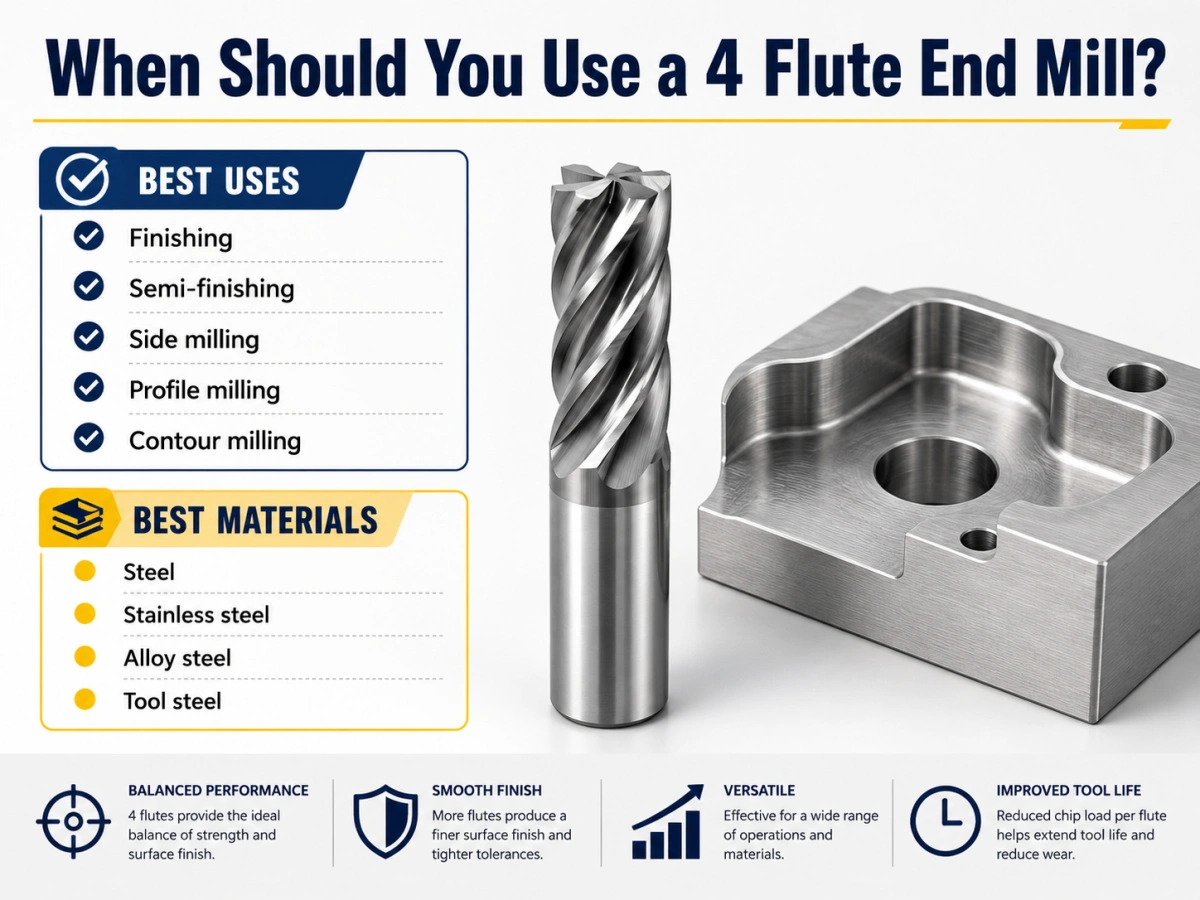
Da, o 4 flute end mill can cut aluminum. Cu toate acestea, it works best when the operation is light, stable, and focused on surface finish rather than heavy chip removal.
Un 4 flute end mill is generally more suitable for:
- light finishing
- semifinisare
- frezare laterală
- frezarea conturului
- shallow profiling
- applications where smoother surface quality is required
Prin contrast, it is usually less suitable for:
- deep slotting
- degrosare grea
- aggressive chip removal
- unstable setups with limited chip evacuation
- aluminum jobs where chips cannot clear smoothly
Cu alte cuvinte, o 4 flute end mill can be a good choice for aluminum, but mainly in controlled finishing applications rather than heavy material removal.
Advantages of 4 Freze cu caneluri pentru aluminiu
When used in the right conditions, 4 flute end mills can offer several practical advantages in aluminum machining.
Better Surface Finish
Because a 4 flute end mill has more cutting edges, it can produce a smoother finish in light finishing, frezarea conturului, and shallow profiling operations.
Higher Rigidity
The stronger core structure of a 4 flute tool can improve stability, mai ales când precizie, edge quality, and part finish are important.
Good for Light Finishing and Side Milling
In many finishing applications, o 4 flute end mill can help deliver cleaner edges and more stable cutting performance.
These benefits are most useful when chip load is controlled, cutting depth is light, and flute space is not the main limitation.
Limitations of 4 Freze cu caneluri pentru aluminiu
Although 4 flute end mills have advantages, they also have clear limits in aluminum machining.
Less Chip Space
Un 4 flute design has narrower flute channels than a 2 design flaut. Prin urmare, chip evacuation becomes more limited, especially when the tool removes a larger amount of material.
Not Ideal for Deep Slots
Deep slotting in aluminum usually requires more flute space for chip removal. For this reason, o 4 flute tool is often not the first choice for deep slotting or aggressive roughing.
Higher Risk of Built-Up Edge
If chips do not clear smoothly, aluminum may stick to the cutting edge. Ca urmare, tool performance, stabilitate de tăiere, and surface finish may decline.
For these reasons, machinists often choose 2 flute tools for roughing, deeper slotting, and heavy chip removal in aluminum.
2 Flaut vs 4 Freze cu caneluri pentru aluminiu
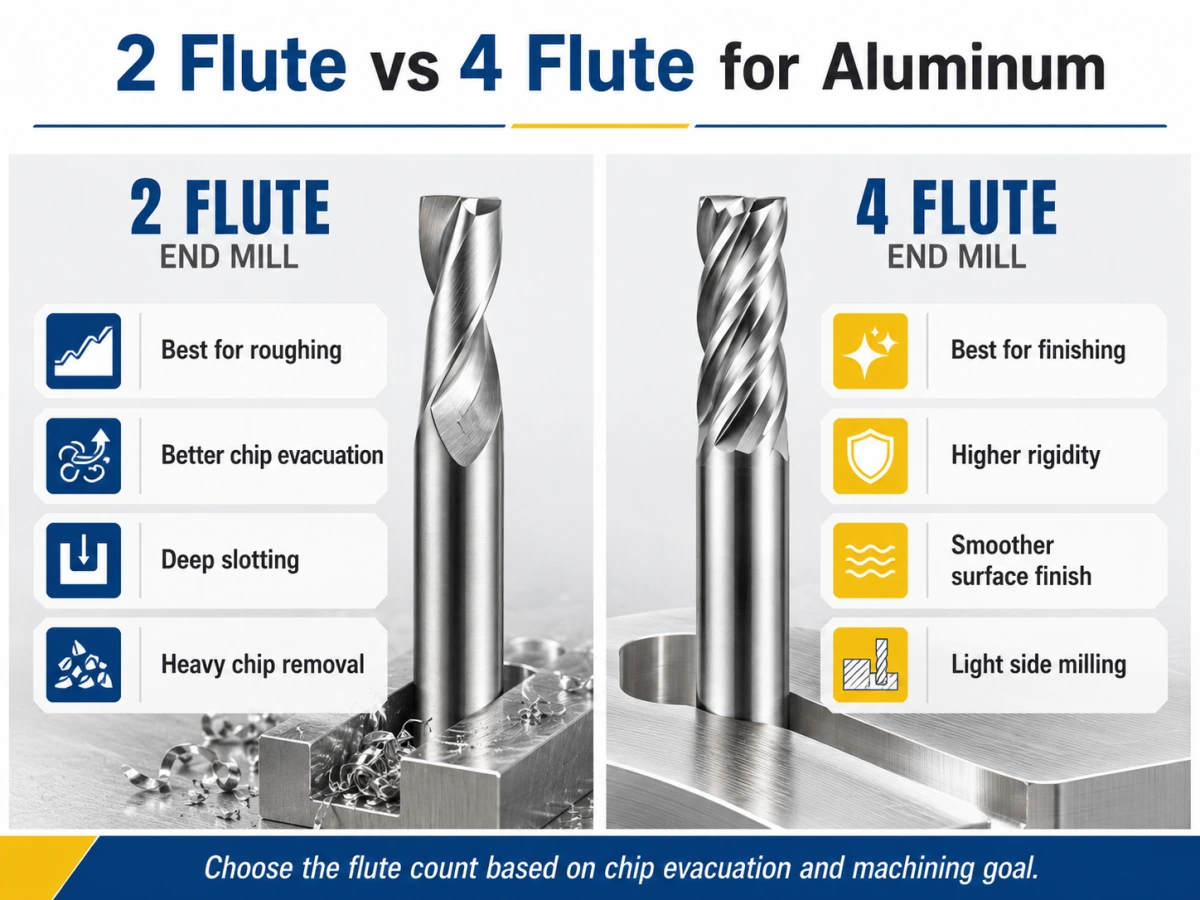
Pentru prelucrarea aluminiului, o 2 flute end mill is often the safer choice for roughing, deep slotting, and heavier chip removal because it provides more flute space and better chip evacuation. That is why many machinists choose 2 flute tools when aluminum chips need to clear quickly.
Cu toate acestea, o 4 flute end mill can still work well when the goal is finishing quality, light profiling, frezare laterală, or stable contour cutting. In these cases, the operation usually removes less material, so chip evacuation becomes easier to control.
For a detailed comparison, citeste-ne 2 flaut vs 4 Freză de capăt pentru caneluri ghid.
If your main work also includes steel, oțel inoxidabil, or alloy materials, you can check our 4 Freză de capăt pentru caneluri product page here.
Quick Selection Guide for Aluminum Machining
| Machining Condition | O alegere mai bună | Reason |
| Aluminum finishing | 4 Freză de capăt pentru caneluri | Smoother surface finish |
| Light side milling | 4 Freză de capăt pentru caneluri | Better stability |
| Shallow profiling | 4 Freză de capăt pentru caneluri | Cleaner cutting edge |
| Deep slotting | 2 Freză de capăt pentru caneluri | More chip space |
| Heavy roughing | 2 Freză de capăt pentru caneluri | Better chip evacuation |
| Aggressive material removal | 2 Freză de capăt pentru caneluri | Lower risk of chip packing |
FAQ
sunt 4 flute end mills good for aluminum?
Da, 4 flute end mills can be good for aluminum finishing, light profiling, frezare laterală, and contour milling. Cu toate acestea, they are usually not the best choice for deep slotting or heavy roughing.
Can a 4 flute end mill cut aluminum?
Da, o 4 flute end mill can cut aluminum. The key is to use it in the right operation, control chip evacuation, and avoid aggressive material removal when flute space is limited.
Is 2 flute or 4 flute better for aluminum?
Un 2 flute end mill is usually better for aluminum roughing, deep slotting, and heavy chip removal. Un 4 flute end mill can work better for light finishing and stable side milling.
Why do many machinists choose 2 flute tools for aluminum?
Many machinists choose 2 flute tools for aluminum because they provide larger flute space. This helps chips leave the cutting zone more easily and reduces the risk of chip packing.
Concluzie
Aşa, are 4 flute end mills good for aluminum?
Da, but mainly for finishing, semifinisare, light profiling, frezarea conturului, and side milling. For heavy roughing, deep slotting, or aggressive chip removal, o 2 flute end mill usually works better because it provides more flute space for aluminum chips.
Prin urmare, the right choice depends on the cutting operation. If your goal is smoother surface finish and stable light cutting, o 4 flute end mill can work well in aluminum. Cu toate acestea, if chip evacuation is the top concern, o 2 flute tool is usually the safer option.
Need a 4 Flute End Mill for Aluminum Finishing or Steel Machining?
If you need a 4 flute end mill for aluminum finishing, light profiling, frezare laterală, steel machining, or stainless steel machining, we can help you choose a suitable carbide tool design.
Send us your material, cutting diameter, flute length, coating requirement, drawing, or machining application. Our team can recommend standard or custom carbide end mills for your CNC machining project.
Check our 4 Freză de capăt pentru caneluri product page here.
Related guides:
Ce este a 4 moara cu flaut folosit pt?