 Freze de precizie,Scule de tăiere pentru prelucrarea CNC a fiecărui material

Principala diferență în a 4 flaut vs 6 Comparația frezei cu caneluri este echilibrul dintre evacuarea așchiilor și rigiditatea sculei.
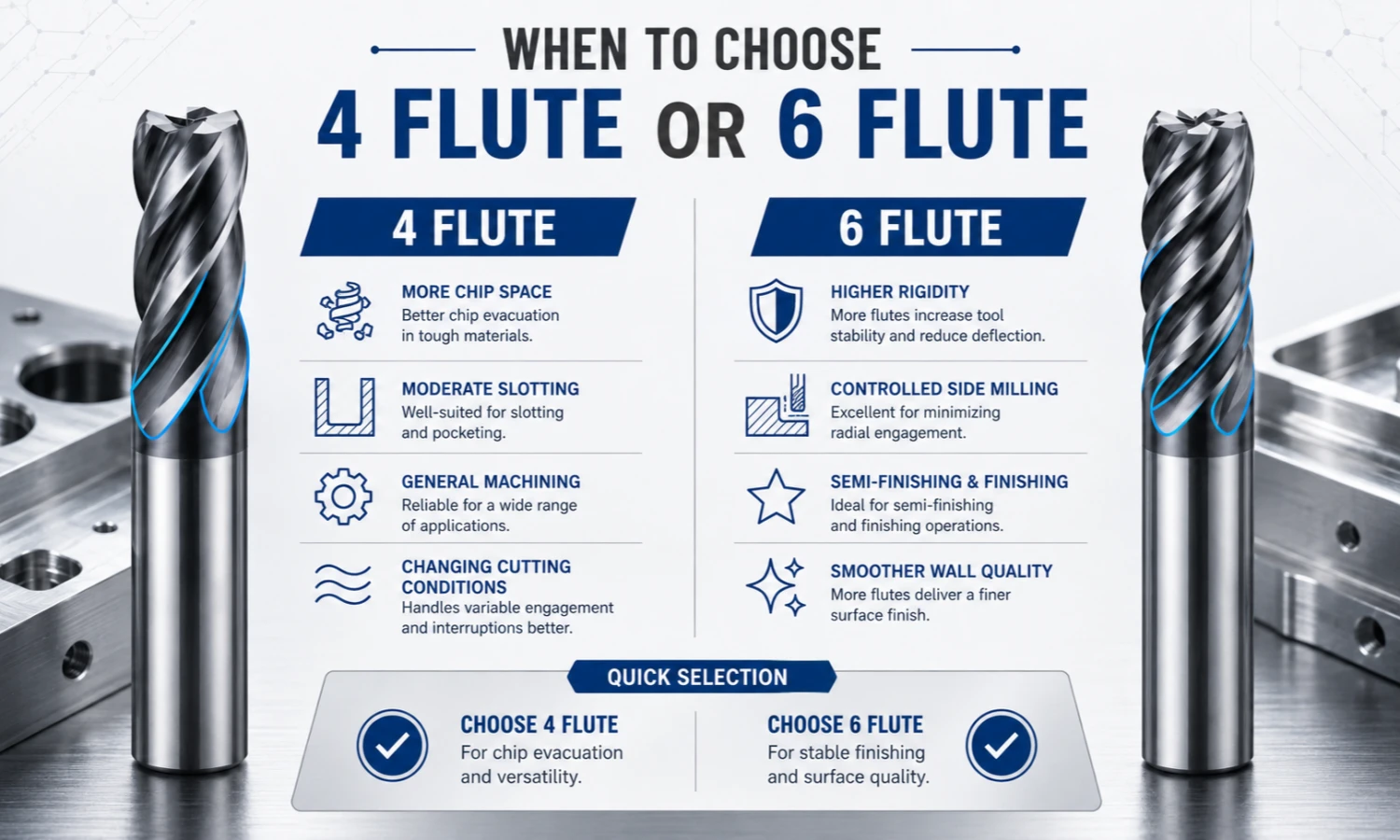
O 4 moara cu caneluri oferă mai mult spațiu pentru flute. Prin urmare, este în general mai flexibil pentru sloting moderat, frezare laterală, frezarea profilului, și schimbarea condițiilor de tăiere.
În contrast, o 6 moara cu caneluri are mai multe muchii de tăiere și de obicei un miez mai puternic. Poate oferi o mai bună stabilitate în timpul semifinisării și finisării controlate, mai ales când calitatea pereților și finisarea suprafeței sunt obiectivele principale.
Nici numarul de flaut nu este intotdeauna mai bun. Alegerea corectă depinde de operația de prelucrare, volumul cipului, angajarea de tăiere, rigiditatea mașinii, surplusul sculei, și finisajul necesar.
Diferențele cheie între 4 Flaut și 6 Freze pentru flaut
4 Moara de capăt pentru flaut: Mai mult spațiu pentru cip și versatilitate
O 4 Freza cu caneluri are patru muchii de tăiere cu mai mult spațiu între caneluri decât un design cu șase caneluri. Ca urmare, așchiile pot părăsi mai ușor zona de tăiere.
Acest design oferă un echilibru practic al evacuarii așchiilor, puterea miezului, și stabilitate de tăiere. Este de obicei selectat pentru prelucrarea generală a oțelului și a oțelului inoxidabil, slotare moderată, frezare laterală, frezarea profilului, și semifinisare.
Un tăietor cu patru caneluri este, de asemenea, mai îngăduitor atunci când angajarea tăierii sau condițiile de prelucrare se schimbă în timpul producției.
Pentru dimensiuni standard, modele cu tăiere centrală, acoperiri, și opțiuni personalizate, revizuiește-ne 4 freză de capăt din carbură de flute.
Pentru un ghid de aplicare mai larg, citire ce este a 4 moara cu flaut folosit pt.
6 Moara de capăt pentru flaut: Rigiditate mai mare pentru finisare
O 6 Freza cu caneluri are șase muchii de tăiere și mai puțin spațiu pentru caneluri. Marginile de tăiere suplimentare și miezul mai puternic pot îmbunătăți rigiditatea, stabilitatea peretelui, și consistența suprafeței în timpul prelucrării controlate.
Prin urmare, acest design este adesea folosit pentru frezarea laterală, finisare profil, semifinisare, si finisare in otel, oţel inoxidabil, și oțel aliat.
Cu toate acestea, spațiul mai mic al canelului limitează evacuarea așchiilor. Un tăietor cu șase caneluri nu este în mod normal prima alegere pentru fante adânci cu lățime completă, degrosare grea, sau operațiuni care produc un volum mare de cip.
Pentru dimensiunile produselor și opțiunile de personalizare, revizuiește-ne 6 freză de capăt din carbură de flute.
Pentru mai multe informații despre aplicațiile sale, citire ce este a 6 moara cu flaut folosit pt.
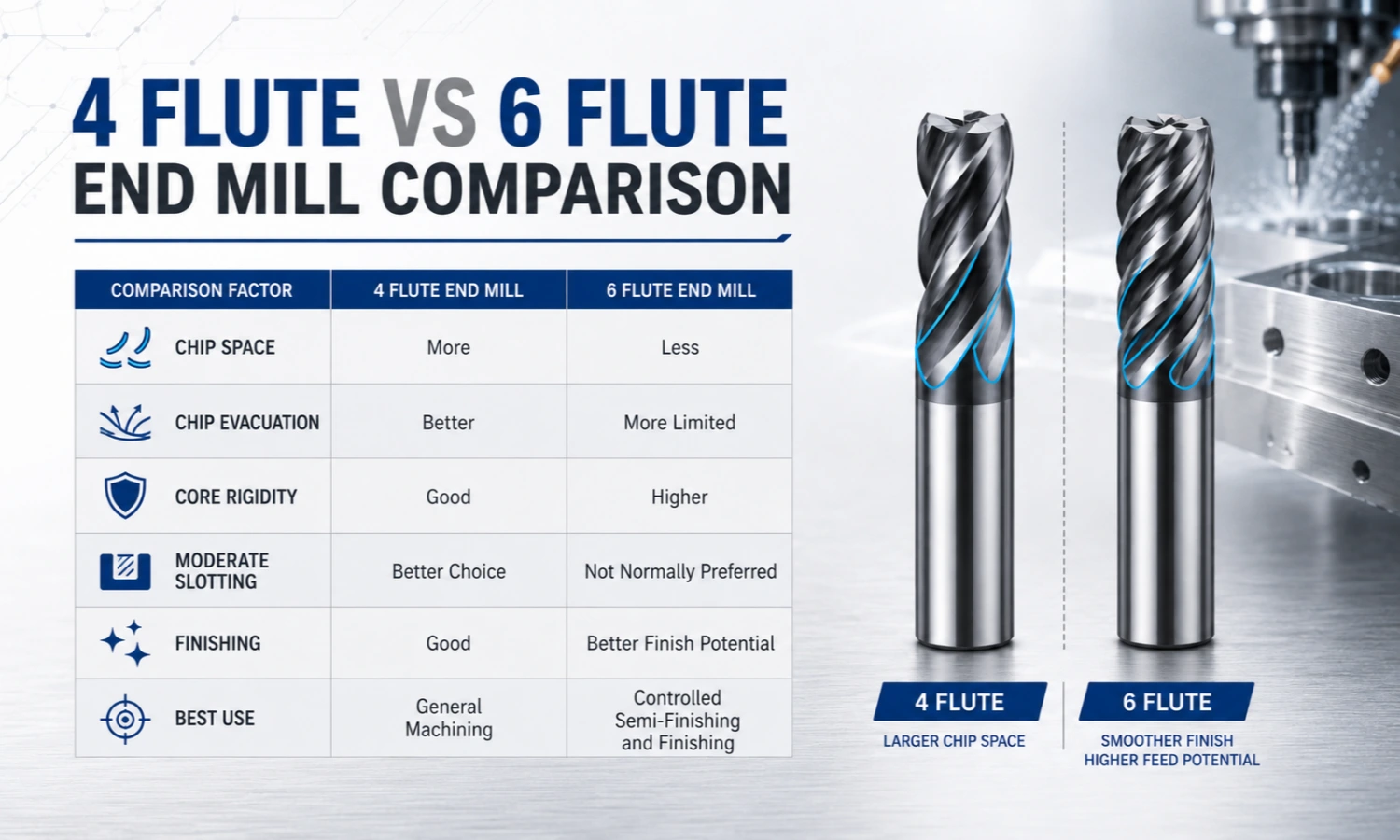
4 Flaut vs 6 Flaut End Mill Comparație
| Factorul de comparație | 4 Moara de capăt pentru flaut | 6 Moara de capăt pentru flaut |
|---|---|---|
| Chip Space | Mai mult | Mai puțin |
| Evacuare cip | Mai bine | Mai limitat |
| Rigiditatea miezului | Bun | Superior |
| Prelucrarea generală a oțelului | Mai versatil | Mai specializat |
| Slotting moderat | O alegere mai bună | În mod normal, nu este preferat |
| Frezare laterală | Potrivit | Potrivit cu angajare controlată |
| Frezarea profilului | Potrivit | Potrivit pentru treceri stabile de finisare |
| Semifinisare | Potrivit | Adesea mai bine |
| Finisare | Bun | Potenţial de finisare mai bun |
| Degroșare grea | Mai potrivite | Nu este ideal |
| Configurarea mașinii | Mai iertător | Funcționează cel mai bine în configurații rigide |
| Cea mai bună utilizare | Prelucrare generală și îndepărtare moderată a așchiilor | Semifinisare și finisare controlate |
| Utilizați cu precauție | Finisaj foarte ușor, unde mai multe muchii de tăiere pot ajuta | Fante adânci, evacuare slabă a așchiilor, consolă lungă, sau setări instabile |
Acest tabel oferă îndrumări generale de selecție. Performanța reală depinde și de gradul de carbură, acoperire, unghiul helixului, diametrul sculei, lungimea flautului, starea titularului, livrarea lichidului de răcire, și parametrii de tăiere.
4 Flaut vs 6 Freză de capăt cu caneluri pentru oțel
Ambele numere de flaut pot prelucra oțel. Cu toate acestea, se potrivesc diferitelor operatiuni.
O 4 Freza cu caneluri este, în general, opțiunea mai flexibilă pentru prelucrarea generală a oțelului. Spațiul său mai mare pentru caneluri permite îndepărtarea moderată a așchiilor, schimbarea angajamentelor de tăiere, frezare laterală, frezarea profilului, și sloting ușor până la moderat.
O 6 freza cu caneluri devine mai utilă atunci când operația se concentrează pe semifinisare sau finisare controlată. Marginile sale tăietoare suplimentare pot îmbunătăți calitatea peretelui și consistența suprafeței. Cu toate acestea, aparatul, titular, reţinere de muncă, iar calea sculei ar trebui să rămână stabilă.
Alege 4 Flaut pentru prelucrarea generală a oțelului
Un tăietor cu patru caneluri este o alegere practică când:
- Operația include sloting moderat.
- Evacuarea așchiilor rămâne importantă.
- Angajamentul de tăiere se poate schimba.
- Un instrument trebuie să acopere mai multe operațiuni.
- Configurarea nu este optimizată doar pentru finisare.
Alege 6 Flaut pentru finisare controlată
Un tăietor cu șase caneluri poate oferi rezultate mai bune atunci când:
- Operația presupune în principal semifinisare sau finisare.
- Este necesară o calitate mai bună a peretelui.
- Angajarea radială rămâne ușoară și controlată.
- Mașina și suportul asigură o bună rigiditate.
- Calitatea suprafeței contează mai mult decât spațiul maxim de cip.
În multe ateliere, un design cu patru fluturi servește ca punct de plecare pentru uz general. O unealtă cu șase caneluri oferă o alegere mai specializată atunci când operația devine stabilă și concentrată pe finisare.
4 Flaut vs 6 Freză de capăt cu caneluri pentru oțel inoxidabil
Oțelul inoxidabil poate genera căldură și se poate întări atunci când condițiile de tăiere devin instabile. Prin urmare, evacuare cip, angajarea de tăiere, acoperire, geometria sculei, iar rigiditatea mașinii contează.
O 4 moara cu caneluri este de obicei un punct de plecare practic pentru prelucrarea generală a oțelului inoxidabil. Oferă un echilibru util între spațiul cipului și rezistența miezului, astfel încât se poate descurca cu frezarea profilului, frezare laterală, îndepărtarea moderată a materialului, și semifinisare.
O 6 moara cu flaut este mai specializată. Poate funcționa bine în trecerile controlate de semifinisare și finisare în cazul în care consistența dimensională, calitatea peretelui, iar suprafețele mai netede sunt obiectivele principale.
Cu toate acestea, volumul așchiilor și angajarea tăierii trebuie să rămână controlate. Altfel, așchii și căldura se pot acumula în jurul muchiilor de tăiere.
Pentru finisare specializată din oțel inoxidabil, uneltele cu cinci sau mai multe caneluri și unghiuri de spirală mai mari sunt, de asemenea, comune. Chiar și așa, caneluri suplimentare ajută doar la evacuarea așchiilor, a alerga afară, ținerea uneltelor, iar rigiditatea configurației rămân sub control. Geometria cu spirală variabilă sau cu pas variabil poate îmbunătăți, de asemenea, controlul vibrațiilor.
În general:
- Alege 4 flaut pentru o mai mare versatilitate și mai mult spațiu pentru cip.
- Alege 6 canal pentru finisare controlată și cerințe mai mari de calitate a suprafeței.
Cum să alegi a 4 Flaut sau 6 Flaut moara cu capat in trei pasi
Pas 1: Începeți cu operația de prelucrare
Primul, identifica operatia principala.
Alegeți o 4 freza cu caneluri atunci când lucrarea include caneluri moderate, schimbarea angajamentelor de tăiere, sau frezare laterală și profil generală. Spațiul său mai mare al canelului oferă o cale mai sigură pentru ca așchii să părăsească zona de tăiere.
Luați în considerare a 6 freza cu caneluri când operațiunea folosește angajarea laterală controlată și se concentrează pe semifinisare sau finisare.
Pentru degroșare grea, o freză de degroșare dedicată poate fi mai potrivită decât o unealtă standard de finisare cu patru sau șase caneluri.
Pas 2: Verificați evacuarea așchiilor și rigiditatea setării
Următor, revizuiți configurația completă de prelucrare.
Un tăietor cu șase flute funcționează cel mai bine când:
- Angajarea tăierii rămâne controlată.
- Mașina și suportul asigură o bună rigiditate.
- Contopirea sculei este menținută cât se poate de scurtă.
- Lichidul de răcire sau aerul poate ajunge în zona de tăiere.
- Așchiile pot părăsi piesa de prelucrat fără tăiere.
O unealtă cu patru caneluri este în general mai îngăduitoare atunci când configurația este mai puțin rigidă sau condițiile de tăiere se schimbă.
Un număr mai mare de flaut nu poate corecta un suport instabil, surplombarea excesivă, slabă reținere a muncii, sau evacuarea așchiilor blocată.
Pas 3: Setați Prioritatea de finisare a suprafeței
in sfarsit, decideți dacă controlul așchiilor sau calitatea finisării au prioritate mai mare.
Alegeți patru flute când este versatili, evacuare cip, iar îndepărtarea moderată a materialului contează cel mai mult.
Alegeți șase flute când configurația este stabilă și operațiunea vizează calitatea peretelui, consistenta dimensionala, și o suprafață finisată mai netedă.
Mai multe muchii de tăiere pot reduce sarcina suportată de fiecare muchie atunci când avansul este reglat corect. Cu toate acestea, controlul slab al așchiilor sau căldura excesivă pot elimina acest avantaj.
Ce să verificați când a 6 Freza cu flaut nu îmbunătățește rezultatul
Un tăietor cu șase caneluri nu produce automat un finisaj mai bun. Când rezultatul devine mai rău, inspectați starea completă de tăiere înainte de a da vina pe unealta.
| Semn de prelucrare | Cauza posibila | Primul punct de verificat |
|---|---|---|
| Așchii se adună în jurul muchiilor de tăiere | Volumul așchiilor este prea mare pentru spațiul disponibil pentru caneluri | Reduceți angajarea tăierii sau luați în considerare a 4 design flaut |
| Temperatura de tăiere crește rapid | Așchiile rămân în zona de tăiere sau accesul la lichidul de răcire este limitat | Îmbunătățiți evacuarea așchiilor și livrarea lichidului de răcire |
| Apar șovăieli pe perete sau urme de vibrații | Contopirea sculei sau configurația completă nu are rigiditate | Suportul pentru verificare, surplomba, reţinere de muncă, și calea sculei |
| Finisajul suprafeței nu se îmbunătățește | A alerga afară, hrana, sau angajarea tăierii este nepotrivită | Verificați cursa și ajustați strategia de finisare |
| Marginile tăietoare se așează în mod neașteptat | Recuparea așchiilor, căldură, sau angajament instabil | Verificați controlul cipului, acoperire, și condițiile de tăiere |
Acestea sunt semne generale de depanare, mai degrabă decât reguli de tăiere fixe. Reglarea corectă depinde de designul frezei, materialul piesei de prelucrat, maşină, titular, și parametrii de prelucrare.
Exemple practice de selecție
Oțel general cu crestare moderată
Pentru crestare moderată sau schimbarea angajării tăierii în oțel general, o 4 moara cu caneluri este în mod normal alegerea mai flexibilă.
Spațiul său mai mare pentru caneluri permite evacuarea așchiilor, în timp ce miezul cu patru caneluri oferă încă rigiditate utilă pentru frezarea laterală și a profilului.
Dacă operațiunea se schimbă într-o trecere finală ușoară de finisare laterală, o 6 freza cu flaut poate fi evaluată separat.
Finisare profil din oțel inoxidabil
Când oțelul inoxidabil este prelucrat cu angajare laterală ușoară și stabilă, o configurație rigidă, și o țintă clară de finisare, o 6 moara cu caneluri poate oferi un potențial de finisare mai bun.
Cu toate acestea, dacă așchiile încep să se adune sau temperatura de tăiere crește rapid, o 4 designul canelului poate oferi un echilibru mai sigur între spațiul canelului și stabilitatea tăierii.
Aceste exemple arată de ce numărul de flute ar trebui să se potrivească cu operația în loc să fie selectat doar după numele materialului.
Întrebări frecvente
Care este principala diferență dintre a 4 flaut și 6 Freză de capăt pentru caneluri?
Principala diferență este echilibrul dintre evacuarea așchiilor și rigiditate.
O 4 moara cu caneluri oferă mai mult spațiu pentru flute și o versatilitate mai mare. În contrast, o 6 moara cu caneluri oferă mai multe muchii de tăiere, rigiditate mai mare a miezului, și un potențial de finisare mai bun în condiții stabile.
Este o 4 flaut sau 6 moara cu caneluri mai bună pentru oțel?
O 4 moara cu caneluri este de obicei mai bună pentru prelucrarea generală a oțelului, slotare moderată, și schimbarea condițiilor de tăiere.
O 6 freza cu caneluri funcționează adesea mai bine în timpul frezării laterale controlate, semifinisare, și finisare atunci când calitatea suprafeței este scopul principal.
Când ar trebui să evit să folosesc a 6 Freză de capăt pentru caneluri?
O 6 Freza cu caneluri nu este, în mod normal, prima alegere pentru fante adânci cu lățime completă, degrosare grea, operațiuni cu volum mare de cip, acces slab la lichid de răcire, sau setări instabile.
Spațiul său mai mic al canelului poate crește tăierea așchiilor și căldura atunci când angajarea tăierii este prea mare.
Un număr mai mare de fluturi produce întotdeauna un finisaj mai bun al suprafeței?
Nu. Un număr mai mare de flute poate îmbunătăți potențialul de finisare, dar rezultatul depinde și de runout, hrana pe dinte, geometria sculei, rigiditatea mașinii, starea titularului, evacuare cip, și stabilitatea piesei de prelucrat.
Dacă așchii sau căldură rămân în zona de tăiere, un tăietor cu șase caneluri poate să nu îmbunătățească suprafața.
Cum aleg între a 4 flaut și 6 Freză de capăt pentru caneluri?
Începeți cu operația de prelucrare și volumul așchiilor. Apoi verificați angajarea tăierii, surplusul sculei, starea titularului, și rigiditatea mașinii.
Alegeți patru caneluri atunci când evacuarea așchiilor și versatilitatea contează mai mult. Alegeți șase flute atunci când configurația este stabilă și finisarea controlată este scopul principal.
Concluzie
Când comparăm a 4 flaut vs 6 Freză de capăt pentru caneluri, începeți cu scopul de prelucrare.
Un tăietor cu patru caneluri oferă mai mult spațiu pentru așchii și o flexibilitate mai mare pentru prelucrarea generală a oțelului și a oțelului inoxidabil, slotare moderată, frezare laterală, și schimbarea condițiilor de tăiere.
O freză cu șase caneluri oferă o rigiditate mai mare și un potențial de finisare mai bun atunci când angajarea tăierii rămâne controlată. Prin urmare, se potrivește operațiunilor stabile de semifinisare și finisare care necesită o calitate mai bună a pereților și suprafețe mai netede.
În loc să alegeți un tăietor numai după numărul de flaut, potriviți unealta cu materialul, volumul cipului, adâncimea de tăiere, rigiditatea mașinii, ținerea uneltelor, și finisajul necesar.
Am nevoie de ajutor pentru a alege între 4 Flaut și 6 Freze pentru flaut?
Selectarea numărului corect de flaut poate îmbunătăți controlul așchiilor, stabilitate de tăiere, durata de viata a sculei, și calitatea suprafeței.
Trimiteți-ne materialul piesei dvs. de prelucrat, duritatea materialului, diametrul de tăiere, lungimea flautului, operatie de prelucrare, cerința de acoperire, si cantitate. Puteți oferi și un desen, referință la instrument, sau fotografia aplicației atunci când specificația este incompletă.
Vom analiza informațiile disponibile și vă vom ajuta să alegeți o freză standard sau personalizată potrivită.
E-mail cerința dvs. direct la sales@cutterbest.com.