 Прецизионные фрезы,Режущие инструменты для обработки любого материала с ЧПУ

Канавка концевой фрезы — это спиральная канавка на фрезе концевой фрезы.. Это помогает сформировать передовой край, удалить фишки, направляющая охлаждающая жидкость, и контролировать производительность резки во время фрезерования с ЧПУ.
Для машинистов, инженеры, и покупатели, Конструкция канавок важна, поскольку она влияет на эвакуацию стружки, прочность инструмента, обработка поверхности, Норма подачи, и пригодность материала. Например, а 2 Концевая фреза с канавками обычно обеспечивает лучшее удаление стружки при обработке алюминия.. В отличие, а 4 Концевая фреза с канавками часто обеспечивает лучшую стабильность резания стали..
Поэтому, понимание количества и конструкции канавок концевой фрезы поможет вам выбрать подходящую фрезу для различных материалов и операций обработки..
Что означает флейта на концевой фрезе?
Канавка концевой фрезы — это канавка, проходящая вдоль режущей части инструмента.. Большинство флейт спиральные., но в некоторых специальных инструментах могут использоваться конструкции с прямыми канавками..
Каждая канавка создает пространство для выхода стружки из зоны резки.. В то же время, форма канавки также влияет на прочность режущей кромки и жесткость инструмента.. Из-за этого, Конструкция канавок – это не только удаление стружки. Это также влияет на весь процесс резки..
Проще говоря, флейта имеет четыре основные функции:
| Функция | Почему это важно |
| Формирование режущей кромки | Каждая флейта помогает создать режущую кромку |
| Удаление стружки | Канавка позволяет стружке выходить из разреза |
| Поток охлаждающей жидкости | СОЖ может легче достичь зоны резания |
| Прочность инструмента | Глубина канавки влияет на прочность сердцевины инструмента. |
Если вы выбираете общий фрезерный инструмент с ЧПУ, вы можете начать с нашего Концевая фреза страница.
Почему важно учитывать количество канавок концевой фрезы?
Количество канавок концевой фрезы означает, сколько канавок имеет фреза.. Общие варианты включают в себя 2 флейта, 3 флейта, 4 флейта, и 6 флейтовые концевые фрезы.
Количество канавок влияет на пространство стружки и прочность инструмента.. Меньшее количество канавок обычно обеспечивает больше места для стружки., поэтому они хорошо работают для мягких материалов и прорезей. Однако, большее количество канавок придает инструменту более прочный сердечник и больше режущих кромок. Как результат, они могут улучшить стабильность и чистоту поверхности более твердых материалов..
| Количество флейт | Основная особенность | Типичное использование |
| 2 Флейта | Большое пространство для чипа | Алюминий, пластик, долбление |
| 3 Флейта | Баланс удаления стружки и финишной обработки | Алюминий, цветные металлы |
| 4 Флейта | Повышенная жесткость и стабильность | Сталь, нержавеющая сталь, общее фрезерование |
| 6 Флейта | Больше режущих кромок | Отделка и более твердые материалы |
Поэтому, больше флейт не всегда лучше. Лучший выбор зависит от материала, глубина резания, жесткость машины, и требования к качеству поверхности.
Распространенные типы канавок концевых фрез
2 Флейта концевая фреза
А 2 Концевая фреза с канавками имеет две режущие канавки и увеличенное пространство для стружки.. По этой причине, часто используется для алюминия, пластик, медь, и другие мягкие или цветные материалы.
Это также распространенный выбор для прорезания пазов, поскольку струге необходимо достаточно места, чтобы покинуть зону резки.. Если удаление стружки плохое, стружка может остаться в пазу и вызвать износ инструмента, плохая отделка, или поломка инструмента.
Для алюминия, Пластмасс, и слот-приложения, вы можете просмотреть наш 2 концевая фреза с канавками страница.
3 Флейта концевая фреза
А 3 Концевая фреза с канавками обеспечивает баланс между эвакуацией стружки, стабильность резки, и качество поверхности. У него больше режущих кромок, чем у 2 инструмент флейта, но в нем по-прежнему остается достаточно места для канавок для алюминия и других цветных металлов..
Многие производители используют эту фрезу, когда им требуется более качественная обработка поверхности, чем у обычной фрезы. 2 каннелюрная фреза, сохраняя при этом хороший отвод стружки. Кроме того, этот инструмент может быть полезен при высокоскоростной обработке алюминия, когда станок, держатель инструмента, и параметры резки стабильны.
Для более подробной информации, прочитайте наш что такое 3 концевая фреза с флейтой, используемая для гид.
4 Флейта концевая фреза
А 4 концевая фреза с канавками — один из наиболее распространенных вариантов обработки стали., нержавеющая сталь, и общее фрезерование с ЧПУ. По сравнению с 2 инструмент флейта, у него больше режущих кромок и более прочное ядро.
Как результат, а 4 Концевая фреза с канавками может обеспечить лучшую стабильность, лучшая прочность инструмента, и более гладкая поверхность при многих операциях обработки стали. Однако, у него меньше места для чипа, чем у 2 инструмент флейта, поэтому это может быть не лучший выбор для глубоких пазов в алюминии..
Для стали, нержавеющая сталь, и общее фрезерование с ЧПУ, вы можете просмотреть наш 4 концевая фреза с канавками.
6 Флейта концевая фреза
А 6 Концевая фреза с канавками имеет больше режущих кромок и меньшее пространство для стружки.. Часто используется для отделки., боковое фрезерование, и обработка более твердых материалов при правильном контроле нагрузки стружки.
Потому что 6 флейтовые инструменты имеют больший контакт с заготовкой, они могут помочь улучшить качество поверхности. Однако, им необходимы стабильные условия обработки и надлежащая эвакуация стружки..
Для чистовой и стабильной обработки на станках с ЧПУ., вы можете просмотреть наш 6 концевая фреза с канавками.
Как выбрать количество канавок концевой фрезы в зависимости от материала
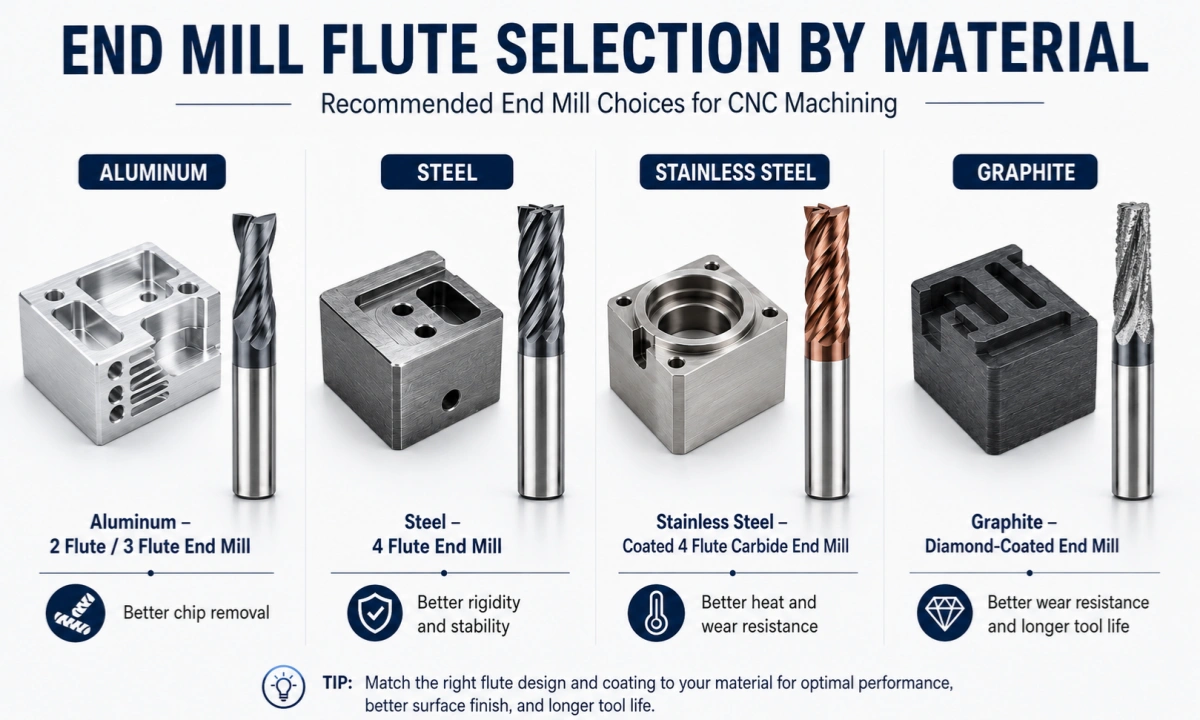
Для разных материалов нужны разные конструкции канавок.. Поэтому, материал должен быть одним из первых факторов, которые вы проверяете перед выбором количества канавок концевой фрезы..
| Материал заготовки | Рекомендуемое количество флейт | Причина |
|---|---|---|
| Алюминий | 2 флейта или 3 флейта | Лучшее удаление стружки |
| Пластик | 1 флейта или 2 флейта | Уменьшает засорение стружки |
| Сталь | 4 флейта | Повышенная жесткость и стабильность |
| Нержавеющая сталь | 4 концевая фреза из твердого сплава с канавкой или покрытием | Повышенная термостойкость и износостойкость |
| Закалённая сталь | 4 флейта или 6 флейта | Более прочная режущая кромка и лучшая обработка |
| Графит | Концевая фреза с алмазным покрытием | Лучшая износостойкость |
Концевая фреза для алюминия
Алюминий мягкий, но он может прилипнуть к режущей кромке, если не удалить стружку быстро. Поэтому, 2 флейта или 3 концевые фрезы с канавками обычно являются лучшим выбором.
Увеличенное пространство канавок помогает отводить стружку от зоны резания.. Кроме того, полированные канавки могут уменьшить наросты на кромке и улучшить стабильность резания.
Концевая фреза для стали
Сталь требует большей жесткости инструмента и лучшей стабильности резания.. По этой причине, 4 концевые фрезы с канавками широко используются для фрезерования стали..
А 4 конструкция канавок обеспечивает более прочный сердечник и больше режущих кромок. Поэтому, он может поддерживать боковое фрезерование, профилирование, фрезерование уступов, и финишная обработка во многих областях применения стали.
Концевая фреза для нержавеющей стали
Нержавеющая сталь может выделять тепло и деформироваться во время обработки.. Поэтому, инструмент должен иметь острую режущую кромку, хорошее покрытие, и стабильная конструкция флейты.
Во многих случаях, с покрытием 4 концевая фреза из твердого сплава – практичный выбор. Однако, параметры резки, охлаждающая жидкость, и жесткость машины тоже имеют значение.
Для высокопроизводительной обработки на станках с ЧПУ, вы также можете просмотреть наши Твердосплавная концевая фреза.
Концевая фреза для графита
Графит абразивный, поэтому износ инструмента является серьезной проблемой. В этом случае, количество флейт важно, но покрытие еще важнее.
Концевые фрезы с алмазным покрытием могут улучшить износостойкость и продлить срок службы инструмента при обработке графита и других абразивных материалов..
Для обработки графита, просмотреть наш концевые фрезы с алмазным покрытием.
Как конструкция канавки влияет на производительность резки
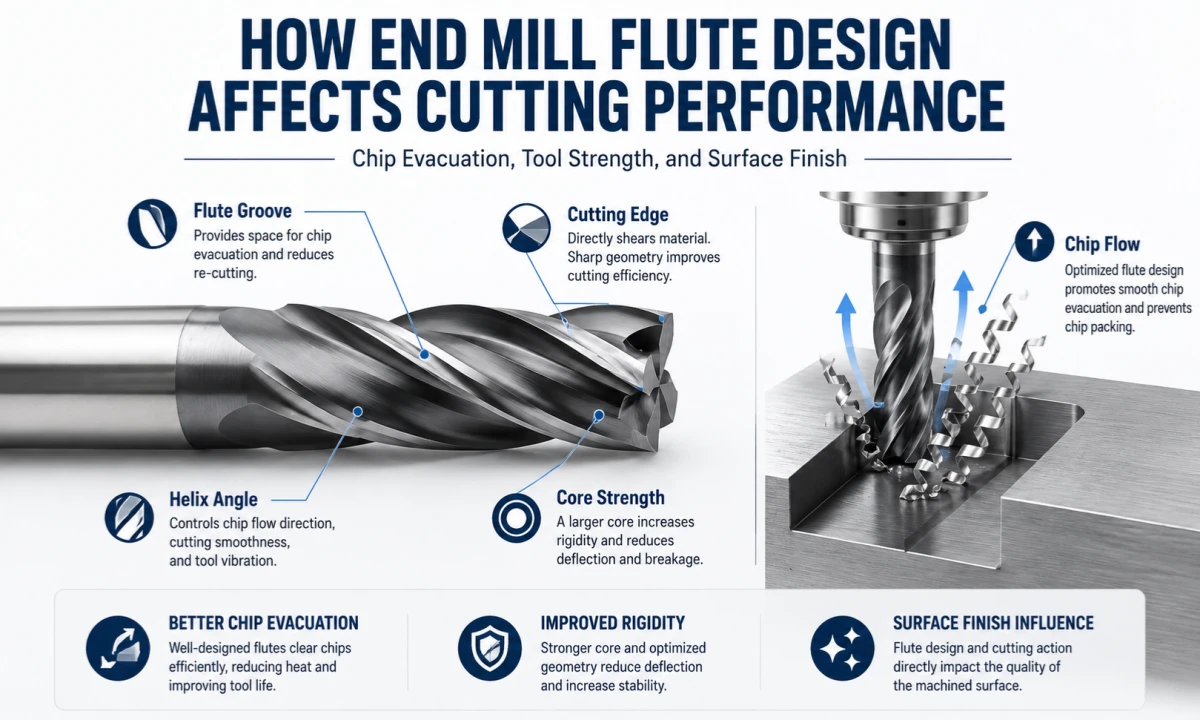
Конструкция канавок концевой фрезы влияет не только на количество режущих кромок.. Он также включает в себя глубину канавки, угол спирали, диаметр сердечника, длина канавки, и совместимость покрытий.
Более подробное руководство по выбору концевой фрезы, прочитайте наш руководство по выбору инструмента концевой фрезы.
Эвакуация стружки
Эвакуация стружки – это способность инструмента удалять стружку из зоны резания.. Если стружка не может плавно покинуть разрез, они могут вызвать жар, трение, плохая обработка поверхности, или поломка инструмента.
Меньшее количество канавок обычно обеспечивает больше места для стружки.. Поэтому, 2 флейта и 3 концевые фрезы с канавками часто лучше подходят для алюминия, пластик, и глубокие слоты.
Прочность инструмента
Прочность инструмента частично зависит от диаметра сердечника концевой фрезы.. Инструмент с более глубокими канавками имеет больше места для стружки., но у него может быть меньшее ядро. Как результат, оно может быть менее жестким.
Больше флейт обычно создают более сильное ядро.. Поэтому, 4 флейта и 6 Концевые фрезы с канавками часто лучше подходят для более твердых материалов и стабильного бокового фрезерования..
Поверхностная обработка
Большее количество канавок может улучшить качество поверхности, поскольку больше режущих кромок контактируют с заготовкой.. Однако, инструменту также необходима правильная скорость подачи, скорость, биение инструмента, и устойчивость машины.
Для отделочных операций, 4 флейта или 6 часто используются фрезы с канавками. Тем временем, для черновой обработки или долбления, меньшее количество канавок может работать лучше, потому что они легче удаляют стружку.
Контроль тепла
Контроль нагрева важен для нержавеющей стали., титан, и закаленная сталь. Если тепло остается вблизи режущей кромки, износ инструмента может быстро увеличиться.
Подходящий дизайн флейты, покрытие, метод подачи охлаждающей жидкости, и скорость резания могут помочь уменьшить нагрев и увеличить срок службы инструмента..
Выбор канавки концевой фрезы в зависимости от операции обработки
Операция обработки также влияет на выбор канавки.. Инструмент, используемый для прорезания пазов, может оказаться не лучшим выбором для чистовой обработки.. Поэтому, вам следует сопоставить количество канавок с задачей резки.
| Операция обработки | Рекомендуемое количество флейт | Выбор инструмента |
| Долбление алюминия | 2 флейта или 3 флейта | Лучшее пространство для чипа |
| Прорезная сталь | 2 флейта или 4 флейта | Зависит от глубины и жесткости. |
| Боковая фреза стали | 4 флейта | Повышенная стабильность резки |
| Отделка | 4 флейта или 6 флейта | Лучшее качество поверхности |
| Черновая обработка | Черновая концевая фреза | Более быстрое удаление материала |
| Обработка графита | Концевая фреза с алмазным покрытием | Лучшая износостойкость |
Для удаления тяжелого материала перед финишной отделкой, просмотреть наш черновые концевые фрезы.
Для долбления
Для обработки пазов требуется хороший отвод стружки, поскольку инструмент режет внутри узкой канавки.. Поэтому, 2 каннелюрные инструменты часто предпочтительнее для алюминия и мягких материалов..
Для долбления стали, лучший выбор зависит от глубины паза, охлаждающая жидкость, и жесткость машины.
Для бокового фрезерования
Боковое фрезерование требует жесткости инструмента и стабильной резки.. Во многих случаях, 4 Концевые фрезы с канавками работают хорошо, поскольку они обеспечивают хорошую прочность и баланс резания..
Для отделки
Для окончательной обработки необходима более гладкая поверхность и стабильная сила резания.. Поэтому, 4 флейта или 6 Концевые фрезы с канавками часто используются, когда удаление стружки не является серьезной проблемой..
Распространенные ошибки при выборе канавок концевой фрезы
Выбор неправильного количества канавок может снизить срок службы инструмента и качество обработки.. Ниже приведены некоторые распространенные ошибки, которых следует избегать.
| Ошибка | Возможный результат | Лучший выбор |
| Использование слишком большого количества канавок для прорезания пазов в алюминии | Засорение чипа и нагрев | Использовать 2 флейта или 3 флейта |
| Использование слишком малого количества канавок для чистовой обработки стали | Плохая отделка или вибрация | Использовать 4 флейта или 6 флейта |
| Игнорирование длины канавки | Вибрация и отклонение инструмента | Используйте самую короткую подходящую длину канавок. |
| Выбор только по цене | Короткий срок службы инструмента | Подберите дизайн инструмента к материалу |
| Использование одного инструмента для всех материалов | Нестабильная производительность | Выбор по материалу и эксплуатации |
Суммируя, Лучшая конструкция канавок концевой фрезы должна соответствовать материалу заготовки, глубина резания, траектория инструмента, жесткость машины, и требуемая обработка поверхности.
Часто задаваемые вопросы о канавках концевых фрез
Что означает флейта на концевой фрезе?
Канавка — это канавка на фрезе концевой фрезы.. Он образует режущую кромку, удаляет фишки, и помогает охлаждающей жидкости достичь зоны резки.
Чем больше канавок лучше на концевой фрезе??
Не всегда. Большее количество канавок может улучшить жесткость и чистоту поверхности., но они уменьшают пространство чипа. Меньшее количество канавок обычно лучше удаляет стружку., особенно в алюминии и шлицевании.
Что такое 2 концевая фреза с флейтой, используемая для?
Машинисты часто используют 2 концевая фреза для алюминия, пластик, мягкие материалы, и прорезь. Он имеет больше места для чипа, чтобы было легче удалять стружки.
Для обработки алюминия, видеть 2 концевая фреза с канавками.
Что такое 4 концевая фреза с флейтой, используемая для?
Машинисты часто используют 4 концевая фреза для стали, нержавеющая сталь, боковое фрезерование, профилирование, и общая обработка с ЧПУ. Он обеспечивает лучшую жесткость и стабильность резания, чем 2 инструмент флейта.
Для обработки стали, видеть 4 концевая фреза с канавками.
Сколько канавок лучше всего для алюминия?
Для алюминия, 2 флейта и 3 концевые фрезы с канавками обычно являются лучшим выбором. Они обеспечивают больше пространства для стружки и уменьшают засорение стружки при высокоскоростной обработке..
Сколько канавок лучше всего для стали?
Для стали, 4 Обычно используются концевые фрезы с канавками, поскольку они обеспечивают лучшую прочность инструмента и стабильность резания.. Для отделки, 6 Концевые фрезы с канавками также могут подойти, если установка станка стабильна..
Как выбрать правильное количество канавок концевой фрезы??
Первый, проверить материал. Затем, подтвердить операцию обработки, такие как прорезь, боковое фрезерование, черновая обработка, или отделка. Окончательно, выберите количество флейт, покрытие, длина канавки, и размер инструмента в зависимости от условий резания.
Заключение
Канавка концевой фрезы влияет на удаление стружки, прочность режущей кромки, обработка поверхности, Норма подачи, и срок службы инструмента. Поэтому, Выбор правильного количества канавок важен для стабильного фрезерования на станке с ЧПУ..
В общем, 2 флейта и 3 Концевые фрезы с канавками лучше подходят для алюминия и мягких материалов.. 4 Концевые фрезы с канавками подходят для обработки стали и общего фрезерования.. 6 Концевые фрезы с канавками часто используются для чистовой обработки и обработки более твердых материалов.. Однако, лучший выбор все еще зависит от материала, глубина резания, жесткость машины, и требования к поверхности.
Если вам нужна помощь в выборе подходящей конструкции флейты, Cutterbest может поддерживать стандартные и специальные фрезы с различным количеством канавок., покрытия, длина канавок, и размеры инструмента.
Для общего фрезерования с ЧПУ, просмотреть наш Твердосплавная концевая фреза.
Для прорезания пазов в алюминии обычно требуется лучшая эвакуация стружки., так что наш 2 концевая фреза с канавками может быть подходящим выбором.
При обработке стали, просмотреть наш 4 концевая фреза с канавками для большей жесткости и стабильности резания.
Для финишной обработки, наш 6 концевая фреза с канавками может помочь улучшить качество поверхности и стабильность инструмента.