 Прецизионные фрезы,Режущие инструменты для обработки любого материала с ЧПУ

Так, для чего используется концевая фреза со сферическим концом? Станочники в основном используют эту фрезу с ЧПУ с закругленным концом для трехмерного контурного фрезерования., обработка полости формы, обработка изогнутых поверхностей, профили произвольной формы, и прецизионная отделка.
В отличие от плоскоконцевой фрезы, инструмент со сферической головкой имеет полностью закругленный режущий кончик. Поэтому, он может следовать по склонам, радиусы, Полостей, и сложные трехмерные поверхности более плавно. Эта геометрия также помогает создавать постепенные переходы и более последовательную обработку изогнутых деталей..
Для стандартных и нестандартных диаметров, Количество флейт, покрытия, и марки твердого сплава, просмотреть наш твердосплавные концевые фрезы со сферическим концом.
Что такое сферическая концевая фреза?
Концевая фреза со сферическим концом — это вращающаяся фреза с полусферическим режущим концом.. Для стандартной конструкции с полным шаровым наконечником, радиус при вершине обычно составляет половину диаметра резания.
Например, фреза с диаметром резания 6 мм обычно имеет радиус шарика 3 мм.. Поскольку режущая кромка загибается вокруг кончика, разные точки кромки контактируют с заготовкой, когда инструмент следует по траектории ЧПУ.
Эта геометрия хорошо подходит для изогнутых поверхностей.. Однако, он неэффективно создает карманы с плоским дном, квадратные плечи, или днище с прямыми прорезями.
Некоторые покупатели также используют имя резак для шаровой мельницы для того же общего инструмента с ЧПУ с закругленным концом.
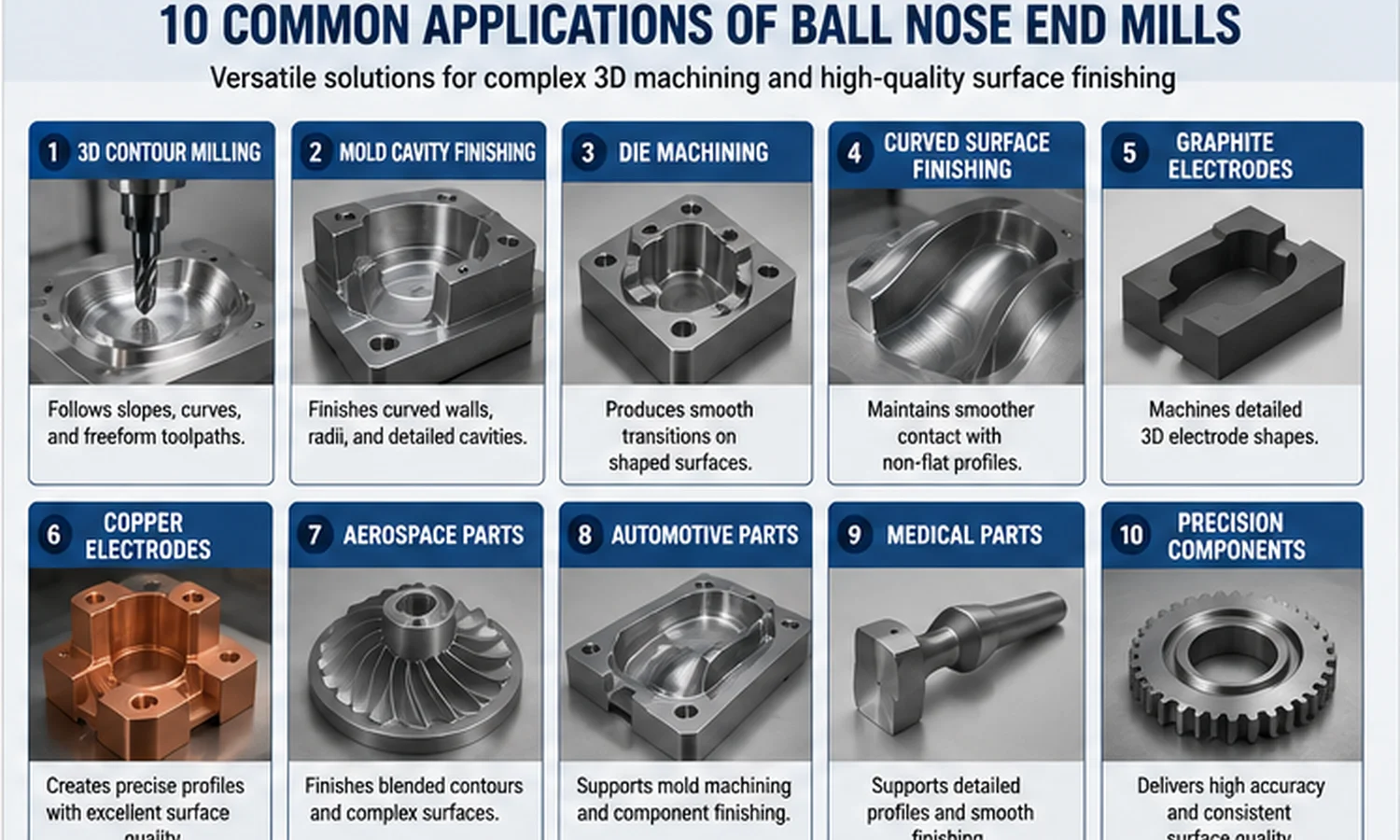
Распространенные применения сферической концевой фрезы на станках с ЧПУ
Концевые фрезы со сферическим концом наиболее полезны, когда заготовка имеет криволинейную геометрию., смешанные переходы, или сложные трехмерные поверхности.
Десять распространенных приложений включают в себя:
- 3D-контурное фрезерование
- Отделка полости формы
- Обработка штампов и пресс-форм
- Отделка изогнутой поверхности
- Радиусная и профильная обработка
- Скульптурная и произвольная обработка
- Обработка графитовым электродом
- Обработка медным электродом
- Отделка деталей аэрокосмической и автомобильной промышленности
- Медицинская и прецизионная обработка компонентов
В таблице ниже приведены основные области применения..
| Приложение ЧПУ | Зачем использовать сферическую концевую фрезу? |
| 3D Контурное фрезерование | Следит за склонами, кривые, и траектории движения инструмента произвольной формы с ЧПУ |
| Отделка полости пресс-формы | Отделка изогнутых стен, радиусы, и подробные полости |
| Обработка штампов | Обеспечивает плавные переходы на фасонных поверхностях. |
| Обработка изогнутой поверхности | Maintains smoother contact with non-flat profiles |
| Graphite Electrodes | Machines detailed 3D electrode shapes |
| Aerospace and Automotive Parts | Finishes blended contours and complex surfaces |
| Medical and Precision Parts | Supports detailed profiles and controlled finishing |
A smaller diameter can reach narrow cavities and fine details. Тем временем, a larger diameter can improve machining efficiency on broader surfaces.
The final cutter selection should match the part geometry, required finish, cavity depth, жесткость машины, and programmed toolpath.
Сферическая концевая фреза для 3D-контурного фрезерования
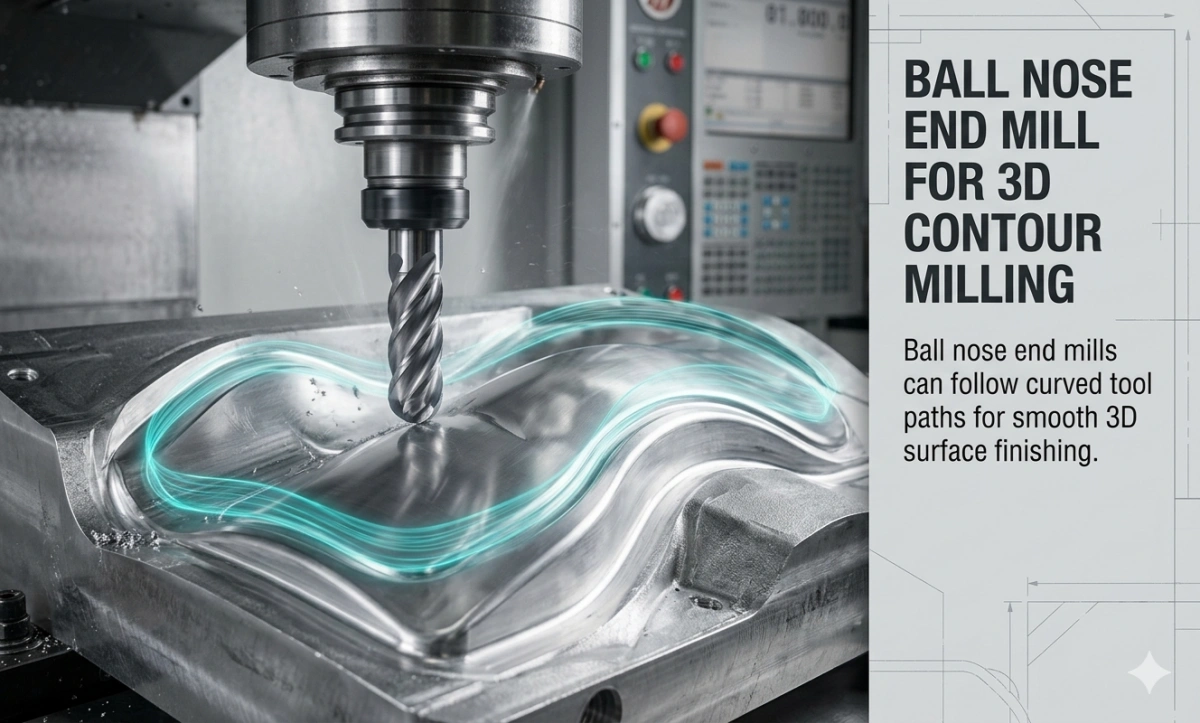
Одним из наиболее распространенных применений сферической концевой фрезы является 3D-контурное фрезерование..
During 3D contouring, the cutting tool must follow slopes, кривые, и поверхности произвольной формы. A flat end mill may create uneven contact or visible marks on these areas. Напротив, the rounded cutting end follows the changing surface angle more naturally.
Typical 3D contour applications include:
- Полости пресс-форм
- Изогнутые поверхности продукта
- Скульптурные формы
- Сложные профили ЧПУ
- Prototype parts
- Freeform components
After roughing removes most of the material, the ball nose cutter can complete semi-finishing or final finishing passes. A suitable step-over and stable toolpath help improve the surface before polishing or final treatment.
Сферическая концевая фреза для чистовой обработки пресс-форм и штампов
Mold and die components often contain cavities, радиусы, curved walls, и подробные профили. Поэтому, mold makers commonly use ball nose end mills during the finishing stage.
Первый, a flat or roughing cutter removes most of the stock. Следующий, the rounded-end cutter machines the remaining curved areas and blended transitions.
Common mold applications include:
- Пресс-формы
- Формы для литья под давлением
- Автомобильные формы
- Штамповочные штампы
- Вставки в пресс-формы
- Medical molds
- Precision tooling
Tool stability is especially important during mold finishing. Excessive cutter overhang, poor holder condition, or unsuitable cutting parameters may cause vibration and visible surface marks.
Поэтому, select the shortest practical tool length and keep the machine setup rigid.
Сферическая концевая фреза для обработки криволинейных поверхностей
A ball nose cutter works well on rounded, sloped, and non-flat surfaces because its geometry maintains smoother contact with the workpiece.
This makes it useful for:
- Аэрокосмические компоненты
- Автозапчасти
- Medical implants and instruments
- Decorative products
- Алюминиевые формы
- Precision mechanical components
- Complex prototypes
В этих приложениях, цель состоит не только в удалении материала. Качество поверхности, dimensional consistency, and smooth toolpath transitions also matter.
Как результат, machinists often choose a ball nose cutter for the final machining stage rather than heavy stock removal.
Сферическая концевая фреза для обработки графита и электродов
Graphite and copper electrodes often contain detailed cavities, narrow radii, и сложные трехмерные формы. Поэтому, rounded-end cutters can help machine these profiles accurately.
Для графита, wear resistance and dust control are important. The cutter may require a suitable carbide grade, покрытие, and sharp edge design.
For copper, sharp cutting edges and smooth flutes can help reduce material adhesion and improve the finished surface.
Before selecting the tool, provide:
- Electrode material and grade
- Drawing or 3D model
- Required surface finish
- Cutter diameter
- Machining depth
- Количество
These details help determine the suitable geometry, марка твердого сплава, покрытие, and tool length.
Ball Nose Milling Strategy for a Better Surface Finish
The cutter alone does not determine the final finish. Toolpath strategy also has a major effect.
Первый, use a small and consistent step-over during finishing. A smaller step-over reduces scallop height, although it also increases machining time.
Следующий, avoid unnecessary cutter overhang. A shorter and more rigid setup reduces vibration and helps maintain a consistent surface.
Кроме того, consider the effective cutting speed near the center of the ball end. The tool center has a lower cutting speed than the outer cutting edge. Поэтому, an appropriate toolpath or slight tool inclination may reduce rubbing near the center.
Окончательно, match the feed rate, скорость шпинделя, покрытие, and cutting depth to the workpiece material and machine condition. Trial cuts may be required for demanding surfaces.
Сферическая концевая фреза против плоской концевой фрезы
A ball nose end mill and a flat end mill have different cutting geometries and machining purposes.
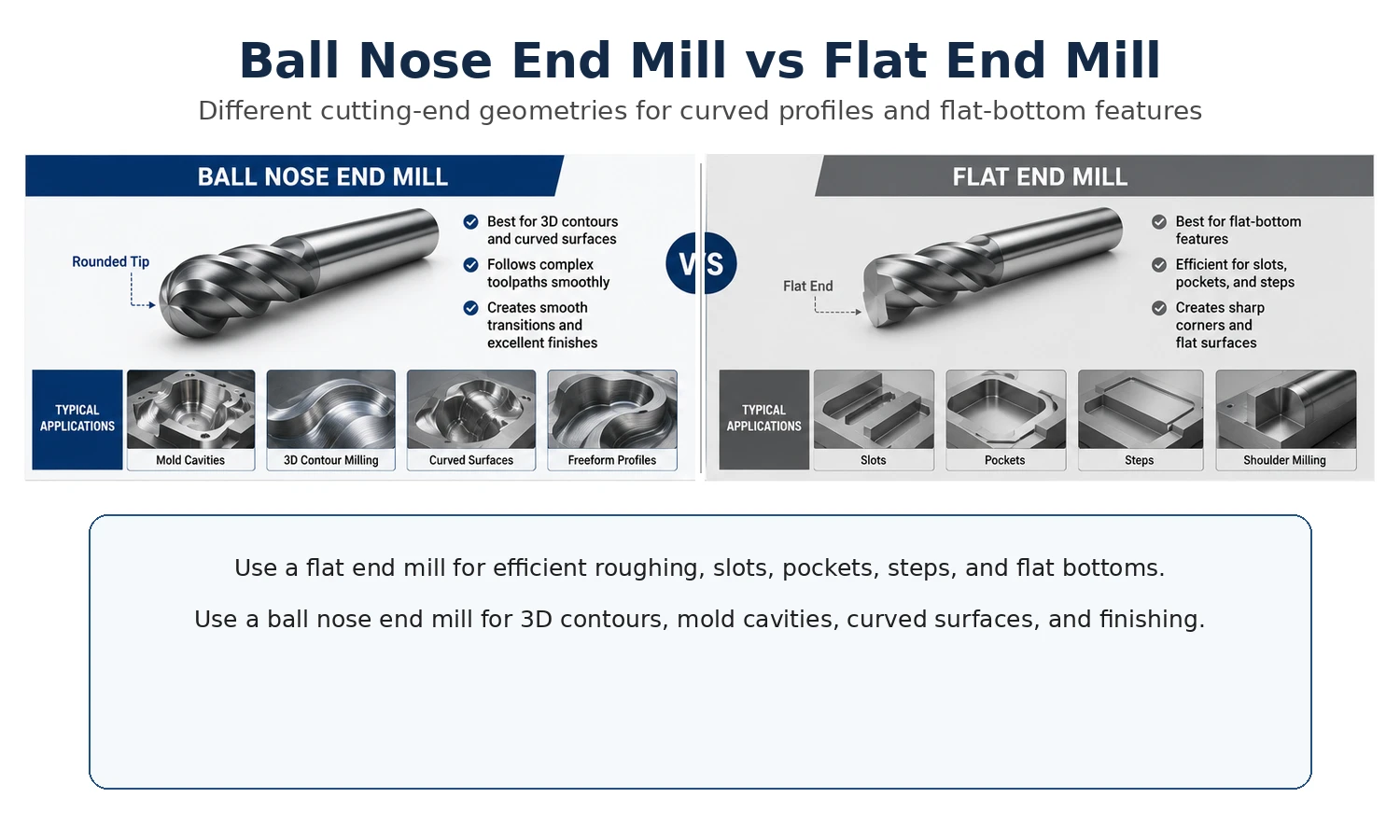
The two tools are often used together. A flat end mill can remove material efficiently during roughing. После этого, a ball nose cutter finishes radii, curved cavities, и сложные профили.
For flat-bottom machining, просмотреть наш flat end mill product.
Концевая фреза со сферическим носом и концевая фреза с бычьим носом
Концевая фреза со сферическим концом имеет полностью закругленную режущую кромку.. Поэтому, it works well for smooth 3D finishing, curved profiles, и поверхности произвольной формы.
A bull nose end mill has a flat center with rounded corners. Как результат, он обеспечивает более сильную угловую поддержку и хорошо подходит для получистовой обработки., ступенчатые профили, and flat areas that require a corner radius.
Для детального сравнения, читать концевая фреза с бычьим концом против концевой фрезы со сферическим носом.
Как выбрать сферическую концевую фрезу
The correct tool depends on the workpiece material, диаметр фрезы, machining depth, дизайн флейты, покрытие, и состояние машины.
Материал заготовки
When machining aluminum and copper, sharp cutting edges and efficient chip evacuation can help reduce built-up edges.
Сталь, нержавеющая сталь, and mold materials usually require a suitable carbide grade and heat-resistant coating to improve wear resistance and tool life.
Graphite machining has different requirements. Поэтому, износ инструмента, покрытие, dust control, and edge sharpness should all be considered.
Cutter Diameter and Tool Length
Choose a diameter that matches the workpiece radius, detail size, and available machining space.
Кроме того, use the shortest practical flute length and overall length. Excessive overhang reduces rigidity and may cause vibration.
Количество флейт
Two-flute designs provide more chip space and often suit aluminum, медь, графит, и более мягкие материалы.
Four-flute designs provide more cutting edges and may improve stability during steel machining and finishing operations.
Coating and Machine Stability
The coating should match the workpiece material, твердость, cutting temperature, and coolant condition.
Однако, even the correct coating cannot compensate for excessive runout, poor holder condition, or an unstable machine setup.
For more detailed selection guidance, читать как выбрать сферическую концевую фрезу.
Вопросы и ответы
What are the main uses of a ball nose end mill?
It is mainly used for 3D contour milling, обработка полости формы, обработка изогнутых поверхностей, финишная обработка штампа, graphite electrodes, профили произвольной формы, and precision CNC finishing.
Может ли сферическая концевая фреза резать плоские поверхности??
It can machine some flat areas, but it does not efficiently create a fully flat-bottom profile. A flat end mill usually works better for flat-bottom pockets, слоты, шаги, и плечи.
Подходит ли концевая фреза со сферическим концом для обработки пресс-форм??
Да. Mold makers commonly use ball nose end mills to finish curved cavities, радиусы, detailed profiles, and complex three-dimensional surfaces.
What materials can ball nose end mills machine?
Они могут обрабатывать сталь, нержавеющая сталь, алюминий, медь, графит, чугун, пресс-форма стали, and many alloy materials. Однако, the carbide grade, покрытие, дизайн флейты, and cutting parameters should match the workpiece.
Can a ball nose end mill machine cast iron?
Да. A carbide ball nose end mill can machine cast iron, especially on curved surfaces, формы, and 3D profiles. Однако, the carbide grade, покрытие, дизайн флейты, and cutting parameters should match the specific cast iron grade.
В чем разница между сферическими и закругленными концевыми фрезами?
A ball nose end mill has a fully rounded tip for 3D finishing and curved surfaces. A bull nose end mill has a flat center with rounded corners, so it provides stronger edge support for semi-finishing and corner-radius machining.
Send Your Ball Nose End Mill Requirement
В итоге, this rounded-end cutter is mainly selected for CNC applications that require smooth 3D contours, отделка пресс-формы, изогнутые поверхности, graphite electrodes, и прецизионные профили.
Need a standard or custom carbide cutter for your CNC machining project?
Send your diameter, длина канавки, общая длина, размер хвостовика, счет флейты, покрытие, материал заготовки, твердость, рисунок, и количество. Our team will review the application and provide a suitable tool proposal and quotation.
Send your requirements to sales@cutterbest.com.