 Fraise de précision,Outils de coupe pour l’usinage CNC de chaque matériau

A quoi sert une fraise à fileter? En usinage CNC, it is used to machine accurate internal and external threads through a controlled milling tool path.
Unlike tapping, thread milling gives machinists more control over thread size, profondeur, et évacuation des copeaux. Donc, many CNC shops use thread milling for blind holes, matériaux durs, tailles de fil personnalisées, et pièces de précision.
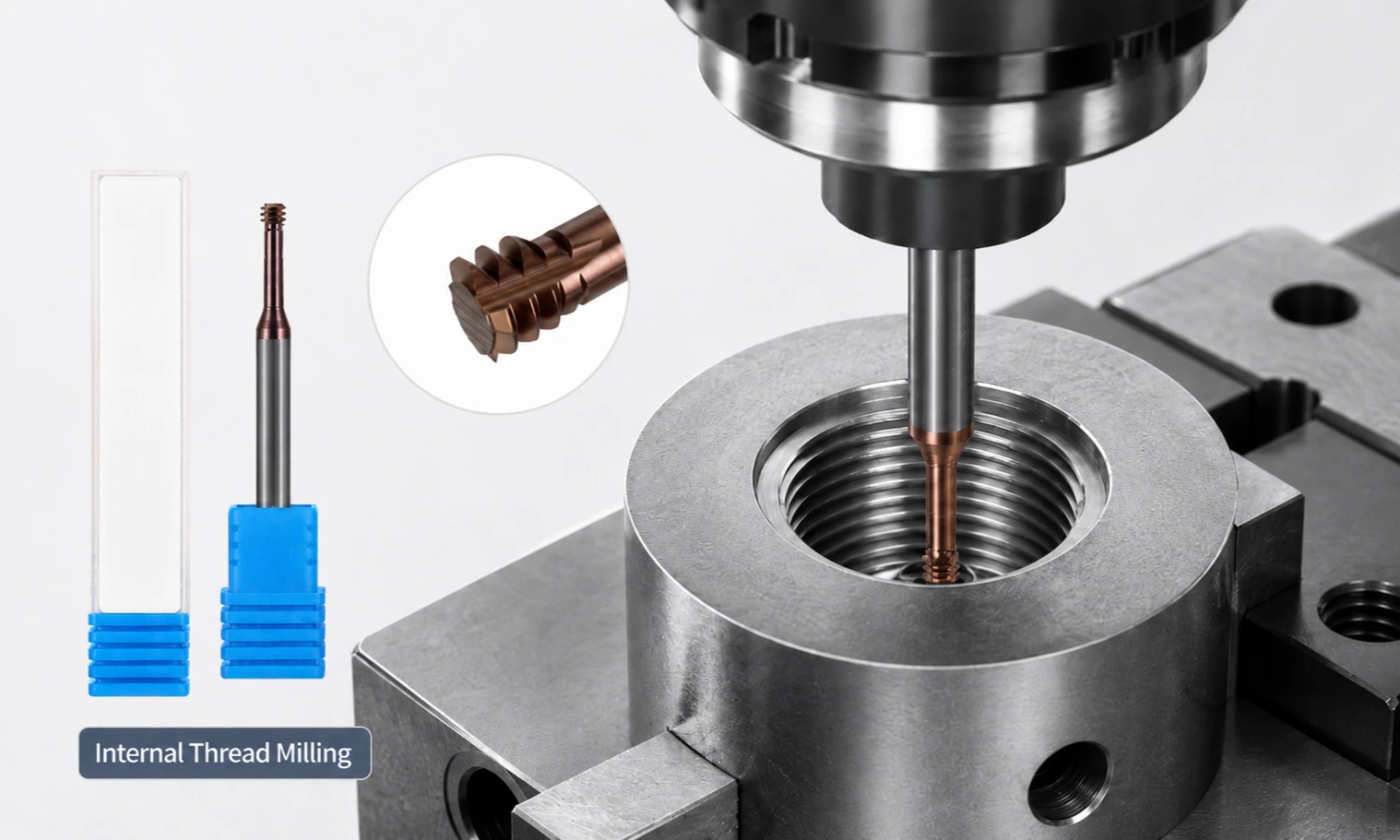
What Is a Thread Milling Cutter?
A thread milling cutter is a cutting tool that machines threads on a CNC milling machine or machining center. It follows a programmed helical tool path and gradually cuts the thread profile inside or outside the workpiece.
En termes simples, the tool does not push directly through the hole like a tap. Plutôt, it moves around the hole while cutting the thread shape. Par conséquent, the process gives better control over thread accuracy and tool movement.
Machinists often use thread milling cutters for:
- Internal threads
- External threads
- Blind holes
- Through holes
- Custom thread sizes
- Precision CNC components
For custom carbide thread milling tools, vous pouvez consulter notre Fraise à fileter.
À quoi sert une fraise à fileter?
A thread milling cutter is mainly used for CNC thread machining. It can produce threads in different materials and part structures, especially when the thread needs high accuracy or a non-standard design.
Internal Thread Milling
Internal thread milling creates threads inside a hole. This method is common in mechanical parts, composants de moule, pièces automobiles, et assemblages de précision.
Par exemple, a pre-drilled hole can be machined with a carbide thread mill to produce a clean internal thread. Because the tool path is controlled by CNC programming, the process can improve thread consistency.
External Thread Milling
External thread milling creates threads on the outside diameter of a part. This application is often used for shafts, connectors, fittings, and custom mechanical components.
Compared with traditional thread cutting methods, CNC thread milling can offer more flexibility when the thread size or pitch needs special control.
Blind Hole Thread Machining
Thread milling is useful for blind holes because the tool does not need to reach the bottom with the same risk as a tap. En outre, chips can evacuate more easily during the cutting process.
This makes thread milling a good choice when the part has limited hole depth or when tool breakage would cause serious production problems.
Custom and Non-Standard Thread Sizes
Many CNC parts use special thread forms, unique pitches, or non-standard depths. Dans ces cas, a custom thread milling cutter may be a better choice.
Pour cette raison, buyers often send drawings, normes de filetage, or sample details before ordering a custom tool.
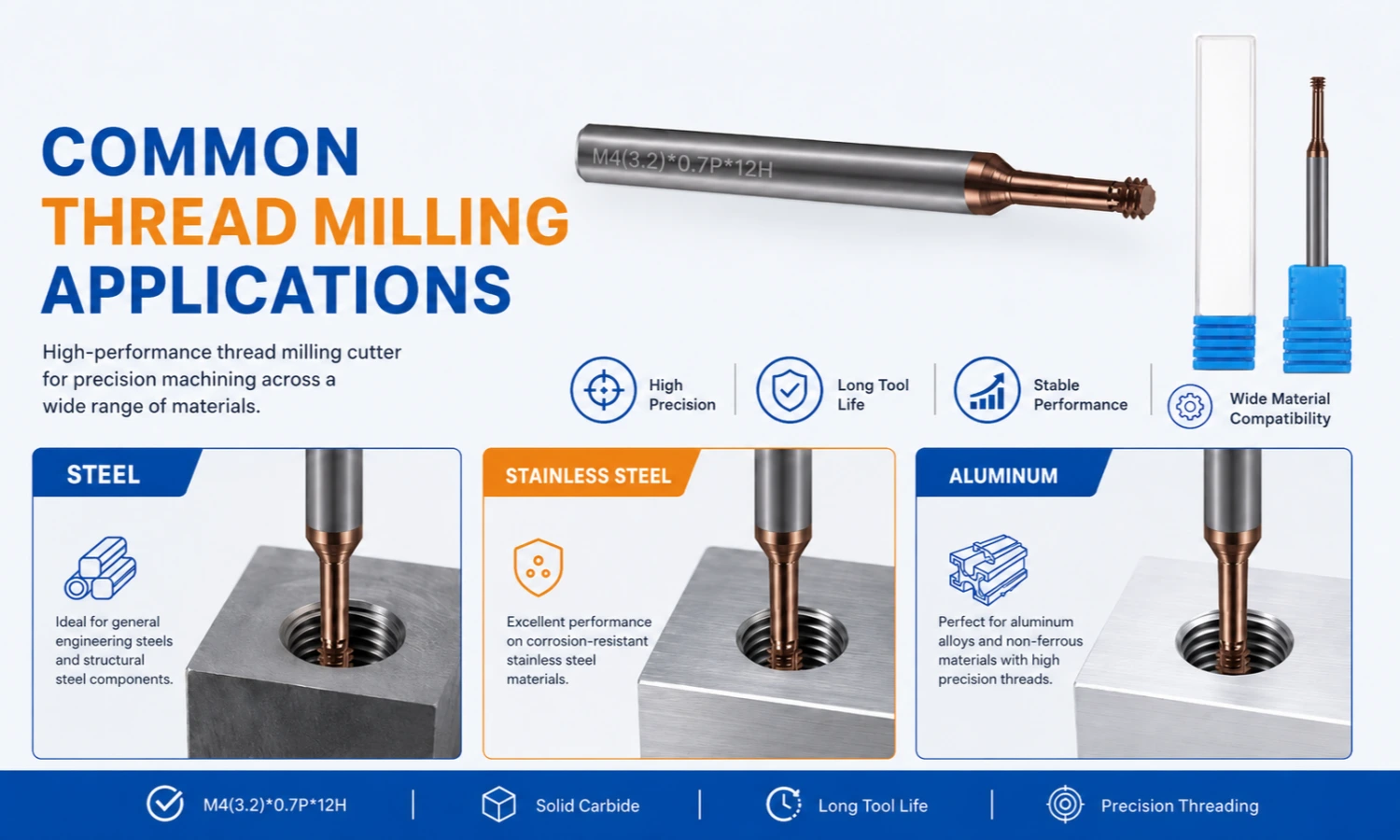
Common Applications of Thread Milling Cutters
Thread milling cutters are used in many CNC machining industries. They are especially helpful when the part requires stable cutting, accurate thread profile, and flexible tool control.
| Application Area | Why Thread Milling Is Useful |
| Precision CNC parts | Helps control thread size and pitch |
| Composants de moules et de matrices | Supports accurate threads in custom parts |
| Pièces automobiles | Suitable for repeatable thread machining |
| Composants aérospatiaux | Helps machine high-value parts with better control |
| Stainless steel parts | Reduces tool breakage risk compared with tapping |
| Blind hole parts | Improves chip evacuation and depth control |
| Custom machinery parts | Supports non-standard thread sizes and drawings |
Dans de nombreux cas, thread milling also works together with drilling and chamfering. Avant le fraisage du filetage, the workpiece usually needs a pre-drilled hole. For hole-making tools, you can check Foret en carbure.
Why Use Thread Milling Instead of Tapping?
Tapping is still common, and it works well for many standard threads. Cependant, thread milling offers more flexibility in some CNC machining situations.
Better Control for Blind Holes
A tap must usually move deep into the hole to form or cut the thread. If chips block the hole, the tap may break. Cependant, a thread milling cutter removes material through a milling path, so chip evacuation can be easier.
Lower Risk of Tool Breakage
Tool breakage can damage the part, especially in stainless steel, acier allié, or expensive components. Thread milling can reduce this risk because cutting forces are often easier to control.
Flexible Thread Size Control
Dans certains cas, one thread milling tool can machine different thread diameters with the same pitch by changing the CNC program. This depends on the thread standard and tool design, but it gives machinists more flexibility.
Suitable for Hard or Difficult Materials
Thread milling can work well in materials that may be difficult for tapping. Par exemple, stainless steel and alloy steel often need stable cutting, revêtement approprié, and good chip control.
This article only gives a basic comparison. A detailed comparison between thread milling and tapping should be covered in a separate guide.
What Materials Can Be Machined with Thread Milling Cutters?
Thread milling cutters can machine many common workpiece materials. Cependant, la conception de l'outil, revêtement, and cutting parameters should match the material.
Acier et acier allié
Steel and alloy steel are common materials for thread milling. A coated carbide thread mill can help improve tool life and cutting stability.
Acier inoxydable
Stainless steel often creates more heat during machining. Donc, sélection du revêtement, vitesse de coupe, and chip evacuation are important.
Aluminium et matériaux non ferreux
Aluminum usually needs sharp cutting edges and good chip removal. En outre, the tool should avoid built-up edge during machining.
Cast Iron and Other Machinable Materials
Fonte, brass, copper alloys, and other machinable materials can also use thread milling. The best tool choice depends on the part design and cutting condition.
How to Choose the Right Thread Milling Cutter
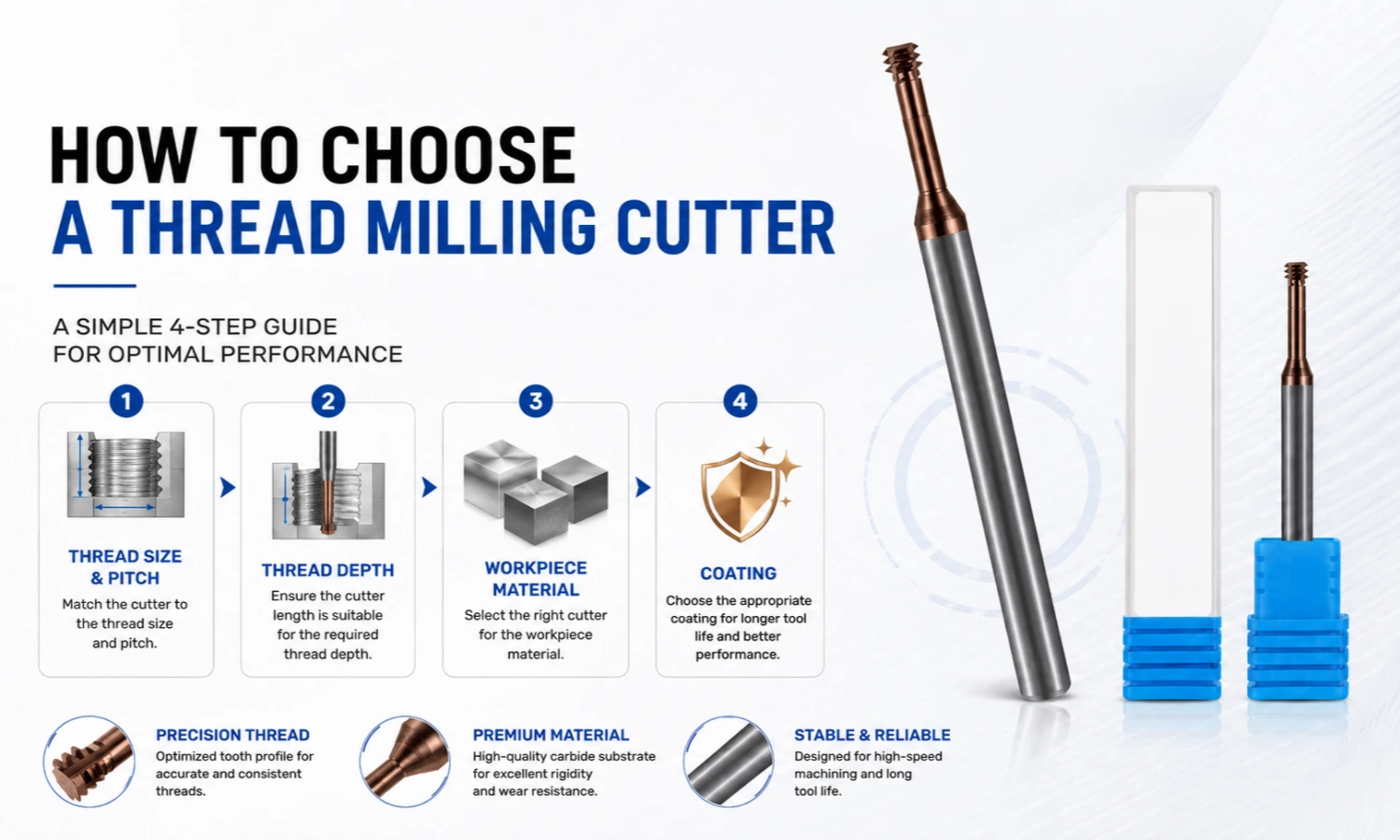
Choosing the right thread milling cutter starts with the thread details and workpiece condition. Before placing an order, buyers should confirm several key points.
Confirm Thread Size and Pitch
D'abord, confirmer la norme de filetage, taille, et pitch. Common standards include metric, UNC, FNU, TNP, and custom thread forms.
If the pitch or thread profile is not standard, a custom tool may be required.
Check Thread Depth and Hole Type
Suivant, check the thread depth and hole type. Blind holes, deep holes, and through holes may need different cutting lengths or neck designs.
Pour cette raison, the hole depth should be provided when asking for a quotation.
Match the Tool with Workpiece Material
Le matériau de la pièce à usiner affecte la qualité du carbure, revêtement, conception de bord, et paramètres de coupe. Pour acier inoxydable ou acier allié, a wear-resistant coating may help improve tool performance.
Choisissez le bon revêtement
Coatings such as TiAlN, Or, TiSiN, or Nano coating can improve tool life in different materials. Cependant, the best choice depends on cutting speed, coolant use, and workpiece hardness.
Send Drawing for Custom Thread Milling Tools
For custom thread milling tools, drawings help the supplier confirm the correct design faster. A drawing can show thread size, pas, profondeur, tolérance, taille de la tige, et exigences particulières.
For other non-standard milling tools, vous pouvez également vérifier Fraises en bout personnalisées.
When Should You Use a Custom Thread Milling Cutter?
A standard thread milling cutter may not fit every job. Dans certaines applications, a custom carbide thread mill gives better results.
You may need a custom tool when:
- The thread size is non-standard
- The pitch is special
- The thread depth is unusual
- The workpiece material is difficult to machine
- The part requires a special coating
- The customer needs OEM logo marking or packaging
- The tool must match an existing sample or drawing
En outre, custom tools are useful for distributors and CNC machining companies that need stable supply for repeated production.
Related Cutting Tools for Thread Machining
Thread machining often requires more than one tool. A typical process may include drilling, chanfreinage, thread milling, and inspection.
Before thread machining, many parts need hole preparation. After thread machining, certaines pièces peuvent également nécessiter un chanfreinage ou un ébavurage des bords.
Pour prendre en charge le processus d’usinage complet, vous pourriez également avoir besoin Fraise à chanfrein pour la préparation des bords avant ou après l'usinage du filetage, et Fraise en bout de carbure pour les applications générales de fraisage du carbure.
FAQ
Qu'est-ce qu'une fraise à fileter?
Une fraise à fileter est un outil de coupe CNC utilisé pour usiner des filetages via un processus de fraisage.. Il suit une trajectoire d'outil programmée et coupe le profil du filetage à l'intérieur ou à l'extérieur de la pièce..
Pouvez-vous couper des fils sur une fraiseuse?
Oui. Une fraiseuse CNC ou un centre d'usinage peut couper des filetages avec une fraise à fileter. La machine utilise une trajectoire d'outil hélicoïdale pour créer le filetage.
Quels sont les inconvénients du filetage à la fraise?
Le fraisage de filets nécessite généralement une programmation CNC et une machine adaptée.. Cela peut également prendre plus de temps de configuration que de taper sur de simples threads standard.. Cependant, it offers better flexibility for blind holes, tailles personnalisées, and difficult materials.
How accurate is thread milling?
Thread milling can produce accurate threads when the tool, machine, program, and cutting parameters are correct. The final accuracy depends on tool quality, rigidité de la machine, matériau de la pièce à usiner, and inspection requirements.
Is thread milling faster than tapping?
Tapping can be faster for simple, standard holes in high-volume production. Cependant, thread milling may be more efficient when the part needs blind hole control, tailles de fil personnalisées, or lower tool breakage risk.
Can one thread milling cutter cut different thread diameters?
Dans certains cas, one cutter can machine different thread diameters with the same pitch by changing the CNC program. Cependant, cela dépend de la norme de filetage, tool profile, et exigence d'usinage.
Is thread milling suitable for blind holes?
Oui. Le fraisage de filets est souvent un bon choix pour les trous borgnes car il permet un meilleur contrôle de la profondeur du filetage et de l'évacuation des copeaux..
Conclusion
Une fraise à fileter est utilisée pour l'usinage CNC des filetages internes et externes. C'est particulièrement utile pour les trous borgnes, tailles de fil personnalisées, matériaux durs, et pièces de précision.
Lors du choix d'un outil de fraisage de filetage, les acheteurs doivent confirmer la taille du fil, pas, profondeur du filetage, matériau de la pièce à usiner, revêtement, et exigences de dessin. Pour fraises à fileter en carbure sur mesure, vous pouvez consulter notre Fraise à fileter ou envoyez-nous un e-mail avec vos détails d'usinage.