 Frese di precisione,Utensili da taglio per la lavorazione CNC di ogni materiale

La differenza principale in a 4 flauto contro 6 Il confronto tra frese a candela è l'equilibrio tra evacuazione del truciolo e rigidità dell'utensile.
A 4 la fresa per flauto offre più spazio per la scanalatura. Perciò, è generalmente più flessibile per scanalature moderate, fresatura laterale, fresatura di profili, e il cambiamento delle condizioni di taglio.
Al contrario, UN 6 La fresa per flauto ha più taglienti e solitamente un nucleo più forte. Può fornire una migliore stabilità durante la semifinitura e la finitura controllata, soprattutto quando gli obiettivi principali sono la qualità delle pareti e la finitura superficiale.
Né il conteggio dei flauti è sempre migliore. La scelta corretta dipende dall'operazione di lavorazione, volume del chip, taglio dell'impegno, rigidità della macchina, sporgenza dell'utensile, e finitura richiesta.
Differenze chiave tra 4 Flauto e 6 Frese per flauto
4 Fresa per flauto: Più spazio per il chip e versatilità
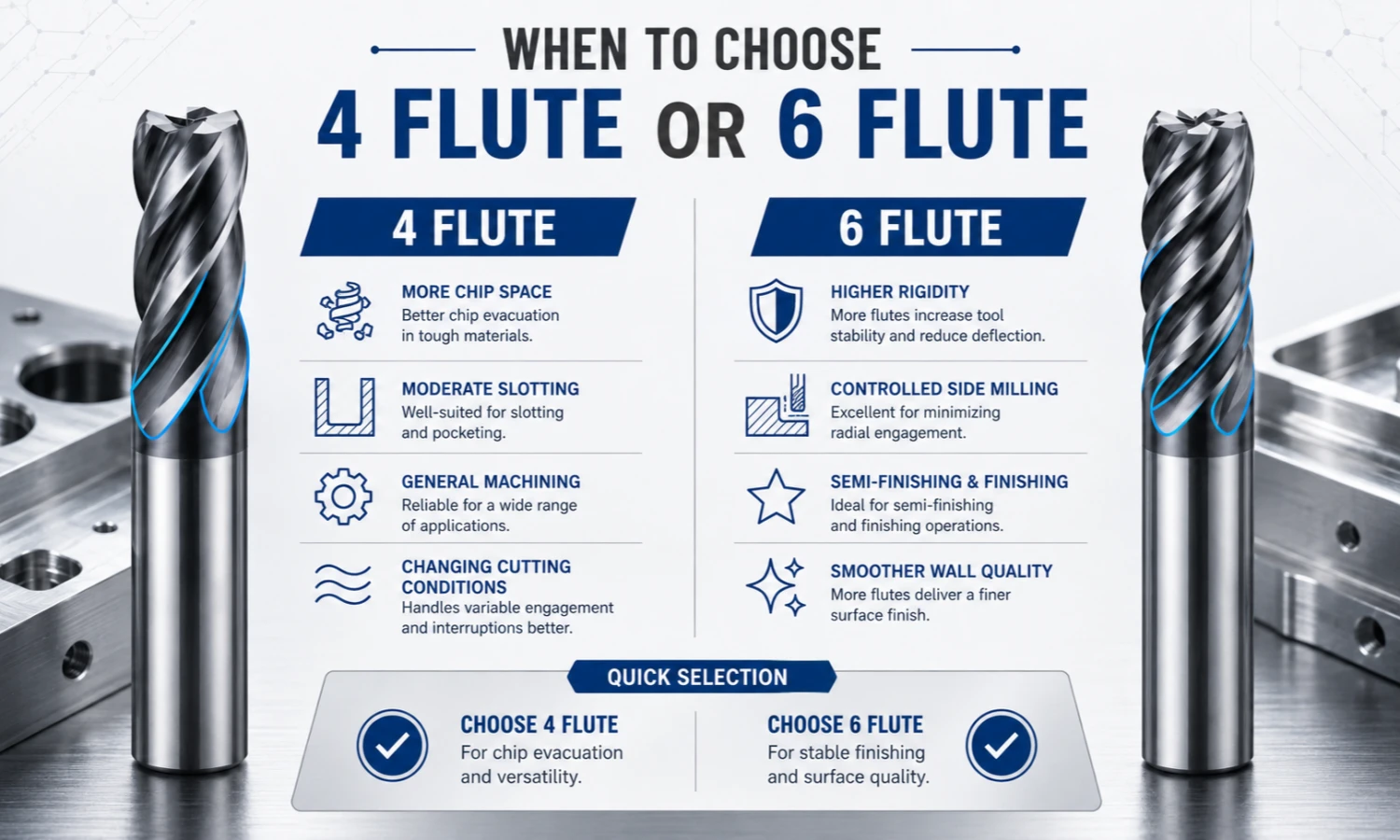
A 4 La fresa per scanalature ha quattro taglienti con più spazio tra le scanalature rispetto al design a sei scanalature. Di conseguenza, i trucioli possono abbandonare più facilmente la zona di taglio.
Questo design fornisce un equilibrio pratico nell'evacuazione dei trucioli, forza fondamentale, e stabilità al taglio. Viene comunemente selezionato per la lavorazione generale di acciaio e acciaio inossidabile, scanalatura moderata, fresatura laterale, fresatura di profili, e semifinitura.
Una fresa a quattro taglienti è inoltre più tollerante quando l'impegno di taglio o le condizioni di lavorazione cambiano durante la produzione.
Per dimensioni standard, disegni a taglio centrale, rivestimenti, e opzioni personalizzate, rivedi il nostro 4 fresa in metallo duro con scanalatura.
Per una guida applicativa più ampia, Leggere cos'è un 4 fresa per flauto utilizzata per.
6 Fresa per flauto: Maggiore rigidità per la finitura
A 6 La fresa per scanalatura ha sei taglienti e meno spazio per la scanalatura. I taglienti aggiuntivi e il nucleo più forte possono migliorare la rigidità, stabilità della parete, e consistenza superficiale durante la lavorazione controllata.
Perciò, questo design viene spesso utilizzato per la fresatura laterale, finitura del profilo, semifinitura, e finitura in acciaio, acciaio inossidabile, e acciaio legato.
Tuttavia, lo spazio ridotto dell'elica limita l'evacuazione del truciolo. Una fresa a sei taglienti non è normalmente la prima scelta per scanalature profonde a tutta larghezza, sgrossatura pesante, o operazioni che producono un elevato volume di trucioli.
Per dimensioni del prodotto e opzioni di personalizzazione, rivedi il nostro 6 fresa in metallo duro con scanalatura.
Per ulteriori informazioni sulle sue applicazioni, Leggere cos'è un 6 fresa per flauto utilizzata per.
4 Flauto contro 6 Confronto delle frese per flauto
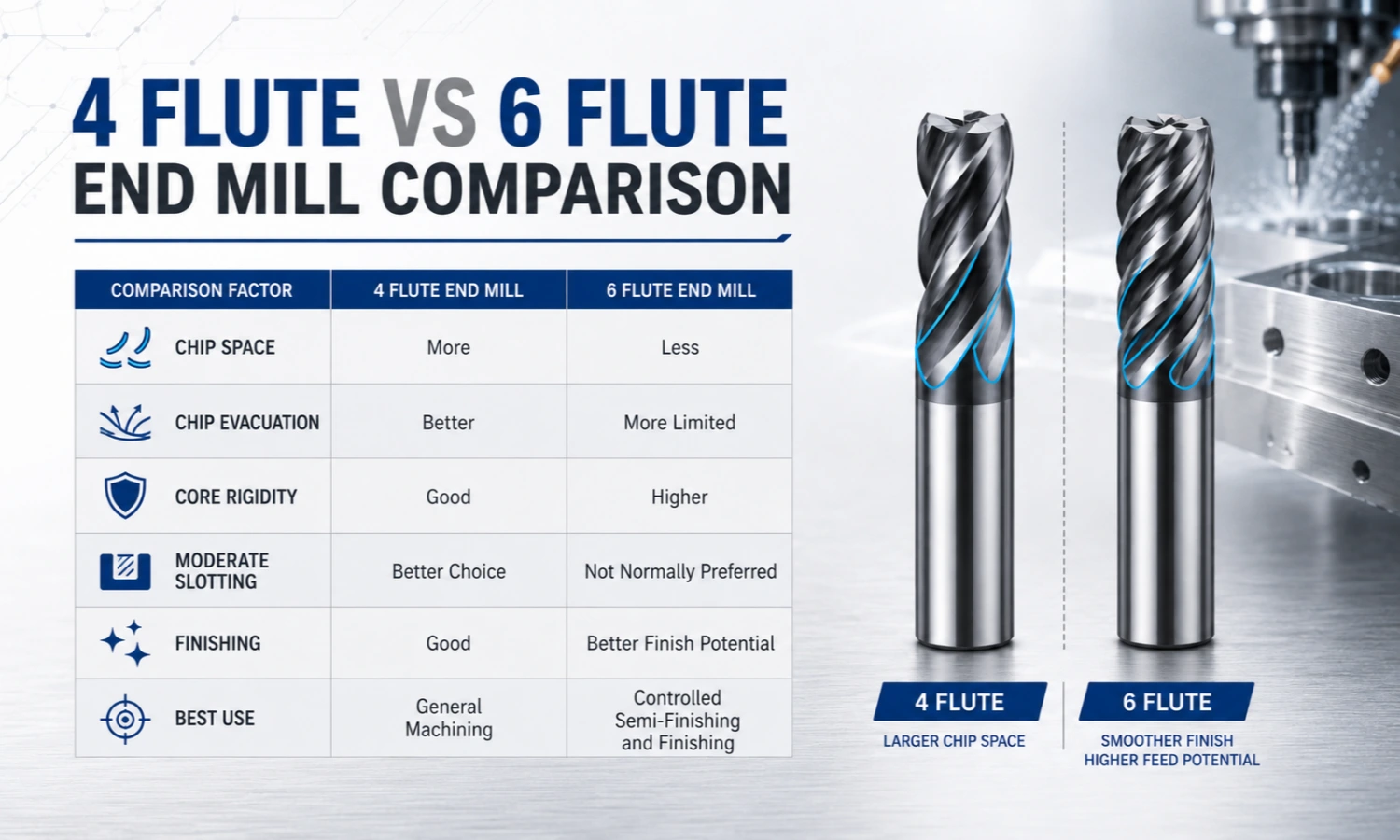
| Fattore di confronto | 4 Fresa per flauto | 6 Fresa per flauto |
|---|---|---|
| Spazio al chip | Di più | Meno |
| Evacuazione dei trucioli | Meglio | Più limitato |
| Rigidità del nucleo | Bene | Più alto |
| Lavorazione generale dell'acciaio | Più versatile | Più specializzato |
| Scanalatura moderata | Scelta migliore | Normalmente non preferito |
| Fresatura laterale | Adatto | Adatto con innesto controllato |
| Fresatura del profilo | Adatto | Adatto per passaggi di finitura stabili |
| Semifinitura | Adatto | Spesso meglio |
| Finissaggio | Bene | Potenziale finale migliore |
| Sgrossatura pesante | Più adatto | Non è l'ideale |
| Configurazione della macchina | Più indulgente | Funziona meglio in configurazioni rigide |
| Miglior utilizzo | Lavorazione generale e moderata asportazione di truciolo | Semifinitura e finitura controllata |
| Utilizzare con cautela | Finitura molto leggera dove più taglienti possono aiutare | Fessure profonde, scarsa evacuazione del truciolo, lungo sbalzo, o configurazioni instabili |
Questa tabella fornisce indicazioni generali sulla selezione. Le prestazioni effettive dipendono anche dal tipo di metallo duro, rivestimento, angolo dell'elica, diametro dell'utensile, lunghezza del flauto, condizione del titolare, mandata del liquido refrigerante, e parametri di taglio.
4 Flauto contro 6 Fresa per flauto per acciaio
Entrambi i numeri di scanalature possono lavorare l'acciaio. Tuttavia, si adattano a diverse operazioni.
A 4 La fresa per scanalatura è generalmente l'opzione più flessibile per la lavorazione generale dell'acciaio. Lo spazio più ampio della scanalatura supporta una moderata rimozione dei trucioli, modifica dell'impegno di taglio, fresatura laterale, fresatura di profili, e scanalatura da leggera a moderata.
A 6 la fresa per scanalatura diventa più utile quando l'operazione si concentra sulla semifinitura o finitura controllata. I suoi taglienti aggiuntivi possono migliorare la qualità delle pareti e la consistenza della superficie. Tuttavia, la macchina, titolare, tenuta del lavoro, e il percorso utensile dovrebbe rimanere stabile.
Scegliere 4 Flauto per la lavorazione generale dell'acciaio
Una taglierina a quattro taglienti è una scelta pratica quando:
- L'operazione prevede una scanalatura moderata.
- L'evacuazione dei trucioli rimane importante.
- L'impegno di taglio potrebbe cambiare.
- Uno strumento deve coprire diverse operazioni.
- L'impostazione non è ottimizzata solo per la finitura.
Scegliere 6 Flauto per finitura controllata
Una taglierina a sei taglienti può fornire risultati migliori quando:
- L'operazione riguarda principalmente la semifinitura o la finitura.
- È necessaria una migliore qualità della parete.
- L'impegno radiale rimane leggero e controllato.
- La macchina e il supporto garantiscono una buona rigidità.
- La qualità della superficie conta più dello spazio massimo del truciolo.
In molti laboratori, un design a quattro flauti funge da punto di partenza per uso generale. Un utensile a sei taglienti offre una scelta più specializzata quando l'operazione diventa stabile e focalizzata sulla finitura.
4 Flauto contro 6 Fresa per flauto per acciaio inossidabile
L'acciaio inossidabile può generare calore e può indurirsi quando le condizioni di taglio diventano instabili. Perciò, evacuazione truciolo, taglio dell'impegno, rivestimento, geometria dell'utensile, e la rigidità della macchina è tutto ciò che conta.
A 4 La fresa per scanalatura è solitamente un punto di partenza pratico per la lavorazione generale dell'acciaio inossidabile. Fornisce un utile equilibrio tra spazio del chip e forza del nucleo, quindi può gestire la fresatura di profili, fresatura laterale, moderata asportazione di materiale, e semifinitura.
A 6 la fresa per flauto è più specializzata. It can perform well in controlled semi-finishing and finishing passes where dimensional consistency, wall quality, and smoother surfaces are the main goals.
Tuttavia, chip volume and cutting engagement must remain controlled. Altrimenti, chips and heat may collect around the cutting edges.
For specialized stainless steel finishing, tools with five or more flutes and higher helix angles are also common. Comunque, additional flutes only help when chip evacuation, esaurire, tenuta dell'utensile, and setup rigidity remain under control. Variable-helix or variable-pitch geometry may also improve vibration control.
Generalmente:
- Scegliere 4 flute for greater versatility and more chip space.
- Scegliere 6 flute for controlled finishing and higher surface-quality requirements.
How to Choose a 4 Flauto o 6 Flute End Mill in Three Steps
Fare un passo 1: Start with the Machining Operation
Primo, individuare l'operazione principale.
Scegli un 4 flute end mill when the job includes moderate slotting, modifica dell'impegno di taglio, o fresatura laterale e di profilo generale. Lo spazio più ampio della scanalatura fornisce ai trucioli un percorso più sicuro per lasciare la zona di taglio.
Consideriamo a 6 fresa ad elica quando l'operazione utilizza l'impegno laterale controllato e si concentra sulla semifinitura o finitura.
Per sgrossatura pesante, una fresa per sgrossatura dedicata può essere più adatta di un utensile di finitura standard a quattro o sei eliche.
Fare un passo 2: Controllare l'evacuazione del truciolo e la rigidità del setup
Prossimo, rivedere l'impostazione completa della lavorazione.
Una taglierina a sei taglienti offre le migliori prestazioni quando:
- L'impegno di taglio rimane controllato.
- La macchina e il supporto garantiscono una buona rigidità.
- La sporgenza dell'utensile è mantenuta quanto più breve possibile.
- Il refrigerante o l'aria possono raggiungere la zona di taglio.
- I trucioli possono lasciare il pezzo senza essere tagliati nuovamente.
Un utensile a quattro taglienti è generalmente più tollerante quando l'impostazione è meno rigida o quando le condizioni di taglio cambiano.
Un conteggio delle scanalature più elevato non può correggere un supporto instabile, sporgenza eccessiva, scarsa tenuta del lavoro, o evacuazione truciolo bloccata.
Fare un passo 3: Imposta la priorità della finitura superficiale
Finalmente, decidere se il controllo truciolo o la qualità di finitura hanno la priorità più alta.
Scegli quattro flauti quando la versatilità, evacuazione truciolo, e la rimozione moderata del materiale è la cosa più importante.
Scegliere sei scanalature quando la configurazione è stabile e l'operazione mira alla qualità della parete, consistenza dimensionale, e una superficie finita più liscia.
Un numero maggiore di taglienti può ridurre il carico trasportato da ciascun tagliente quando l'avanzamento è impostato correttamente. Tuttavia, uno scarso controllo del truciolo o un calore eccessivo possono eliminare questo vantaggio.
Cosa controllare quando a 6 La fresa per flauto non migliora il risultato
Una fresa a sei taglienti non produce automaticamente una finitura migliore. Quando il risultato peggiora, ispezionare l'intera condizione di taglio prima di incolpare l'utensile.
| Segno di lavorazione | Possibile causa | Primo punto da controllare |
|---|---|---|
| I trucioli si accumulano intorno ai bordi taglienti | Il volume del truciolo è troppo alto per lo spazio disponibile nella scanalatura | Ridurre l'impegno di taglio o prendere in considerazione a 4 disegno del flauto |
| La temperatura di taglio aumenta rapidamente | I trucioli rimangono nella zona di taglio oppure l'accesso al refrigerante è limitato | Migliorare l'evacuazione dei trucioli e l'erogazione del refrigerante |
| Appaiono chiacchiere sulla parete o segni di vibrazioni | La sporgenza dell'utensile o l'intera configurazione mancano di rigidità | Titolare dell'assegno, sporgenza, tenuta del lavoro, e percorso utensile |
| La finitura superficiale non migliora | Esaurire, foraggio, o l'innesto del taglio non è adatto | Controllare il runout e regolare la strategia di finitura |
| I taglienti si scheggiano inaspettatamente | Ritaglio del truciolo, Calore, o impegno instabile | Rivedere il controllo del truciolo, rivestimento, e condizioni di taglio |
Questi sono segnali generali per la risoluzione dei problemi piuttosto che regole di taglio fisse. La regolazione corretta dipende dal design della taglierina, materiale del pezzo, macchina, titolare, e parametri di lavorazione.
Esempi pratici di selezione
Acciaio generale con scanalatura moderata
Per scanalature moderate o cambio dell'impegno di taglio nell'acciaio generale, UN 4 la fresa per scanalatura è normalmente la scelta più flessibile.
Lo spazio più ampio della scanalatura favorisce l'evacuazione dei trucioli, mentre il nucleo a quattro scanalature fornisce comunque una rigidità utile per la fresatura laterale e di profilo.
Se l'operazione si trasforma in una passata leggera di finitura laterale finale, UN 6 taglierina per scanalature valutabile a parte.
Finitura profilo in acciaio inox
Quando l'acciaio inossidabile viene lavorato con impegno laterale leggero e stabile, una configurazione rigida, e un obiettivo finale chiaro, UN 6 la fresa per scanalatura può fornire un migliore potenziale di finitura.
Tuttavia, se i trucioli iniziano ad accumularsi o la temperatura di taglio aumenta rapidamente, UN 4 il design della scanalatura può fornire un equilibrio più sicuro tra lo spazio della scanalatura e la stabilità del taglio.
Questi esempi mostrano perché il conteggio delle scanalature dovrebbe corrispondere all'operazione invece di essere selezionato solo in base al nome del materiale.
Domande frequenti
Qual è la differenza principale tra a 4 flauto e 6 fresa a candela a flauto?
La differenza principale è l'equilibrio tra evacuazione del truciolo e rigidità.
A 4 La fresa per scanalatura offre più spazio per la scanalatura e maggiore versatilità. Al contrario, UN 6 la fresa per flauto fornisce più taglienti, maggiore rigidità del nucleo, e migliore potenziale di finitura in condizioni stabili.
È un 4 flauto o 6 fresa per flauto migliore per l'acciaio?
A 4 la fresa per scanalatura è solitamente migliore per la lavorazione generale dell'acciaio, scanalatura moderata, e il cambiamento delle condizioni di taglio.
A 6 la fresa per scanalature spesso offre prestazioni migliori durante la fresatura laterale controllata, semifinitura, e finitura quando l'obiettivo principale è la qualità della superficie.
Quando dovrei evitare di usare a 6 fresa a candela a flauto?
A 6 La fresa per scanalatura non è normalmente la prima scelta per cave profonde a tutta larghezza, sgrossatura pesante, operazioni con volumi elevati di trucioli, scarso accesso al refrigerante, o configurazioni instabili.
Lo spazio ridotto della scanalatura può aumentare il taglio dei trucioli e il calore quando l'impegno di taglio è troppo elevato.
Un numero maggiore di scanalature produce sempre una migliore finitura superficiale?
NO. Un numero maggiore di scanalature può migliorare il potenziale di finitura, ma il risultato dipende anche dal runout, alimentazione per dente, geometria dell'utensile, rigidità della macchina, condizione del titolare, evacuazione truciolo, e stabilità del pezzo.
Se rimangono trucioli o calore nella zona di taglio, una fresa a sei taglienti potrebbe non migliorare la superficie.
Come faccio a scegliere tra a 4 flauto e 6 fresa a candela a flauto?
Iniziare con l'operazione di lavorazione e il volume del truciolo. Quindi controllare l'innesto del taglio, sporgenza dell'utensile, condizione del titolare, e rigidità della macchina.
Scegli quattro eliche quando l'evacuazione del truciolo e la versatilità contano di più. Scegli sei eliche quando l'impostazione è stabile e la finitura controllata è l'obiettivo principale.
Conclusione
Confrontando a 4 flauto contro 6 fresa a candela a flauto, iniziare con l'obiettivo della lavorazione.
Una fresa a quattro taglienti offre più spazio per il truciolo e maggiore flessibilità per la lavorazione generale di acciaio e acciaio inossidabile, scanalatura moderata, fresatura laterale, e il cambiamento delle condizioni di taglio.
Una fresa a sei taglienti offre una maggiore rigidità e un migliore potenziale di finitura quando l'impegno di taglio rimane controllato. Perciò, è adatto ad operazioni stabili di semifinitura e finitura che richiedono una migliore qualità delle pareti e superfici più lisce.
Invece di selezionare una fresa solo in base al numero di scanalature, abbinare lo strumento al materiale, volume del chip, profondità di taglio, rigidità della macchina, tenuta dell'utensile, e finitura richiesta.
Hai bisogno di aiuto per scegliere tra 4 Flauto e 6 Frese per flauto?
La selezione del numero corretto di eliche può migliorare il controllo del truciolo, stabilità al taglio, vita dell'utensile, e qualità della superficie.
Inviaci il materiale del tuo pezzo, durezza del materiale, diametro di taglio, lunghezza del flauto, operazione di lavorazione, requisito del rivestimento, e quantità. Puoi anche fornire un disegno, riferimento dello strumento, o foto dell'applicazione quando la specifica è incompleta.
Esamineremo le informazioni disponibili e ti aiuteremo a selezionare una fresa in metallo duro standard o personalizzata adatta.
Invia la tua richiesta direttamente a sales@cutterbest.com.