 Precision Milling Cutters,Cutting Tools for CNC Machining Every Material

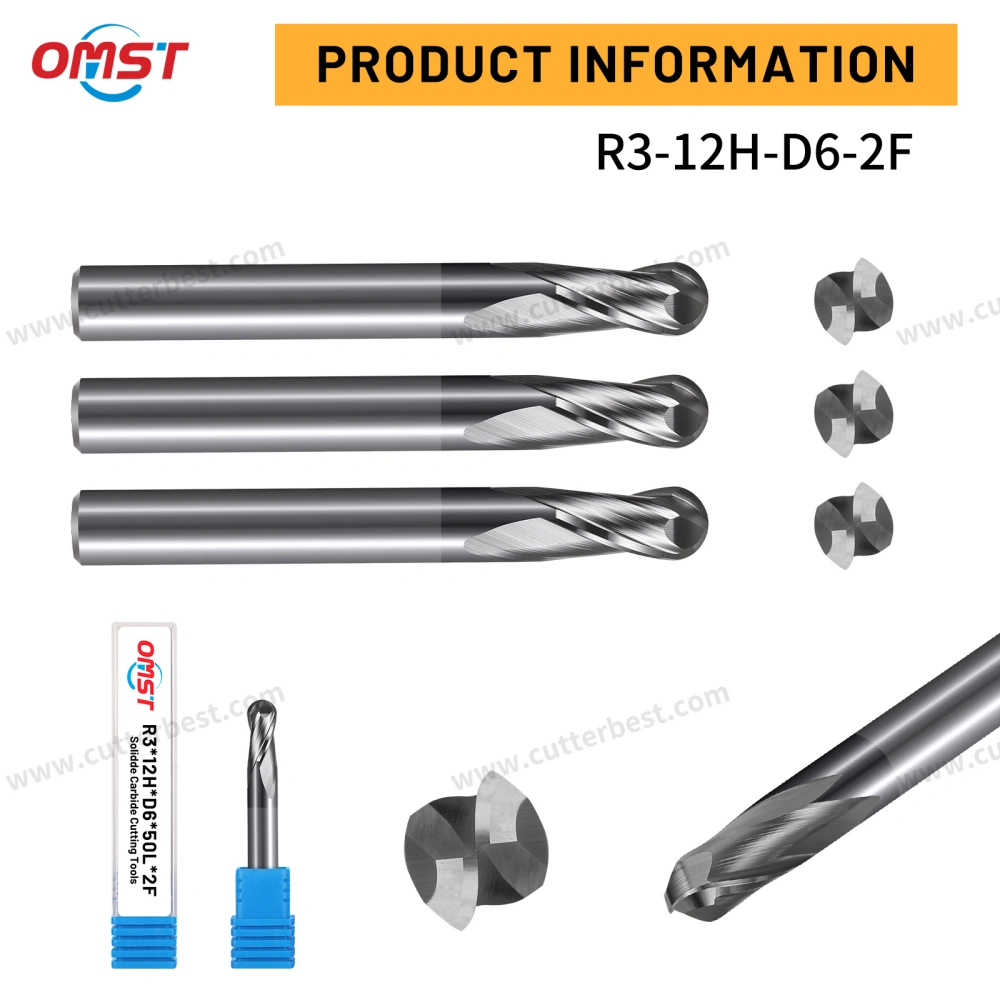
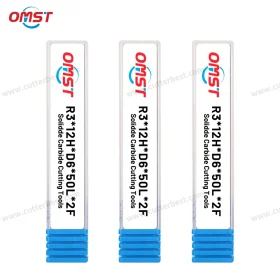
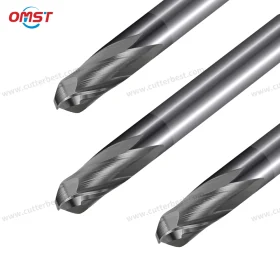
Carbide ball nose end mills have fully rounded cutting ends that follow curved surfaces and complex CNC toolpaths. This geometry makes them suitable for 3D contouring, mold cavity finishing, die machining, sculpted profiles, and precision surface finishing.
CutterBest manufactures standard and custom carbide cutters for CNC machining shops, mold manufacturers, industrial users, and cutting tool distributors. Customers can select different diameters, flute counts, cutting lengths, neck lengths, carbide grades, and coatings according to the workpiece material and machining conditions.
What Is a Ball Nose End Mill?
A ball nose end mill is a rotary milling tool with a hemispherical cutting end. Unlike a flat end mill, it does not produce a fully flat-bottom cutting profile. Instead, the rounded end moves smoothly across curved surfaces and helps create gradual transitions between different contours.
Machinists commonly use this tool after rough machining to finish molds, dies, cavities, radii, and three-dimensional parts. The correct cutter geometry and toolpath can also reduce visible tool marks and lower the amount of secondary polishing required.
For flat-bottom slots, pockets, steps, and square shoulders, please view our flat end mill product.
For a side-by-side comparison of cutting geometry, machining results, and suitable applications, read our ball nose end mill vs flat end mill guide.
Key Features
Full-Radius Cutting End
The rounded cutting end follows curved and freeform surfaces more smoothly than a flat-bottom cutter. Therefore, it is well suited to complex profiles, mold cavities, radii, and detailed 3D finishing.
For a standard full ball-end design, the nose radius is normally half of the cutting diameter. Custom cutting diameters, flute lengths, neck lengths, shank sizes, and overall lengths can be evaluated according to drawings or machining requirements.
Solid Carbide Construction
We manufacture these cutters from tungsten carbide to provide rigidity, wear resistance, and stable performance during CNC milling.
The appropriate carbide grade depends on the workpiece material, hardness, tool diameter, cutting depth, and machining conditions. Therefore, customers should provide the material and hardness information when requesting a quotation.
Multiple Flute Options
We can manufacture cutters with 1–6 flutes. However, 2-flute and 4-flute designs are the most common.
A 2-flute design usually provides more chip space and suits aluminum, copper, graphite, and other applications that require efficient chip evacuation. In contrast, a 4-flute design provides more cutting edges and often suits steel, mold materials, and finishing operations.
Other flute counts can be evaluated according to the cutter diameter, workpiece material, surface finish target, and CNC machining conditions.
Coating Options
Different workpiece materials require different edge treatments and coatings. Available options include:
- TiAlN
- AlTiN
- AlCrN
- TiSiN
- TiN
- DLC
- Nano Blue
- Nano coating
- Uncoated carbide
- Customized coatings
For aluminum and other non-ferrous materials, sharp cutting edges and polished flutes may be more important than a conventional coating. For steel, stainless steel, and hardened materials, a suitable heat-resistant coating can improve wear resistance and tool life.
Standard and Custom Sizes
The standard cutting diameter range is 1–20mm. In addition, we can evaluate smaller or larger diameters according to the cutter structure, flute count, machining depth, and order quantity.
Customers can also request custom flute length, overall length, shank diameter, neck length, long-reach geometry, carbide grade, coating, and dimensional tolerances.
Ball Nose End Mill Applications
These cutters are commonly used for CNC finishing operations that involve curved, three-dimensional, or freeform surfaces.
Typical applications include:
- 3D contour milling
- Mold cavity finishing
- Die and mold machining
- Curved surface finishing
- Radius and profile machining
- Sculpted surface machining
- Automotive mold production
- Aerospace component finishing
- Medical and precision part machining
- Graphite electrode machining
- Copper electrode machining
- CNC engraving and detailed finishing
A smaller diameter can reach narrow cavities and fine details. Meanwhile, a larger diameter can improve machining efficiency on wider curved surfaces. The final selection should consider the part shape, programmed step-over, required surface finish, and machine rigidity.
For a more detailed explanation of machining applications, read what is a ball nose end mill used for.
Specification Options
| Item | Available Options |
| Product Name | Ball Nose End Mill / Ball Nose Cutter |
| Cutter Material | Solid Tungsten Carbide |
| Cutting Diameter | Standard 1–20mm; smaller and larger diameters can be evaluated |
| Cutting End | Full-radius ball end |
| Flute Count | 1–6 flutes; 2-flute and 4-flute designs are the most common |
| Flute Length | Standard or customized |
| Overall Length | Standard or customized |
| Shank Diameter | Straight shank or customized |
| Neck Design | Standard neck, relieved neck, or long-reach design |
| Workpiece Hardness | Standard designs up to HRC65; selected designs may support HRC68–70 |
| Coating | TiAlN, AlTiN, AlCrN, TiSiN, TiN, DLC, Nano, uncoated, or customized |
| Workpiece Materials | Steel, stainless steel, aluminum, copper, graphite, cast iron, mold steel, and alloys |
| Application | 3D contouring, mold finishing, cavity machining, curved surfaces, and precision profiles |
| Custom Service | Diameter, length, shank, neck, flute count, carbide grade, coating, tolerance, and special geometry |
| Order Type | Sample orders, batch production, OEM, ODM, and distributor orders |
Ball Nose End Mills for Different Materials
Aluminum and Non-Ferrous Materials
When machining aluminum, copper, and similar materials, efficient chip evacuation helps reduce chip accumulation and built-up edges.
Sharp cutting edges, larger flute space, polished flutes, and suitable coatings can improve the surface finish. A 2-flute or 3-flute design may suit many non-ferrous applications, depending on the cutter diameter and machining method.
Steel and Stainless Steel
Steel and stainless steel require stable cutting edges, suitable carbide grades, and appropriate coatings.
Tool length and machine rigidity are also important because excessive overhang may cause vibration and reduce surface quality.
TiAlN, AlTiN, AlCrN, or another suitable coating can be selected according to the material, hardness, cutting temperature, and coolant conditions.
Mold Steel and Hardened Materials
For mold steel and hardened materials, the cutter must provide sufficient edge strength, heat resistance, and wear resistance.
Standard cutter designs can support materials up to approximately HRC65. Selected carbide grades, edge preparations, and coatings may support HRC68–70.
However, feasibility depends on:
- Exact workpiece material
- Cutter diameter
- Machining allowance
- Cutting depth
- Machine rigidity
- Toolpath
- Cutting parameters
Please provide complete machining information before ordering tools for high-hardness materials.
Graphite and Copper Electrodes
Graphite machining requires good wear resistance and stable cutter geometry. In contrast, copper electrode machining usually requires sharp cutting edges and a smooth flute surface.
We can recommend suitable carbide grades, coatings, and flute designs according to the electrode material, required surface finish, and production quantity.
Are Ball Nose End Mills and Ball Mill Cutters the Same?
In CNC cutting tool applications, “ball nose end mill” and “ball mill cutter” usually refer to the same type of cutter with a fully rounded cutting end.
“Ball nose end mill” is the more formal and widely accepted name used in professional cutting tool catalogs. “Ball mill cutter” is a shorter term used by some buyers when searching for a milling cutter with a ball-shaped end.
Both terms normally describe a tool used for 3D contour milling, mold cavity finishing, curved surface machining, and complex profile finishing.
However, a ball mill cutter should not be confused with a ball mill machine used for grinding powders or bulk materials.
For more information about this alternative product name, read our ball mill cutter guide.
How to Choose a Ball Nose End Mill
Select the Cutting Diameter
The cutting diameter should match the workpiece radius, cavity width, detail size, and available machining space.
A smaller diameter suits fine details, narrow areas, and small radii. A larger diameter can improve machining efficiency on wider curved surfaces.
Confirm the Flute Length and Overall Length
Choose a flute length and overall length that reach the required machining depth without adding unnecessary overhang.
A cutter that is too long may vibrate and produce visible surface marks. For deep cavities, a relieved neck or long-reach design may provide better access than an excessively long flute.
Match the Flute Design to the Material
The flute count, helix, cutting-edge preparation, and chip space should match the workpiece material and operation.
For example, aluminum normally requires efficient chip evacuation and sharp cutting edges. Steel and hardened materials generally require stronger edges, stable geometry, and a suitable coating.
Choose a Suitable Coating
The coating should match the material hardness, cutting temperature, coolant condition, and machining method.
An unsuitable coating or edge treatment may increase chip adhesion, shorten tool life, or reduce surface quality.
Check Machine and Tool-Holder Stability
Machine rigidity, tool-holder condition, tool runout, and cutter overhang directly affect the final surface finish.
Therefore, use the shortest practical tool length and confirm that the machine and holder can support the required finishing operation.
For more selection information, read how to choose a ball nose end mill.
If the finishing operation may require a flat, ball nose, bull nose, or material-specific cutter, compare the available options in our finishing end mill solutions for CNC machining.
Custom Ball Nose End Mill Manufacturing
Standard cutters may not suit every mold, cavity, radius, or special CNC component. Therefore,CutterBest supports custom ball nose end mill production according to drawings, samples, size lists, and machining requirements.
Custom options include:
- Non-standard cutting diameters
- Custom flute lengths
- Custom overall lengths
- Custom shank diameters
- Relieved-neck and long-reach designs
- 1–6 flute configurations
- Special carbide grades
- Coated or uncoated cutting edges
- Custom dimensional tolerances
- OEM laser marking
- Neutral or private-label packaging
Please provide:
- Workpiece material
- Workpiece hardness
- Cutting diameter
- Flute length
- Overall length
- Shank diameter
- Flute count
- Coating requirement
- Quantity
- Required tolerance
A clear drawing is recommended for non-standard tools.
FAQ
What is a ball nose end mill used for?
Machinists use it for 3D contour milling, curved surface finishing, mold cavities, dies, radii, sculpted profiles, and precision CNC finishing. Its rounded cutting end follows complex surfaces more smoothly than a flat-bottom cutter.
Is a ball nose end mill the same as a ball mill cutter?
In CNC cutting tool applications, the two names usually describe the same rounded-end milling tool. However, “ball nose end mill” is the more formal product name used in professional tool catalogs.
Can a ball nose end mill machine a flat-bottom pocket?
It can machine curved cavity bottoms, but it does not efficiently create a fully flat-bottom profile. A flat end mill is usually more suitable for flat-bottom pockets, slots, steps, and shoulders.
Which flute count should I choose?
Two-flute and four-flute designs are the most common.
A 2-flute cutter provides more chip space, while a 4-flute cutter provides more cutting edges and may improve finishing stability. Other flute counts can be evaluated according to the cutter diameter, workpiece material, and machining conditions.
Can you manufacture cutters for HRC68–70 materials?
Selected carbide grades, coatings, and cutter designs may support materials in the HRC68–70 range.
However, feasibility depends on the exact workpiece material, cutter diameter, machining allowance, toolpath, machine rigidity, and cutting parameters.
Can you customize the cutter dimensions?
Yes. We can customize the cutting diameter, flute length, overall length, shank diameter, neck length, flute count, coating, carbide grade, and tolerance according to drawings or machining requirements.
What information do you need for a quotation?
Please provide the cutting diameter, flute length, overall length, shank diameter, flute count, coating, workpiece material, hardness, quantity, and delivery location.
For non-standard tools, please also send a drawing or sample.
Send Your Ball Nose End Mill Requirement
Need standard or custom carbide ball nose end mills for mold machining, curved surfaces, or 3D contour finishing?
Send us your size list, drawing, workpiece material, hardness, coating requirement, and quantity. Our team will review the application and provide a suitable tool proposal and quotation.
Send your requirements to sales@cutterbest.com