 Прецизионные фрезы,Режущие инструменты для обработки любого материала с ЧПУ

Сравнение углового радиуса и закругления углов часто сбивает покупателей с толку, поскольку названия инструментов звучат одинаково.. Однако, Угловой радиус, Бычий нос, и концевые фрезы для закругления углов могут производить заготовки самых разных профилей..
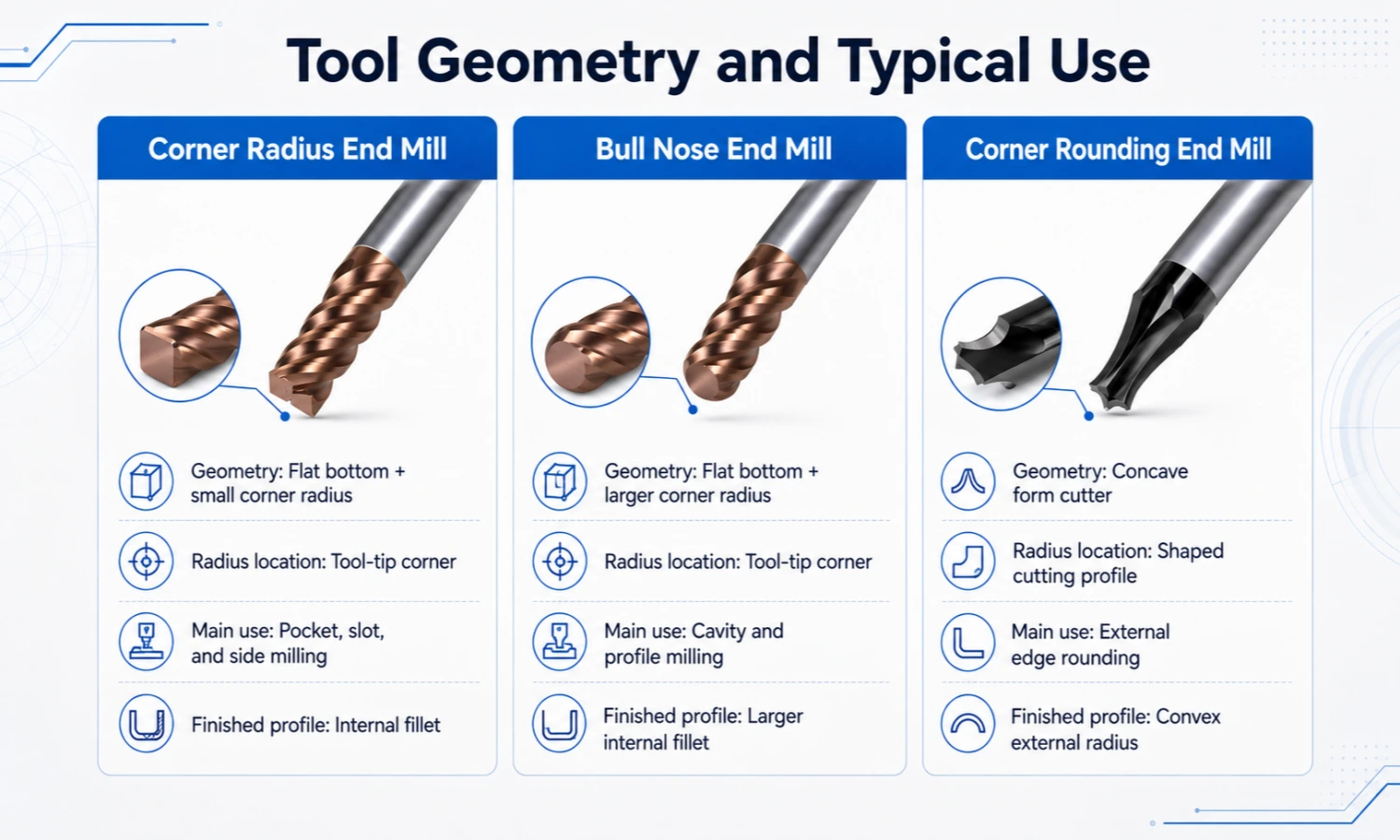
Концевые фрезы с угловым радиусом и концевые фрезы с закругленной головкой обычно имеют плоское или почти плоское дно.. Их радиус находится между нижней и боковыми режущими кромками.. Поэтому, оба инструмента могут выполнять общее фрезерование, создавая внутреннее скругление или закругленный переход..
Концевая фреза для закругления углов отличается от других.. Имеет вогнутый профиль режущей формы, который убирает острый внешний угол и создает выпуклый радиус на кромке заготовки..
Поскольку поставщики могут использовать разные системы именования., покупатели должны проверить геометрию фрезы, размеры, и требуемый готовый профиль вместо того, чтобы полагаться только на название продукта.
Угловой радиус против закругления угла: Быстрый ответ
Сравнение радиуса угла и закругления угла, Концевая фреза с угловым радиусом имеет плоское или почти плоское дно с радиусом на углу инструмента.. Концевая фреза с закругленной головкой обычно имеет аналогичную геометрию., хотя некоторые поставщики используют это название для фрезы с более заметным радиусом угла..
Концевая фреза для закругления углов использует вогнутый профиль резания для формирования выпуклого радиуса на доступной внешней кромке заготовки..
Почему эти названия резцов часто путают?
Разные производители не всегда используют одну и ту же терминологию..
Некоторые поставщики используют «Концевая фреза с бычьим концом» и «Концевая фреза с угловым радиусом» как взаимозаменяемые названия.. Others use “bull nose” for cutters with a larger or more visible tool-corner radius. Однако, there is no globally accepted radius value that separates the two terms.
Corner Rounding End Mills are easier to distinguish because they normally have a shaped concave profile and a different machining purpose.
Поэтому, focus on three questions:
- Where is the radius located on the cutter?
- What profile will it produce on the workpiece?
- Is the operation general milling or external edge forming?
How to Identify Each Cutter from a Tool Photo or Catalog
Product names may be inconsistent, but cutter geometry usually provides a clearer answer.
Check the Bottom Geometry
A Corner Radius or Bull Nose End Mill normally keeps a flat or nearly flat central area at the tool tip. Радиус появляется там, где нижняя режущая кромка встречается с боковой режущей кромкой..
Из-за этой геометрии, фреза все еще может выполнять обработку карманов, боковое фрезерование, долбление, и другие распространенные операции концевого фрезерования.
Ищите профиль вогнутой формы.
Концевая фреза для закругления углов имеет заметно вогнутый профиль резания.. Некоторые конструкции включают пилотную или уменьшенную переднюю часть., в то время как другие используют другую структуру головы.
Сформированная режущая кромка образует выпуклый радиус на внешней кромке заготовки..
Не путайте бычий нос со сферическим носом.
Концевая фреза с закругленной головкой обычно имеет плоскую или почти плоскую центральную часть., с радиусом, расположенным в углу инструмента.
Концевая фреза со сферической головкой имеет полностью закругленный или полусферический наконечник для изогнутых поверхностей., контуры формы, и трехмерная отделка.
Для детального сравнения, прочитайте наш Концевая фреза с бычьим носом и концевая фреза со сферическим носом гид.
Что такое концевая фреза с угловым радиусом?
Концевая фреза с угловым радиусом обычно представляет собой концевую фрезу с плоским дном и закругленным переходом между нижней и боковыми режущими кромками..
Радиус удаляет резкое пересечение между этими режущими кромками.. Как результат, угол может стать прочнее и менее чувствительным к сколам, чем полностью острая концевая фреза с квадратным концом.
Типичная геометрия
Общая конструкция включает в себя:
- Плоское или почти плоское дно.
- Спиральные или прямые режущие кромки
- Радиус в нижнем углу
- Две или более флейты
- Твердый сплав, Быстрорежущая сталь, или другой подходящий инструментальный материал
Радиус принадлежит кончику инструмента. Это не полностью вогнутая форма вокруг режущей головки..
Типичные применения
Концевые фрезы с угловым радиусом обычно используются для:
- Карман, слот, и боковое фрезерование
- Обработка полости пресс-формы
- Профильное фрезерование
- Черновая обработка, получистовая обработка, и отделка
- Обработка внутренних галтелей
- Общее фрезерование на станках с ЧПУ с усиленным углом инструмента
Они особенно полезны, когда для детали требуется плоская обработанная поверхность с закругленным внутренним переходом..
Когда вам следует выбрать один?
Выбирайте этот резак, если для чертежа требуется плоское или почти плоское дно., внутренний угловой радиус, и более прочный угол инструмента, чем у фрезы с острым квадратным концом.
Радиус, диаметр фрезы, длина резки, и зазор должен по-прежнему соответствовать геометрии заготовки.
Что такое концевая фреза с бычьим концом?
Концевая фреза с закругленным концом также имеет радиус между нижней и боковыми режущими кромками.. Поэтому, многие поставщики рассматривают его как разновидность концевой фрезы с угловым радиусом.
В некоторых линейках продукции, «бычий нос» описывает фрезу с большим или более заметным угловым радиусом.. Тем не менее, эта практика именования не универсальна.
Типичная геометрия
Концевая фреза с закругленной головкой обычно имеет:
- Ровная или почти плоская центральная часть.
- Закругленный угол инструмента
- Более прочная угловая геометрия, чем у фрезы с острым квадратным концом.
- Форма, подходящая для обработки полостей и профилей.
В отличие от сферической концевой фрезы, обычно в центре остается плоская или почти плоская область..
Типичные применения
Концевые фрезы с бычьей головкой обычно используются для:
- Фрезерование полости формы и профиля
- Черновая и получистовая обработка
- Большие внутренние галтели
- Контурная обработка
- Операции, требующие более прочного угла инструмента
Фреза может удалять материал с элементов с плоским или почти плоским дном, создавая при этом закругленный внутренний переход..
Когда вам следует выбрать один?
Концевая фреза с закругленным концом может подойти, когда деталь требует внутреннего скругления., заметный радиус угла, и прочный инструментальный уголок для черновой обработки, получистовая обработка, или профильное фрезерование.
Для плоскодонного фрезерования с усиленным уголком инструмента., просмотреть наш Концевая фреза с бычьим носом.
Что такое концевая фреза для закругления углов?
Концевая фреза для закругления углов — это фреза, предназначенная для обработки закругленного профиля на внешней кромке заготовки..
Его режущая кромка имеет вогнутый радиус.. Когда фреза движется вдоль доступного края, сформированный профиль убирает острый угол и создает выпуклый радиус.
Вогнутый профиль для резки формы
Вогнутый профиль резки является наиболее ярким отличительным признаком..
Например, фреза R2,5 может быть рассчитана на получение внешнего радиуса примерно R2,5.. Однако, конечный профиль также зависит от геометрии фрезы, положение машины, закончиться, и условия обработки.
Некоторые конструкции включают пилотную или уменьшенную переднюю часть.. Другие этого не делают. Поэтому, Покупатели должны подтвердить полные размеры перед заказом.
Типичные применения
Концевые фрезы для закругления углов в основном используются для:
- Скругление острых внешних кромок
- Создание выпуклых краевых радиусов
- Отделочная пластина и края детали
- Создание декоративных или функциональных кромочных профилей
- Индивидуальные операции формирования кромок
Обычно их не выбирают для фрезерования карманов., долбление, или общая обработка плоского дна.
Когда вам следует выбрать один?
Выбирайте эту фрезу, если для чертежа требуется выпуклый радиус на внешней кромке, а не внутреннее скругление..
Для обработки закругленного профиля на внешней кромке заготовки., просмотреть наш Концевая фреза для закругления углов.
Руководство по быстрому выбору резака
Разницу в радиусе угла и закруглении углов становится легче понять, если сравнить требуемый профиль заготовки..
| Требуемый профиль заготовки или операция | Рекомендуемый резак |
| Карман с плоским дном и небольшой внутренней галочкой. | Концевая фреза углового радиуса |
| Полость или профиль с более сильным закругленным углом инструмента | Концевая фреза с бычьим носом |
| Выпуклый радиус на доступном внешнем крае | Концевая фреза для закругления углов |
| Полностью изогнутая поверхность или 3D-контурная обработка. | Шариковая концевая фреза |
| Угловая стена, черновая поверхность, или коническая полость | Коническая концевая фреза |
Концевая фреза с закругленным концом и концевая фреза с угловым радиусом могут иметь одинаковую геометрию., в зависимости от системы наименования поставщика. Поэтому, подтвердить чертеж инструмента, радиус, диаметр фрезы, и необходимый готовый профиль перед заказом.
Как выбрать правильную радиусную фрезу
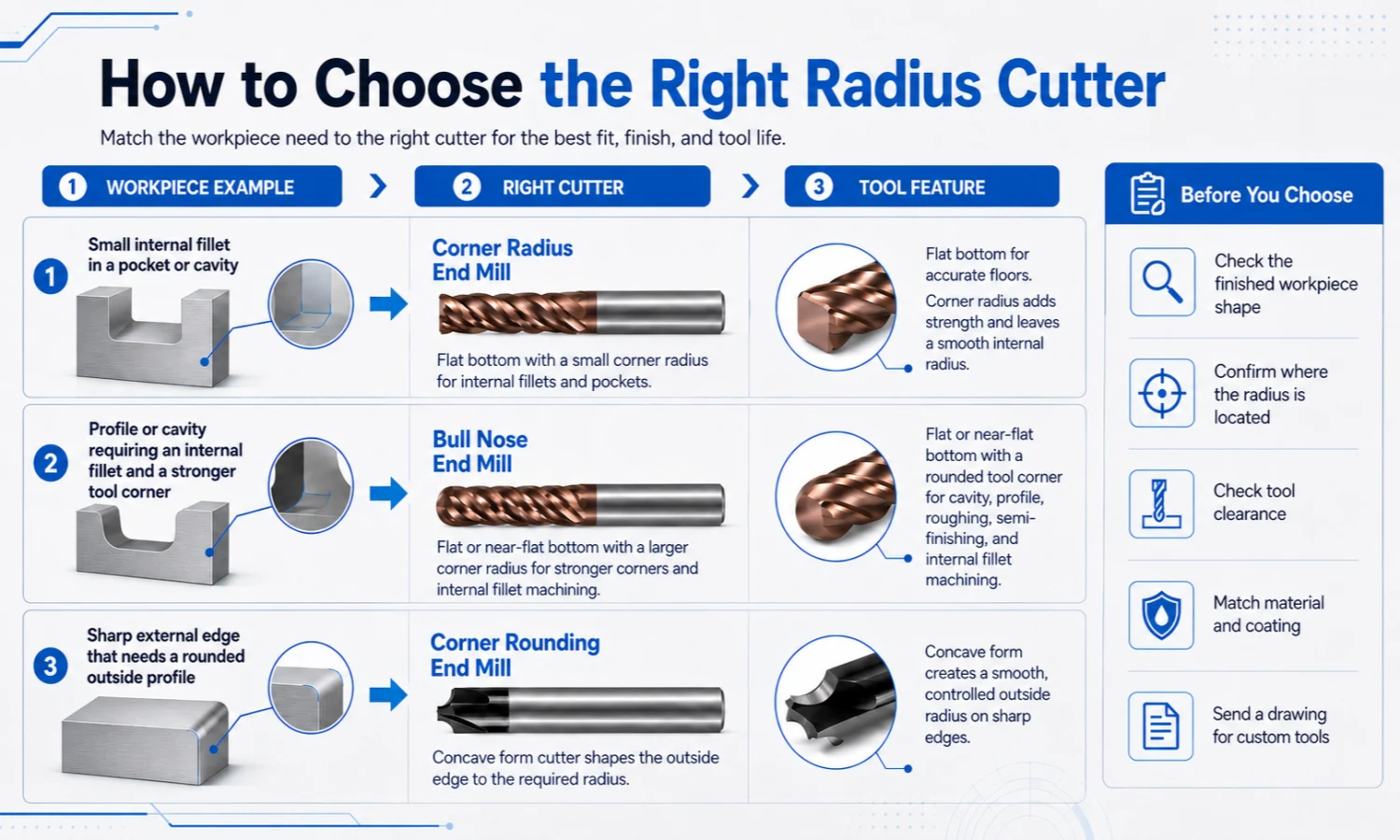
Правильный выбор фрезы зависит в первую очередь от формы готовой заготовки.. После определения профиля, проверь радиус, позиция обработки, зазор инструмента, материал, и операция резки.
Проверьте форму готовой заготовки
Используйте окончательный профиль детали в качестве первой направляющей.:
- Внутреннее галтели в плоскодонной полости: Угловой радиус или концевая фреза с бычьей головкой
- Выпуклый радиус на внешней кромке: Концевая фреза для закругления углов
- Прямоугольный край: Фреза для снятия фаски
- Коническая стена или угол уклона: Конический резак
- Полностью изогнутая 3D-поверхность: Шариковая концевая фреза
Это различие предотвращает многие ошибки при выборе фрезы..
Подтвердите требуемый радиус и размеры инструмента.
Радиус фрезы должен соответствовать чертежу детали.. Однако, одного радиуса недостаточно.
Также подтвердите:
- Диаметр фрезы или головки
- Диаметр хвостовика
- Резка и общая длина
- Количество флейт
- Досягаемость инструмента
- Близлежащие стены, плечи, и приспособления
- Материал заготовки
Фреза может иметь правильный радиус, но все равно мешать другому элементу..
Рассмотрим операцию фрезерования
Определите, является ли операция черновой., получистовая обработка, отделка, карманное фрезерование, обработка полостей, профильное фрезерование, или формирование кромки.
Концевые фрезы углового радиуса и сферические концевые фрезы могут выполнять несколько общих операций фрезерования.. Концевая фреза для закругления углов выполняет более специализированную операцию формирования кромки..
Сопоставьте инструмент с материалом заготовки
Материал влияет на марку твердого сплава, геометрия флейты, покрытие, скорость резания, Норма подачи, и стратегия охлаждающей жидкости.
Сталь, нержавеющая сталь, алюминий, copper, чугун, и закаленной стали формы могут потребоваться различные конструкции фрез.. Поэтому, при запросе рекомендации укажите точный материал и твердость.
Отправить чертеж специальной геометрии
2D или 3D чертеж особенно полезен для глубоких шагов., узкие плечи, ограниченный доступ, прилегающие стены, несколько радиусов, прерывистая резка, и нестандартные профили.
Чертеж помогает поставщику оценить диаметр фрезы., досягаемость инструмента, зазор шеи, и сформированный профиль перед производством.
Распространенные ошибки выбора
Выбор только по названию продукта
Концевая фреза с закругленным концом от одного поставщика может быть указана как концевая фреза с угловым радиусом у другого..
Поэтому, сравните чертеж инструмента, диаметр фрезы, радиус, нижняя геометрия, и дизайн флейты.
Относитесь к каждой узкой режущей головке как к конической фрезе.
Рельеф для флейты, зазор шеи, или сформированная геометрия может сделать часть фрезы более узкой. Однако, это не значит, что это коническая концевая фреза.
Настоящая коническая фреза имеет диаметр резания, который постепенно меняется вдоль режущей части..
Для угловых стен, черновые поверхности, и конические полости, просмотреть наш Конический резак.
Игнорирование зазора инструмента
Форморез может иметь широкую головку., уменьшенная шея, или пилотный раздел. Поэтому, проверьте близлежащие плечи, стены, светильники, и характеристики детали перед обработкой.
Стандартные и специальные варианты радиусных фрез
Стандартные фрезы охватывают множество распространенных применений.. Однако, может потребоваться специальный инструмент, если деталь имеет ограниченный зазор, особый радиус, или необычные требования к материалам.
Доступные варианты могут включать в себя:
- Метрические и дюймовые размеры радиуса
- Два-, три-, четыре-, или конструкции с несколькими канавками
- Режущие кромки с покрытием и без покрытия
- Стандартный или нестандартный диаметр хвостовика
- Короткие и длинные конфигурации
- Нестандартный диаметр фрезы или головки
- Диаметры направляющих, где это применимо
- Уменьшенные шейки и специальный зазор
- Марки твердого сплава и покрытия для конкретного применения
Изображения продуктов и опубликованные размеры могут использоваться в качестве справочных материалов.. Однако, окончательная геометрия, размеры, tolerances, покрытие, Детали производства должны соответствовать подтвержденному чертежу и предложению..
Дополнительные стандартные и индивидуальные решения для фрезерования, просмотреть наш Твердосплавная фреза диапазон.
Информация, которую необходимо подтвердить перед заказом
Прежде чем запросить предложение, подтвердите как можно больше следующей информации:
- Требуемый готовый профиль заготовки
- Внутреннее скругление или внешний радиус кромки
- Требуемый размер радиуса
- Диаметр фрезы или головки
- Диаметр хвостовика
- Резка и общая длина
- Ограничения на доступ к инструментам
- Материал заготовки и твердость
- Тип станка и держателя
- Требуемое количество
- 2D или 3D рисунок
Эти данные помогают определить, подходит ли стандартный инструмент или требуется специальный резак..
Часто задаваемые вопросы
Является ли концевая фреза с закругленной головкой такой же, как концевая фреза с угловым радиусом??
Во многих продуктовых системах, термины пересекаются. Оба обычно описывают плоскую или почти плоскую концевую фрезу с радиусом на углу инструмента..
Некоторые производители используют «бычий нос» для более заметного радиуса.. Однако, не существует универсального разделяющего значения, поэтому проверьте фактическую геометрию и размеры.
В чем разница между угловым радиусом и концевой фрезой для закругления углов?
Концевая фреза с угловым радиусом имеет радиус между нижней и боковыми режущими кромками.. Он может выполнять общее фрезерование при выполнении внутреннего скругления..
Концевая фреза для закругления углов имеет вогнутый профиль режущей формы.. В основном он создает выпуклый радиус на внешней кромке заготовки..
Какой резак следует использовать для получения внешнего закругленного края?
Концевая фреза для закругления углов обычно является правильным выбором для доступной внешней кромки.. Однако, радиус, диаметр головки, пилотная структура, очистка, и геометрия заготовки еще должна быть подтверждена.
Какую фрезу следует использовать для скругления полости формы??
Обычно более подходят угловые фрезы или концевые фрезы с закругленной головкой.. Окончательный выбор зависит от глубины полости., требуемый радиус, surface finish, припуск на черновую обработку, и стратегия обработки.
Могут ли эти резаки быть настроены??
Да. Пользовательские параметры могут включать радиус, диаметр фрезы, диаметр хвостовика, длина инструмента, конфигурация флейты, марка твердого сплава, покрытие, пилотная структура, и специальный допуск.
Чертеж рекомендуется использовать для нестандартных профилей или ограниченного пространства обработки..
Отправьте чертеж радиусной фрезы
На практике, Решение о радиусе угла или закруглении угла зависит от готового профиля, радиус местоположения, зазор инструмента, материал заготовки, и операции механической обработки. Также следует проверить геометрию бычьего носика, поскольку терминология поставщиков может отличаться..