 หัวกัดที่มีความแม่นยํา,เครื่องมือตัดสําหรับเครื่องจักรกลซีเอ็นซีทุกวัสดุ

ดอกเอ็นมิลล์ที่ดีที่สุดสำหรับเหล็กกล้าไร้สนิมคืออะไร?
การเลือก ดอกเอ็นมิลล์ที่ดีที่สุดสำหรับเหล็กกล้าไร้สนิม ไม่ง่ายเหมือนการเลือกจำนวนขลุ่ยหนึ่งอัน, การเคลือบ, หรือรูปทรงของเครื่องตัด. เครื่องมือที่เหมาะสมจะขึ้นอยู่กับเกรดสแตนเลส, การทำงานของเครื่องจักร, รูปทรงของชิ้นงาน, ความแข็งแกร่งของเครื่องจักร, การอพยพของชิป, ส่วนที่ยื่นออกมาของเครื่องมือ, และพื้นผิวที่ต้องการ.
สแตนเลสหลายชนิด, โดยเฉพาะเกรดออสเทนนิติกทั่วไป, มีค่าการนำความร้อนค่อนข้างต่ำและมีแนวโน้มที่จะแข็งตัวในระหว่างการตัดเฉือน. การตัดด้วยความร้อนและความไม่เสถียรจึงเพิ่มความต้องการให้กับคมตัด, การเคลือบ, เรขาคณิตของเครื่องมือ, และการตั้งค่าเครื่อง.
ไม่มีดอกเอ็นมิลตัวใดที่เหมาะกับการใช้งานกับเหล็กสเตนเลสทุกประเภท.
สำหรับงานกัด CNC หลายประเภท, ก ดอกเอ็นมิลโซลิดคาร์ไบด์ เป็นจุดเริ่มต้นทั่วไปเนื่องจากคาร์ไบด์มีความแข็งแกร่งสูง, ความต้านทานการสึกหรอ, และความเสถียรของคมตัดภายใต้สภาวะการตัดเฉือนที่เหมาะสม. อย่างไรก็ตาม, เครื่องตัดขั้นสุดท้ายยังคงต้องตรงกับชิ้นงานและการทำงานจริง.
คู่มือการเลือกดอกเอ็นมิลล์สแตนเลสฉบับย่อ
| ความต้องการเครื่องจักร | ประเภทเครื่องมือที่ต้องพิจารณา | ข้อกังวลในการคัดเลือกหลัก |
|---|---|---|
| พื้นผิวเรียบและการกัดข้าง | ดอกเอ็นมิลล์แบบแบน | ความมั่นคง, การควบคุมชิป, และความแข็งแกร่งของขอบ |
| พื้นผิวโค้งหรือสามมิติ | ดอกเอ็นมิลล์บอลโนส | ความแม่นยำของรูปร่างและการตกแต่งพื้นผิว |
| มุม R ภายในหรือภายนอก | ดอกกัดเอ็นมิลรัศมีมุม | ความแข็งแกร่งของมุมและลดความเสียหายของขอบ |
| การกำจัดวัสดุหนัก | ดอกกัดหยาบ | การอพยพของชิป, ความแข็งแกร่ง, และตัดภาระ |
| การทำโปรไฟล์ทั่วไป | ดอกเอ็นมิลล์โซลิดคาร์ไบด์ | การนับขลุ่ย, การเคลือบ, geometry, และความมั่นคง |
| การกัดที่มีประสิทธิภาพสูงขึ้น | การออกแบบเกลียว/พิตช์แบบแปรผันอาจได้รับการพิจารณา | การควบคุมการสั่นสะเทือนและความเสถียรของเครื่องจักร |
ใช้ตารางนี้เป็นจุดเริ่มต้นแทนที่จะเป็นกฎตายตัว. เครื่องตัดที่ต้องการอาจเปลี่ยนแปลงได้เมื่อเกรดสแตนเลส, ความลึกของการตัด, การว่าจ้าง, สภาพเครื่อง, หรือการเปลี่ยนแปลงรูปทรงของชิ้นงาน.
หากคุณทราบข้อกำหนดในการตัดเฉือนของคุณแล้ว และต้องการตรวจสอบตัวเลือกมาตรฐานและแบบกำหนดเองที่มีอยู่, ดูของเรา ดอกเอ็นมิลสำหรับสเตนเลส.
เลือกประเภทดอกเอ็นมิลล์ตามการทำงานของเครื่องจักร
โรงงานของเราไม่ถือว่าการตัดเฉือนสแตนเลสเหมือนกับการใช้เครื่องตัดแบบอยู่กับที่. ดอกเอ็นมิลล์แบบแบน, ดอกเอ็นมิลจมูกบอล, ดอกเอ็นมิลล์รัศมีมุม, และดอกกัดหยาบนั้นใช้เพื่อวัตถุประสงค์ในการตัดเฉือนที่แตกต่างกัน.
Therefore, โดยทั่วไปควรระบุคุณลักษณะการตัดเฉือนก่อนที่จะเลือกจำนวนร่องหรือการเคลือบ.
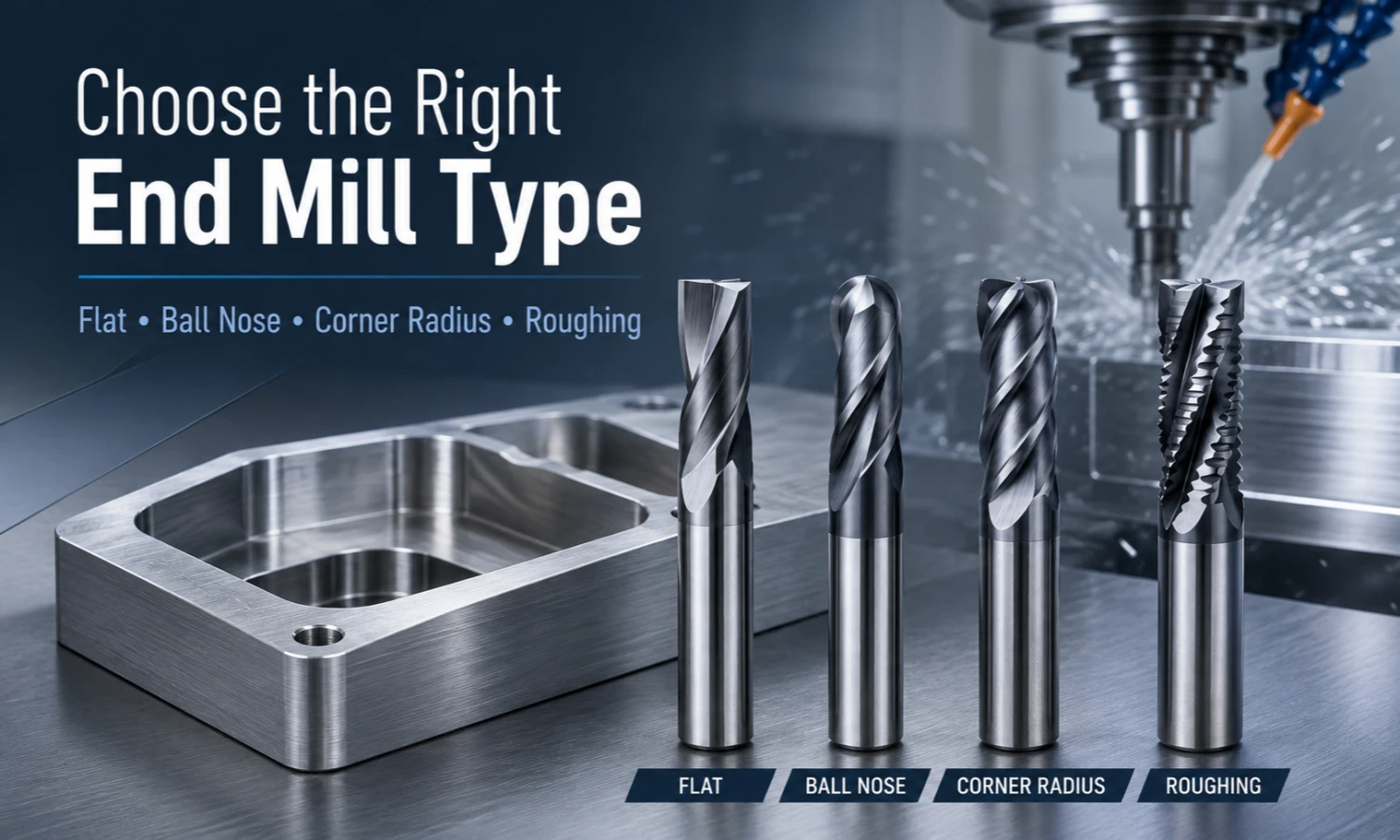
ดอกเอ็นมิลแบบแบนสำหรับพื้นผิวเรียบและการกัดข้าง
โดยทั่วไปจะพิจารณาดอกเอ็นมิลล์แบบแบน:
- การกัดข้าง
- การกัดบ่า
- การกลึงด้านล่างแบบแบน
- การทําโปรไฟล์
- การดำเนินการกัดร่องที่เหมาะสม
หากชิ้นงานต้องการผนังตรง, ก้นแบน, หรือไหล่เหลี่ยม, โดยทั่วไปแล้วปลายตัดเรียบจะมีความเหมาะสมมากกว่ารูปทรงปลายมน.
สำหรับข้อมูลจำเพาะและตัวเลือกที่มี, ดูของเรา ดอกเอ็นมิลล์แบบแบน.
ดอกเอ็นมิลปลายมนสำหรับพื้นผิวโค้งและ 3 มิติ
ดอกเอ็นมิลหัวมนจะใช้เป็นหลักเมื่อหัวกัดต้องเป็นไปตามรูปทรงโค้งหรือสามมิติ.
การใช้งานทั่วไป ได้แก่ แม่พิมพ์, ฟันผุโค้ง, 3การทำโปรไฟล์ D, การตกแต่งรูปร่าง, และพื้นผิวที่ซับซ้อน.
ปลายตัดที่โค้งมนเป็นไปตามการเปลี่ยนแปลงมุมพื้นผิวอย่างเป็นธรรมชาติมากกว่าคัตเตอร์ปลายแบน. อย่างไรก็ตาม, เมื่อตัดเฉือนสแตนเลส, รูปร่างส่วนท้ายเป็นเพียงส่วนหนึ่งของการเลือกเท่านั้น. ความแข็งแกร่งของเครื่องมือ, การเคลือบ, การออกแบบขลุ่ย, ความยาวตัด, และยังต้องพิจารณาให้เสร็จสิ้นตามที่ต้องการ.
สำหรับตัวเลือกการตัดเฉือนพื้นผิวโค้ง, ดูของเรา ดอกเอ็นมิลล์บอลโนส.
ดอกเอ็นมิลล์รัศมีมุมสำหรับมุม R และคมตัดที่แข็งแกร่งยิ่งขึ้น
ดอกเอ็นมิลล์รัศมีมุม, หรือที่เรียกกันทั่วไปว่าดอกเอ็นมิลล์จมูกวัว, ผสมผสานปลายตัดแบนเข้ากับรัศมีที่มุมด้านนอก.
รัศมีสามารถเสริมมุมตัดได้เมื่อเทียบกับมุม 90 องศาที่คม. นอกจากนี้ยังเหมาะสมเมื่อแบบร่างชิ้นงานระบุรัศมี R ภายใน.
สำหรับการใช้งานสแตนเลสที่มีความต้องการสูง, รัศมีจริง, เส้นผ่านศูนย์กลางของเครื่องตัด, ตัดภาระ, และกลยุทธ์การตัดเฉือนควรได้รับการประเมินร่วมกัน.
สำหรับตัวเลือกรัศมีและเรขาคณิตแบบกำหนดเอง, ดูของเรา ดอกเอ็นมิลล์บูลโนส.
ดอกกัดหยาบสำหรับการกำจัดวัสดุหนัก
เมื่อเป้าหมายหลักคือการขจัดวัสดุจำนวนมากแทนที่จะสร้างพื้นผิวขั้นสุดท้าย, อาจพิจารณาดอกกัดหยาบได้.
หัวกัดหยาบมุ่งเน้นไปที่การกำจัดวัสดุ, การสร้างชิป, การจัดการการตัดโหลด, และความเสถียรของกระบวนการ. การออกแบบที่เหมาะสมยังขึ้นอยู่กับเกรดสแตนเลสด้วย, ค่าเผื่อการตัดเฉือน, เส้นผ่านศูนย์กลางของเครื่องตัด, ความลึกของการตัด, การอพยพของชิป, และความแข็งแกร่งของเครื่องจักร สำหรับงานกำจัดวัสดุหนัก, ดูของเรา ดอกกัดหยาบ.
เหตุใดจึงนิยมใช้โซลิดคาร์ไบด์กับสแตนเลส
ก ดอกเอ็นมิลล์คาร์ไบด์สำหรับสแตนเลส เป็นเรื่องธรรมดาในการตัดเฉือน CNC สมัยใหม่ เนื่องจากโซลิดคาร์ไบด์มีคุณสมบัติที่มีประโยชน์ภายใต้สภาวะการตัดเฉือนที่ท้าทาย.
โซลิดคาร์ไบด์สามารถนำเสนอได้:
- มีความแข็งแกร่งสูง
- ทนต่อการสึกหรอได้ดี
- เสถียรภาพที่ล้ำหน้า
- ความต้านทานต่ออุณหภูมิการตัดที่สูงขึ้น
- ความเข้ากันได้กับรูปทรงการตัดและระบบการเคลือบที่แตกต่างกัน
ลักษณะเหล่านี้มีประโยชน์เนื่องจากสแตนเลสสามารถสร้างความร้อนได้มากและอาจแข็งตัวเมื่อการตัดไม่มั่นคงหรือขอบเริ่มเสียดสีแทนการตัดอย่างมีประสิทธิภาพ.
อย่างไรก็ตาม, การเลือกโซลิดคาร์ไบด์ไม่ได้ทำให้กระบวนการเลือกเครื่องมือเสร็จสิ้น. เส้นผ่านศูนย์กลางคัตเตอร์, ความยาวตัด, การนับขลุ่ย, การเคลือบ, geometry, ส่วนที่ยื่นออกมาของเครื่องมือ, สภาพเครื่อง, และการดำเนินการตัดเฉือนยังต้องมีการประเมินร่วมกัน.
สำหรับตัวเลือกเครื่องมือคาร์ไบด์ที่มีอยู่, ดูของเรา เครื่องตัดดอกเอ็นมิลล์คาร์ไบด์.
สำหรับกระบวนการเลือกเครื่องมือคาร์ไบด์ที่กว้างขึ้น, อ่าน วิธีการเลือกคัตเตอร์ดอกเอ็นมิลล์คาร์ไบด์.
วิธีการเลือกจำนวนขลุ่ย: การอพยพของเศษเทียบกับความแข็ง
คำถามค้นหาที่พบบ่อยคือ: ดอกเอ็นมิลล์ควรมีกี่ฟันสำหรับเหล็กกล้าไร้สนิม?
ไม่มีคำตอบที่เป็นสากล.
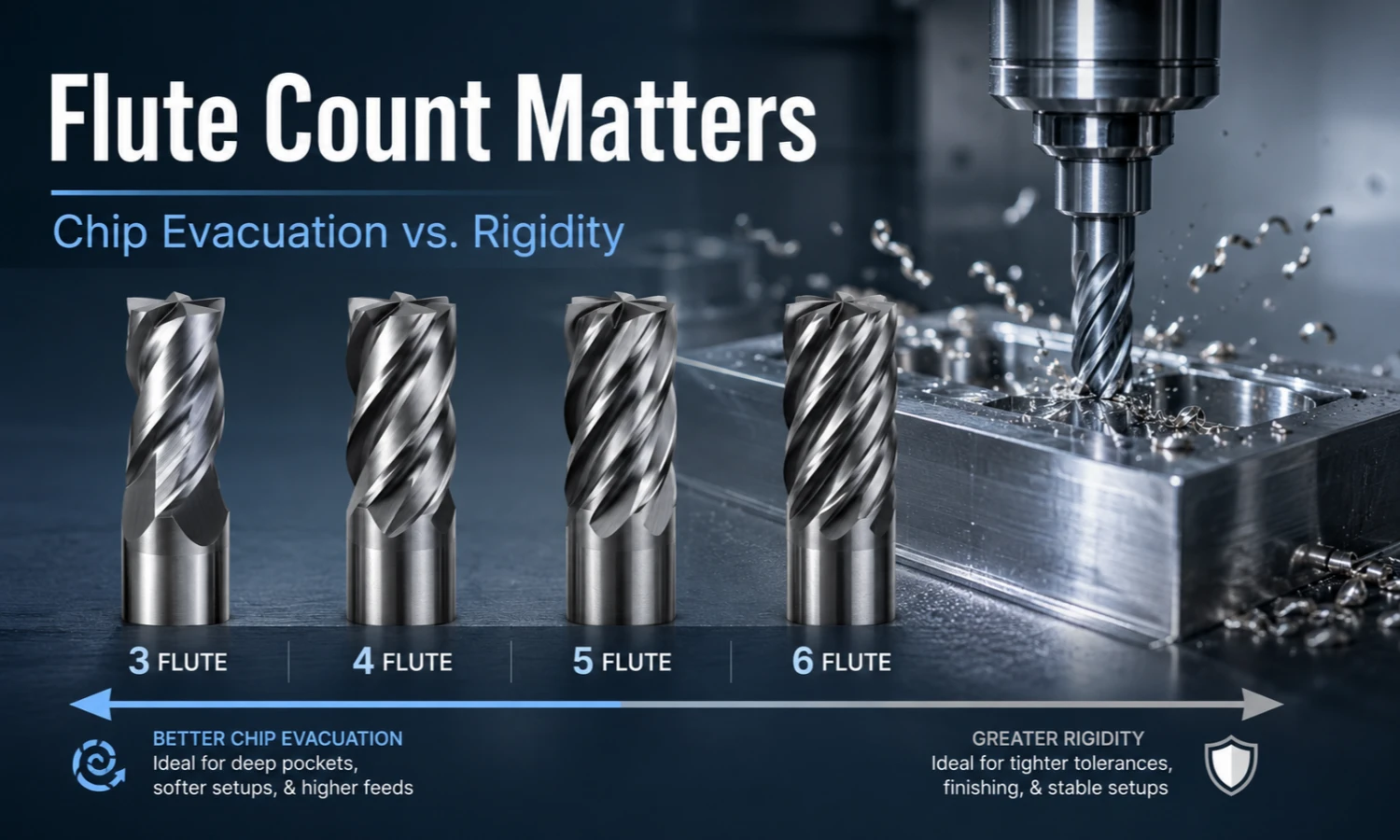
จำนวนขลุ่ยจะเปลี่ยนทั้งจำนวนคมตัดและพื้นที่ว่างสำหรับเศษ. โดยทั่วไปจำนวนร่องฟันที่ต่ำกว่าจะทำให้มีเนื้อที่ชิปมากขึ้น, ในขณะที่การนับขลุ่ยที่สูงขึ้นจะทำให้มีหน้าสัมผัสในการตัดมากขึ้นและมักใช้แกนที่ค่อนข้างแข็งแรงกว่า.
เครื่องชั่งที่ถูกต้องขึ้นอยู่กับการทำงาน, เส้นผ่านศูนย์กลางของเครื่องตัด, การว่าจ้าง, ปริมาณชิป, ความแข็งแกร่งของเครื่องจักร, และจำเป็นต้องทำให้เสร็จ.
3-ดอกกัดเอ็นมิลฟลุต
การออกแบบสามร่องฟันทำให้มีพื้นที่ร่องค่อนข้างกว้าง และอาจพิจารณาได้เมื่อการคายเศษเป็นส่วนสำคัญของการใช้งาน.
อย่างไรก็ตาม, การนับขลุ่ยเพียงอย่างเดียวไม่ได้กำหนดประสิทธิภาพ. เรขาคณิตเกลียว, การออกแบบหลัก, การสู้รบในแนวรัศมี, ความลึกของการตัด, และต้องพิจารณาเส้นผ่านศูนย์กลางของเครื่องตัดด้วย.
4-ดอกกัดเอ็นมิลฟลุต
สมดุลระหว่างการนับที่ล้ำสมัย, ความแข็งแกร่งหลัก, พื้นที่ชิป, และความคล่องตัวในการตัดเฉือนทั่วไป.
สิ่งเหล่านี้อาจได้รับการพิจารณาสำหรับการกัดข้าง, การทําโปรไฟล์, การกัดไหล่, และการทำงานของ CNC อื่นๆ เมื่อรูปทรงเครื่องมือและการตั้งค่ามีความเหมาะสม.
ดูของเรา 4 ดอกเอ็นมิลล์ขลุ่ย สำหรับข้อมูลจำเพาะและตัวเลือกการใช้งานที่มีอยู่.
5-ดอกกัดเอ็นมิลฟลุต
หัวกัดแบบห้าร่องมักปรากฏในงานสเตนเลสประสิทธิภาพสูง เนื่องจากคมตัดเพิ่มเติมจะมีประโยชน์เมื่อมีการควบคุมการเข้าปะทะและการคายเศษยังคงเพียงพอ.
อย่างไรก็ตาม, การเพิ่มจำนวนขลุ่ยยังช่วยลดพื้นที่ว่างสำหรับชิปอีกด้วย.
Therefore, ไม่ควรเลือกแบบ 5 ร่องเพียงเพราะชิ้นงานเป็นสแตนเลส. การเจาะรูลึก, ปริมาณชิปสูง, การอพยพมีจำกัด, เส้นผ่านศูนย์กลางของเครื่องตัด, และความแข็งแกร่งของเครื่องจักรอาจเปลี่ยนจำนวนขลุ่ยที่ต้องการ.
6-ดอกกัดเอ็นมิลฟลุต
ดอกเอ็นมิลล์แบบ 6 ฟันอาจได้รับการพิจารณาสำหรับการกัดข้างที่มีความเสถียร, การทําโปรไฟล์, กึ่งสำเร็จ, และการเก็บผิวละเอียดที่สามารถจัดการการคายเศษได้และหน้าสัมผัสการตัดที่มากขึ้นจะเป็นประโยชน์.
ไม่ควรถือเป็นหัวกัดสำหรับเก็บผิวละเอียดเท่านั้น หรือเป็นตัวเลือกอัตโนมัติสำหรับวัสดุที่แข็งกว่า. การออกแบบเครื่องตัดและกลยุทธ์การตัดเฉือนที่สมบูรณ์ยังคงมีความสำคัญ.
เพื่อการเปรียบเทียบจำนวนขลุ่ยที่กว้างขึ้น, อ่าน 2 ฟลุตกับ 4 ฟลุตกับ 6 ดอกเอ็นมิลล์ขลุ่ย.
การเคลือบผิวแบบใดที่เหมาะกับดอกเอ็นมิลล์สแตนเลส?
การเคลือบก็เป็นอีกหนึ่งส่วนสำคัญในการเลือก ดอกเอ็นมิลล์สำหรับสแตนเลส.
เครื่องมืออุตสาหกรรมสำหรับเหล็กกล้าไร้สนิมมักใช้ระบบการเคลือบทนความร้อนและการสึกหรอเช่น:
- อัลทิน
- อัลซีอาร์เอ็น
- TiAlN
- TiSiN หรือ TiAlSiN ในแอปพลิเคชันประสิทธิภาพสูงบางตัว
ขึ้นอยู่กับระบบการเคลือบและการใช้งาน, การเคลือบเหล่านี้อาจให้ประโยชน์ที่เกี่ยวข้องกับการทนความร้อน, ความต้านทานต่อการเกิดออกซิเดชัน, ความต้านทานการสึกหรอ, การควบคุมแรงเสียดทาน, และการป้องกันที่ล้ำสมัย.
อย่างไรก็ตาม, การเคลือบไม่ควรถูกอธิบายโดยอัตโนมัติว่าดีที่สุดสำหรับการใช้งานสแตนเลสทุกประเภท.
การเลือกการเคลือบก็ขึ้นอยู่กับด้วย:
- เกรดสแตนเลส
- อุณหภูมิการตัด
- การตัดเฉือนแบบเปียกหรือแบบแห้ง
- สารตั้งต้นคาร์ไบด์
- รูปทรงเรขาคณิตที่ล้ำสมัย
- การมีส่วนร่วมของคัตเตอร์
- กลยุทธ์การตัดเฉือน
ด้วยเหตุนี้, ควรเลือกการเคลือบเป็นส่วนหนึ่งของระบบเครื่องตัดที่สมบูรณ์ แทนที่จะเลือกตามชื่อการเคลือบเพียงอย่างเดียว.
การเปรียบเทียบเชิงลึกระหว่าง AlTiN, อัลซีอาร์เอ็น, TiAlN, และตัวเลือกการเคลือบอื่นๆ สงวนไว้เพื่อการเฉพาะที่ดีกว่า การเคลือบดอกเอ็นมิลล์ที่ดีที่สุดสำหรับเหล็กกล้าไร้สนิม แนะนำ.
ส่วนที่เป็นเกลียวแบบแปรผัน, มุมเกลียว, สนามแปรผัน, ความแข็งแกร่งและการพูดคุยพล่อยๆ
ที่ มุมเกลียวของดอกเอ็นมิลล์สำหรับสแตนเลส ส่งผลต่อการมีส่วนร่วมที่ล้ำสมัย, ทิศทางแรงตัด, การไหลของชิป, และพฤติกรรมการตัดเฉือน. อย่างไรก็ตาม, ไม่มีมุมเกลียวเดี่ยวที่ควรได้รับการปฏิบัติอย่างดีที่สุดในระดับสากลสำหรับการใช้งานสแตนเลสทุกประเภท.
รูปทรงเกลียวแบบแปรผันและระยะพิทช์แปรผันยังมักใช้ในดอกเอ็นมิลล์ประสิทธิภาพสูงอีกด้วย.
แทนที่จะปล่อยให้ทุกคมตัดจับชิ้นงานในช่วงเวลาซ้ำๆ กันทุกประการ, การออกแบบเกลียวแปรผันหรือระยะพิทช์ไม่เท่ากันจะเปลี่ยนจังหวะของแรงตัด. ในการใช้งานที่เหมาะสม, ซึ่งจะช่วยลดการสั่นสะเทือนและการพูดคุยซ้ำๆ ได้.
แต่ถึงอย่างไร, รูปทรงไม่สามารถแก้ไขการตั้งค่าการตัดเฉือนที่ไม่เสถียรได้ทุกครั้ง.
เมื่อเกิดการพูดคุยกัน, ควรประเมินทั้งระบบ, รวมทั้ง:
- ส่วนยื่นของเครื่องมือ
- สภาพของตัวจับยึดเครื่องมือ
- ความแข็งแกร่งของแกนหมุน
- การทำงาน
- เส้นผ่านศูนย์กลางคัตเตอร์
- การสู้รบตามแนวแกน
- การหมั้นในแนวรัศมี
- รูปทรงเรขาคณิตที่ล้ำสมัย
Therefore, ถือว่าเกลียวแปรผันหรือระยะพิทช์แปรผันเป็นส่วนหนึ่งของระบบการตัดเฉือนที่สมบูรณ์ แทนที่จะเป็นโซลูชันแบบสแตนด์อโลน.
จับคู่ดอกเอ็นมิลล์กับเกรดสเตนเลสทั่วไป
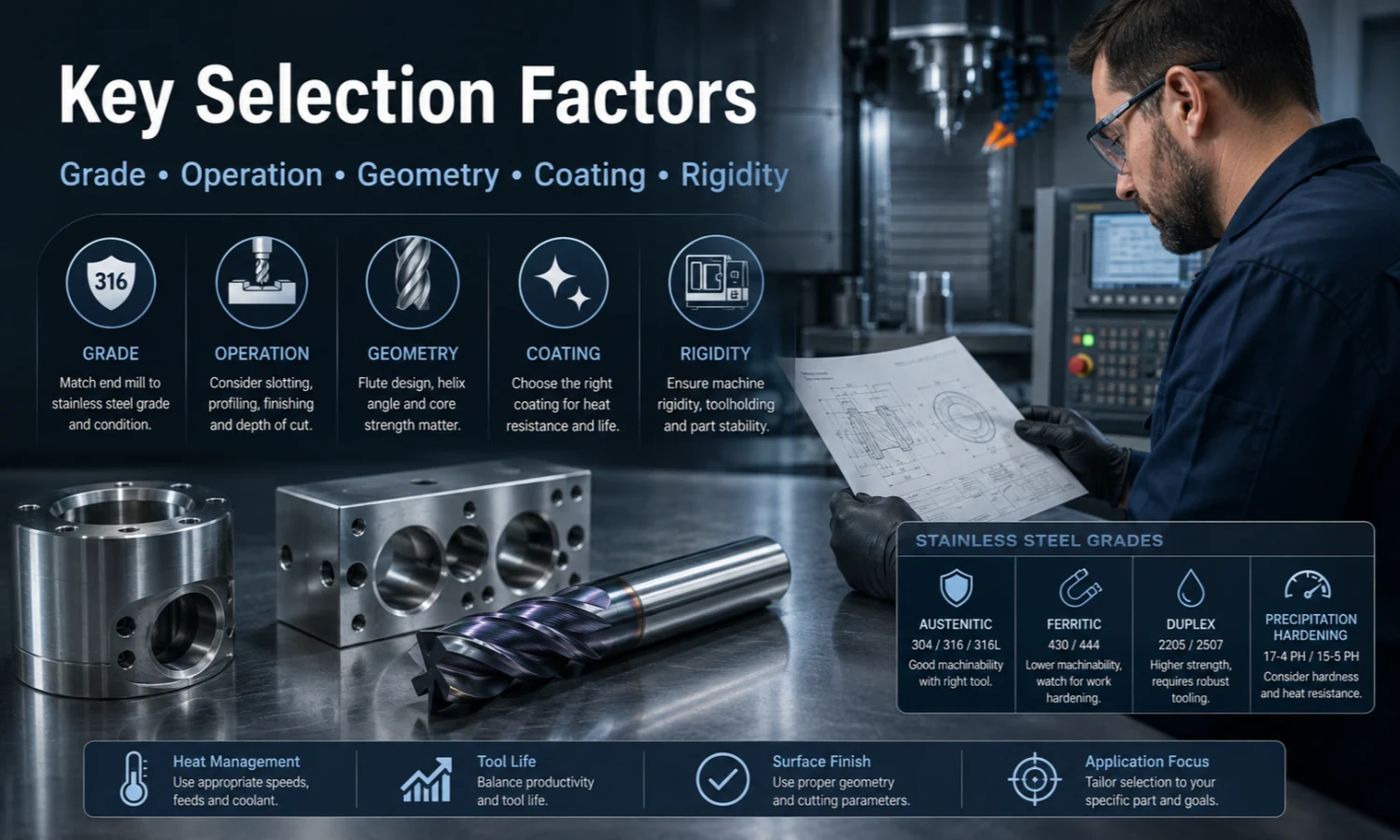
“เหล็กกล้าไร้สนิม” รวมถึงวัสดุที่มีพฤติกรรมการตัดเฉือนที่แตกต่างกัน.
แนวคิดหัวกัดที่คล้ายกันอาจใช้ได้กับหลายเกรด, แต่เป็นเรขาคณิตที่เหมาะสม, การเคลือบ, การนับขลุ่ย, และกลยุทธ์การตัดเฉือนยังสามารถเปลี่ยนแปลงได้.
| สแตนเลสเกรด | ลักษณะการตัดเฉือนทั่วไป | การพิจารณาเลือกดอกเอ็นมิลล์ |
|---|---|---|
| 303 | โดยทั่วไปแล้ว ตัดเฉือนได้ง่ายกว่าเกรดออสเทนนิติกหลายเกรด | รูปทรงของเครื่องตัดสมดุล, เสร็จ, และผลผลิต |
| 304 | เกรดทั่วไปมีแนวโน้มที่จะแข็งตัว | การตัดที่มั่นคง, คมตัดที่มีประสิทธิภาพ, และการเกิดเศษที่สม่ำเสมอ |
| 316 | วัสดุเหนียวที่สามารถสร้างความร้อนได้มาก | ความเสถียรของเครื่องมือ, การควบคุมความร้อน, และความต้านทานต่อการสึกหรอก็มีความสำคัญ |
| 17-4 พีเอช | พฤติกรรมการตัดเฉือนเปลี่ยนแปลงไปตามสภาวะการให้ความร้อน | พิจารณาความแข็งที่แท้จริง, ความแข็งแกร่งของเครื่องมือ, และตัดภาระ |
นี่เป็นข้อควรพิจารณาในการเลือกทั่วไปมากกว่าพารามิเตอร์การตัดคงที่.
ตัวอย่างเช่น, สองส่วนประกอบที่ทำมาจาก 304 สแตนเลสอาจต้องใช้ดอกเอ็นมิลล์ที่แตกต่างกัน หากอันหนึ่งต้องการการกัดร่องลึก ในขณะที่อีกอันต้องการการเก็บผิวละเอียดด้านเบาเท่านั้น.
เช่นเดียวกัน, ก 17-4 ส่วนประกอบ PH ไม่ควรได้รับการประเมินตามชื่อวัสดุเท่านั้น. สภาพการรักษาความร้อนและความแข็งจริงยังส่งผลต่อการเลือกเครื่องตัดอีกด้วย.
รายการตรวจสอบการเลือกดอกเอ็นมิลล์ที่ใช้งานได้จริงสำหรับเหล็กกล้าไร้สนิม
ก่อนที่จะเลือกดอกเอ็นมิลล์หรือขอใบเสนอราคา, ยืนยันข้อมูลต่อไปนี้.
1. สแตนเลสเกรด
ระบุเกรดที่แน่นอนทุกครั้งที่เป็นไปได้, เช่น 303, 304, 316, 17-4 พีเอช, หรือสเตนเลสอัลลอยด์อื่นที่ระบุ.
การอธิบายชิ้นงานว่าเป็น “สแตนเลส” เท่านั้น อาจไม่ได้ให้ข้อมูลเพียงพอสำหรับการประเมินเครื่องมือที่แม่นยำ.
2. การทำงานของเครื่องจักร
ยืนยันว่าจะใช้คัตเตอร์ในการเซาะร่องหรือไม่, การกัดข้าง, การทําโปรไฟล์, การหยาบ, ตกแต่ง, การแทง, หรือคอนทัวร์สามมิติ.
3. เรขาคณิตของชิ้นงาน
ระบุว่าคุณลักษณะเป็นแบบแบนหรือไม่, โค้ง, ไหล่, มุม R, โพรงลึก, หรือรูปร่างภายในหรือภายนอกอื่น ๆ.
ซึ่งจะช่วยพิจารณาว่าจะแบนหรือไม่, บอลโนส, รัศมีมุม, หรือควรพิจารณารูปทรงอื่นๆ ของเครื่องตัด.
4. ขนาดเครื่องมือที่จำเป็น
มิติที่มีประโยชน์ได้แก่:
- เส้นผ่านศูนย์กลางการตัด
- ความยาวขลุ่ย
- ความยาวโดยรวม
- เส้นผ่านศูนย์กลางก้าน
- รัศมีมุม, ถ้าจำเป็น
สำหรับการใช้งานที่ไม่ได้มาตรฐาน, ภาพวาดมักจะมีประโยชน์มากกว่าคำอธิบายที่เขียนยาวๆ.
5. การหยาบหรือการตกแต่ง
เครื่องมือที่เลือกสำหรับการขจัดวัสดุอย่างมีประสิทธิภาพอาจไม่ใช่หัวกัดแบบเดียวกับที่ใช้ในการผลิตผิวสำเร็จขั้นสุดท้าย.
6. ความแข็งแกร่งของเครื่องจักรและการตั้งค่า
สภาพเครื่อง, แกนหมุน, ที่ใส่เครื่องมือ, ส่วนที่ยื่นออกมาของเครื่องมือ, การทำงาน, และความมั่นคงของชิ้นงานล้วนส่งผลต่อประสิทธิภาพของเครื่องตัด.
หัวกัดคาร์ไบด์ชนิดแข็งไม่สามารถชดเชยการเคลื่อนที่ในตัวจับยึดหรือชิ้นงานได้.
7. การอพยพชิป
การคายเศษมีความสำคัญเป็นพิเศษในช่องลึก, กระเป๋า, พื้นที่เครื่องจักรแบบปิด, และการดำเนินงานที่มีการมีส่วนร่วมมากขึ้น.
ดังนั้นควรเลือกจำนวนร่องร่วมกับข้อกำหนดในการขจัดเศษ.
8. ความต้องการการตกแต่งพื้นผิว
การกัดหยาบและการเก็บผิวละเอียดขั้นสุดท้ายอาจต้องใช้การออกแบบหัวกัดที่แตกต่างกัน แม้ว่าจะตัดเฉือนสแตนเลสเกรดเดียวกันก็ตาม.
คำถามที่พบบ่อย
ดอกเอ็นมิลล์ที่ดีที่สุดสำหรับเหล็กกล้าไร้สนิมคืออะไร?
ไม่มีดอกเอ็นมิลล์ที่ดีที่สุดเพียงตัวเดียวสำหรับการใช้งานกับเหล็กสเตนเลสทุกประเภท. โซลิดคาร์ไบด์เป็นทางเลือกทั่วไป, แต่ควรเลือกคัตเตอร์สุดท้ายตามเกรดสแตนเลส, การทำงานของเครื่องจักร, รูปทรงของชิ้นงาน, การนับขลุ่ย, การเคลือบ, ความแข็งแกร่งของเครื่องจักร, การอพยพของชิป, และจำเป็นต้องทำให้เสร็จ.
ดอกเอ็นมิลล์โซลิดคาร์ไบด์จะตัดสแตนเลสหรือไม่?
Yes. ดอกเอ็นมิลล์โซลิดคาร์ไบด์ถูกนำมาใช้กันอย่างแพร่หลายสำหรับการตัดเฉือนเหล็กสแตนเลส เนื่องจากคาร์ไบด์ให้ความแข็งแกร่งสูง, ความต้านทานการสึกหรอ, และความเสถียรที่ล้ำหน้า. รูปทรงของเครื่องตัด, การเคลือบ, การออกแบบขลุ่ย, และสภาพการตัดเฉือนควรยังคงตรงกับการใช้งาน.
ฉันควรใช้ฟันสแตนเลสกี่ฟัน?
มันขึ้นอยู่กับการดำเนินการ. โดยทั่วไปร่องฟันที่น้อยลงจะทำให้มีเนื้อที่ชิปมากขึ้น, ในขณะที่ร่องฟันมากขึ้นจะให้คมตัดเพิ่มเติม และอาจปรับปรุงความแข็งแกร่งหรือประสิทธิภาพการเก็บผิวละเอียดภายใต้สภาวะที่เหมาะสม. เส้นผ่านศูนย์กลางคัตเตอร์, การว่าจ้าง, ปริมาณชิป, การทำงานของเครื่องจักร, และควรคำนึงถึงความแข็งแกร่งของเครื่องจักรด้วย.
การเคลือบผิวแบบใดดีที่สุดสำหรับดอกเอ็นมิลล์สแตนเลส?
ไม่มีการเคลือบที่ดีที่สุดที่เป็นสากล. อัลทิน, อัลซีอาร์เอ็น, TiAlN, และระบบการเคลือบทนความร้อนอื่น ๆ โดยทั่วไปจะได้รับการพิจารณาสำหรับการใช้งานสแตนเลส. การเคลือบผิวที่เหมาะสมจะขึ้นอยู่กับเกรดสแตนเลส, อุณหภูมิการตัด, เรขาคณิตของเครื่องตัด, วัสดุพิมพ์, กลยุทธ์การตัดเฉือน, และสภาวะของน้ำหล่อเย็น.
ดอกเอ็นมิลล์ 4 ร่องหรือ 5 ร่องดีกว่าสำหรับเหล็กกล้าไร้สนิม?
ทั้งสองจะไม่ดีขึ้นโดยอัตโนมัติ.
สำหรับการดำเนินการที่สร้างปริมาณชิปมากขึ้น, พื้นที่ร่องเพิ่มเติมที่มีอยู่ในหัวกัด 4 ร่องเมื่อเทียบกับการออกแบบ 5 ร่องที่คล้ายกันอาจมีประโยชน์. เมื่อการควบคุมหน้าสัมผัสในแนวรัศมีและการคายเศษมีความน่าเชื่อถือ, การออกแบบแบบ 5 ร่องอาจให้หน้าสัมผัสในการตัดมากขึ้น.
ตัวเลือกสุดท้ายยังคงขึ้นอยู่กับเส้นผ่านศูนย์กลางของหัวกัด, เรขาคณิตของขลุ่ย, การว่าจ้าง, ความแข็งแกร่งของเครื่องจักร, และการดำเนินการเฉพาะ.
สามารถใช้เครื่องเอ็นมิลล์เดียวกันทั้งสองเครื่องได้ 304 และ 316 stainless steel?
คัตเตอร์อาจเหมาะกับทั้งสองวัสดุ, แต่ไม่ได้หมายความว่าสภาพการตัดเฉือนหรือการกำหนดค่าหัวกัดแบบเดียวกันจะเหมาะสมที่สุดเสมอไป. การสมัครที่สมบูรณ์, รวมถึงพฤติกรรมทางวัตถุด้วย, geometry, การมีส่วนร่วมของเครื่องมือ, การสร้างความร้อน, และการตั้งค่าเครื่อง, ควรได้รับการประเมิน.
ต้องการความช่วยเหลือในการเลือกดอกเอ็นมิลล์สำหรับเหล็กกล้าไร้สนิม?
สำหรับการประเมินเครื่องมือ, กรุณาระบุ:
- เกรดสแตนเลส
- การเขียนแบบชิ้นงาน
- การทำงานของเครื่องจักร
- เส้นผ่านศูนย์กลางการตัดที่ต้องการ
- ความยาวขลุ่ย
- ความยาวโดยรวม
- เส้นผ่านศูนย์กลางของก้านหากระบุ
- ข้อกำหนดในการหยาบหรือการเก็บผิวละเอียด
- รัศมีมุมหรือรูปทรงพิเศษ
- ปัญหาการตัดเฉือนในปัจจุบันหรือข้อกำหนดพิเศษ
โรงงานของเราสามารถตรวจสอบข้อกำหนดของชิ้นงานและการตัดเฉือนและช่วยประเมินว่าก ดอกเอ็นมิลล์แบบแบน, ดอกเอ็นมิลล์บอลโนส, ดอกเอ็นมิลล์รัศมีมุม, ดอกกัดหยาบ, ดอกเอ็นมิลล์คาร์ไบด์, หรือเครื่องมือตัดแบบกำหนดเอง เหมาะสมกับการใช้งานมากกว่า.
สำหรับข้อกำหนดที่ไม่ได้มาตรฐาน, ขนาดและรูปทรงของเครื่องตัดขั้นสุดท้ายสามารถยืนยันได้ตามแบบ, วัสดุชิ้นงาน, และสภาวะการตัดเฉือน.