 Präzisions-Fräser,Schneidwerkzeuge für die CNC-Bearbeitung jedes Materials

Was ist der beste Schaftfräser für Edelstahl??
Auswahl der bester Schaftfräser für Edelstahl ist nicht so einfach wie die Auswahl einer Flötenanzahl, Beschichtung, oder Fräserform. Welches Werkzeug das richtige ist, hängt von der Edelstahlsorte ab, Bearbeitungsvorgang, Werkstückgeometrie, Steifigkeit der Maschine, Spanabfuhr, Werkzeugüberhang, und erforderliche Oberflächenbeschaffenheit.
Viele Edelstähle, vor allem gängige austenitische Sorten, haben eine relativ geringe Wärmeleitfähigkeit und neigen dazu, während der Bearbeitung zu verfestigen. Hitze und instabiles Schneiden können daher zusätzliche Anforderungen an die Schneide stellen, Beschichtung, Werkzeuggeometrie, und Maschineneinrichtung.
Es gibt keinen einzigen Schaftfräser, der für jede Edelstahlanwendung am besten geeignet ist.
Für viele CNC-Fräsbearbeitungen, A Vollhartmetall-Schaftfräser ist ein häufiger Ausgangspunkt, da Hartmetall eine hohe Steifigkeit bietet, Verschleißfestigkeit, und Schneidkantenstabilität bei geeigneten Bearbeitungsbedingungen. Jedoch, Der endgültige Fräser muss immer noch zum tatsächlichen Werkstück und zur Bearbeitung passen.
Kurzanleitung zur Auswahl von Schaftfräsern aus Edelstahl
| Bearbeitungsanforderung | Zu berücksichtigender Werkzeugtyp | Hauptanliegen bei der Auswahl |
|---|---|---|
| Planflächen und Seitenfräsen | Flacher Schaftfräser | Stabilität, Chipkontrolle, und Kantenfestigkeit |
| Gebogene oder 3D-Oberflächen | Kugelfräser | Konturgenauigkeit und Oberflächengüte |
| Interne oder externe R-Ecken | Eckenradius-Schaftfräser | Eckenfestigkeit und reduzierte Kantenschäden |
| Schwerer Materialabtrag | Schruppfräser | Spanabfuhr, Steifigkeit, und Schnittlast |
| Allgemeine Profilerstellung | Vollhartmetall-Schaftfräser | Flötenzählung, Beschichtung, geometry, und Stabilität |
| Hochleistungsfräsen | Es können variable Helix-/Steigungsdesigns in Betracht gezogen werden | Vibrationskontrolle und Bearbeitungsstabilität |
Verwenden Sie diese Tabelle als Ausgangspunkt und nicht als feste Regel. Der bevorzugte Fräser kann sich je nach Edelstahlsorte ändern, Schnitttiefe, Engagement, Maschinenzustand, oder Änderungen der Werkstückgeometrie.
Wenn Sie Ihre Bearbeitungsanforderungen bereits kennen und die verfügbaren Standard- und kundenspezifischen Optionen prüfen möchten, siehe unsere Schaftfräser für Edelstahl.
Wählen Sie den Schaftfräsertyp nach Bearbeitungsvorgang aus
In unserer Fabrik wird die Bearbeitung von Edelstahl nicht als eine feststehende Fräseranwendung behandelt. Flache Schaftfräser, Kugelkopffräser, Eckradiusfräser, und Schruppfräser dienen unterschiedlichen Bearbeitungszwecken.
daher, Das Bearbeitungsmerkmal sollte normalerweise identifiziert werden, bevor die Anzahl der Nuten oder die Beschichtung ausgewählt wird.
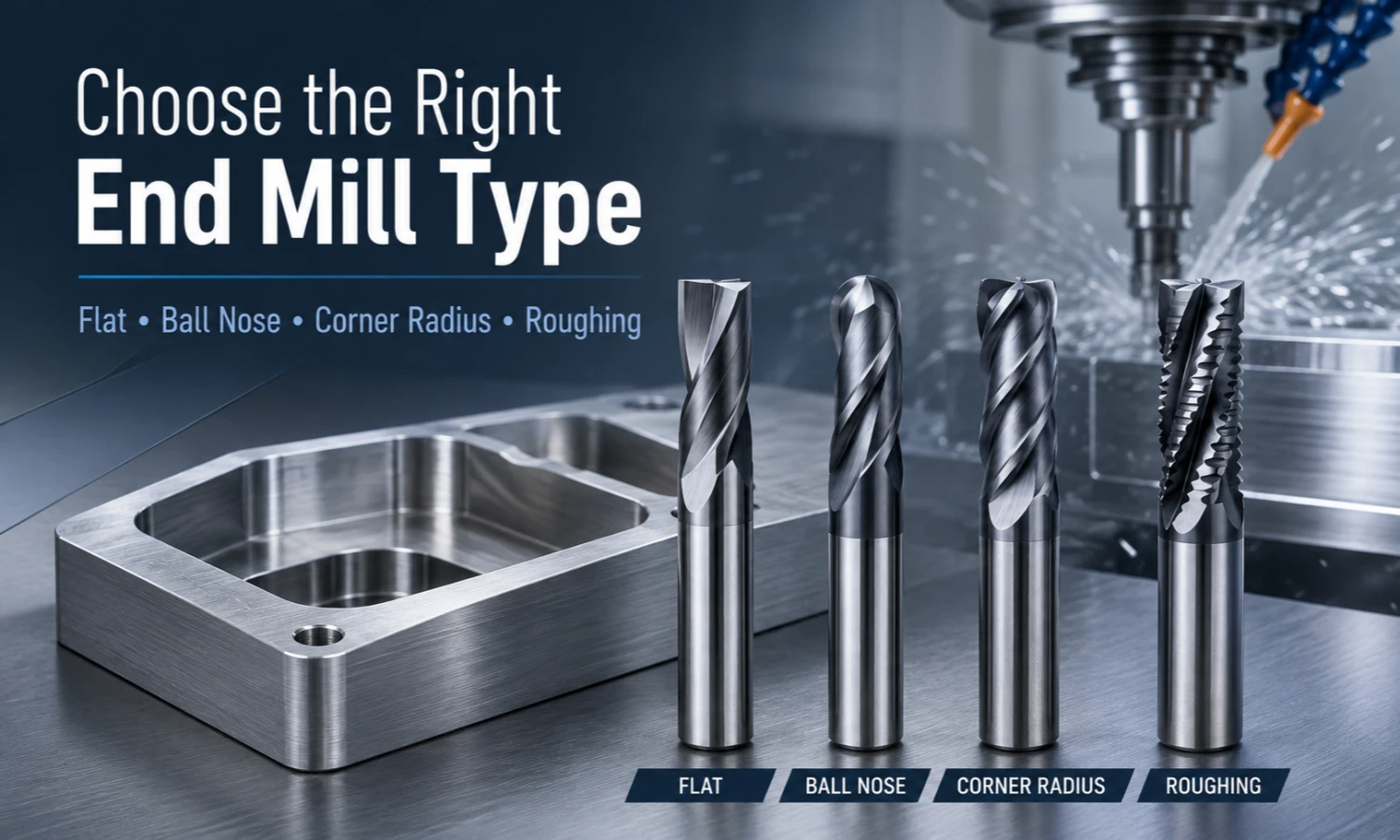
Flache Schaftfräser für flache Oberflächen und Seitenfräsen
Üblicherweise wird ein Flachfräser in Betracht gezogen:
- Seitenfräsen
- Eckfräsen
- Flachbodenbearbeitung
- Profilierung
- Geeignete Schlitzoperationen
Wenn das Werkstück gerade Wände erfordert, flache Böden, oder quadratische Schultern, Ein flaches Schneidenende ist im Allgemeinen besser geeignet als eine Kugelkopfgeometrie.
Für Spezifikationen und verfügbare Optionen, siehe unsere Flacher Schaftfräser.
Kugelkopffräser für gekrümmte und 3D-Oberflächen
Kugelkopffräser werden hauptsächlich verwendet, wenn der Fräser einer gekrümmten oder dreidimensionalen Geometrie folgen muss.
Typische Anwendungen sind Formen, gekrümmte Hohlräume, 3D-Profilierung, Konturbearbeitung, und komplexe Oberflächen.
Das abgerundete Schneidenende folgt sich ändernden Oberflächenwinkeln natürlicher als ein Fräser mit flachem Ende. Jedoch, bei der Bearbeitung von Edelstahl, Die Endform ist nur ein Teil der Auswahl. Werkzeugsteifigkeit, Beschichtung, Flötendesign, Schnittlänge, und das erforderliche Finish müssen noch berücksichtigt werden.
Für Optionen zur Bearbeitung gekrümmter Oberflächen, siehe unsere Kugelfräser.
Eckenradius-Schaftfräser für R-Ecken und stärkere Schneidkanten
Ein Eckradius-Schaftfräser, auch allgemein als Bull-Nose-Schaftfräser bezeichnet, kombiniert ein flaches Schneidende mit einem Radius an der Außenecke.
Der Radius kann die Schneidecke im Vergleich zu einer scharfen 90-Grad-Ecke verstärken. Dies ist auch sinnvoll, wenn in der Werkstückzeichnung ein interner R-Radius angegeben ist.
Für anspruchsvolle Edelstahlanwendungen, der tatsächliche Radius, Fräserdurchmesser, Schnittlast, und Bearbeitungsstrategie sollten gemeinsam bewertet werden.
Für Radius- und benutzerdefinierte Geometrieoptionen, siehe unsere Bull-Nase-Schaftfräser.
Schruppfräser für schwere Materialabtragung
Wenn das Hauptziel darin besteht, größere Materialmengen zu entfernen, und nicht in der Herstellung der endgültigen Oberflächenbeschaffenheit, Ein Schruppfräser kann in Betracht gezogen werden.
Schruppfräser konzentrieren sich auf den Materialabtrag, Spanbildung, Schnittlastmanagement, und Prozessstabilität. Die passende Ausführung hängt immer noch von der Edelstahlsorte ab, Bearbeitungszugabe, Fräserdurchmesser, Schnitttiefe, Spanabfuhr, und Maschinensteifigkeit. Für schwere Materialabtragsanwendungen, siehe unsere Schruppfräser.
Warum Vollhartmetall häufig für Edelstahl verwendet wird
A Hartmetall-Schaftfräser für Edelstahl ist in der modernen CNC-Bearbeitung weit verbreitet, da Vollhartmetall Eigenschaften bietet, die unter anspruchsvollen Schnittbedingungen nützlich sind.
Vollhartmetall kann bieten:
- Hohe Steifigkeit
- Gute Verschleißfestigkeit
- Höchste Stabilität
- Beständigkeit gegen erhöhte Schnitttemperaturen
- Kompatibilität mit unterschiedlichen Schneidgeometrien und Beschichtungssystemen
Diese Eigenschaften sind nützlich, da rostfreier Stahl erhebliche Hitze erzeugen und sich verhärten kann, wenn der Schnitt instabil wird oder die Kante zu reiben beginnt, statt effektiv zu schneiden.
Jedoch, Die Auswahl von Vollhartmetall schließt den Werkzeugauswahlprozess nicht ab. Fräserdurchmesser, Schnittlänge, Flötenzahl, Beschichtung, geometry, Werkzeugüberhang, Maschinenzustand, und Bearbeitungsvorgang müssen noch gemeinsam bewertet werden.
Für verfügbare Hartmetall-Werkzeugoptionen, siehe unsere Hartmetall-Schaftfräser.
Für einen umfassenderen Auswahlprozess für Hartmetallwerkzeuge, lesen So wählen Sie einen Hartmetall-Schaftfräser aus.
So wählen Sie die Flötenanzahl aus: Spanabfuhr vs. Steifigkeit
Eine häufige Suchfrage ist: Wie viele Nuten sollte ein Schaftfräser für Edelstahl haben??
Eine allgemeingültige Antwort gibt es nicht.
Die Anzahl der Spannuten verändert sowohl die Anzahl der Schneidkanten als auch den verfügbaren Platz für Späne. Eine geringere Spannutenzahl sorgt im Allgemeinen für mehr Spanraum, während eine höhere Anzahl an Nuten für mehr Schneidkontakte sorgt und häufig einen relativ stärkeren Kern verwendet.
Die richtige Balance hängt von der Operation ab, Fräserdurchmesser, Engagement, Spanvolumen, Steifigkeit der Maschine, und erforderliches Finish.
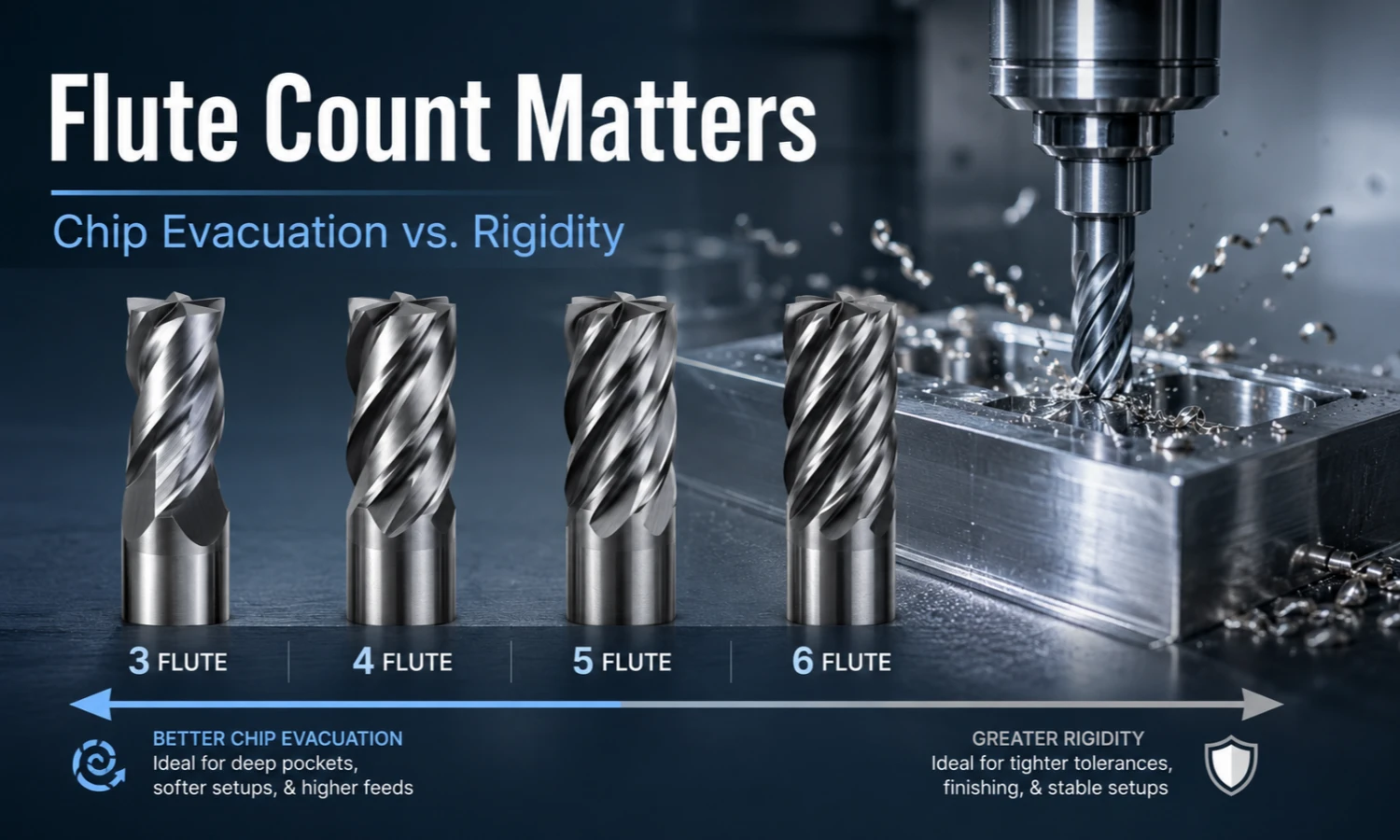
3-Schaftfräser mit Nut
Dreischneidige Konstruktionen bieten einen relativ großzügigen Spanraum und können in Betracht gezogen werden, wenn die Spanabfuhr ein wichtiger Teil der Anwendung ist.
Jedoch, Die Anzahl der Flöten allein entscheidet nicht über die Leistung. Helix-Geometrie, Kerndesign, radialer Eingriff, Schnitttiefe, und Fräserdurchmesser müssen ebenfalls berücksichtigt werden.
4-Schaftfräser mit Nut
Balance zwischen modernster Anzahl, Rumpfstärke, Chipraum, und allgemeine Vielseitigkeit bei der Bearbeitung.
Sie können für das Seitenfräsen in Betracht gezogen werden, Profilierung, Schulterfräsen, und andere CNC-Operationen, wenn die Werkzeuggeometrie und -einrichtung geeignet sind.
Sehen Sie sich unsere an 4 Schaftfräser mit Nut für verfügbare Spezifikationen und Anwendungsmöglichkeiten.
5-Schaftfräser mit Nut
Fünfschneidige Fräser werden häufig in Hochleistungsanwendungen aus rostfreiem Stahl eingesetzt, da die zusätzliche Schneidkante nützlich sein kann, wenn der Eingriff kontrolliert wird und die Spanabfuhr ausreichend bleibt.
Jedoch, Durch die Erhöhung der Nutanzahl verringert sich auch der Platz für Späne.
daher, Eine 5-schneidige Ausführung sollte nicht allein deshalb gewählt werden, weil das Werkstück aus Edelstahl besteht. Tiefe Schlitzung, hohes Spanvolumen, begrenzte Evakuierung, Fräserdurchmesser, und die Steifigkeit der Maschine können die bevorzugte Nutanzahl ändern.
6-Schaftfräser mit Nut
Für das stabile Seitenfräsen können Schaftfräser mit sechs Schneiden in Betracht gezogen werden, Profilierung, Halbfertigbearbeitung, und Schlichtanwendungen, bei denen die Spanabfuhr beherrschbar ist und mehr Schneidkontakte von Vorteil sind.
Sie sollten nicht als reine Schlichtfräser oder als automatische Wahl für härtere Materialien betrachtet werden. Das komplette Fräserdesign und die Bearbeitungsstrategie bleiben wichtig.
Für einen breiteren Vergleich der Flötenanzahl, lesen 2 Flöte vs 4 Flöte vs 6 Schaftfräser mit Nut.
Welche Beschichtung eignet sich für Edelstahl-Schaftfräser??
Die Beschichtung ist ein weiterer wichtiger Teil der Auswahl Schaftfräser für Edelstahl.
Industriewerkzeuge für Edelstahl verwenden üblicherweise hitzebeständige und verschleißfeste Beschichtungssysteme wie z:
- Altin
- AlCrN
- TiAlN
- TiSiN oder TiAlSiN in einigen Hochleistungsanwendungen
Abhängig vom Beschichtungssystem und der Anwendung, Diese Beschichtungen können Vorteile im Hinblick auf die Hitzebeständigkeit bieten, Oxidationsbeständigkeit, Verschleißfestigkeit, Reibungskontrolle, und modernster Schutz.
Jedoch, Keine Beschichtung sollte automatisch als die beste für jede Edelstahlanwendung bezeichnet werden.
Die Auswahl der Beschichtung hängt auch davon ab:
- Edelstahlsorte
- Schnitttemperatur
- Nass- oder Trockenbearbeitung
- Hartmetallsubstrat
- Modernste Geometrie
- Fräsereingriff
- Bearbeitungsstrategie
Aus diesem Grund, Die Beschichtung sollte als Teil des gesamten Schneidsystems und nicht nur anhand des Beschichtungsnamens ausgewählt werden.
Ein tiefergehender Vergleich zwischen AlTiN, AlCrN, TiAlN, und anderen Beschichtungsoptionen ist besser einem dedizierten vorbehalten Beste Schaftfräserbeschichtung für Edelstahl Führung.
Variable Helix, Helixwinkel, Variable Tonhöhe, Steifigkeit und Rattern
Der Schaftfräser-Helixwinkel für Edelstahl wirkt sich auf das innovative Engagement aus, Schnittkraftrichtung, Spanfluss, und Bearbeitungsverhalten. Jedoch, Es gibt keinen einzelnen Spiralwinkel, der für jede Edelstahlanwendung als der universell beste angesehen werden sollte.
Variable Helix- und Variable-Pitch-Geometrien werden auch häufig in Hochleistungs-Schaftfräsern verwendet.
Anstatt zuzulassen, dass jede Schneidkante in exakt demselben, wiederholten Intervall in das Werkstück eingreift, Konstruktionen mit variabler Helix oder ungleicher Steigung verändern den zeitlichen Verlauf der Schnittkräfte. In geeigneten Anwendungen, Dies kann dazu beitragen, wiederholte Vibrationen und Rattern zu reduzieren.
Trotzdem, Die Geometrie kann nicht jedes instabile Bearbeitungssetup korrigieren.
Wenn Geschwätz auftritt, Das Gesamtsystem sollte evaluiert werden, einschließlich:
- Werkzeugüberhang
- Zustand des Werkzeughalters
- Spindelsteifigkeit
- Werkstückhalterung
- Fräserdurchmesser
- Axialer Eingriff
- Radialer Eingriff
- Modernste Geometrie
daher, Betrachten Sie die variable Helix oder variable Steigung als einen Teil des gesamten Bearbeitungssystems und nicht als eigenständige Lösung.
Passen Sie den Schaftfräser an gängige Edelstahlsorten an
„Edelstahl“ umfasst Materialien mit unterschiedlichem Bearbeitungsverhalten.
Ein ähnliches Fräserkonzept kann für mehrere Güteklassen funktionieren, aber die passende Geometrie, Beschichtung, Flötenzahl, und die Bearbeitungsstrategie kann sich noch ändern.
| Edelstahlqualität | Typische Bearbeitungseigenschaften | Überlegungen zur Schaftfräserauswahl |
|---|---|---|
| 303 | Im Allgemeinen einfacher zu bearbeiten als viele austenitische Sorten | Fräsergeometrie ausbalancieren, beenden, und Produktivität |
| 304 | Übliche Güteklasse mit Tendenz zur Verfestigung | Stabiler Schnitt, effektive Schneidkanten, und gleichmäßige Spanbildung |
| 316 | Robustes Material, das erhebliche Hitze erzeugen kann | Werkzeugstabilität, Wärmekontrolle, und Verschleißfestigkeit werden wichtig |
| 17-4 PH | Das Bearbeitungsverhalten ändert sich je nach Wärmebehandlungszustand | Berücksichtigen Sie die tatsächliche Härte, Werkzeugsteifigkeit, und Schnittlast |
Hierbei handelt es sich eher um allgemeine Auswahlüberlegungen als um festgelegte Schnittparameter.
Zum Beispiel, zwei Komponenten aus 304 Für Edelstahl sind möglicherweise andere Schaftfräser erforderlich, wenn einer eine tiefe Nutenbearbeitung erfordert, während der andere nur eine leichte Seitenbearbeitung erfordert.
Ebenfalls, A 17-4 Die PH-Komponente sollte nicht nur anhand des Materialnamens bewertet werden. Auch der Wärmebehandlungszustand und die tatsächliche Härte können die Auswahl des Fräsers beeinflussen.
Praktische Checkliste zur Auswahl von Schaftfräsern für Edelstahl
Bevor Sie einen Schaftfräser auswählen oder ein Angebot anfordern, Bestätigen Sie die folgenden Informationen.
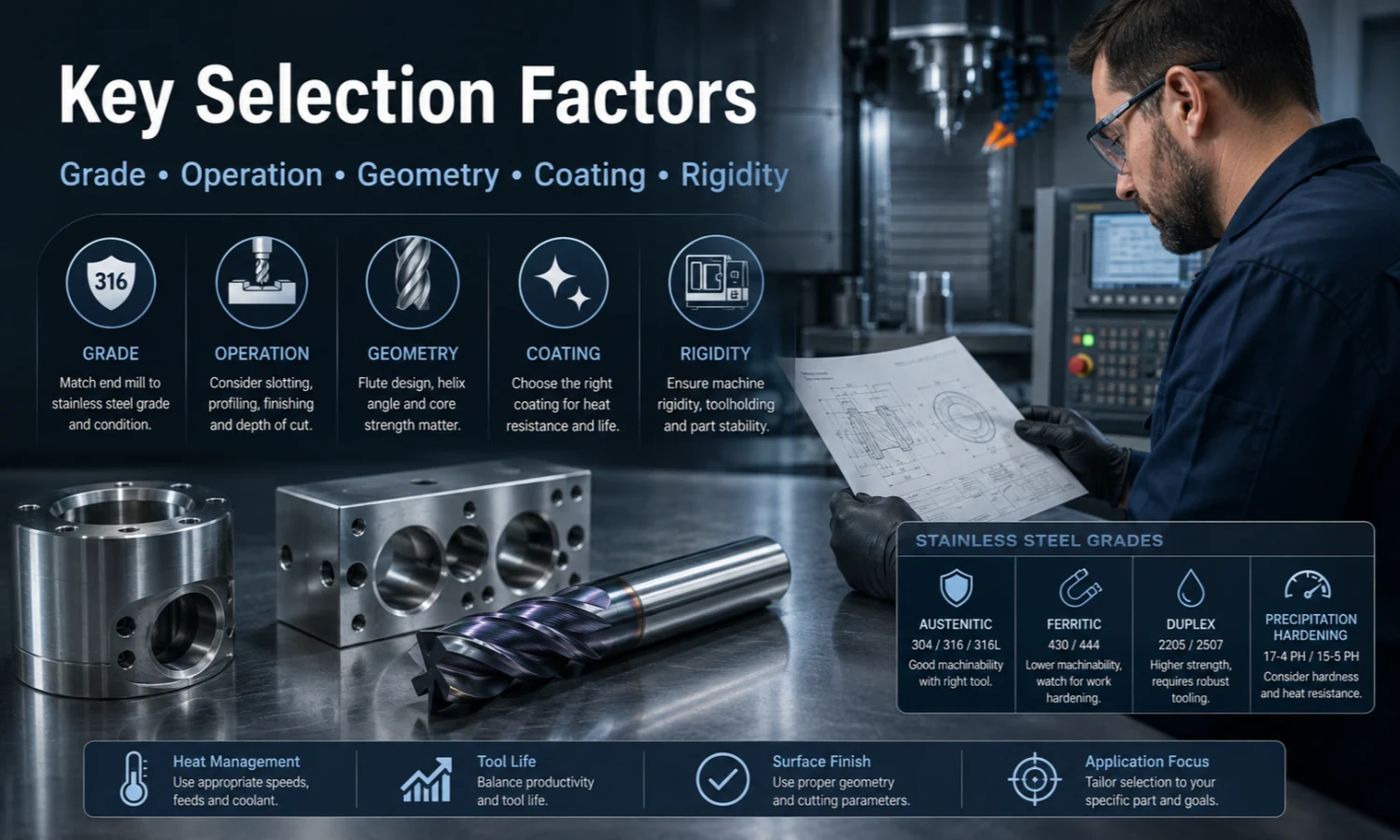
1. Edelstahlqualität
Geben Sie nach Möglichkeit die genaue Note an, wie zum Beispiel 303, 304, 316, 17-4 PH, oder eine andere spezifizierte rostfreie Legierung.
Die bloße Beschreibung des Werkstücks als „Edelstahl“ liefert möglicherweise nicht genügend Informationen für eine genaue Werkzeugbewertung.
2. Bearbeitungsvorgang
Bestätigen Sie, ob der Fräser zum Schlitzen verwendet wird, Seitenfräsen, Profilierung, Schruppen, Abschluss, Taschenbildung, oder 3D-Konturierung.
3. Werkstückgeometrie
Identifizieren Sie, ob das Feature flach ist, gebogen, eine Schulter, eine R-Ecke, ein tiefer Hohlraum, oder eine andere Innen- oder Außenkontur.
Dies hilft festzustellen, ob Flat, Kugelnase, Eckenradius, oder eine andere Fräsergeometrie sollte in Betracht gezogen werden.
4. Erforderliche Werkzeugabmessungen
Zu den nützlichen Abmessungen gehören::
- Schnittdurchmesser
- Flötenlänge
- Gesamtlänge
- Schaftdurchmesser
- Eckenradius, falls erforderlich
Für nicht standardmäßige Anwendungen, Eine Zeichnung ist oft nützlicher als eine lange schriftliche Beschreibung.
5. Schruppen oder Schlichten
Das für einen effizienten Materialabtrag ausgewählte Werkzeug ist möglicherweise nicht derselbe Fräser, der für die endgültige Oberflächenbeschaffenheit verwendet wird.
6. Maschinen- und Setup-Steifigkeit
Zustand der Maschine, Spindel, Werkzeughalter, Werkzeugüberhang, Werkstückhalterung, und Werkstückstabilität können sich alle auf die Leistung des Fräsers auswirken.
Ein starrer Hartmetallfräser kann Bewegungen im Halter oder Werkstück nicht ausgleichen.
7. Spanabfuhr
Besonders wichtig ist die Spanabfuhr bei tiefen Nuten, Taschen, geschlossene Bearbeitungsräume, und Operationen mit höherem Engagement.
Daher sollte die Anzahl der Nuten zusammen mit den Anforderungen an die Spanabfuhr ausgewählt werden.
8. Anforderung an die Oberflächenbeschaffenheit
Für einen Schruppvorgang und einen abschließenden Schlichtdurchgang können unterschiedliche Fräserkonstruktionen erforderlich sein, selbst wenn dieselbe Edelstahlsorte bearbeitet wird.
Häufig gestellte Fragen
Was ist der beste Schaftfräser für Edelstahl??
Es gibt keinen optimalen Schaftfräser für jede Edelstahlanwendung. Eine häufige Wahl ist Vollhartmetall, Der endgültige Fräser sollte jedoch entsprechend der Edelstahlsorte ausgewählt werden, Bearbeitungsvorgang, Werkstückgeometrie, Flötenzahl, Beschichtung, Steifigkeit der Maschine, Spanabfuhr, und erforderliches Finish.
Kann ein Vollhartmetall-Schaftfräser Edelstahl schneiden??
Yes. Vollhartmetall-Schaftfräser werden häufig für die Bearbeitung von Edelstahl verwendet, da Hartmetall eine hohe Steifigkeit bietet, Verschleißfestigkeit, und höchste Stabilität. Die Fräsergeometrie, Beschichtung, Flötendesign, und Bearbeitungsbedingungen sollten dennoch zur Anwendung passen.
Wie viele Nuten sollte ich für Edelstahl verwenden??
Das hängt von der Operation ab. Weniger Spannuten bieten im Allgemeinen mehr Spanraum, während mehr Nuten zusätzliche Schneidkanten bieten und unter geeigneten Bedingungen die Steifigkeit oder die Endbearbeitungsleistung verbessern können. Fräserdurchmesser, Engagement, Spanvolumen, Bearbeitungsvorgang, und Maschinensteifigkeit sollten alle berücksichtigt werden.
Welche Beschichtung eignet sich am besten für Edelstahl-Schaftfräser??
Es gibt keine allgemeingültig beste Beschichtung. Altin, AlCrN, TiAlN, und andere hitzebeständige Beschichtungssysteme werden üblicherweise für Edelstahlanwendungen in Betracht gezogen. Die passende Beschichtung hängt von der Edelstahlsorte ab, Schnitttemperatur, Fräsergeometrie, Substrat, Bearbeitungsstrategie, und Kühlmittelbedingungen.
Ist ein Schaftfräser mit 4 oder 5 Schneiden besser für Edelstahl geeignet??
Beides ist nicht automatisch besser.
Für Operationen, die mehr Spanvolumen erzeugen, Der zusätzliche Spannutenraum, der bei einem 4-Schneiden-Fräser im Vergleich zu einem ähnlichen 5-Schneiden-Design zur Verfügung steht, kann nützlich sein. Wenn der radiale Eingriff kontrolliert ist und die Spanabfuhr zuverlässig ist, ein 5-schneidiges Design bietet möglicherweise mehr Schneidkontakte.
Die endgültige Wahl hängt immer noch vom Fräserdurchmesser ab, Flötengeometrie, Engagement, Steifigkeit der Maschine, und die konkrete Operation.
Kann derselbe Schaftfräser beides bearbeiten? 304 Und 316 stainless steel?
Für beide Materialien kann ein Fräser geeignet sein, Dies bedeutet jedoch nicht, dass die gleichen Bearbeitungsbedingungen oder die gleiche Fräserkonfiguration immer optimal sind. Die vollständige Bewerbung, einschließlich Materialverhalten, geometry, Werkzeugeinsatz, Wärmeerzeugung, und Maschineneinrichtung, ausgewertet werden sollte.
Benötigen Sie Hilfe bei der Auswahl eines Schaftfräsers für Edelstahl??
Zur Werkzeugbewertung, Bitte angeben:
- Edelstahlsorte
- Werkstückzeichnung
- Bearbeitungsvorgang
- Erforderlicher Schnittdurchmesser
- Flötenlänge
- Gesamtlänge
- Schaftdurchmesser falls angegeben
- Schrupp- oder Schlichtanforderung
- Eckenradius oder Sondergeometrie
- Aktuelle Bearbeitungsprobleme oder spezielle Anforderungen
Unser Werk kann die Werkstück- und Bearbeitungsanforderungen überprüfen und bei der Beurteilung helfen, ob a Flachfräser, Kugelkopffräser, Eckradius-Schaftfräser, Schruppfräser, Hartmetall-Schaftfräser, oder kundenspezifisches Schneidwerkzeug ist für die Anwendung besser geeignet.
Für nicht standardmäßige Anforderungen, Die endgültigen Abmessungen und die Geometrie des Fräsers können anhand der Zeichnung bestätigt werden, Werkstückmaterial, und Bearbeitungsbedingungen.