 Freze de precizie,Scule de tăiere pentru prelucrarea CNC a fiecărui material

Într-o moara frontală vs moara cu cap comparaţie, o moara de fata este, in general, alegerea mai buna pentru un larg, deschide, suprafață plană accesibilă deoarece acoperirea sa mai largă de tăiere poate reduce numărul de trasee laterale a sculei. O freză de capăt este de obicei mai flexibilă atunci când zona de prelucrare este mică, accesul este limitat, sau aceeași parte necesită și sloturi, buzunare, profiluri, sau contururi.
Alegerea nu este doar „partea mare = freza frontală” și „partea mică = freza cu cap”.
Dimensiunea suprafeței, acces la tăietor, diametrul de tăiere utilizabil, rigiditatea mașinii, reţinere de muncă, caracteristicile din jur, iar planul general de prelucrare afectează decizia finală.
Acest ghid compară moara frontală vs moara cu cap selecție dintr-o perspectivă practică de prelucrare CNC și explică când fiecare unealtă are mai mult sens.
Face Mill vs End Mill: Comparație rapidă
Ambele unelte pot prelucra suprafețe plane, dar sunt concepute în jurul unor priorități diferite.
O freză frontală se concentrează pe prelucrarea plană eficientă. O freză de capăt oferă o flexibilitate mai largă a traseului sculei și poate prelucra atât zone plane locale, cât și caracteristici mai complexe.
| Factorul de comparație | Face Mill | Freză de capăt |
|---|---|---|
| Scopul principal | Operațiuni ample planare și de fațare | Prelucrare cu caracteristici de uz general |
| Acțiune primară de tăiere | Optimizat în principal pentru tăierea feței pe o suprafață plană | Utilizează muchii de tăiere de capăt și periferice în funcție de operație |
| Geometrie tipică | Diametru de tăiere relativ mare; multe modele folosesc mai multe inserții | Unealtă cilindrică mai compactă, cu muchii tăietoare de capăt și laterale |
| Acoperire de suprafață | În general mai larg | În general, mai îngustă |
| Deschideți suprafețe plane | De obicei, alegerea mai directă pentru larg, fețe accesibile | Potrivit pentru zone mici sau plane locale |
| Suprafețe plane mici sau restrânse | Poate fi limitat de spațiul de tăiere | Adesea mai ușor de accesat |
| Sloturi, buzunare, profiluri | Nu scopul principal | De obicei, mai versatil |
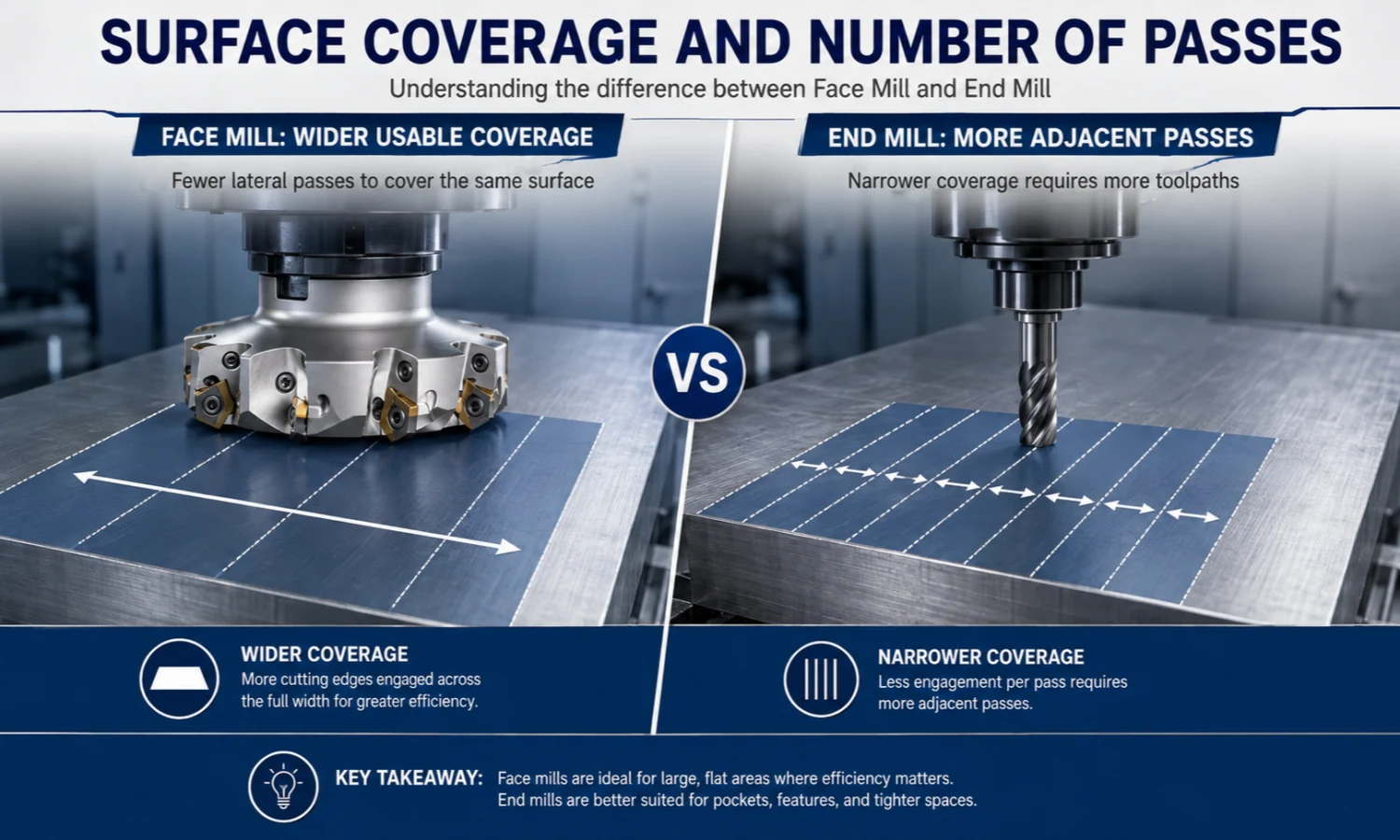
| Pase laterale pe o față lată | Poate necesita mai puține treceri atunci când acoperirea utilizabilă a frezei este mai largă | Adesea necesită mai multe trasee de scule adiacente pe aceeași suprafață largă |
| Flexibilitatea traseului sculei | Mai specializat | Superior |
| Considerații privind mașina și accesul | Dimensiunea mai mare a frezei poate necesita mai mult spațiu liber și o capacitate adecvată de configurare/mașină | Dimensiunea compactă se potrivește adesea zonelor restrânse |
| Schimbarea instrumentului | Adaugă un instrument dedicat pentru fațare | Poate face față și alte caracteristici cu un singur instrument |
| Regula tipică de selecție | Larg, deschide, lucrare plană accesibilă | Mic, restrânsă, sau prelucrare cu caracteristici mixte |
Punctul cheie este că capacitatea și adecvarea sunt diferite. O freză de capăt poate fi capabilă să prelucreze o față plană, dar asta nu îl face în mod automat instrumentul preferat pentru un larg, deschide, operație repetată de față.
Ce este o moara de fata?
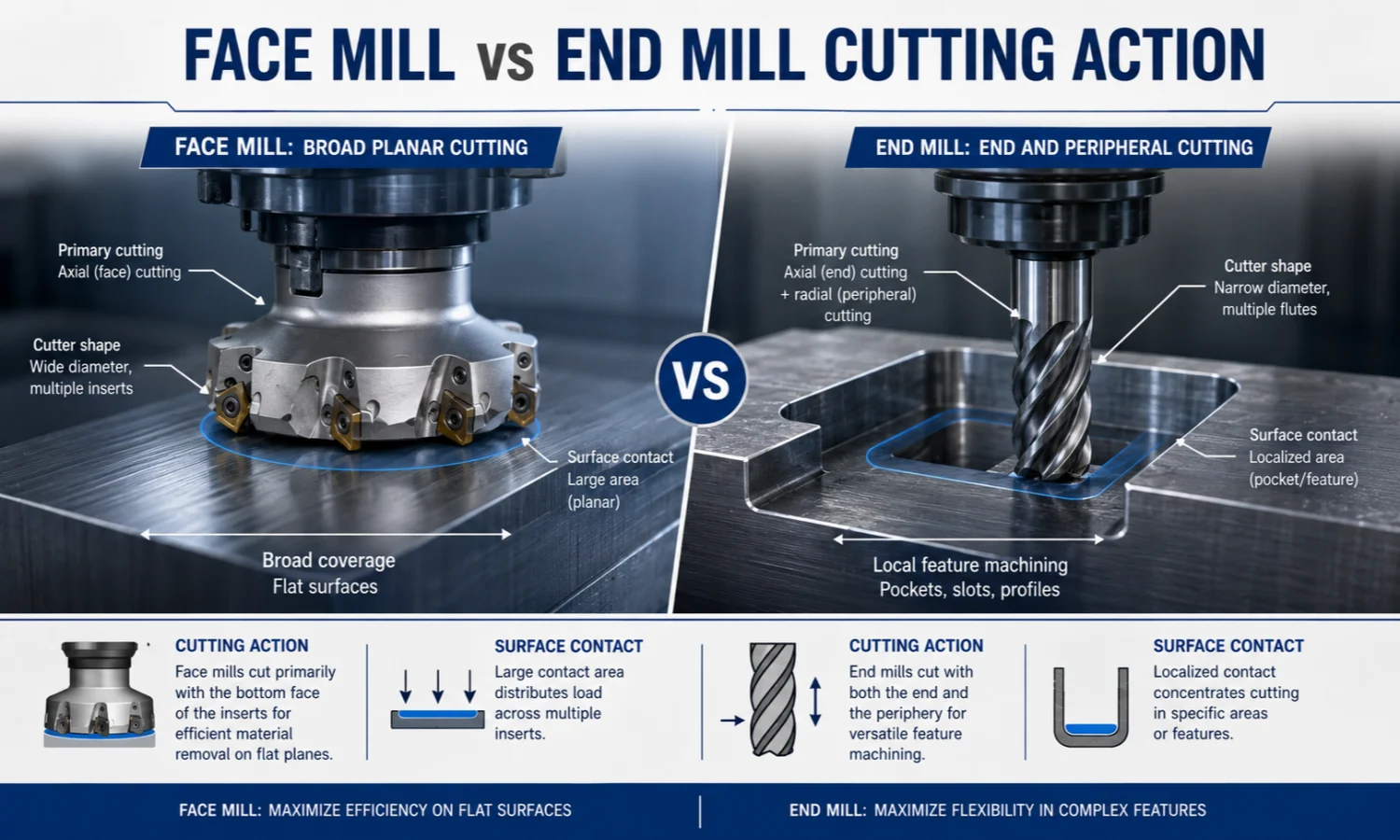
O freză frontală este o freză concepută în principal pentru a prelucra suprafețe plane cu axa tăietorului în general perpendiculară pe fața prelucrată..
În comparație cu o freză tipică, o freza de fata ofera de obicei o suprafata eficienta de taiere mai mare. Multe freze frontale folosesc, de asemenea, mai multe inserții de tăiere înlocuibile dispuse în jurul corpului frezei.
Principalul său avantaj nu este doar diametrul său fizic. The avantaj practic provine de cât de mult din suprafața țintă poate acoperi freza în timpul fiecărei treceri.
Acțiunea de tăiere primară și designul tipic al sculei
O freză frontală cuplează piesa de prelucrat în principal prin muchii de tăiere poziționate pentru prelucrarea plană.
Deoarece tăietorul poate oferi o acoperire utilizabilă relativ largă atunci când accesul și configurarea permit, poate fi util la prelucrare:
- Fețe mari de sus
- Suprafețe plane deschise
- Stoc care necesită nivelarea suprafeței
- Fețe de referință sau de referință
- Operații repetate de față
Frezele frontale sunt disponibile în diferite geometrii și unghiuri de intrare. De exemplu, 45° frezele frontale se potrivesc de obicei la frezarea frontală generală, în timp ce frezele de 90° pot fi utile atunci când operația necesită și acces aproape de un umăr pătrat.
Cu toate acestea, acest articol nu tratează fiecare freză ca fiind interschimbabilă. Geometria frezei trebuie încă să se potrivească cu piesa de prelucrat reală și cu cerințele de prelucrare.
Unde o moara de fata are cel mai mult sens
O freză de față are, în general, cel mai bun sens atunci când este suprafața țintă:
- Larg
- Deschide
- Accesibil
- Potrivit pentru un diametru de tăietor relativ mare
Acest lucru contează deoarece acoperirea frezei poate reduce numărul de trasee laterale adiacente.
De exemplu, dacă o placă largă poate accepta o freză de față adecvată fără interferențe din partea clemelor, ziduri, sefii, sau alte caracteristici, lățimea de tăiere mai mare poate acoperi fața cu mai puține treceri decât o freză mai mică.
Acest lucru nu garantează o îmbunătățire specifică a timpului de ciclu. Productivitatea reală depinde încă de mașină, reţinere de muncă, conditii de taiere, calea sculei, materialul piesei de prelucrat, și configurare.
Ce este o moara de capat?
O freză cu cap este o unealtă de frezat mai versatilă care poate folosi muchii de tăiere la capătul sculei și în jurul circumferinței sale.
Această geometrie permite unei freze cu cap să prelucreze mult mai mult decât o suprafață superioară plană.
În această comparație, „freză” se referă în principal la uneltele utilizate în mod obișnuit pentru suprafețe plane generale, sloting, buzunare, profilare, și lucrări de conturare. Capacitatea exactă depinde de stilul capătului și de geometria de tăiere, deci nu orice tip de freză ar trebui tratat ca interschimbabil.
Capacitate de tăiere la capăt și periferică
Combinația dintre muchiile de tăiere de capăt și periferice conferă frezei de capăt o mai mare flexibilitate în direcția traseului sculei și accesul la caracteristici.
În funcție de proiectarea și funcționarea sculei specifice, o mașină de cutie de freză:
- Suprafețe plane locale
- Sloturi
- buzunare
- Pereții laterali
- Profiluri
- Contururi
- Caracteristici geometrice mixte
Această flexibilitate este unul dintre motivele pentru care o freză de capăt poate rămâne alegerea practică chiar și atunci când o freză de față dedicată ar putea prelucra mai eficient una dintre suprafețele plane..
Unde o moara are cel mai mult sens
O freză de capăt este de obicei mai practică când:
- Suprafața plană este relativ mică
- Zona de prelucrare este în interiorul sau în apropierea unui buzunar
- Ziduri, cleme, corpuri de fixare, sau alte caracteristici restricționează accesul tăietorului
- Aceeași parte are nevoie și de sloturi, buzunare, profiluri, sau contururi
- Un instrument poate completa mai multe funcții și poate evita schimbarea suplimentară a sculei
Aşa, un moara de capat vs moara de fata decizia ar trebui să ia în considerare întreaga sarcină de prelucrare, mai degrabă decât o suprafață izolată.
Diferențele cheie între o freză de față și o freză de capăt
Diferența dintre frezare frontală vs frezare frontală devine mai clar când ne uităm la motivul pentru care instrumentele se comportă diferit, mai degrabă decât pur și simplu enumerarea aplicațiilor lor.
Acțiunea de tăiere primară și geometria sculei
O freză frontală este optimizată în primul rând pentru a mătura pe o suprafață plană.
O freză cu cap combină capacitatea de tăiere la capăt și de tăiere periferică, ceea ce îi oferă mai multă libertate de a intra în zonele locale și caracteristicile mașinii în direcții diferite.
Acest lucru duce la principala diferență practică:
O freză de față este specializată în acoperire plană, în timp ce o freză de capăt accentuează flexibilitatea geometrică.
Această distincție explică, de asemenea, de ce cele două instrumente se pot suprapune în unele operațiuni fără a deveni înlocuitori direcți pentru fiecare aplicație..
Acoperire de suprafață, Dimensiunea suprafeței plane, și Numărul de treceri
Acesta este unul dintre cei mai importanți factori atunci când alegeți un freza de fata sau freza cu capat.
O suprafață mai largă nu necesită automat o freză de față. Relația importantă este:
Dimensiunea suprafeței → acoperire utilizabilă a frezei → numărul de trasee laterale a sculei
Să presupunem că două tăietoare pot ajunge ambele la suprafață.
O freză de față relativ mare poate acoperi o lățime mai mare în timpul fiecărei treceri. Prin urmare, poate reduce adesea numărul de trasee adiacente necesare pentru prelucrarea unei fețe late deschise.
O freză mai mică poate avea nevoie de mai multe treceri pentru a acoperi aceeași zonă.
Cu toate acestea, diametrul frezei singur nu decide rezultatul.
Acoperirea utilizabilă a tăietorului poate fi limitată de:
- Cleme
- Fixare
- Ziduri din apropiere
- Găuri
- Șefii
- Pași
- Marginile părților
- Abordarea instrumentului
- Spațiul liber disponibil pentru mașină
Prin urmare, „suprafața mare” nu trebuie tratată ca un prag dimensional fix. Este mare în raport cu freza care practic poate ajunge și prelucra.
Finisarea suprafeței și planeitatea: Ce alegere de instrument poate decide și nu
O freză de suprafață poate fi un instrument foarte potrivit pentru a crea un finisaj consistent pe o suprafață plană largă, deoarece geometria și acoperirea sa sunt proiectate în jurul operațiunilor de fațare..
Cu toate acestea, Tipul de sculă singur nu determină finisarea suprafeței sau planeitatea.
Rezultatele reale pot depinde și de:
- Curățarea tăietorului
- Geometrie de vârf sau inserție
- Starea sculei
- Condiții de alimentare
- Material piesa de prelucrat
- Starea mașinii
- Stabilitatea suportului de lucru
- Strategia traseului uneltei
- Precizie de configurare
O freză cu cap poate produce, de asemenea, un finisaj adecvat pe o suprafață plană mai mică sau localizată.
Prin urmare, nu este corect din punct de vedere tehnic să spunem că o freză cu suprafață produce întotdeauna un finisaj de suprafață mai bun decât o freză cu cap.
Întrebarea mai utilă este:
Ce instrument se potrivește mai bine dimensiunii, deschidere, accesibilitate, și cerințele generale de prelucrare a acestei suprafețe particulare?
De ce morile finale sunt de obicei mai bune pentru sloturi, buzunare, și Profiluri
Când piesa include fante, buzunare, profiluri, contururi, sau caracteristici laterale localizate, o freză cu cap oferă, în general, mai multă flexibilitate decât o freză frontală.
Muchiile de tăiere de capăt și periferice permit instrumentului să urmeze:
- Căi interne
- Limite de buzunar
- Geometria profilului
- Zone de prelucrare mai înguste
- Zonele pe care un tăietor mai mare nu le poate accesa cu ușurință
Prelucrarea umărului necesită o analiză mai atentă. Some 90° face milling cutters can approach or machine square-shoulder features, so “shoulder = end mill” is not a universal rule.
If your main decision is specifically between a dedicated side cutter and an end mill for grooves or side-oriented machining, see our guide to Freză laterală vs Freză de capăt.
For a broader comparison of face-oriented and side-oriented milling operations, vedea Frezare laterală vs frezare frontală.
Machine, Workholding, and Tool-Access Limits
The theoretically most productive cutter is not useful if the setup cannot support it.
Before selecting a larger face mill, considera:
- Available cutter clearance
- Spindle and toolholder capability
- Rigiditatea mașinii
- Stabilitatea suportului de lucru
- Clamp position
- Nearby walls or fixtures
- Approach direction
A broad surface may appear ideal for face milling, but a fixture or nearby feature can prevent a large cutter from reaching the full area.
În acest caz, o freză mai mică poate oferi soluția mai practică.
Când se schimbă mai puține scule, favorizează o freză
Productivitatea sculei nu trebuie judecată doar după lățimea unei treceri de tăiere.
Luați în considerare o componentă mică care are nevoie:
- O față superioară prelucrată
- Un buzunar
- Un slot
- Un profil
O freză de suprafață poate fi mai bună la prelucrarea de la sine a feței superioare. Cu toate acestea, dacă o freză de capăt poate prelucra fața superioară și apoi continua cu buzunarul, slot, si profil, utilizarea frezei poate reduce schimbările inutile de scule.
Acest lucru nu înseamnă că o freză este întotdeauna mai productivă.
În schimb, arată de ce selecția uneltelor ar trebui să ia în considerare procesul complet, mai degrabă decât o singură operație.
Poți face față morii cu o freză de capăt?
Da, o moara de capat poate a fi folosit pentru fațare în condiții adecvate.
Dar capacitatea nu echivalează cu alegerea preferată.
An end mill may work very well for a small or restricted flat surface. On a wide, open surface, cu toate acestea, a dedicated face mill may provide more useful surface coverage and reduce the number of lateral passes.
The correct choice depends on the geometry of the end mill, the target surface, accesibilitate, configurarea mașinii, and the other features that must be machined.
When an End Mill Is Reasonable for Facing
Using an end mill for facing may make sense when:
- The flat surface is small
- The surface lies inside a pocket
- A large cutter cannot clear nearby walls or fixtures
- Clamps restrict face-mill access
- The same end mill is already required for other features
- Avoiding an additional tool change improves the overall process
The end mill must also have suitable end geometry for the intended cutting direction and surface requirement.
Prin urmare, „o freză de capat poate face față” nu ar trebui să fie interpretată niciodată ca „orice freză de capat este la fel de potrivită pentru fațare”.
Când o freză de față dedicată are mai mult sens
O freză de față dedicată devine, în general, mai atractivă atunci când:
- Ținta este una largă, open surface
- Cutterul poate accesa cea mai mare parte sau toată fața
- Acoperirea utilă a frezei este semnificativ mai largă decât freza disponibilă
- Operația necesită înfruntări repetate
- Reducerea traseelor laterale adiacente contează
- Prelucrarea plană este scopul principal al operației
Pentru aceste aplicații, ne puteți revizui freze frontale.
Dacă nu sunteți sigur de diametrul frezei, unghi de intrare, stil de inserare, sau adecvarea unei freze frontale pentru piesa dvs. de prelucrat, selecția finală ar trebui să se bazeze pe geometria reală a piesei și pe condițiile de prelucrare, mai degrabă decât pe o regulă generică.
How to Choose Between a Face Mill and an End Mill
The easiest way to choose is to start with the geometry of the machining task.
Do not begin with: Which tool is more powerful?
Instead ask: What surface or feature must I machine, how accessible is it, and what other operations must the same setup complete?
Choose a Face Mill When…
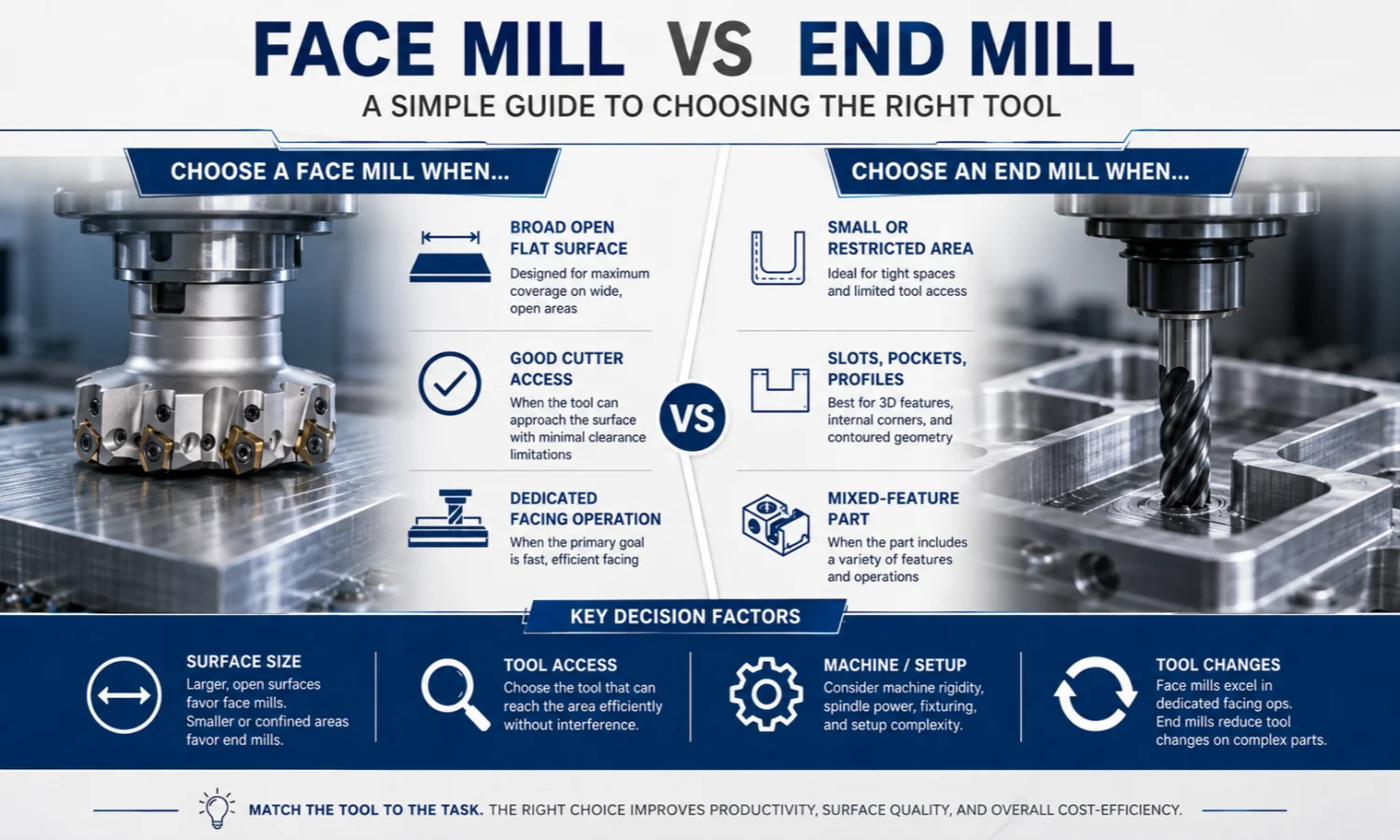
A face mill is generally the stronger candidate when:
- Ținta este una largă, deschide, accessible flat surface
- Cutter clearance allows useful surface coverage
- The machine and toolholder can support the cutter
- The workholding is stable
- Facing is repeated enough to justify a dedicated tool
- Reducing lateral toolpaths is valuable
- Planar machining is the main objective
This is why face mills are widely used for large open surfaces, top faces, operațiuni de nivelare, și alte sarcini de prelucrare plană dedicate.
Alegeți o freză când...
O freză cu cap poate fi alegerea mai bună când:
- Suprafața plată este relativ mică
- Suprafața este localizată
- Accesul este limitat
- Suprafața se află în interiorul sau în apropierea unei alte caracteristici
- Piesa are nevoie și de sloturi, buzunare, profiluri, sau contururi
- O moară mai mare nu poate curăța pereții, corpuri de fixare, sau cleme
- O singură freză poate finaliza mai multe operațiuni și poate reduce schimbările inutile ale sculei
Cu alte cuvinte, freza finală câștigă adesea atunci când flexibilitatea contează mai mult decât acoperirea unei zone extinse.
Trei scenarii de selecție a geometriei părților
Scenariu 1: Față lată deschisă a plăcii
Piesa are un mare, suprafață superioară accesibilă, cu suficient spațiu liber în jurul zonei de prelucrare.
O freză de față va fi, în general, alegerea mai directă, deoarece acoperirea sa mai largă utilizabilă poate reduce numărul de treceri adiacente..
Direcția tipică: Face Mill
Scenariu 2: Small part with a top face, buzunar, and slot
The top surface needs light facing, but the same component also requires a pocket and slot.
If a suitable end mill can complete all three operations, keeping one tool in the machining sequence may be more practical than adding a dedicated face mill.
Direcția tipică: End Mill may be more practical
Scenariu 3: Flat area limited by clamps or nearby features
The target surface is flat, but walls, corpuri de fixare, cleme, or nearby geometry restrict the approach of a large-diameter cutter.
Even if a face mill would normally suit the surface size, inadequate clearance may make a smaller end mill the more workable option.
Direcția tipică: Depends on tool access; End Mill may be more practical
Face Mill vs End Mill FAQs
Can You Use an End Mill as a Face Mill?
Da. A suitable end mill can machine flat surfaces, especially small or localized areas.
Cu toate acestea, o freză de față dedicată are adesea mai mult sens pentru larg, suprafețe deschise, deoarece o acoperire mai largă a frezei poate reduce traseele laterale adiacente ale sculei atunci când configurația o permite.
Care este principala diferență dintre frezarea frontală și frezarea finală?
Frezarea frontală se concentrează în primul rând pe prelucrarea suprafețelor plane cu o freză optimizată pentru contact și acoperire larg cu fața.
Frezarea la capăt folosește capacitatea de tăiere la capăt și periferică pentru a prelucra o gamă mai largă de caracteristici, inclusiv suprafețele plane locale, sloturi, buzunare, profiluri, și contururi.
Ce instrument este mai bun pentru suprafețe mari plane?
Pentru un larg, deschide, accessible flat surface, o moara de fata este in general alegerea mai potrivita.
Acoperirea sa mai mare de tăiere utilizabilă poate reduce adesea numărul de treceri laterale în comparație cu o freză mai mică..
Cu toate acestea, cleme, corpuri de fixare, capacitatea mașinii, caracteristici din apropiere, iar accesul la tăietor poate schimba selecția finală.
Which Tool Is Usually Better for Slots, buzunare, și Profiluri?
An end mill is generally more versatile for slots, buzunare, profiluri, and contours because it can use both end and peripheral cutting edges.
The exact tool still depends on the feature geometry, dimensiunile cerute, materialul piesei de prelucrat, accesul la instrumente, și condițiile de prelucrare.
Does a Face Mill Always Produce a Better Surface Finish Than an End Mill?
No.
A face mill can be well suited to producing a consistent finish on a broad flat surface, but surface quality also depends on tool condition, a alerga afară, cutting-edge geometry, reţinere de muncă, starea mașinii, material, calea sculei, și parametrii de tăiere.
A properly selected end mill can also produce a suitable finish on smaller or localized flat surfaces.
Need Help Choosing a Face Mill or End Mill?
The best moara frontală vs moara cu cap choice depends on more than tool diameter. Dimensiunea suprafeței, deschidere, acces, reţinere de muncă, capacitatea mașinii, and the other features on the part all influence the decision.
If your main requirement is broad planar machining, explorează-ne face milling cutter options pentru diferite cerințe de prelucrare plană:
Pentru o aplicație nouă sau non-standard, trimiteți-ne desenul piesei de prelucrat sau o schiță simplă împreună cu materialul piesei de prelucrat și cerințele de prelucrare.
Putem examina cererea și vă putem ajuta să stabilim dacă a freza de fata sau freza cu capat este punctul de plecare mai potrivit pentru sarcina de prelucrare.