 Freze de precizie,Scule de tăiere pentru prelucrarea CNC a fiecărui material

Știind cum să alegeți o freză de freză din carbură, ajută la reducerea riscului de ambalare a așchiilor, uzura prematură a marginilor, vorbărie, finisare slabă a suprafeței, erori dimensionale, și ruperea sculei. Din acest motiv, diametrul frezei nu ar trebui să fie niciodată singurul factor de selecție.
Un instrument adecvat trebuie să se potrivească cu materialul piesei de prelucrat, duritate, operatie de prelucrare, număr de flaut, profilul final, acoperire, surplusul sculei, și cerința de evacuare a așchiilor. Aluminiu, oţel, stainless steel, fontă, iar oțelul de matriță creează așchii diferite, forțe de tăiere, căldură, si conditiile de uzura.
Acest ghid oferă recomandări practice pentru selectarea unei freze din carbură solidă. Oferă o direcție de pornire mai degrabă decât parametrii de tăiere fix, deoarece alegerea finală depinde și de dimensiunea frezei, maşină, titular, angajarea instrumentului, lichid de răcire, și calitatea suprafeței cerută.
Tabel de selecție rapidă a frezei de carbură
| Materialul piesei de prelucrat | Direcția tipică a flautului | Geometrie și direcție de acoperire | Risc de selecție principală |
|---|---|---|---|
| Aluminiu și materiale neferoase | 2 sau 3 Fluiere | Margine ascuțită, flaut lustruit, neacoperite, DLC, sau opțiune cu frecare redusă | Ambalare așchiilor și margine încorporată |
| Oțel carbon și oțel aliat | 4 flautele ca punct de plecare comun | Miez și margine puternice; TiAlN, Altin, TiSiN, sau acoperire bazată pe aplicare | Uzura marginilor și ciobirea colțurilor |
| Oţel inoxidabil | 4 spre 6 flaute conform operatiei | Geometrie rigidă sau helix variabilă; TiAlN, Altin, sau AlCrN | Căldură, vorbărie, și călirea prin muncă |
| Fontă | Număr de flaut bazat pe aplicație | Puternic, margine rezistentă la uzură și acoperire adecvată | Uzură abrazivă, praf, și uzură instabilă a marginilor |
| Mold și oțel pentru scule | Bazat pe duritate și geometrie caracteristică | Plat, nas de taur, sau nas bilă; acoperire selectată după duritate și căldură | Chipping, abatere, și finisare slabă a suprafeței |
Utilizați acest tabel ca filtru inițial. Următor, confirmați operația de prelucrare, adâncimea de tăiere, lungimea flautului, surplusul sculei, precizia titularului, și finisajul necesar.
Factori cheie înainte de a alege o freză din carbură
Materialul piesei de prelucrat și duritatea
Tipul de material afectează forma așchiilor, forța de tăiere, căldură, adeziune, și uzură abrazivă. De obicei, aluminiul are nevoie de mai mult spațiu pentru cip, în timp ce oțelul necesită o rezistență mai mare a muchiei. Oțelul inoxidabil necesită tăiere stabilă pentru a controla căldura și întărirea prin lucru.
Duritatea modifică și selecția. O unealtă proiectată pentru materiale până la HRC45 poate folosi un alt grad de carbură, pregătirea marginilor, și acoperire dintr-o unealtă destinată oțelului matriță HRC60 sau HRC65.
Operație de prelucrare
Slotting, frezare laterală, degrosare, finisare, și conturarea 3D plasează sarcini diferite asupra frezei.
Stajarea pe toată lățimea necesită suficient spațiu pentru caneluri pentru a îndepărta așchiile. În contrast, frezarea laterală ușoară sau finisarea poate beneficia de mai multe muchii de tăiere. O cavitate de matriță poate necesita, de asemenea, un profil de capăt diferit față de un buzunar cu fund plat.
Evacuare cip
Evacuarea slabă a așchiilor poate provoca căldură, re-tăierea așchiilor, marginea construită, vibratie, și ruperea sculei. Această problemă devine deosebit de importantă în aluminiu, buzunare adânci, și frezare cu fantă completă.
Mai puține flute oferă, în general, mai mult spațiu pentru cip. Mai multe caneluri oferă mai multe muchii tăietoare, dar lasă mai puțin spațiu pentru așchii.
Pentru o explicație detaliată, citeste-ne Ghid de selectare a flautului pentru freza finală.
Rigiditatea sculei și depășirea
Contopirea lungă a sculei reduce rigiditatea și crește deformarea. Înainte de a modifica parametrii de acoperire sau tăiere, verificați dacă freza se extinde mai departe de suport decât este necesar.
Utilizați cea mai scurtă unealtă practică pentru adâncimea de prelucrare necesară. Pentru caracteristici profunde, un design cu gât lung cu o lungime de tăiere controlată poate oferi o stabilitate mai bună decât o lungime inutil de lungă a canelului.
Finisajul suprafeței și precizia dimensională
Finisarea necesită o geometrie stabilă, curgere controlată a sculei, un profil de capăt adecvat, și condiții de tăiere consistente. Uzura sculei, precizia titularului, vibratie, și surplombarea excesivă poate reduce calitatea suprafeței.
Un număr mai mare de fluturi poate sprijini finisarea în condiții adecvate. Cu toate acestea, nu ar trebui să reducă atât de mult spațiul așchiilor încât așchii să rămână în zona de tăiere.
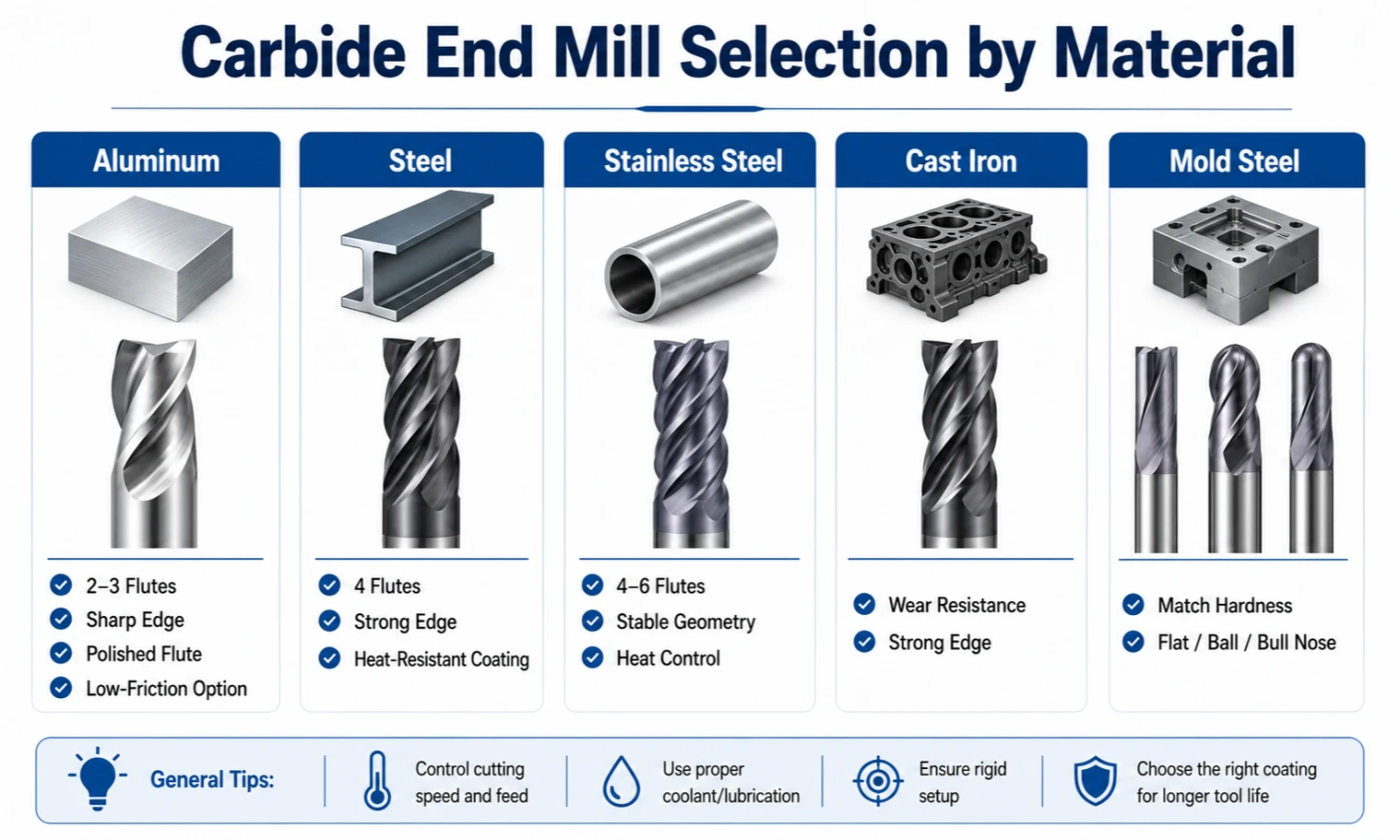
Alegerea unei freze din carbură pentru aluminiu
Aluminiul este relativ moale, dar poate adera la muchia de tăiere. Frecarea și evacuarea slabă a așchiilor pot crea o margine încorporată, care modifică geometria efectivă de tăiere și deteriorează finisajul suprafeței.
Direcția recomandată
Pentru multe aplicații din aluminiu, utilizare:
- 2-flaut sau geometrie cu 3 flute
- Margini de tăiere ascuțite
- Spațiu mare și neted pentru flaut
- Suprafețe șlefuite
- Neacoperit, DLC, sau o altă opțiune cu frecare redusă
- Conexiune sculă scurtă și stabilă
Uneltele cu două caneluri oferă mai mult spațiu pentru așchii și adesea se potrivesc cu sloting, buzunare, și tăieturi mai adânci. Uneltele cu trei caneluri oferă o margine de tăiere suplimentară, păstrând în același timp mai mult spațiu pentru așchii decât multe modele cu patru caneluri.
Geometria cu helix înalt poate îmbunătăți, de asemenea, fluxul de așchii și finisarea suprafeței în aplicațiile adecvate din aluminiu. Cu toate acestea, puterea muchiei, stabilitatea mașinii, diametrul sculei, și adâncimea de tăiere încă mai trebuie luată în considerare.
Considerații de acoperire pentru aluminiu
Neacoperit, lustruit, DLC, sau alte suprafețe cu frecare redusă sunt de obicei preferate deoarece ajută la reducerea aderenței materialului.
Unele acoperiri care conțin titan pot crește aderența în anumite aplicații de aluminiu. Prin urmare, nu selectați un strat doar pentru că oferă rezistență ridicată la căldură. Aliajul de aluminiu, lustruire flaut, viteza de taiere, lichid de răcire, iar funcționarea afectează și performanța.
Probleme comune ale aluminiului
Marginea încorporată indică adesea o frecare ridicată, o margine plictisitoare, evacuare slabă a așchiilor, sau condiții de tăiere necorespunzătoare. Ambalarea așchiilor înseamnă, de obicei, că spațiul canalului sau metoda de evacuare nu poate gestiona volumul de așchii.
În practică, mai întâi verificați muchia de tăiere, stare flaut, surplusul sculei, livrare aer sau lichid de răcire, și dacă numărul de flaut lasă suficient spațiu pentru cip.
Alegerea unei freze din carbură pentru oțel
Oțelul creează forțe de tăiere mai mari și o uzură mai mare a marginilor decât aluminiul. Ca urmare, instrumentul are nevoie de un miez mai puternic, muchii de tăiere stabile, calitate adecvată de carbură, și acoperire rezistentă la căldură.
De ce Patru Flaut sunt un punct de plecare comun
Freze cu patru caneluri oferă mai multe muchii de tăiere și au adesea un miez mai puternic decât modelele comparabile cu două caneluri. Acest lucru le face un punct de plecare practic pentru crestarea generală a oțelului, frezare laterală, profilare, si finisare.
Cu toate acestea, patru flute nu sunt singura opțiune. Sculele cu trei caneluri sau cu elice variabile se pot potrivi cu degroșarea și prelucrarea cu eficiență ridicată, în timp ce modelele cu cinci sau șase caneluri pot fi potrivite pentru frezarea laterală controlată și finisarea.
Direcția recomandată
Pentru multe aplicații din oțel carbon și aliat, considera:
- Patru flaut ca o selecție inițială
- Miez puternic și margini de tăiere
- Pregătirea adecvată a colțurilor
- TiAlN, Altin, TiSiN, sau acoperire bazată pe aplicare
- Suport stabil și curgere controlată
- Seria de scule potrivite durității piesei de prelucrat
Oțel cu conținut scăzut de carbon, oțel aliat, iar oțelul călit nu ar trebui să folosească automat același cuțit. Pe măsură ce duritatea și temperatura de tăiere cresc, calitate de carbură, acoperire, pregătirea marginilor, iar rigiditatea sculei devine mai importantă.
Probleme comune ale oțelului
Uzura rapidă a flancurilor poate indica un grad neadecvat de carbură, acoperire, sau starea de tăiere. Așchierea colțurilor poate rezulta din sarcina de tăiere excesivă, geometrie slabă a colțului, vibratie, sau tăiere întreruptă.
Înainte de a înlocui designul sculei, verificați suportul, a alerga afară, surplusul sculei, strângerea piesei de prelucrat, adâncimea de tăiere, și dacă pregătirea muchiei se potrivește cu operația.
Alegerea unei freze din carbură pentru oțel inoxidabil
Oțelul inoxidabil combină adesea duritatea, generare de căldură, și comportament de întărire a muncii. Când marginea de tăiere se freacă în loc să formeze o așchie consistentă, căldura rămâne aproape de suprafață și materialul poate deveni mai greu de tăiat.
Din acest motiv, prelucrarea oțelului inoxidabil necesită avans stabil, prindere rigidă, runout controlat, rezistență adecvată a muchiei, și îndepărtarea fiabilă a așchiilor.
Direcția recomandată
In functie de operatie, considera:
- Patru caneluri pentru multe operațiuni generale de frezare
- Cinci sau șase caneluri pentru frezare laterală și finisare adecvate
- Margini de tăiere puternice și stabile
- TiAlN, Altin, AlCrN, sau un alt strat adecvat
- Conexiune scurtă a sculei
- Alimentare constantă și încărcare a așchiilor
- Lichid de răcire sau aer stabil
Un număr mai mare de caneluri oferă mai multe muchii tăietoare, dar reduce spațiul pentru așchii. Șase caneluri pot funcționa bine la frezarea laterală stabilă sau la finisare, dar nu sunt automat cea mai bună alegere pentru tăierea adâncă sau pentru tăierea grea pe toată lățimea.
Modele cu helix variabilă și cu pas inegal
Geometria cu spirală variabilă sau cu pas inegal poate ajuta la reducerea forțelor de tăiere repetitive. Ca urmare, aceste modele pot reduce vibrațiile în aplicațiile instabile din oțel inoxidabil.
Ele nu înlocuiesc o configurație rigidă. Masina, titular, surplusul sculei, strângerea piesei de prelucrat, iar strategia de tăiere controlează în continuare stabilitatea generală.
Tipuri din oțel inoxidabil
Clasele austenitice precum 304 şi 316 tind să genereze căldură și să se întărească. Calitățile inoxidabile întăribile pot necesita muchii mai puternice și o serie de scule potrivite durității lor.
Oțelul inoxidabil duplex combină rezistența și duritatea, așa că deseori necesită un control atent al încărcării așchiilor, căldură, și angajarea instrumentelor. Prin urmare, nota exactă trebuie confirmată înainte de a selecta instrumentul final.
Alegerea unei freze din carbură pentru fontă
Fonta este adesea abrazivă, deci rezistența la uzură și stabilitatea marginilor sunt factori majori de selecție. Cu toate acestea, diferite tipuri de fontă nu produc același comportament de tăiere.
Fontă gri
Fonta gri produce de obicei scurte, așchii casante și pot crea praf fin. Un grad de carbură rezistent la uzură, margine puternică, și controlul adecvat al prafului poate îmbunătăți stabilitatea procesului.
Multe operațiuni cu fontă cenușie folosesc tăierea uscată sau extracția controlată a aerului. Cu toate acestea, strategia lichidului de răcire ar trebui să se potrivească cu mașina, gradul materialului, și procesul de producție.
Fontă ductilă
Fonta ductilă are o duritate mai mare decât fonta cenușie. Cipsele sale pot fi mai lungi, astfel încât controlul cipurilor poate deveni mai important.
Cuțitul poate avea nevoie de un echilibru între rezistența la uzură și duritatea muchiei. O muchie foarte slabă se poate ciobi sub sarcini de tăiere mai grele, în timp ce o acoperire necorespunzătoare se poate uza rapid în condiții abrazive.
Direcția recomandată
Pentru prelucrarea fontei, se concentreze pe:
- Grad de carbură rezistent la uzură
- Geometrie puternică de ultimă oră
- Pregătirea corespunzătoare a marginilor
- Acoperire bazată pe aplicare
- Configurare stabilă a mașinii și a suportului
- Control corect al prafului și al așchiilor
Nu tratați fiecare tip de fontă ca pe un uscat, material producator de pulbere. Confirmați dacă piesa de prelucrat este gri, ductile, grafit compactat, sau alt tip.
Alegerea unei freze din carbură pentru matriță și oțel pentru scule
Prelucrarea matriței poate include degroșare, semifinisare, prelucrarea cavitatii, profilare, si finisare finala. Prin urmare, selectarea sculei ar trebui să se potrivească atât cu duritatea piesei de prelucrat, cât și cu forma prelucrată.
Selectați profilul final după geometria caracteristicii
Frezele plate se potrivesc cu fantele cu fund plat, buzunare, trepte, umerii, și pereții laterali drepti.
Frezele cu vârf de taur sau cu raza colțului oferă colțuri exterioare mai puternice decât uneltele ascuțite cu capăt pătrat. Se potrivesc adesea profilării, semifinisare, și prelucrarea matrițelor unde ciobirea colțurilor este o preocupare.
Frezele cu vârf sferic urmează suprafețe curbate și contururi 3D. Pe măsură ce instrumentul se deplasează printr-o cavitate, capătul rotunjit menține contactul cu geometria complexă, făcându-l util pentru finisarea matrițelor și matrițelor.
Pentru o comparație mai largă, citire tipuri de freze și utilizări ale acestora.
Potriviți seria de scule la duritatea piesei de prelucrat
Seria de scule poate viza materiale până la HRC45, HRC55, HRC60, sau HRC65. Aceste valori descriu intervalul de duritate dorit al piesei de prelucrat, nu duritatea sculei cu carbură.
Pe măsură ce duritatea crește, instrumentul poate avea nevoie de o calitate mai fină de carbură, pregătire mai puternică a marginilor, acoperire adecvată, consolă mai scurtă, și o configurație mai stabilă a suportului.
Frezarea tare necesită, de asemenea, un control atent al curbei, sarcina de tăiere, angajarea instrumentului, și căldură. O serie de instrumente cu duritate mare nu poate compensa o configurare instabilă.
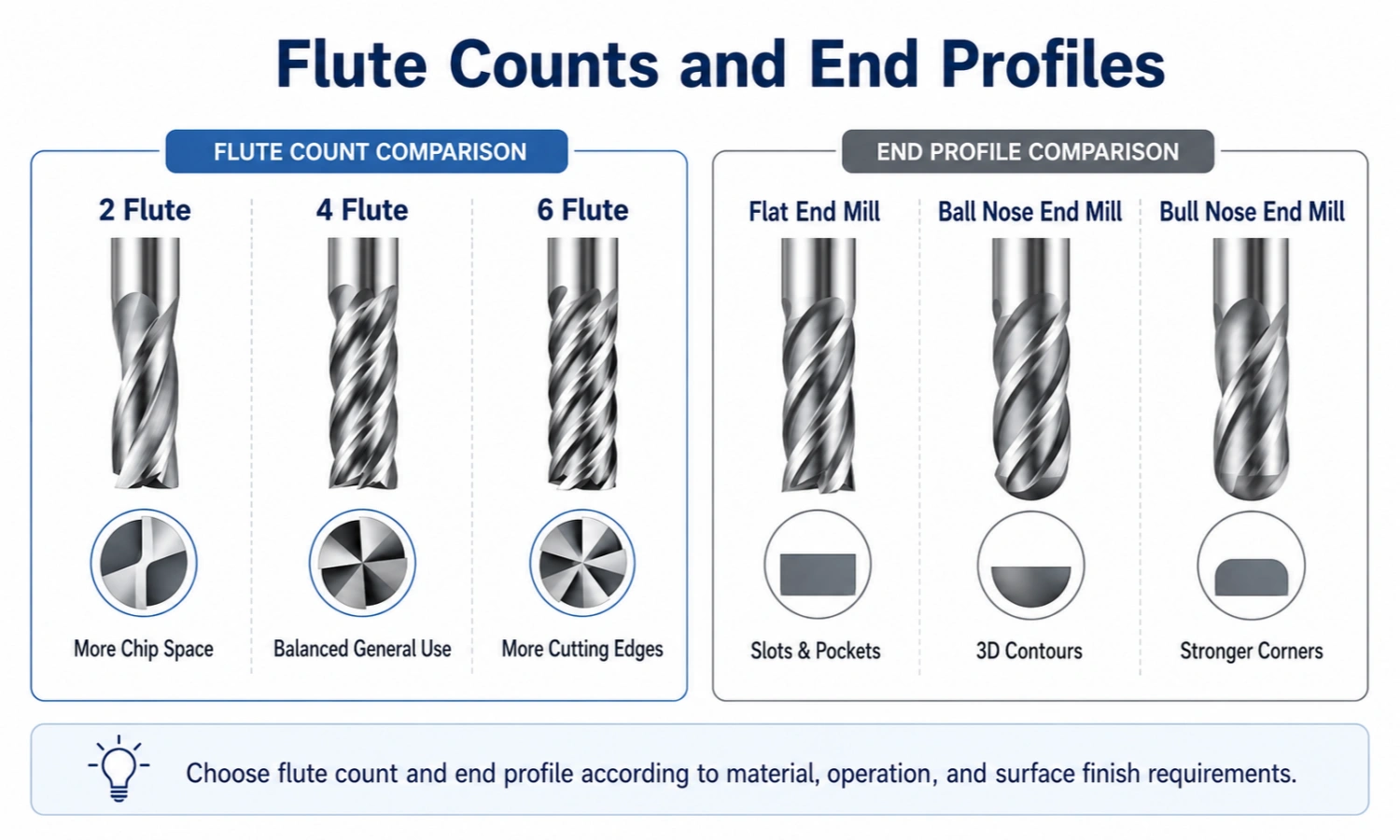
Alegerea unei freze din carbură prin operație de prelucrare
Aspre
Degroșarea creează volum mare de așchii și sarcină de tăiere. Folosiți suficient spațiu pentru canal pentru a îndepărta așchiile de zona de tăiere, și selectați o structură de margine care poate face față angajării.
Geometria de degroșare sau spargerea așchiilor împarte așchiile în secțiuni mai mici și poate reduce rezistența la tăiere. Frezarea dinamică sau trohoidală poate menține, de asemenea, o sarcină de tăiere mai consistentă atunci când strategia CAM, maşină, și configurarea îl sprijină.
Finisare
Finisarea necesită o geometrie stabilă, curgere controlată a sculei, margini ascuțite și consistente, și un profil de capăt adecvat.
Mai multe caneluri pot îmbunătăți capacitatea de alimentare și calitatea suprafeței atunci când evacuarea așchiilor rămâne adecvată. Înainte de a schimba freza, inspectați suportul, starea sculei, surplomba, și prindere a piesei de prelucrat.
Frezare cu buzunar adânc
Buzunarele adânci cresc riscul acumulării de cipuri, devierea sculei, vorbărie, și acces slab la lichid de răcire.
Folosiți cea mai scurtă consolă practică. Când funcția necesită o acoperire suplimentară, luați în considerare un design cu gât lung, cu numai lungimea de tăiere necesară. Acest lucru poate îmbunătăți rigiditatea în comparație cu utilizarea unui flaut excesiv de lung.
Pentru un proces de selecție mai larg care include tipul de tăietor, dimensiune, acoperire, si functionare, citeste-ne Ghid de selectare a sculelor de freza cu cap.
Diagnosticarea problemei frezei cu carbură
| Problemă de prelucrare | Cauza posibila | Direcția de reglare |
|---|---|---|
| Marginea încorporată | Frecare mare, marginea plictisitoare, evacuare slabă a așchiilor | Folosiți o geometrie mai clară, îmbunătățirea fluxului de așchii, și selectați o suprafață lustruită sau cu frecare redusă |
| Ruperea sculei | Contopire excesivă, ambalare a cipurilor, configurație instabilă, sarcina grea | Reduceți surplusul, îmbunătăți evacuarea, deformare a suportului cecului, și reduce implicarea instabilă |
| Chatter | Rigiditate scăzută, lungă întindere, prindere slabă, forțe de tăiere repetitive | Scurtați consolă, îmbunătăți prinderea, și luați în considerare geometria helixului variabil |
| Finisaj slab al suprafeței | Uzura sculei, a alerga afară, vibratie, profil de capăt necorespunzător | Verificați muchia de tăiere, precizia titularului, stabilitatea hranei, și geometria de finisare |
| Uzura rapidă a marginilor | Grad greșit de carbură, acoperire, sau starea de tăiere | Potriviți calitatea și acoperirea cu materialul, duritate, căldură, si functionare |
| Corner Chipping | Sarcină excesivă, tăiere întreruptă, design slab de colț | Utilizați o geometrie de colț mai puternică, revizuirea angajamentului, și îmbunătățirea stabilității procesului |
Acest tabel ajută la identificarea primelor puncte de verificat. O problemă de prelucrare poate avea mai multe cauze, deci schimbarea numai a stratului de acoperire sau a numărului de caneluri poate să nu rezolve problema.
Greșeli frecvente de selecție
Folosind un cutter pentru fiecare material
O unealtă nu poate funcționa la fel de bine în aluminiu, oţel, stainless steel, fontă, și oțel matriță întărit. Fiecare material creează așchii diferite, căldură, forte, si uzura.
Ignorând Evacuarea Cipului
Evacuarea slabă a așchiilor crește căldura și provoacă tăierea din nou a așchiilor. În fante și buzunare adânci, poate duce, de asemenea, la defectarea bruscă a sculei.
Alegerea acoperirii numai după nume
O acoperire mai scumpă sau la temperatură mai mare nu este automat mai bună. Acoperirea trebuie să se potrivească cu materialul piesei de prelucrat, calitate de carbură, geometria marginilor, starea lichidului de răcire, și operația de tăiere.
Utilizarea Excesivă Excesiune a sculei
Consola lungă reduce rigiditatea. Înainte de a schimba viteza, hrana, sau material pentru scule, scurtați raza instrumentului ori de câte ori caracteristica o permite.
Numai prețul instrumentului de comparare
Este posibil ca un preț de achiziție mai mic să nu reducă costul total de prelucrare. Durata de viață a sculei, calitatea suprafeței, timpul de nefuncţionare al maşinii, respingerea părții, și frecvența de schimbare a sculei afectează și rezultatul final.
FAQ
Cum aleg o freză din carbură?
Începeți cu materialul piesei de prelucrat, duritate, și operațiunea de prelucrare. Următor, confirmați numărul de flaut, profilul final, acoperire, dimensiunile sculei, surplomba, evacuare cip, și finisarea necesară a suprafeței.
Care freză din carbură este cea mai bună pentru aluminiu?
Uneltele cu două sau trei caneluri sunt puncte de plecare comune, deoarece oferă mai mult spațiu pentru așchii. Margini ascuțite, flutele lustruite, și neacoperite, DLC, sau o altă opțiune cu frecare scăzută poate ajuta, de asemenea, la reducerea acumulării de material.
Frezele din carbură pot tăia oțel inoxidabil?
Da. Cuțitul trebuie să ofere o rigiditate adecvată, puterea muchiei, spațiu pentru flaut, acoperire, și stabilitate de tăiere. Avansarea stabilă și depășirea controlată a sculei ajută, de asemenea, la reducerea căldurii și întărirea prin muncă.
Care este scopul unei freze cu elice variabile?
Un design cu helix variabil sau cu pas inegal modifică sincronizarea forțelor de tăiere. Acest lucru poate reduce vibrațiile și vibrațiile repetitive, mai ales în timpul frezării laterale şi a altor operaţii instabile.
Ar trebui să folosesc 2, 4, sau 6 Fluiere?
Mai puține flute oferă, în general, mai mult spațiu pentru cip. Mai multe caneluri oferă mai multe muchii de tăiere și pot îmbunătăți rigiditatea sau performanța de finisare. Alegerea corectă depinde de material, operare, logodnă, volumul cipului, și cerințele de suprafață.
Pentru o comparație detaliată, citire 2 flaut vs 4 flaut vs 6 Freză de capăt pentru caneluri.
Când ar trebui înlocuită o freză de carbură?
Inspectați sau înlocuiți dispozitivul de tăiere când observați ciobirea muchiei, zgomot anormal, sarcină crescută pe ax, deriva dimensionala, deteriorarea finisajului suprafeței, bavuri excesive, sau căldură de tăiere în creștere rapidă.
Nu așteptați defecțiunea completă a sculei. Înlocuiți unealta când începe uzura pentru a reduce stabilitatea procesului sau calitatea pieselor.
Aveți nevoie de ajutor pentru a alege freza de carbură potrivită?
Instrumentul potrivit depinde de materialul piesei de prelucrat, duritate, operatie de prelucrare, dimensiunile cerute, configurarea mașinii, și cerințele de finisare a suprafeței.
Trimite-ne desenul tău, model de instrument, imaginea produsului, eşantion, sau informațiile de prelucrare disponibile. Vom examina aplicația dvs. și vă vom recomanda o soluție adecvată pentru freza de carbură.
Pentru opțiuni standard și personalizate, vizitați-ne freza de freza din carbură pagina produsului.
Pentru a discuta aplicația dvs, trimite-ne un e-mail la sales@cutterbest.com.