 Прецизионные фрезы,Режущие инструменты для обработки любого материала с ЧПУ

Основное отличие в 4 флейта против 6 Сравнение концевых фрез с канавками - это баланс между эвакуацией стружки и жесткостью инструмента..
А 4 Концевая фреза с канавками обеспечивает больше места для канавок. Поэтому, как правило, он более гибок для умеренного размещения слотов, боковое фрезерование, профильное фрезерование, и изменение условий резания.
В отличие, а 6 Концевая фреза с канавками имеет больше режущих кромок и обычно более прочный сердечник.. Это может обеспечить лучшую стабильность во время контролируемой получистовой и чистовой обработки., особенно, когда качество стен и качество поверхности являются основными целями.
Ни один счет флейты не всегда лучше. Правильный выбор зависит от операции обработки., объем чипа, сокращение помолвки, жесткость машины, вылет инструмента, и необходимая отделка.
Ключевые различия между 4 Флейта и 6 Флейтовые концевые фрезы
4 Флейта концевая фреза: Больше места для чипа и универсальность
А 4 Концевая фреза с канавками имеет четыре режущие кромки с большим пространством между канавками, чем у конструкции с шестью канавками.. Как результат, стружка может легче покинуть зону резания.
Такая конструкция обеспечивает практический баланс эвакуации стружки., основная сила, и стабильность резки. Обычно его выбирают для общей обработки стали и нержавеющей стали., умеренное размещение, боковое фрезерование, профильное фрезерование, и получистовая обработка.
Четырехзубая фреза также более щадящая при изменении условий зацепления или обработки во время производства..
Для стандартных размеров, центрально-режущие конструкции, покрытия, и пользовательские опции, просмотрите наш 4 Концевая фреза из твердого сплава канавок.
Для более широкого руководства по применению, читать что такое 4 концевая фреза с флейтой, используемая для.
6 Флейта концевая фреза: Повышенная жесткость при чистовой обработке
А 6 Концевая фреза с канавками имеет шесть режущих кромок и меньше места для канавок.. Дополнительные режущие кромки и более прочный сердечник повышают жесткость., устойчивость стены, и однородность поверхности во время контролируемой обработки.
Поэтому, эта конструкция часто используется для бокового фрезерования, отделка профиля, получистовая обработка, и отделка сталью, нержавеющая сталь, и легированная сталь.
Однако, меньшее пространство канавок ограничивает эвакуацию стружки. Фреза с шестью канавками обычно не является лучшим выбором для обработки глубоких пазов полной ширины., тяжелая черновая обработка, или операции, которые производят большой объем стружки.
Для размеров продукта и возможностей настройки, просмотрите наш 6 Концевая фреза из твердого сплава канавок.
Для получения дополнительной информации о его приложениях, читать что такое 6 концевая фреза с флейтой, используемая для.
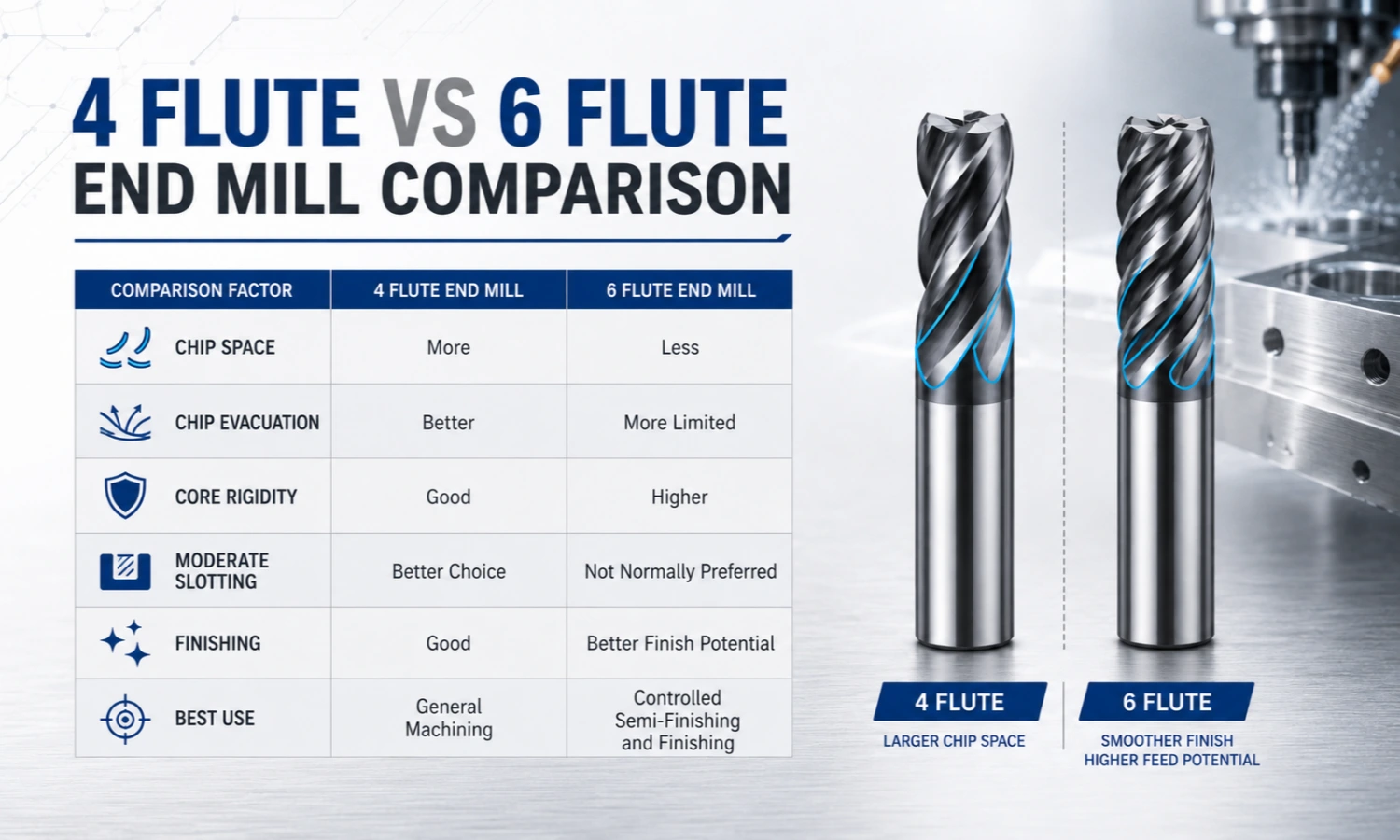
4 Флейта против 6 Сравнение концевых фрез с флейтой
| Коэффициент сравнения | 4 Флейта концевая фреза | 6 Флейта концевая фреза |
|---|---|---|
| Чип Космос | Больше | Меньше |
| Эвакуация стружки | Лучше | Более ограниченный |
| Основная жесткость | Хороший | Выше |
| Общая обработка стали | Более универсальный | Более специализированный |
| Умеренное слотирование | Лучший выбор | Обычно не предпочтительнее |
| Боковое фрезерование | Подходящий | Подходит для контролируемого взаимодействия |
| Профильное фрезерование | Подходящий | Хорошо подходит для стабильных чистовых проходов |
| Получистовая обработка | Подходящий | Часто лучше |
| Отделка | Хороший | Лучший потенциал завершения |
| Тяжелая черновая обработка | Более подходящий | Не идеально |
| Настройка машины | Более снисходительный | Лучше всего работает в жестких установках |
| Лучшее использование | Общая обработка и умеренное удаление стружки | Контролируемая получистовая и чистовая обработка |
| Используйте с осторожностью | Очень легкая чистовая обработка, где может помочь большее количество режущих кромок. | Глубокие слоты, плохая эвакуация стружки, длинный свес, или нестабильные настройки |
В этой таблице представлены общие рекомендации по выбору.. Фактическая производительность также зависит от марки твердого сплава., покрытие, угол спирали, диаметр инструмента, длина канавки, состояние держателя, подача охлаждающей жидкости, и параметры резки.
4 Флейта против 6 Флейта концевая фреза для стали
Оба числа канавок позволяют обрабатывать сталь.. Однако, они подходят для разных операций.
А 4 Концевая фреза с канавками, как правило, является более гибким вариантом для общей обработки стали.. Увеличенное пространство канавок обеспечивает умеренное удаление стружки., изменение режущего контакта, боковое фрезерование, профильное фрезерование, и от легкой до умеренной щели.
А 6 Концевая фреза с канавками становится более полезной, когда операция фокусируется на контролируемой получистовой или чистовой обработке.. Его дополнительные режущие кромки могут улучшить качество стен и однородность поверхности.. Однако, машина, держатель, работа, и траектория инструмента должна оставаться стабильной.
Выбирать 4 Флейта для общей обработки стали
Четырехзубая фреза — практичный выбор, когда:
- Операция включает в себя умеренное дробление.
- Эвакуация стружки остается важной.
- Сокращение участия может измениться.
- Один инструмент должен охватывать несколько операций.
- Установка не оптимизирована только для финишной обработки.
Выбирать 6 Канавка для контролируемой чистовой обработки
Фреза с шестью канавками может обеспечить лучшие результаты, если:
- Операция в основном предполагает получистовую или чистовую обработку..
- Требуется лучшее качество стен.
- Радиальное зацепление остается легким и контролируемым.
- Станок и держатель обеспечивают хорошую жесткость..
- Качество поверхности важнее, чем максимальное пространство для стружки.
Во многих мастерских, конструкция с четырьмя канавками служит отправной точкой общего назначения. Инструмент с шестью канавками предлагает более специализированный выбор, когда операция становится стабильной и ориентированной на чистовую обработку..
4 Флейта против 6 Флейта концевая фреза для нержавеющей стали
Нержавеющая сталь может выделять тепло и затвердевать, когда условия резки становятся нестабильными.. Поэтому, эвакуация стружки, сокращение помолвки, покрытие, геометрия инструмента, и жесткость машины все имеет значение.
А 4 Концевая фреза с канавками обычно является практической отправной точкой для общей обработки нержавеющей стали.. Это обеспечивает полезный баланс между пространством чипа и прочностью ядра., поэтому он может обрабатывать профильное фрезерование, боковое фрезерование, умеренное удаление материала, и получистовая обработка.
А 6 концевая фреза с флейтой более специализирована. Он может хорошо работать при контролируемых получистовых и чистовых проходах, где требуется постоянство размеров., качество стен, и более гладкие поверхности являются основными целями.
Однако, объем стружки и зацепление при резании должны оставаться под контролем. В противном случае, стружка и тепло могут собираться вокруг режущих кромок.
Для специальной отделки нержавеющей стали, Также распространены инструменты с пятью или более канавками и более высоким углом спирали.. Несмотря на это, дополнительные канавки помогают только при эвакуации стружки, закончиться, инструмент холдинг, и жесткость установки остаются под контролем. Геометрия с изменяемой спиралью или переменным шагом также может улучшить контроль вибрации..
В общем:
- Выбирать 4 канавка для большей универсальности и большего пространства для стружки.
- Выбирать 6 канавка для контролируемой чистовой обработки и повышенных требований к качеству поверхности.
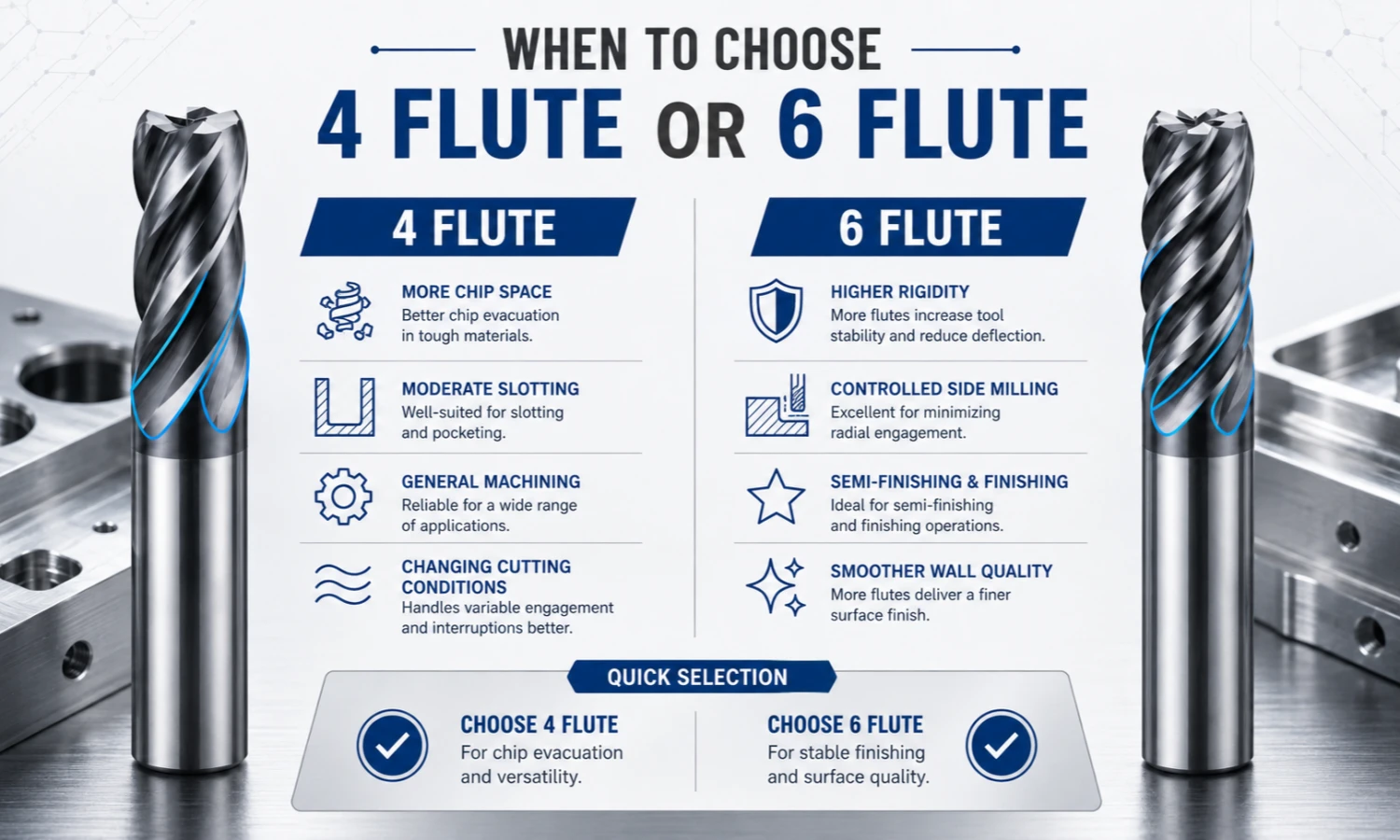
Как выбрать 4 Флейта или 6 Флейта концевая фреза за три шага
Шаг 1: Начните с операции механической обработки
Первый, определить основную операцию.
Выберите 4 концевая фреза с канавками, когда работа включает умеренную обработку пазов, изменение режущего контакта, или общее боковое и профильное фрезерование. Увеличенное пространство канавок обеспечивает более безопасный выход стружки из зоны резания..
Рассмотрим 6 концевая фреза с канавками, когда в операции используется контролируемое боковое зацепление и основное внимание уделяется получистовой или чистовой обработке..
Для тяжелой черновой обработки, специальная фреза для черновой обработки может оказаться более подходящей, чем стандартный инструмент для чистовой обработки с четырьмя или шестью канавками..
Шаг 2: Проверьте эвакуацию стружки и жесткость установки.
Следующий, просмотрите полную настройку обработки.
Шестизубая фреза работает лучше всего, когда:
- Захват резки остается под контролем.
- Станок и держатель обеспечивают хорошую жесткость..
- Вылет инструмента должен быть настолько коротким, насколько это практически возможно..
- СОЖ или воздух могут попасть в зону резки..
- Стружка может покинуть заготовку без повторной резки..
Инструмент с четырьмя канавками, как правило, более щадящий, когда настройка менее жесткая или изменяются условия резания..
Большее количество канавок не может исправить нестабильный держатель., чрезмерный вылет, плохое трудоустройство, или заблокирована эвакуация стружки.
Шаг 3: Установите приоритет шероховатости поверхности
Окончательно, решить, что имеет более высокий приоритет: контроль стружки или качество отделки.
Выбирайте четыре флейты, если вам нужна универсальность., эвакуация стружки, и умеренное удаление материала имеют наибольшее значение.
Выбирайте шесть канавок, если установка стабильна и операция нацелена на качество стен., постоянство размеров, и более гладкая готовая поверхность.
Если подача установлена правильно, большее количество режущих кромок может снизить нагрузку на каждую кромку.. Однако, плохой контроль стружки или чрезмерный нагрев могут лишить этого преимущества.
Что проверить, если 6 Концевая фреза с канавками не улучшает результат
Шестизубая фреза не обеспечивает автоматически лучшую отделку.. Когда результат становится хуже, проверьте полное состояние резания, прежде чем обвинять инструмент.
| Знак обработки | Возможная причина | Первое, что нужно проверить |
|---|---|---|
| Стружка собирается вокруг режущих кромок | Объем стружки слишком велик для доступного пространства канавок. | Уменьшите взаимодействие при резании или рассмотрите возможность 4 дизайн флейты |
| Температура резки быстро повышается | Стружка остается в зоне резания или доступ СОЖ ограничен. | Улучшите эвакуацию стружки и подачу СОЖ. |
| Появляются дребезжание стен или следы вибрации | Вылет инструмента или всей установке недостает жесткости. | Держатель чека, нависать, работа, и траектория инструмента |
| Чистота поверхности не улучшается | Закончиться, кормить, или режущее зацепление неподходящее | Проверьте биение и отрегулируйте стратегию чистовой обработки. |
| Режущие кромки неожиданно скалываются | Перерезка чипа, нагревать, или нестабильное взаимодействие | Обзор управления чипом, покрытие, и условия резания |
Это общие признаки устранения неполадок, а не фиксированные правила резки.. Правильная регулировка зависит от конструкции фрезы., материал заготовки, машина, держатель, и параметры обработки.
Практические примеры выбора
Обычная сталь с умеренными прорезями
Для умеренной прорезки пазов или изменения зацепления при резании в обычной стали., а 4 Концевая фреза с канавками обычно является более гибким выбором..
Увеличенное пространство канавок обеспечивает эвакуацию стружки., в то время как четырехзубая сердцевина по-прежнему обеспечивает полезную жесткость при боковом и профильном фрезеровании..
Если операция переходит в легкий заключительный проход боковой чистовой обработки, а 6 фрезерный станок можно оценить отдельно.
Отделка профиля из нержавеющей стали
При обработке нержавеющей стали с легким и стабильным боковым зацеплением, жесткая установка, и четкая финишная цель, а 6 Концевая фреза с канавками может обеспечить лучший потенциал чистовой обработки.
Однако, если стружка начинает собираться или температура резания быстро повышается, а 4 конструкция канавок может обеспечить более безопасный баланс между пространством канавок и стабильностью резания..
Эти примеры показывают, почему количество канавок должно соответствовать операции, а не выбираться только по названию материала..
Часто задаваемые вопросы
В чем основное отличие между 4 флейта и 6 концевая фреза с канавками?
Основное отличие заключается в балансе между эвакуацией стружки и жесткостью..
А 4 flute end mill provides more flute space and greater versatility. В отличие, а 6 flute end mill provides more cutting edges, higher core rigidity, and better finishing potential under stable conditions.
Это 4 флейта или 6 flute end mill better for steel?
А 4 flute end mill is usually better for general steel machining, умеренное размещение, и изменение условий резания.
А 6 flute cutter often performs better during controlled side milling, получистовая обработка, and finishing when surface quality is the main goal.
When should I avoid using a 6 концевая фреза с канавками?
А 6 flute end mill is normally not the first choice for deep full-width slots, тяжелая черновая обработка, high chip-volume operations, poor coolant access, или нестабильные настройки.
Its smaller flute space can increase chip recutting and heat when cutting engagement is too high.
Does a higher flute count always produce a better surface finish?
Нет. A higher flute count can improve finishing potential, but the result also depends on runout, корм на зуб, геометрия инструмента, жесткость машины, состояние держателя, эвакуация стружки, и стабильность заготовки.
Если в зоне резания остается стружка или тепло, шестизубая фреза может не улучшить качество поверхности.
Как мне выбрать между 4 флейта и 6 концевая фреза с канавками?
Начните с операции обработки и объема стружки.. Затем проверьте зацепление резки, вылет инструмента, состояние держателя, и жесткость машины.
Выбирайте четыре канавки, когда эвакуация стружки и универсальность имеют большее значение.. Выбирайте шесть канавок, когда установка стабильна и главной целью является контролируемая обработка..
Заключение
При сравнении 4 флейта против 6 концевая фреза с канавками, начните с цели обработки.
Четырехзубая фреза обеспечивает больше места для стружки и большую гибкость при обработке обычной и нержавеющей стали., умеренное размещение, боковое фрезерование, и изменение условий резания.
Фреза с шестью канавками обеспечивает более высокую жесткость и лучший потенциал чистовой обработки, при этом зацепление при резании остается контролируемым.. Поэтому, подходит для стабильных получистовых и чистовых операций, требующих лучшего качества стен и более гладких поверхностей.
Вместо того, чтобы выбирать фрезу только по количеству канавок, подобрать инструмент к материалу, объем чипа, глубина резания, жесткость машины, инструмент холдинг, и необходимая отделка.
Нужна помощь в выборе между 4 Флейта и 6 Флейтовые концевые фрезы?
Выбор правильного количества канавок может улучшить стружкоотвод., стабильность резки, срок службы инструмента, и качество поверхности.
Отправьте нам материал заготовки, твердость материала, диаметр резания, длина канавки, операция механической обработки, требование к покрытию, и количество. Вы также можете предоставить чертеж, справочник инструментов, или фото приложения, если спецификация неполная.
Мы рассмотрим доступную информацию и поможем вам выбрать подходящую стандартную или нестандартную твердосплавную концевую фрезу..
Отправьте свое требование по электронной почте sales@cutterbest.com.