 Frese di precisione,Utensili da taglio per la lavorazione CNC di ogni materiale

A cosa serve una fresa a testa piatta? Nella lavorazione CNC, viene utilizzato principalmente per produrre slot, tasche a fondo piatto, pareti laterali diritte, spalle quadrate, scanalature per chiavette, passi, e altre funzionalità 2D o 2.5D. I suoi taglienti finali rimuovono il materiale dalla parte inferiore di una lavorazione, mentre le scanalature periferiche lavorano le pareti laterali.
Scegli questo strumento quando il disegno richiede un fondo piatto, un muro dritto, o una transizione definita dal basso alla parete. Il risultato finale dipende ancora dal materiale, profondità, volume del chip, portata dell'utensile, e metodo di inserimento.
Una fresa con un numero inferiore di scanalature può essere adatta a una fessura profonda in alluminio perché i trucioli hanno bisogno di spazio per fuoriuscire, mentre un utensile con nucleo più resistente può essere adatto alla fresatura laterale leggera o alla finitura dell'acciaio.
Per una spiegazione dettagliata della geometria e della struttura di taglio, Leggere cos'è una fresa a testa piatta.
Taglie disponibili, conta il flauto, materials, rivestimenti, e le opzioni personalizzate sono elencate sul nostro fresa a punta piatta pagina del prodotto.
A cosa serve una fresa a punta piana nella lavorazione CNC?
Le seguenti operazioni rappresentano gli usi più comuni delle frese a candela nella lavorazione CNC. I macchinisti scelgono la fresa quando la parte necessita di una superficie piana, un muro dritto, o entrambi.
Fresatura di scanalature
Durante la fresatura di scanalature, la taglierina rimuove il materiale su tutto il suo diametro e produce una fessura con fondo piatto. Perché entrambi i lati dello strumento sono impegnati, la scanalatura a tutta larghezza crea un elevato volume di trucioli. L'evacuazione del truciolo deve essere pianificata prima dell'inizio del taglio.
Per alluminio e altri materiali a truciolo lungo, un numero inferiore di scanalature spesso fornisce più spazio per le scanalature. Nelle fessure profonde, dirigere aria o refrigerante nella zona di taglio. Se i chip ancora non riescono a scappare, ridurre la profondità per passata o utilizzare un percorso utensile graduale.
Fresatura di tasche
Le frese a estremità piatta possono sgrossare e rifinire tasche a fondo piatto. I macchinisti possono entrare nella tasca tramite rampa, interpolazione elicoidale, ingresso laterale, Tuffo diretto con apposita fresa, o attraverso un foro preforato.
La portata dell'utensile è fondamentale nelle tasche profonde. Una fresa molto più lunga del necessario ha maggiori probabilità di flettersi sotto carico radiale. Perciò, È necessario utilizzare la lunghezza di taglio e la sporgenza più corte possibili.
Fresatura laterale e di profilo
Nella fresatura laterale, le scanalature periferiche tagliano pareti diritte, profili esterni, e passaggi. Lunghezza di taglio, impegno radiale, sporgenza, eccentricità del supporto, e la rigidità della macchina influiscono sulla precisione della parete. Utilizzare una passata di finitura separata quando l'operazione richiede tolleranze più strette.
Spalle, Sedi per chiavette, e Passi
Un profilo con estremità piatta può lavorare una parete inferiore e verticale nello stesso percorso utensile, che si adatta alle spalle, scanalature per chiavette, canali, recessi, e passaggi. Per una tolleranza di larghezza ridotta, prima sgrossare la caratteristica e rifinire entrambi i lati separatamente.
Finitura delle superfici a fondo piatto
Una passata di finitura può pulire il fondo di una tasca o di una rientranza. Lasciare un piccolo margine dopo la sgrossatura e rimuovere i trucioli prima della passata finale per evitare graffi e danni ai bordi.
Una fresa piana può anche lavorare una piccola superficie piana aperta. Per un viso ampio e aperto, Tuttavia, una fresa frontale può rimuovere il materiale in modo più efficiente e fornire un percorso di taglio più produttivo.
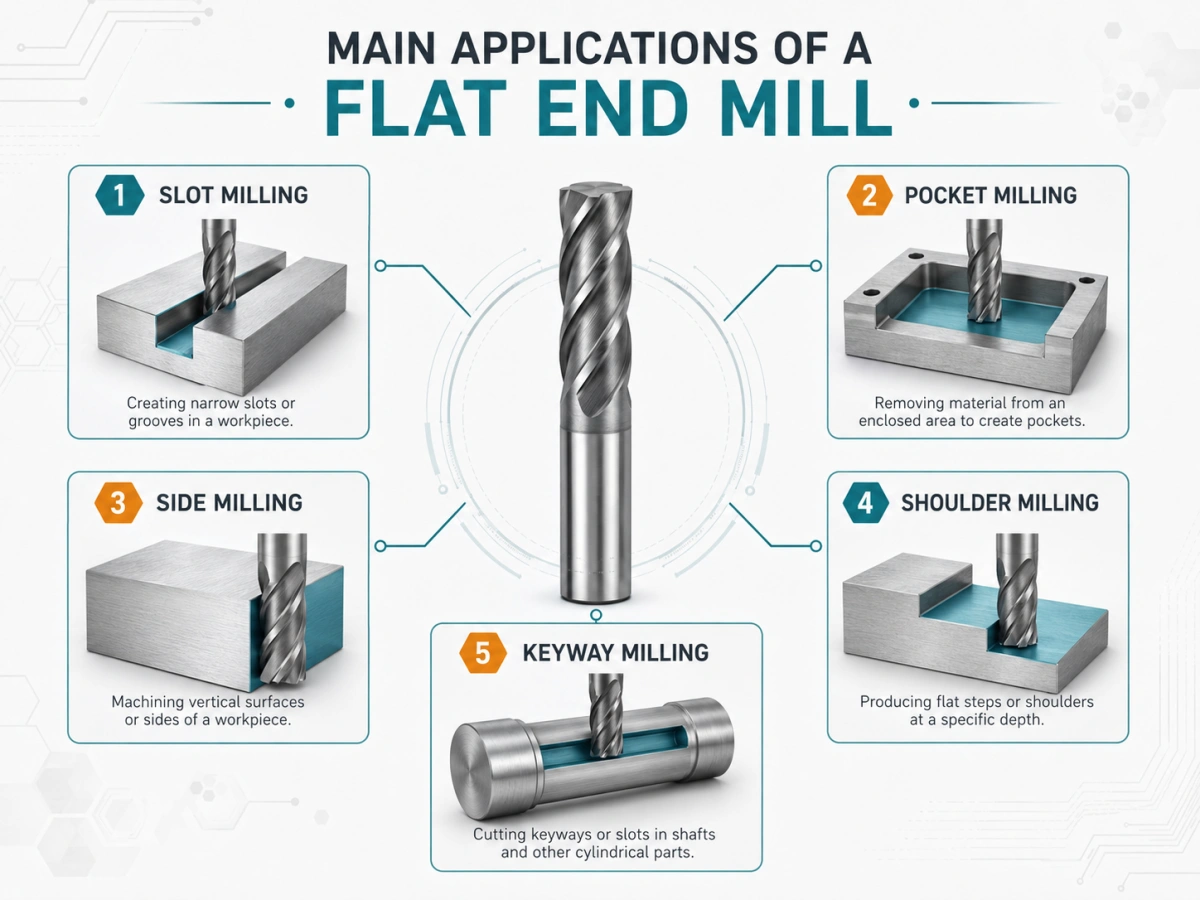
Guida applicativa alle frese a punta piana
| Applicazione | Caratteristica tipica | Preoccupazione principale |
| Fresatura di scanalature | Slot pieno o aperto | Evacuazione truciolo |
| Fresatura di tasche | Tasca a fondo piatto | Entrata e portata |
| Fresatura laterale | Parete diritta o profilo | Rigidità |
| Fresatura di spallamenti | Fondo con parete verticale | Precisione degli angoli |
| Fresatura della sede della chiavetta | Scanalatura stretta | Tolleranza sulla larghezza |
| Finitura inferiore | Fondo o rientranza della tasca | Ritaglio del truciolo |
Può una fresa a punta piana immergere?
Alcune frese a candela possono immergersi direttamente nel pezzo, ma questa capacità non dovrebbe essere data per scontata. La penetrazione diretta dipende dalla geometria del tagliente e del centro. Un design con taglio centrale può rimuovere materiale vicino all'asse dell'utensile, mentre un altro disegno potrebbe non tagliare efficacemente al centro.
Immersione diretta
L'immersione diretta sposta la fresa verticalmente nel materiale solido. Carica pesantemente i bordi terminali e rende difficile la rimozione dei trucioli. Utilizzare l'immersione diretta solo quando l'utensile supporta l'ingresso assiale e la configurazione è adatta.
Rampa, Entrata elicoidale, e pre-foratura
L'ingresso in rampa e elicoidale distribuisce il carico in modo più graduale rispetto a un'immersione rettilinea, quindi sono spesso preferiti per l'ingresso tascabile. Un foro preforato o un'entrata laterale potrebbero essere più adatti per una tasca profonda, uno strumento di taglio non centrale, una configurazione a bassa rigidità, o una funzionalità con spazio sul chip limitato. Confermare il metodo di immissione consigliato prima della produzione.
Note applicative per materiale del pezzo
Alluminio e materiali non ferrosi
Per alluminio, lo spazio del truciolo e l'adesione sono le principali preoccupazioni. Conteggi del flauto inferiore, grandi valli del flauto, e i bordi affilati o lucidati aiutano i trucioli lunghi a lasciare il taglio. Seleziona un non rivestito, DLC, TiB2, o un'altra opzione non ferrosa adatta a seconda della lega e del processo.
Per utensili progettati con più spazio per il truciolo, rivedi il nostro 2 fresa a candela a flauto opzioni.
Acciaio e Acciaio Inossidabile
La lavorazione dell'acciaio richiede un equilibrio tra spazio truciolo e rigidità. Gli strumenti a quattro taglienti sono comuni per lavori generali, mentre consideriamo TiAlN, Altin, o un altro rivestimento resistente al calore per il grado e il processo esatti.
L'acciaio inossidabile trattiene il calore e può indurirsi. Mantenere un carico di trucioli stabile, limitare la sporgenza, e rimuovere i trucioli in modo affidabile invece di limitarsi ad aumentare la velocità.
Per la lavorazione generale dell'acciaio, rivedi il nostro 4 fresa a candela a flauto opzioni.
Titanio e leghe resistenti al calore
Le leghe di titanio concentrano il calore sul tagliente. Utilizza una configurazione rigida, geometria stabile, impegno radiale controllato, e rimozione affidabile dei trucioli. La velocità e l'avanzamento devono essere basati sulla lega, diametro dell'utensile, conteggio dei flauti, rivestimento, fidanzamento, e lo stato della macchina.
Ghisa e acciaio temprato
La ghisa è abrasiva, quindi la resistenza all'usura e la robustezza del tagliente sono importanti. L'acciaio temprato richiede la conferma della durezza effettiva perché HRC 45, HRC 55, e HRC 65 sono condizioni di taglio diverse. Una sporgenza breve e un percorso utensile stabile sono particolarmente importanti per i materiali più duri.
Come il conteggio del flauto cambia l'applicazione
Il conteggio delle scanalature modifica lo spazio del truciolo, forza fondamentale, e il numero di taglienti. Selezionare il numero di scanalature in base all'operazione anziché applicare una regola fissa a ogni materiale.
| Condizioni di taglio | Conteggio tipico del flauto | Motivo principale |
| Elevato volume di trucioli | Conteggio del flauto inferiore | Più spazio per i chip |
| Fresatura generale | Conteggio medio dei flauti | Rigidità equilibrata |
| Impegno leggero | Numero di flauti più elevato | Più taglienti |
| Finissaggio | Conteggio medio-alto | Contatto del bordo stabile |
Per controllato, applicazioni con un numero di scanalature più elevato, rivedi il nostro 6 fresa a candela a flauto pagina del prodotto.
Quando dovresti usare un'altra taglierina?
Superfici curve o 3D
Una fresa a testa sferica è generalmente più adatta per gli stampi, muore, superfici curve, e contorni 3D. La sua estremità arrotondata mantiene un contatto graduale al variare dell'angolo della superficie. Una fresa piatta può lasciare gradini o segni visibili di utensile sulla stessa geometria.
Per lavorazioni curve e 3D, rivedi il nostro Frese a candela a testa sferica.
Un raggio dell'angolo è consentito o obbligatorio
Una fresa a punta toro mantiene una sezione centrale piatta ma aggiunge angoli esterni raggiati. Il raggio rafforza l'angolo di taglio e riduce la concentrazione delle sollecitazioni. Può quindi fornire una migliore durata dell'utensile quando il disegno della parte consente un raccordo tra la parete e il fondo.
Per un confronto dettagliato, Leggere fresa a punta toro vs fresa piana.
Smussatura o sbavatura controllata
Una fresa a candela piana può rompere leggermente un bordo attraverso un percorso utensile programmato, ma una fresa per smussatura normalmente fornisce un controllo dell'angolo e una sbavatura più prevedibili.
Funzionalità molto profonde o non standard
Le tasche profonde potrebbero richiedere un collo lungo, collo ridotto, o progettazione personalizzata. Perché la portata extra aumenta la deflessione, mantenere la lunghezza di taglio non più lunga del necessario.
Per portata non standard, dimensioni, o geometria, rivedi il nostro frese personalizzate servizio.
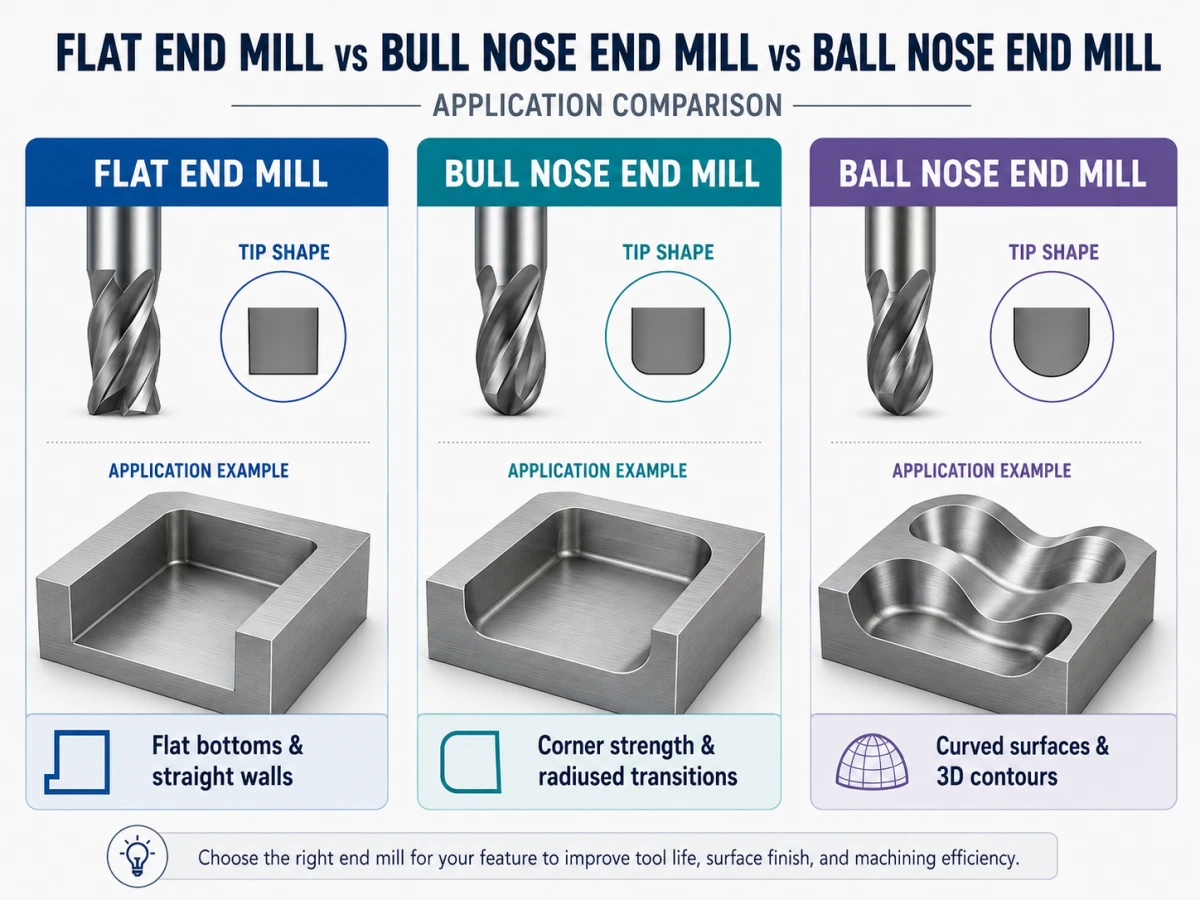
Lista di controllo per la selezione delle frese a punta piana di base
- Caratteristica di lavorazione: Confermare se l'operazione coinvolge uno slot, tasca, parete, spalla, chiavetta, fare un passo, o superficie a fondo piatto.
- Risultato richiesto: Conferma la forma del fondo, precisione del muro, condizione d'angolo, tolleranza, e requisiti di finitura superficiale.
- Materiale del pezzo: Fornire l'esatto grado e durezza del materiale.
- Profondità di taglio: Utilizzare solo la lunghezza e la portata della scanalatura richieste dalla funzione.
- Volume del truciolo: La realizzazione di cave complete richiede più spazio per il truciolo rispetto alla fresatura laterale leggera.
- Metodo di immissione: Confermare l'immersione diretta, rampante, entrata elicoidale, ingresso laterale, o preforatura.
- Condizioni della macchina e della tenuta: Controllare le condizioni del mandrino, eccentricità del supporto, sporgenza dell'utensile, e rigidità del pezzo.
Errori comuni nell'applicazione
- Utilizzo di troppi flauti in una fessura profonda, che riduce lo spazio del truciolo e aumenta il rischio di ritaglio.
- Utilizzando uno strumento che è molto più lungo del necessario, che aumenta la deflessione e le chiacchiere.
- Supponendo che ogni fresa a candela possa immergersi direttamente nel materiale solido.
- Aspettarsi un vero angolo interno con raggio zero tra due pareti verticali. Una fresa rotante lascia sempre un raggio correlato al suo diametro.
Come migliorare il risultato della lavorazione
Ridurre le sbavature sulla fessura o sul bordo della tasca
Controllare la nitidezza dei bordi, esaurire, carico di trucioli, e il percorso utensile finale. Una passata di finitura leggera e un'efficace rimozione dei trucioli possono ridurre le bave.
Migliora la planarità del fondo tascabile
Lasciare un margine di rifinitura controllato, rimuovere i trucioli prima del passaggio finale, e utilizzare lo strumento pratico più breve. L'eccentricità o la deflessione possono produrre gradini e un pavimento della tasca irregolare.
Controlla le vibrazioni e le pareti rastremate
Ridurre la sporgenza, migliorare la rigidità, ridurre l'impegno radiale, ed evitare un improvviso e completo impegno negli angoli interni. Utilizzare una passata di finitura separata quando è importante la precisione della parete.
Previene il sovraccarico di taglio e l'accumulo di trucioli
Adattare lo spazio della scanalatura al volume del truciolo, dirigere aria o refrigerante nel taglio, e ridurre la profondità assiale quando i trucioli non possono fuoriuscire. Evitare alimentazioni così basse da sfregare il bordo.
Domande frequenti
Una fresa piatta può tagliare una tasca a fondo piatto??
Sì. La realizzazione di tasche a fondo piatto è una delle sue principali applicazioni. Portata dello strumento, metodo di immissione, evacuazione truciolo, e l'indennità di rifinitura deve ancora essere considerata.
Può una fresa piatta creare un angolo interno quadrato??
Può produrre una transizione definita tra una superficie inferiore e una parete verticale. Tuttavia, l'angolo tra due pareti verticali manterrà un raggio basato sul diametro della fresa.
Una fresa a candela può immergersi direttamente nel materiale??
Alcuni design possono immergersi direttamente, mentre altri no. Il metodo corretto dipende dalla geometria del centro e del tagliente finale.
Quale numero di scanalature è migliore per la fresatura di scanalature?
Un numero inferiore di eliche è spesso preferito per lavorazioni di scanalatura con volumi di truciolo elevati perché forniscono più spazio per le eliche. La scelta finale dipende ancora dal materiale, profondità della fessura, diametro dell'utensile, e l'erogazione del refrigerante o dell'aria.
Quando è opportuno utilizzare invece uno strumento con testa sferica??
Utilizzare una fresa a punta sferica per superfici curve, 3Contorni D, e caratteristiche con angoli di superficie variabili. Utilizzare un profilo con estremità piatta quando è richiesto un fondo piatto o una spalla definita.
Conclusione
Una fresa a testa piatta viene utilizzata principalmente per le scanalature, tasche a fondo piatto, pareti diritte, spalle, scanalature per chiavette, passi, e altre funzionalità 2D o 2.5D. I suoi taglienti terminali lavorano il fondo, mentre le scanalature periferiche lavorano le pareti laterali.
Il successo del taglio dipende dalla forma richiesta, materiale, evacuazione truciolo, portata, metodo di immissione, conteggio dei flauti, e stabilità della macchina. Seleziona un naso sferico, naso di toro, fresa frontale, mulino per smussatura, o taglierina personalizzata quando la geometria non rientra nei punti di forza di un profilo con estremità piatta standard.
Discuti la tua applicazione per la fresa a punta piana
Rivedi i nostri standard e personalizzati fresa a punta piatta opzioni per diverse dimensioni, conta il flauto, materiali degli utensili, rivestimenti, e requisiti di lavorazione.
Si prega di inviare il materiale del pezzo, durezza, dimensioni dell'utensile richieste, operazione di lavorazione, profondità delle caratteristiche, tolleranza richiesta, quantità, e disegno se disponibile.
E-mail: sales@cutterbest.com