 Прецизионные фрезы,Режущие инструменты для обработки любого материала с ЧПУ

Знакомство
Что такое концевая фреза с бычьей головкой? Это концевая фреза с плоским дном и определенным радиусом режущих углов.. Эта геометрия также обычно описывается в каталогах инструментов как концевая фреза углового радиуса, хотя наименование может различаться у разных производителей.
Плоское дно позволяет фрезе обрабатывать нижние поверхности., в то время как закругленные углы создают закругленный переход от дна к стене вместо острого среза угла..
Концевые фрезы с закругленным концом обычно используются для контурной обработки., профильное фрезерование, обработка полостей, получистовая обработка, и другие операции с ЧПУ, где геометрия детали допускает или требует радиус угла..
Что такое концевая фреза с бычьим концом?
Концевая фреза с бычьей головкой имеет плоское режущее дно с закругленными углами между нижней режущей кромкой и боковой режущей кромкой.
Эта геометрия отличает его от двух других распространенных профилей концевых фрез.. Фреза с квадратным или плоским концом имеет острый режущий угол., в то время как концевая фреза со сферическим концом имеет полностью закругленный режущий конец. Фреза с бычьим носом сохраняет плоское дно, добавляя при этом определенный радиус угла..
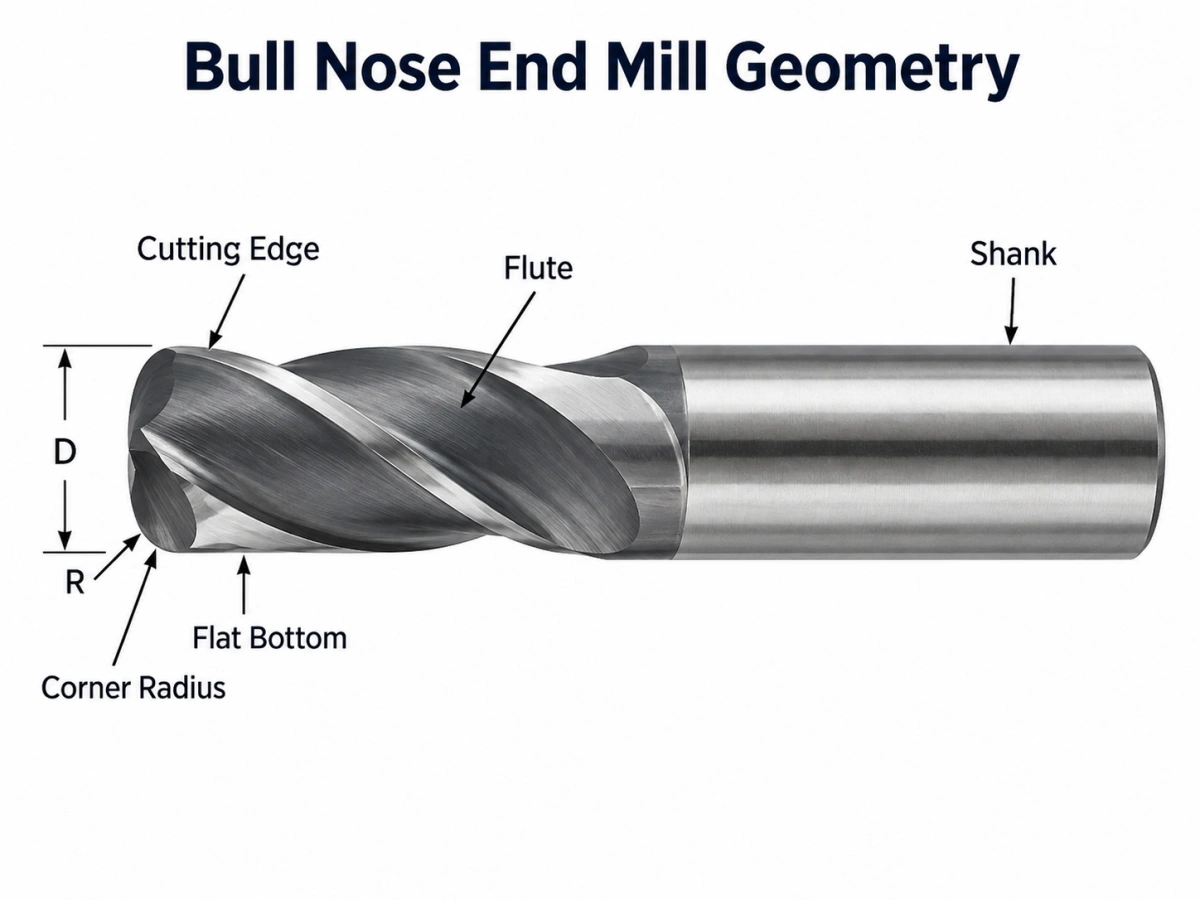 Как результат, инструмент полезен, когда деталь требует плоского или ступенчатого элемента вместе с закругленным переходом от дна к стенке..
Точная фреза по-прежнему должна соответствовать требуемым размерам детали., угловая геометрия, достигать, и условия обработки.
Терминология концевых фрез с бычьей головкой и концевых фрез с угловым радиусом
Условия Концевая фреза с бычьим носом и концевая фреза углового радиуса часто описывают близкородственную геометрию фрезы с плоским дном и закругленными углами резания..
«Концевая фреза с угловым радиусом» — общий термин в каталоге, поскольку он напрямую описывает геометрию инструмента.. «Фреза с бычьим концом» также широко используется покупателями., машинисты, и поставщики.
Однако, соглашения об именах могут различаться у разных производителей. В некоторых каталогах эти термины могут использоваться по-разному или отдельные семейства продуктов могут быть разделены в зависимости от размера радиуса., ряд, или приложение.
По этой причине, не полагайтесь только на название продукта. Подтвердите фактический диаметр фрезы, угловой радиус, геометрия флейты, и другие необходимые размеры перед заказом.
Доступные конфигурации продукта, см. наш Концевая фреза с бычьим носом.
Почему угловой радиус имеет значение
Угловой радиус расположен там, где плоское основание фрезы переходит в боковую режущую кромку..
Этот радиус изменяет геометрию, создаваемую при переходе от нижней части к стенке обработанного элемента.. Вместо того, чтобы оставлять геометрию с острыми углами, свойственную фрезе с квадратным профилем., геометрия бычьего носа создает закругленный переход или следует за ним.
Поэтому требуемый радиус должен соответствовать чертежу и геометрии готовой детали..
Больший или меньший радиус не следует выбирать только по общему правилу.. Точное значение R зависит от требуемой функции., размеры фрезы, требования к механической обработке, и дизайн детали.
Для чего используется концевая фреза с бычьей головкой?
Концевые фрезы с закругленной головкой используются в фрезерных станках с ЧПУ, где геометрия детали выигрывает от плоского дна в сочетании с угловым радиусом..
Типичные области применения включают в себя:
- Контурное фрезерование
- Профильное фрезерование
- Получистовая обработка
- Обработка полостей
- Обработка пресс-форм и штампов
- Ступенчатые элементы с закругленными нижними углами
- Переходы снизу к стене, где требуется угловой радиус
Один и тот же тип фрезы может использоваться для разных материалов заготовки., но окончательная конфигурация инструмента должна соответствовать материалу и условиям обработки..
Например, марка твердого сплава, геометрия флейты, покрытие или обработка поверхности, размеры инструмента, и дизайн резки могут варьироваться в зависимости от фактического применения.
Поэтому, само по себе имя инструмента не определяет полную настройку обработки.
Базовый выбор концевой фрезы с закругленной головкой
Выбор фрезы с закругленным концом начинается с геометрии детали, а не с общих правил производительности..
Геометрия детали и угла
Первый, проверьте рисунок.
Подтвердите, является ли функция:
- Требуется угловой радиус
- Позволяет радиусный переход
- Требуется ровное дно
- Имеет достаточный доступ для выбранного диаметра фрезы
- Вместо этого требуется острый внутренний угол.
Если для чертежа требуется острый угол резки под углом 90 градусов без заданного радиуса., геометрия бычьего носа может быть неправильным выбором для этой функции.
Размеры инструмента
Диаметр фрезы и угловой радиус должны соответствовать обрабатываемому элементу..
Длина реза, досягаемость инструмента, размер хвостовика, и общая геометрия инструмента также должна соответствовать настройке детали и станка..
На этой странице не перечислены все возможные комбинации размеров, поскольку стандартные и пользовательские конфигурации различаются.. Фактические размеры и доступные опции продукта, увидеть Концевая фреза с бычьим носом страница продукта.
Требования к заготовке и обработке
После подтверждения базовой геометрии, окончательная конфигурация фрезы зависит от заготовки и требований к обработке..
Для разных применений может потребоваться разная геометрия канавок., покрытие или обработка поверхности, длина инструмента, центрально-режущий дизайн, или требования толерантности.
Для нестандартных применений, информация о чертежах и обработке обеспечивает наилучшую основу для подтверждения окончательного инструмента..
Связанные сравнения концевых фрез
Концевую фрезу с бычьей головкой иногда сравнивают с фрезами других профилей., но каждое сравнение имеет другой вопрос выбора.
Если вам нужно резкое сравнение, видеть Бычий нос против фрезы с плоским концом.
О разнице между фрезой с плоским дном и закругленным режущим концом, видеть Концевая фреза с бычьим носом и концевая фреза со сферическим носом.
Бычий нос / фрезы с угловым радиусом также отличаются от фрез с закруглением углов.. Видеть Угловой радиус против концевой фрезы с закруглением углов.
Вопросы и ответы
Что такое концевая фреза с бычьей головкой?
Концевая фреза с закругленной головкой представляет собой фрезу с плоским дном и определенным радиусом режущих углов.. Угловой радиус создает закругленный переход между обработанным дном и боковой стенкой..
Для чего используется концевая фреза с бычьим концом?
Типичное использование включает контурное фрезерование., профильное фрезерование, получистовая обработка, обработка полостей, обработка пресс-форм и штампов, и функции, требующие закругленного перехода от дна к стене.
Фактическое применение зависит от геометрии детали и конфигурации инструмента..
Является ли концевая фреза с закругленным концом такой же, как концевая фреза с угловым радиусом??
Эти термины часто используются для близкородственных фрез с плоским дном и закругленными режущими углами., а «концевая фреза с угловым радиусом» — общее каталожное описание для этой геометрии..
Однако, терминология может различаться у разных производителей, поэтому фактический радиус и геометрия фрезы всегда должны быть подтверждены..
Как выбрать концевую фрезу с бычьей головкой??
Начните с чертежа детали и необходимой геометрии углов..
Подтвердите диаметр фрезы, угловой радиус, требуемый охват, и другие размеры. Затем при подтверждении окончательной геометрии канавки учтите материал заготовки и требования к обработке., покрытие или обработка поверхности, и конструкция инструмента.
Для стандартных размеров или нестандартных конфигураций, обратитесь к Концевая фреза с бычьим носом страница продукта.
Является ли концевая фреза с закруглением углов такой же, как концевая фреза для закругления углов??
No.
Концевая фреза с закругленным концом или угловым радиусом имеет радиус на режущих углах самого инструмента.. Концевая фреза для закругления углов — это фреза другой формы, используемая для создания закругленного профиля на кромке заготовки..
Для детального различия, видеть Угловой радиус против концевой фрезы с закруглением углов.
Заключение
Концевая фреза с закругленной головкой сочетает в себе плоское режущее дно и закругленные режущие углы.. Обычно используется, когда деталь требует плоского или ступенчатого элемента вместе с закругленным переходом от дна к стенке..
Правильный резак зависит от чертежа, угловой радиус, размеры инструмента, заготовка, и требования к обработке, а не в одной фиксированной конфигурации.
Если вам нужна помощь в подтверждении использования фрезы с усеченной головкой с вашей стороны, отправьте свои требования к чертежу или обработке по электронная почта или свяжитесь с нами напрямую по WhatsApp.