 Cortadores de fresagem de precisão,Ferramentas de corte para usinagem CNC de todos os materiais

Para que é usada uma fresa de topo plano? Na usinagem CNC, é usado principalmente para produzir slots, bolsos de fundo plano, paredes laterais retas, ombros quadrados, rasgos de chaveta, passos, e outros recursos 2D ou 2,5D. Suas arestas de corte finais removem material da parte inferior de um recurso, enquanto os canais periféricos usinam as paredes laterais.
Escolha esta ferramenta quando o desenho exigir um fundo plano, uma parede reta, ou uma transição definida de baixo para parede. O resultado final ainda depende do material, profundidade, volume de chips, alcance da ferramenta, e método de entrada.
Uma fresa com contagem de canais mais baixa pode ser adequada para uma ranhura profunda de alumínio porque os cavacos precisam de espaço para escapar, enquanto uma ferramenta com núcleo mais forte pode ser adequada para fresamento lateral leve ou acabamento em aço.
Para uma explicação detalhada da geometria e estrutura de corte, ler o que é uma fresa de topo plano.
Tamanhos disponíveis, contagens de flauta, materiais, revestimentos, e opções personalizadas estão listadas em nosso fresa de topo plano página do produto.
Para que serve uma fresa de topo plano na usinagem CNC?
As operações a seguir representam os usos mais comuns de fresas de topo plano na usinagem CNC. Os maquinistas escolhem a fresa quando a peça precisa de uma superfície plana, uma parede reta, ou ambos.
Fresamento de canais
Durante o fresamento de canais, a fresa remove material em todo o seu diâmetro e produz uma ranhura com fundo plano. Porque ambos os lados da ferramenta estão engatados, slot de largura total cria um alto volume de chips. A evacuação dos cavacos deve ser planejada antes do início do corte.
Para alumínio e outros materiais com cavacos longos, uma contagem mais baixa de flautas geralmente fornece mais espaço para flautas. Em slots profundos, direcionar ar ou líquido refrigerante para a zona de corte. Se os chips ainda não conseguirem escapar, reduza a profundidade por passe ou use um percurso escalonado.
Fresamento de Bolso
As fresas de topo plano podem desbastar e dar acabamento em bolsões de fundo plano. Os maquinistas podem entrar no bolsão aumentando, interpolação helicoidal, entrada lateral, mergulho direto com um cortador adequado, ou através de um furo pré-perfurado.
O alcance da ferramenta é fundamental em bolsões profundos. Uma fresa muito mais longa do que o necessário tem maior probabilidade de desviar sob carga radial. Portanto, o comprimento de corte e a saliência práticos mais curtos devem ser usados.
Fresamento lateral e de perfil
No fresamento lateral, as flautas periféricas cortam paredes retas, perfis externos, e etapas. Comprimento de corte, engate radial, saliência, excentricidade do suporte, e a rigidez da máquina afetam a precisão da parede. Use uma passagem de acabamento separada quando a operação exigir tolerâncias mais restritas.
Ombros, Chavetas, e etapas
Um perfil de extremidade plana pode usinar uma parede inferior e uma parede vertical no mesmo percurso, que combina com os ombros, rasgos de chaveta, canais, recessos, e etapas. Para tolerância de largura estreita, desbaste o recurso primeiro e termine ambos os lados separadamente.
Acabamento de superfícies de fundo plano
Uma passagem de acabamento pode limpar o fundo de um bolsão ou reentrância. Deixe uma pequena margem após o desbaste e remova cavacos antes do passe final para evitar arranhões e danos nas bordas.
Uma fresa de topo plano também pode usinar uma pequena superfície plana aberta. Para um rosto grande e aberto, no entanto, uma fresa de facear pode remover material com mais eficiência e fornecer um caminho de corte mais produtivo.
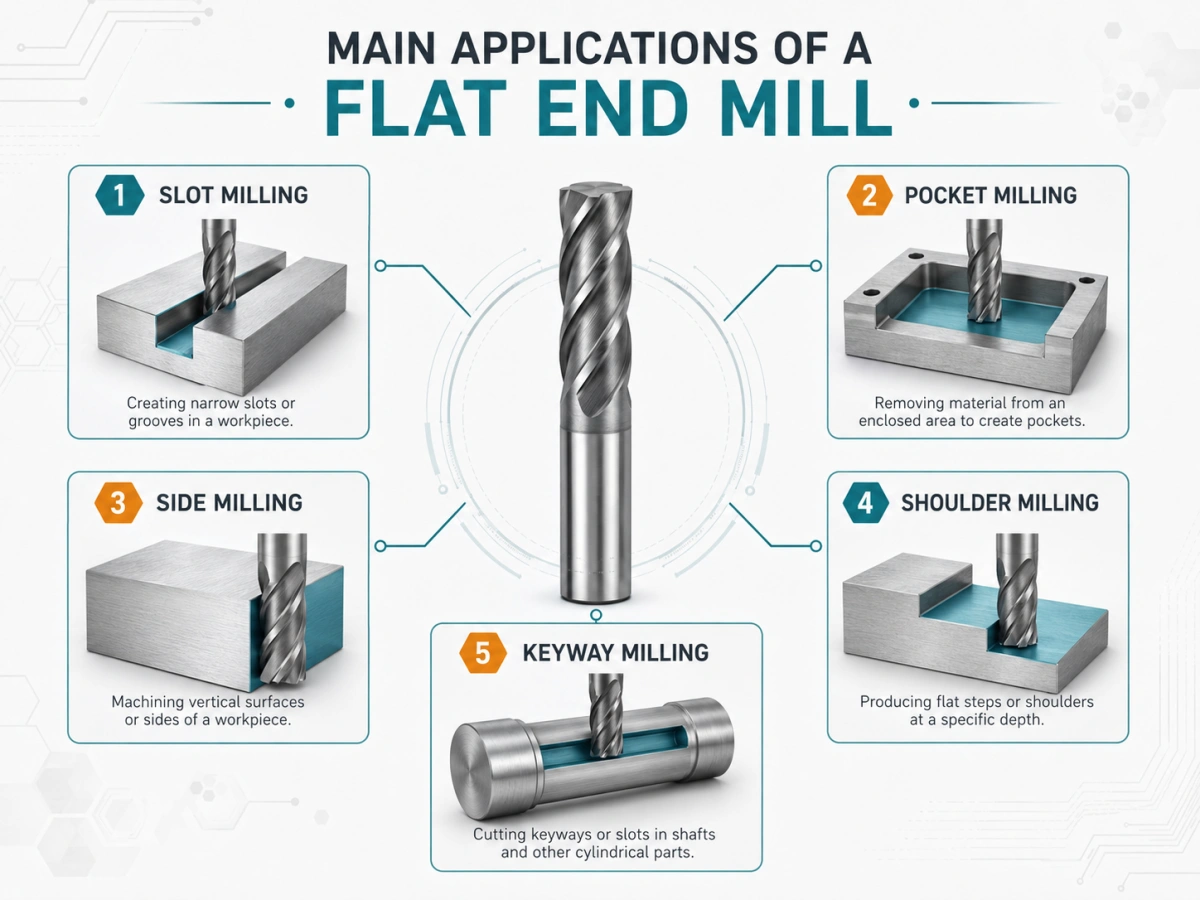
Guia de aplicação de fresa plana
| Aplicativo | Recurso típico | Principal preocupação |
| Fresamento de canais | Slot cheio ou aberto | Evacuação de cavacos |
| Fresamento de bolso | Bolso de fundo plano | Entrada e alcance |
| Fresamento lateral | Parede reta ou perfil | Rigidez |
| Fresamento de cantos a 90 graus | Parte inferior com parede vertical | Precisão de canto |
| Fresamento de chaveta | Sulco estreito | Tolerância de largura |
| Acabamento inferior | Parte inferior do bolso ou recesso | Recorte de cavacos |
Uma fresa plana pode mergulhar?
Algumas fresas de topo plano podem mergulhar diretamente na peça de trabalho, mas esta capacidade não deve ser assumida. O mergulho direto depende do corte final e da geometria central. Um projeto de corte central pode remover material próximo ao eixo da ferramenta, enquanto outro desenho pode não cortar eficazmente no centro.
Mergulho Direto
O mergulho direto move a fresa verticalmente em material sólido. Ele carrega fortemente as bordas finais e dificulta a remoção de cavacos. Use o mergulho direto somente quando a ferramenta suportar entrada axial e a configuração for adequada.
Rampando, Entrada helicoidal, e Pré-Perfuração
A rampa e a entrada helicoidal distribuem a carga de forma mais gradual do que um mergulho reto, então eles são frequentemente preferidos para entrada no bolso. Um furo pré-perfurado ou entrada lateral pode ser mais adequado para um bolsão profundo, uma ferramenta de corte não central, uma configuração de baixa rigidez, ou um recurso com espaço de chip limitado. Confirme o método de entrada recomendado antes da produção.
Notas de aplicação por material da peça
Alumínio e Materiais Não Ferrosos
Para alumínio, o espaço do chip e a adesão são as principais preocupações. Contagens mais baixas de flauta, grandes vales de flauta, e bordas afiadas ou polidas ajudam cavacos longos a sair do corte. Selecione um não revestido, DLC, TiB2, ou outra opção não ferrosa adequada de acordo com a liga e processo.
Para ferramentas projetadas com mais espaço para cavacos, revise nosso 2 moinho de extremidade de flauta opções.
Aço e Aço Inoxidável
A usinagem de aço precisa de um equilíbrio entre espaço para cavacos e rigidez. Ferramentas de quatro flautas são comuns para trabalhos em geral, enquanto considere TiAlN, AlTiN, ou outro revestimento resistente ao calor para o grau e processo exatos.
O aço inoxidável retém o calor e pode endurecer. Mantenha uma carga de cavacos estável, limite de saliência, e remova cavacos de forma confiável, em vez de simplesmente aumentar a velocidade.
Para usinagem de aço de uso geral, revise nosso 4 moinho de extremidade de flauta opções.
Titânio e ligas resistentes ao calor
As ligas de titânio concentram o calor na ponta. Use uma configuração rígida, geometria estável, engate radial controlado, e remoção confiável de cavacos. A velocidade e o avanço devem ser baseados na liga, diâmetro da ferramenta, contagem de flauta, revestimento, noivado, e condição da máquina.
Ferro Fundido e Aço Endurecido
O ferro fundido é abrasivo, portanto, a resistência ao desgaste e a resistência da borda são importantes. O aço endurecido exige que a dureza real seja confirmada porque o HRC 45, CDH 55, e CDH 65 são diferentes condições de corte. Um balanço curto e um percurso de ferramenta estável são especialmente importantes para materiais mais duros.
Como a contagem de flautas altera a aplicação
A contagem de flautas altera o espaço do chip, força central, e o número de arestas de corte. Selecione a contagem de canais de acordo com a operação em vez de aplicar uma regra fixa para cada material.
| Condição de corte | Contagem típica de flautas | Razão Principal |
| Alto volume de chips | Contagem inferior de flauta | Mais espaço para chips |
| Fresamento geral | Contagem de flauta média | Rigidez equilibrada |
| Engajamento leve | Maior contagem de flautas | Mais arestas de corte |
| Acabamento | Contagem média a alta | Contato de borda estável |
Para controlado, aplicações com maior número de flautas, revise nosso 6 moinho de extremidade de flauta página do produto.
Quando você deve usar outro cortador?
Superfícies curvas ou 3D
Uma fresa de topo esférica é geralmente mais adequada para moldes, morre, superfícies curvas, e contornos 3D. Sua extremidade arredondada mantém contato gradual conforme o ângulo da superfície muda. Uma fresa plana pode deixar degraus ou marcas de ferramenta visíveis na mesma geometria.
Para usinagem curva e 3D, revise nosso fresas de ponta esférica.
Um raio de canto é permitido ou obrigatório
Uma fresa de topo com ponta boleada mantém uma seção central plana, mas adiciona cantos externos arredondados. O raio fortalece o canto de corte e reduz a concentração de tensão. Pode, portanto, proporcionar melhor vida útil da ferramenta quando o desenho da peça permite um filete entre a parede e o fundo.
Para uma comparação detalhada, ler nariz de touro vs fresa de topo plano.
Chanframento ou Rebarbação Controlada
Uma fresa de topo plano pode quebrar levemente uma aresta através de um percurso de ferramenta programado, mas uma fresa de chanfro normalmente fornece controle de ângulo e rebarbação mais previsíveis.
Recursos muito profundos ou fora do padrão
Bolsos profundos podem exigir pescoço longo, pescoço reduzido, ou design personalizado. Porque o alcance extra aumenta a deflexão, mantenha o comprimento de corte não maior que o necessário.
Para alcance fora do padrão, dimensões, ou geometria, revise nosso fresas de topo personalizadas serviço.
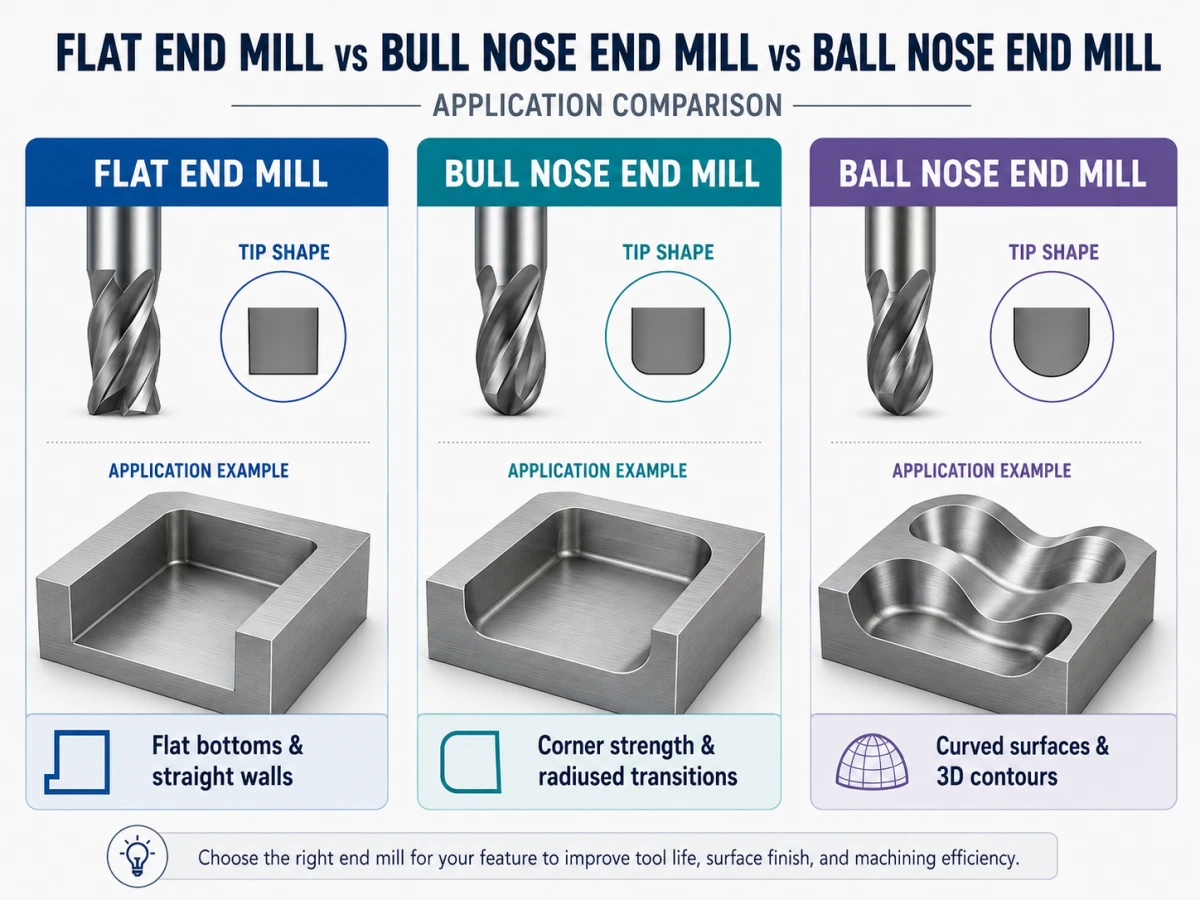
Lista de verificação básica para seleção de fresa plana
- Recurso de usinagem: Confirme se a operação envolve um slot, bolso, parede, ombro, chaveta, etapa, ou superfície de fundo plano.
- Resultado obrigatório: Confirme a forma inferior, precisão da parede, condição de canto, tolerância, e exigência de acabamento superficial.
- Material da peça: Forneça o grau e a dureza exatos do material.
- Profundidade de corte: Use apenas o comprimento e alcance do canal exigidos pelo recurso.
- Volume de chips: O fresamento completo precisa de mais espaço para cavacos do que o fresamento lateral leve.
- Método de entrada: Confirme o mergulho direto, rampa, entrada helicoidal, entrada lateral, ou pré-perfuração.
- Máquina e condição de retenção: Verifique a condição do fuso, excentricidade do suporte, balanço da ferramenta, e rigidez da peça.
Erros comuns de aplicação
- Usando muitas flautas em um slot profundo, o que reduz o espaço para cavacos e aumenta o risco de recortar.
- Usando uma ferramenta que é muito mais longa do que o necessário, o que aumenta a deflexão e a vibração.
- Supondo que cada fresa de topo plano possa mergulhar diretamente em material sólido.
- Esperando um verdadeiro canto interno com raio zero entre duas paredes verticais. Uma fresa rotativa sempre deixa um raio relacionado ao seu diâmetro.
Como melhorar o resultado da usinagem
Reduza rebarbas na ranhura ou na borda do bolso
Verifique a nitidez das bordas, acabar, carga de cavacos, e o percurso final. Uma passagem de acabamento leve e uma remoção eficaz de cavacos podem reduzir rebarbas.
Melhorar o nivelamento do piso de bolso
Deixe uma margem de acabamento controlada, remova as fichas antes da passagem final, e use a ferramenta prática mais curta. O desvio ou a deflexão podem produzir degraus e um piso irregular do bolsão.
Controle de vibração e paredes cônicas
Encurtar saliência, melhorar a rigidez, reduzir o engate radial, e evite o envolvimento total repentino nos cantos internos. Use uma passagem de acabamento separada quando a precisão da parede for importante.
Evite sobrecarga de corte e acúmulo de cavacos
Combine o espaço da flauta com o volume do chip, direcionar ar ou líquido refrigerante para o corte, e reduza a profundidade axial quando os cavacos não puderem escapar. Evite avanços tão baixos que a borda esfregue.
Perguntas frequentes
Uma fresa de topo plano pode cortar um bolsão de fundo plano?
Sim. O embolsamento de fundo plano é uma de suas principais aplicações. Alcance da ferramenta, método de entrada, evacuação de cavacos, e subsídio de acabamento ainda devem ser considerados.
Uma fresa de topo plano pode fazer um canto interno quadrado?
Pode produzir uma transição definida entre uma superfície inferior e uma parede vertical. No entanto, o canto entre duas paredes verticais manterá um raio baseado no diâmetro da fresa.
Uma fresa de topo plano pode mergulhar diretamente no material?
Alguns designs podem mergulhar diretamente, enquanto outros não podem. O método correto depende do centro e da geometria do corte final.
Qual contagem de canais é melhor para fresamento de canais?
Contagens de canais mais baixas são frequentemente preferidas para canais com alto volume de cavacos porque fornecem mais espaço de canal. A escolha final ainda depende do material, profundidade do slot, diâmetro da ferramenta, e refrigerante ou fornecimento de ar.
Quando uma ferramenta de ponta esférica deve ser usada?
Use uma fresa de topo esférico para superfícies curvas, 3Contornos D, e recursos com mudança de ângulos de superfície. Use um perfil de extremidade plana quando for necessário um fundo plano ou ombro definido.
Conclusão
Uma fresa de topo plano é usada principalmente para ranhuras, bolsos de fundo plano, paredes retas, ombros, rasgos de chaveta, passos, e outros recursos 2D ou 2,5D. Suas arestas de corte finais usinam a parte inferior, enquanto os canais periféricos usinam as paredes laterais.
O corte bem sucedido depende da forma necessária, material, evacuação de cavacos, alcançar, método de entrada, contagem de flauta, e estabilidade da máquina. Selecione um nariz esférico, nariz de touro, fresa de facear, moinho de chanfro, ou cortador personalizado quando a geometria fica fora dos limites de um perfil de extremidade plana padrão.
Discuta sua aplicação de fresadora de topo plano
Revise nosso padrão e personalizado fresa de topo plano opções para diferentes dimensões, contagens de flauta, materiais de ferramentas, revestimentos, e requisitos de usinagem.
Por favor envie o material da sua peça, dureza, dimensões necessárias da ferramenta, operação de usinagem, profundidade do recurso, tolerância necessária, quantidade, e desenho se disponível.
E-mail: sales@cutterbest.com