 Freze de precizie,Scule de tăiere pentru prelucrarea CNC a fiecărui material

What Is the Best End Mill for Stainless Steel?
Choosing the best end mill for stainless steel is not as simple as selecting one flute count, acoperire, or cutter shape. The right tool depends on the stainless steel grade, operatie de prelucrare, geometria piesei de prelucrat, rigiditatea mașinii, evacuare cip, surplusul sculei, și finisarea necesară a suprafeței.
Many stainless steels, especially common austenitic grades, have relatively low thermal conductivity and a tendency to work harden during machining. Heat and unstable cutting can therefore place additional demands on the cutting edge, acoperire, geometria sculei, și configurarea mașinii.
There is no single end mill that is best for every stainless steel application.
For many CNC milling operations, o freză din carbură solidă is a common starting point because carbide offers high rigidity, rezistenta la uzura, și stabilitate de vârf în condiții de prelucrare adecvate. Cu toate acestea, the final cutter still needs to match the actual workpiece and operation.
Quick Stainless Steel End Mill Selection Guide
| Machining Requirement | Tool Type to Consider | Main Selection Concern |
|---|---|---|
| Flat surfaces and side milling | Moara plată | Stability, control cip, și rezistența muchiei |
| Curved or 3D surfaces | Moara de capăt cu nas bilă | Contour accuracy and surface finish |
| Internal or external R-corners | Freză de capăt cu rază de colț | Corner strength and reduced edge damage |
| Heavy material removal | Moara de degroșare | Evacuare cip, rigiditate, and cutting load |
| General profiling | Freză din carbură solidă | Număr de flaut, acoperire, geometrie, and stability |
| Higher-performance milling | Variable helix/pitch designs may be considered | Vibration control and machining stability |
Utilizați acest tabel ca punct de plecare, mai degrabă decât o regulă fixă. The preferred cutter may change when the stainless steel grade, adâncimea de tăiere, logodnă, starea mașinii, or workpiece geometry changes.
If you already know your machining requirements and want to review available standard and custom options, vezi noastre Freze pentru oțel inoxidabil.
Choose the End Mill Type by Machining Operation
Our factory does not treat stainless steel machining as one fixed cutter application. Freze plate, freze cu cap bilă, freze cu raza de colt, and roughing end mills serve different machining purposes.
Prin urmare, the machining feature should usually be identified before flute count or coating is selected.
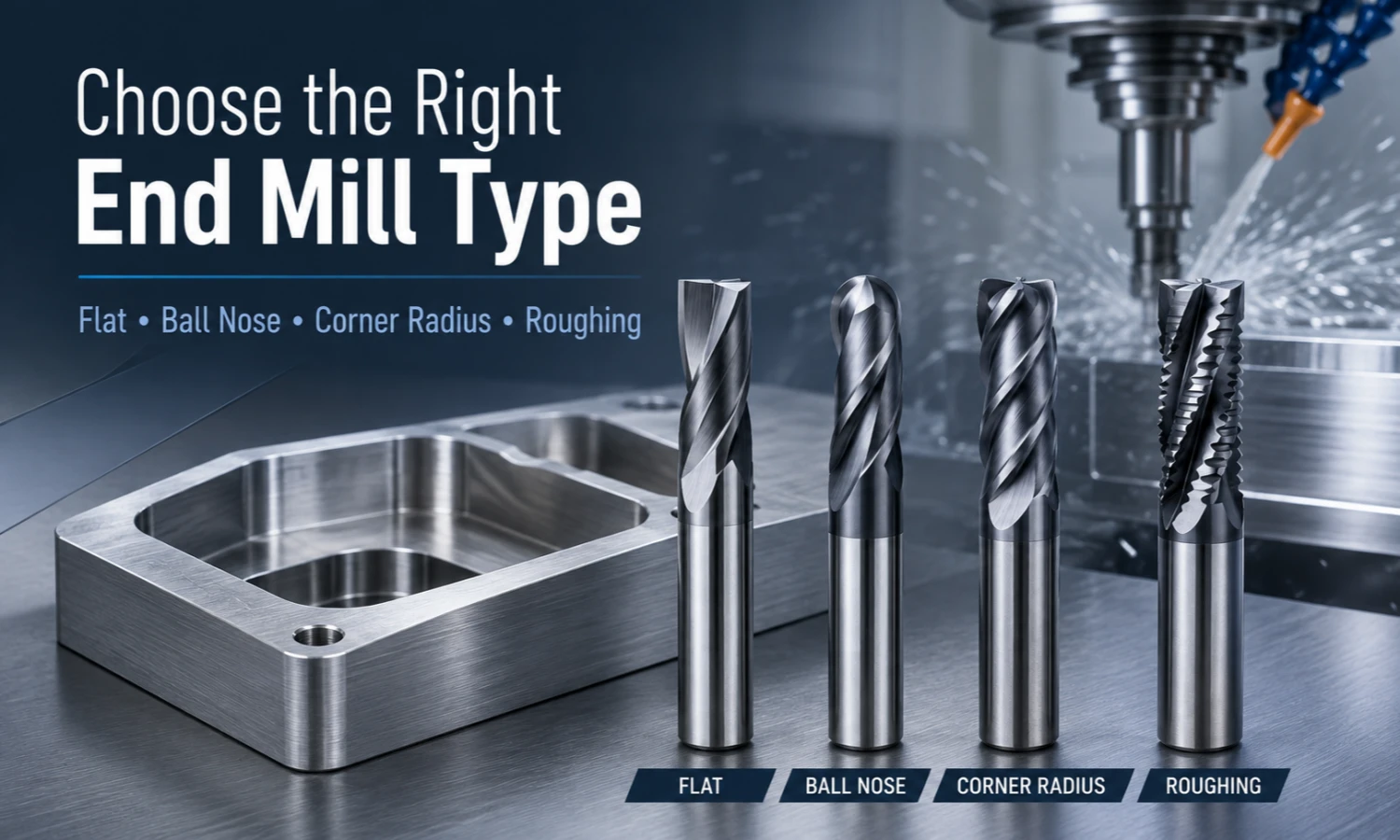
Flat End Mills for Flat Surfaces and Side Milling
A flat end mill is commonly considered for:
- Frezare laterală
- Frezarea umărului
- Flat-bottom machining
- Profilare
- Suitable slotting operations
If the workpiece requires straight walls, funduri plate, sau umeri patrati, a flat cutting end is generally more appropriate than a ball nose geometry.
For specifications and available options, vezi noastre Moara plată.
Ball Nose End Mills for Curved and 3D Surfaces
Ball nose end mills are primarily used when the cutter must follow curved or three-dimensional geometry.
Typical applications include molds, curved cavities, 3D profiling, contour finishing, and complex surfaces.
The rounded cutting end follows changing surface angles more naturally than a flat-ended cutter. Cu toate acestea, when machining stainless steel, the end shape is only one part of the selection. Rigiditatea sculei, acoperire, design flaut, lungimea de tăiere, and required finish still need to be considered.
For curved-surface machining options, vezi noastre Freze cu cap bilă.
Corner Radius End Mills for R-Corners and Stronger Cutting Edges
A corner radius end mill, also commonly called a bull nose end mill, combines a flat cutting end with a radius at the outer corner.
The radius can strengthen the cutting corner compared with a sharp 90-degree corner. It is also appropriate when the workpiece drawing specifies an internal R-radius.
For demanding stainless steel applications, the actual radius, diametrul tăietorului, sarcina de tăiere, and machining strategy should be evaluated together.
For radius and custom geometry options, vezi noastre Taur Nose End Mill.
Roughing End Mills for Heavy Material Removal
When the main goal is removing larger amounts of material rather than producing the final surface finish, a roughing end mill may be considered.
Roughing cutters focus on material removal, formarea așchiilor, cutting-load management, and process stability. The appropriate design still depends on the stainless steel grade, alocația de prelucrare, diametrul tăietorului, depth of cut, evacuare cip, and machine rigidity.For heavy material removal applications, vezi noastre Freze de degroșare.
Why Solid Carbide Is Commonly Used for Stainless Steel
A carbide end mill for stainless steel is common in modern CNC machining because solid carbide provides properties that are useful under demanding cutting conditions.
Solid carbide can offer:
- High rigidity
- Good wear resistance
- Cutting-edge stability
- Resistance to elevated cutting temperatures
- Compatibilitate cu diferite geometrii de tăiere și sisteme de acoperire
Aceste caracteristici sunt utile deoarece oțelul inoxidabil poate genera căldură considerabilă și se poate întări atunci când tăierea devine instabilă sau marginea începe să se frece în loc să taie eficient.
Cu toate acestea, selectarea carburii solide nu încheie procesul de selecție a sculei. Diametrul tăietorului, lungimea de tăiere, număr de flaut, acoperire, geometrie, surplusul sculei, starea mașinii, iar operațiunea de prelucrare mai trebuie evaluată împreună.
Pentru opțiunile disponibile de scule din carbură, vezi noastre Freză din carbură.
Pentru un proces mai larg de selecție a sculelor din carbură, citire Cum să alegi o freză din carbură.
Cum să alegi numărul de flaut: Evacuarea cipului vs rigiditate
O întrebare frecventă de căutare este: Câte fluturi ar trebui să aibă o freză cu cap pentru oțel inoxidabil?
Nu există un răspuns universal.
Numărul flutelor modifică atât numărul de muchii tăietoare, cât și spațiul disponibil pentru așchii. Numărul mai mic de flaut oferă, în general, mai mult spațiu pentru cip, while higher flute counts provide more cutting contacts and often use a relatively stronger core.
The correct balance depends on the operation, diametrul tăietorului, logodnă, volumul cipului, rigiditatea mașinii, și finisajul necesar.
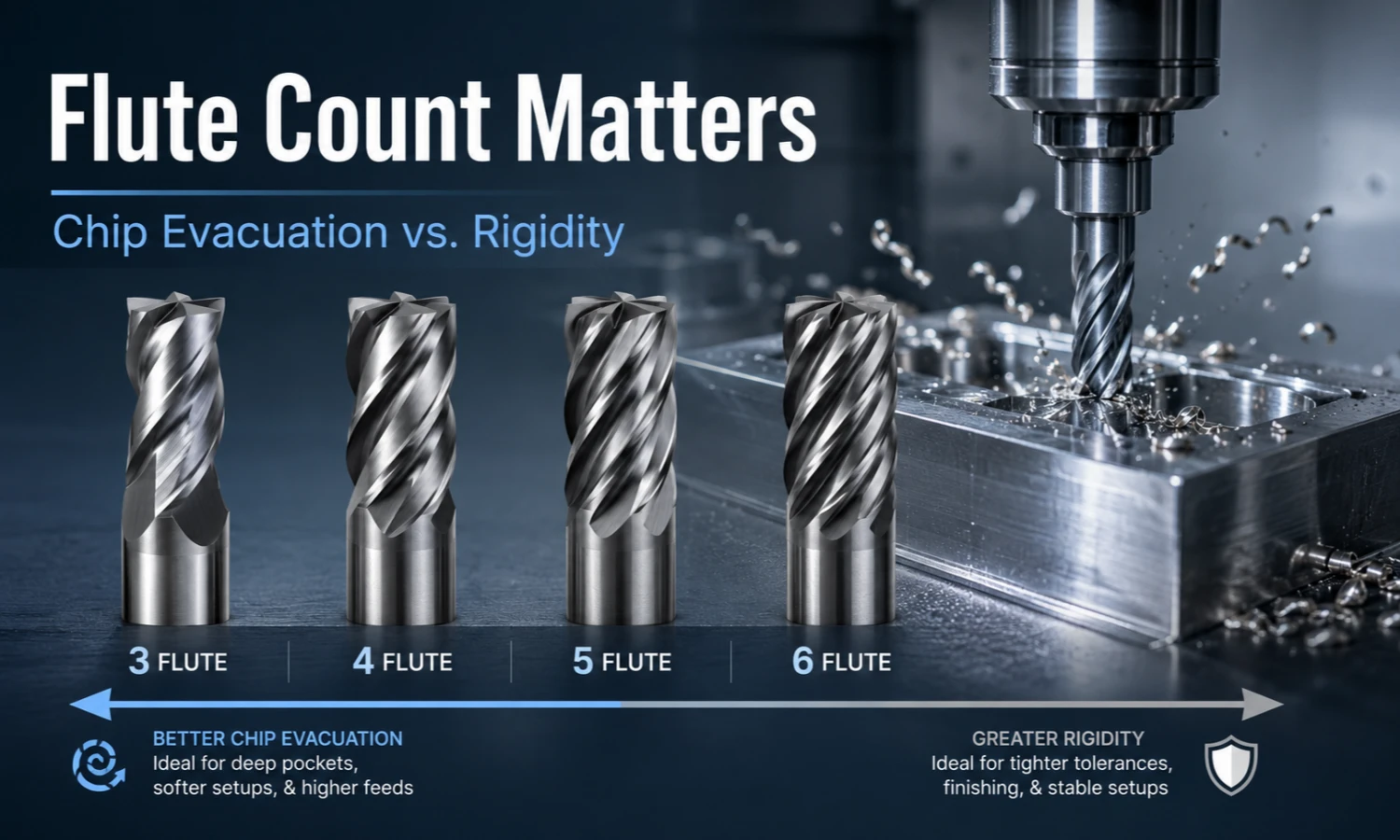
3-Freze pentru flaut
Three-flute designs provide relatively generous flute space and may be considered when chip evacuation is an important part of the application.
Cu toate acestea, flute count alone does not determine performance. Helix geometry, core design, angrenare radială, adâncimea de tăiere, and cutter diameter must also be considered.
4-Freze pentru flaut
balance between cutting-edge count, puterea miezului, chip space, and general machining versatility.
They may be considered for side milling, profilare, frezarea umărului, and other CNC operations when the tool geometry and setup are suitable.
Vezi noastre 4 Moara de capăt pentru flaut for available specifications and application options.
5-Freze pentru flaut
Frezele cu cinci caneluri apar frecvent în aplicațiile de înaltă performanță din oțel inoxidabil, deoarece muchia de tăiere suplimentară poate fi utilă atunci când cuplarea este controlată și evacuarea așchiilor rămâne adecvată.
Cu toate acestea, creșterea numărului de flaut reduce, de asemenea, spațiul disponibil pentru jetoane.
Prin urmare, un design cu 5 caneluri nu trebuie selectat doar pentru că piesa de prelucrat este din oțel inoxidabil. Încadrare adâncă, volum mare de cip, evacuare limitată, diametrul tăietorului, iar rigiditatea mașinii poate modifica numărul de fluturi preferat.
6-Freze pentru flaut
Freze cu șase caneluri pot fi luate în considerare pentru frezarea laterală stabilă, profilare, semifinisare, și aplicații de finisare în care evacuarea așchiilor este gestionabilă și mai multe contacte de tăiere sunt benefice.
Acestea nu trebuie tratate ca tăietori numai pentru finisare sau ca alegere automată pentru materiale mai dure. Designul complet al frezei și strategia de prelucrare rămân importante.
For a broader flute-count comparison, citire 2 Flaut vs 4 Flaut vs 6 Moara de capăt pentru flaut.
What Coating Is Suitable for Stainless Steel End Mills?
Coating is another important part of selecting freze de capăt pentru oțel inoxidabil.
Industry tooling for stainless steel commonly uses heat-resistant and wear-resistant coating systems such as:
- Altin
- AlCrN
- TiAlN
- TiSiN or TiAlSiN in some higher-performance applications
Depending on the coating system and application, these coatings may provide benefits related to heat resistance, oxidation resistance, rezistenta la uzura, friction control, și protecție de ultimă oră.
Cu toate acestea, no coating should automatically be described as the best for every stainless steel application.
Coating selection also depends on:
- Stainless steel grade
- Cutting temperature
- Wet or dry machining
- Carbide substrate
- Geometrie de ultimă oră
- Cutter engagement
- Machining strategy
Din acest motiv, coating should be selected as part of the complete cutter system rather than by coating name alone.
A deeper comparison between AlTiN, AlCrN, TiAlN, and other coating options is better reserved for a dedicated Best End Mill Coating for Stainless Steel ghid.
Helix variabil, Unghiul Helix, Variable Pitch, Rigidity and Chatter
The end mill helix angle for stainless steel affects cutting-edge engagement, cutting-force direction, fluxul de cip, and machining behavior. Cu toate acestea, there is no single helix angle that should be treated as universally best for every stainless steel application.
Variable helix and variable pitch geometries are also frequently used in high-performance end mills.
Instead of allowing every cutting edge to engage the workpiece at exactly the same repeated interval, variable helix or unequal-pitch designs change the timing of the cutting forces. In suitable applications, this can help reduce repetitive vibration and chatter.
Totuşi, geometry cannot correct every unstable machining setup.
When chatter occurs, the complete system should be evaluated, inclusiv:
- Contopirea sculei
- Toolholder condition
- Spindle rigidity
- Workholding
- Diametrul tăietorului
- Axial engagement
- Angajarea radială
- Geometrie de ultimă oră
Prin urmare, consider variable helix or variable pitch as one part of the complete machining system rather than as a standalone solution.
Match the End Mill to Common Stainless Steel Grades
“Stainless steel” includes materials with different machining behavior.
A similar cutter concept may work across several grades, but the appropriate geometry, acoperire, număr de flaut, and machining strategy can still change.
| Stainless Steel Grade | Typical Machining Characteristic | End Mill Selection Consideration |
|---|---|---|
| 303 | Generally easier to machine than many austenitic grades | Balance cutter geometry, finish, and productivity |
| 304 | Common grade with a tendency to work harden | Stable cutting, effective cutting edges, and consistent chip formation |
| 316 | Tough material that can generate considerable heat | Tool stability, heat control, and wear resistance become important |
| 17-4 PH | Machining behavior changes with heat-treatment condition | Consider actual hardness, rigiditatea sculei, and cutting load |
These are general selection considerations rather than fixed cutting parameters.
De exemplu, two components made from 304 stainless steel may require different end mills if one requires deep slotting while the other requires only light side finishing.
De asemenea, o 17-4 PH component should not be evaluated only by material name. Its heat-treatment condition and actual hardness can also influence cutter selection.
Practical End Mill Selection Checklist for Stainless Steel
Before selecting an end mill or requesting a quotation, confirm the following information.

1. Stainless Steel Grade
Provide the exact grade whenever possible, ca 303, 304, 316, 17-4 PH, or another specified stainless alloy.
Describing the workpiece only as “stainless steel” may not provide enough information for accurate tool evaluation.
2. Operație de prelucrare
Confirm whether the cutter will be used for slotting, frezare laterală, profilare, degrosare, finisare, buzunare, or 3D contouring.
3. Workpiece Geometry
Identify whether the feature is flat, curved, a shoulder, an R-corner, a deep cavity, or another internal or external contour.
This helps determine whether Flat, Nas de minge, Raza de colț, or another cutter geometry should be considered.
4. Required Tool Dimensions
Dimensiunile utile includ:
- Diametrul de tăiere
- Lungimea flautului
- Lungime totală
- Diametrul tijei
- Raza colțului, if required
Pentru aplicații non-standard, a drawing is often more useful than a long written description.
5. Roughing or Finishing
A tool selected for efficient material removal may not be the same cutter used to produce the final surface finish.
6. Machine and Setup Rigidity
Starea mașinii, spindle, toolholder, surplusul sculei, reţinere de muncă, iar stabilitatea piesei de prelucrat poate afecta performanța frezei.
O freză rigidă din carbură nu poate compensa mișcarea suportului sau a piesei de prelucrat.
7. Evacuare cip
Evacuarea așchiilor devine deosebit de importantă în fantele adânci, buzunare, zone de prelucrare închise, și operațiuni cu un angajament mai mare.
Prin urmare, numărul canelurilor trebuie selectat împreună cu cerințele de îndepărtare a așchiilor.
8. Cerință de finisare a suprafeței
O operație de degroșare și o trecere finală de finisare pot necesita modele diferite de freze chiar și atunci când se prelucrează aceeași calitate de oțel inoxidabil.
Întrebări frecvente
Care este cea mai bună freză finală pentru oțel inoxidabil?
Nu există o singură cea mai bună freză pentru fiecare aplicație din oțel inoxidabil. Carbura solidă este o alegere comună, dar freza finală trebuie selectată în funcție de calitatea oțelului inoxidabil, operatie de prelucrare, geometria piesei de prelucrat, număr de flaut, acoperire, rigiditatea mașinii, evacuare cip, și finisajul necesar.
O freză din carbură solidă va tăia oțel inoxidabil?
Da. Solid carbide end mills are widely used for stainless steel machining because carbide provides high rigidity, rezistenta la uzura, și stabilitate de vârf. Geometria frezei, acoperire, design flaut, and machining conditions should still match the application.
How many flutes should I use for stainless steel?
It depends on the operation. Mai puține flute oferă, în general, mai mult spațiu pentru cip, while more flutes provide additional cutting edges and may improve rigidity or finishing performance under suitable conditions. Diametrul tăietorului, logodnă, volumul cipului, operatie de prelucrare, and machine rigidity should all be considered.
What coating is best for stainless steel end mills?
There is no universal best coating. Altin, AlCrN, TiAlN, and other heat-resistant coating systems are commonly considered for stainless steel applications. The appropriate coating depends on the stainless steel grade, temperatura de tăiere, geometria frezei, substrate, machining strategy, and coolant conditions.
Is a 4-flute or 5-flute end mill better for stainless steel?
Neither is automatically better.
For operations that create more chip volume, the additional flute space available in a 4-flute cutter compared with a similar 5-flute design may be useful. When radial engagement is controlled and chip evacuation is reliable, a 5-flute design may provide more cutting contacts.
The final choice still depends on cutter diameter, geometria flautului, logodnă, rigiditatea mașinii, and the specific operation.
Can the same end mill machine both 304 şi 316 stainless steel?
A cutter may be suitable for both materials, but this does not mean the same machining conditions or cutter configuration will always be optimal. The complete application, including material behavior, geometrie, angajarea instrumentului, generare de căldură, și configurarea mașinii, should be evaluated.
Need Help Choosing an End Mill for Stainless Steel?
For tool evaluation, vă rugăm să furnizați:
- Stainless steel grade
- Workpiece drawing
- Operație de prelucrare
- Required cutting diameter
- Lungimea flautului
- Lungime totală
- Shank diameter if specified
- Roughing or finishing requirement
- Raza colțului sau geometrie specială
- Orice problemă curentă de prelucrare sau cerință specială
Fabrica noastră poate revizui piesa de prelucrat și cerințele de prelucrare și poate ajuta la evaluarea dacă a moara plată, moara cu cap bilă, freză cu rază de colț, freza de degroșare, freză de carbură, sau unealtă de tăiere personalizată este mai potrivit pentru aplicație.
Pentru cerințe non-standard, dimensiunile finale și geometria frezei pot fi confirmate conform desenului, materialul piesei de prelucrat, și condițiile de prelucrare.